


Children often learn best when they can touch, shape, test, and create things for themselves. Modeling dough turns an ordinary afternoon into an opportunity to build imaginative worlds, practice useful skills, and spend time away from screens. For parents, choosing the right materials and introducing simple activities can make creative play easier to enjoy at home.
When comparing play dough for kids India, it helps to look beyond colors and packaging. Parents can consider the dough’s texture, age suitability, included tools, safety information, and the kinds of activities children can try with it. A suitable set can support open-ended play without requiring complicated instructions or elaborate craft supplies.
What should parents look for when choosing modeling dough?
Parents should begin with age suitability, product information, texture, and ease of use. A good set should match a child’s developmental stage and offer opportunities to experiment without making every activity dependent on an adult’s instructions.
Young children may enjoy squeezing, rolling, and flattening dough, while older preschoolers may be ready to create recognizable shapes, patterns, and miniature scenes. The right choice depends on the child’s interests and current abilities rather than age alone.
Check the packaging and product page for clear information about ingredients, safety testing, recommended age, and any supervision requirements. If a set includes tools, check whether children can use them safely and whether an adult needs to assist.
It is also useful to consider how the dough will be used. A simple set may suit short activities at home, while a set with multiple buckets and shaping accessories can give children more ways to experiment. Parents looking for modeling dough sets for children in India should compare the actual contents of each set rather than assuming all kits offer the same materials.
How does play dough support early learning?
Modeling dough gives children a hands-on way to practice coordination, creativity, concentration, and problem-solving. These benefits develop through repeated play, experimentation, and interaction—not simply by owning a particular toy.
When children pinch a small piece of dough, roll it into a ball, or press it into a mold, they practice using their fingers and hands with increasing control. These actions can support fine motor development, which is useful for everyday tasks such as drawing, handling small objects, and beginning to write.
Dough play also introduces simple problem-solving challenges. A child might try to make a tall tower, notice that it keeps falling, and decide to create a wider base. This is a small but meaningful opportunity to test an idea, observe the result, and make an adjustment.
Language can develop through the same activity. Ask children to describe what they are making, explain the steps, or tell a story about their creation. Instead of correcting every unusual shape, encourage them to explain their thinking.
For families comparing play dough for kids India, these everyday learning opportunities can be just as important as the number of colors or accessories included in a package.
Which creative activities can children try at home?
Simple activities often work best because they leave room for children to make their own decisions. Start with familiar shapes and everyday themes, then introduce small challenges as children become more confident.
Here are five easy ideas for a home activity session:
- Shape-and-name game: Make circles, squares, triangles, and other simple shapes. Invite children to name each one or find a similar shape around the room.
- Animal-making challenge: Ask children to form an animal using basic shapes. They can explain which features make their creation recognizable.
- Pretend bakery: Shape pretend cookies, cupcakes, or loaves. Children can invent a menu, name their creations, and practice counting them.
- Pattern-making activity: Roll small pieces into different shapes and arrange them in a repeating pattern. Encourage children to decide what should come next.
- Story scene: Build a garden, farm, neighborhood, or imaginary planet. Children can invent characters and use the scene to tell a story.
These activities do not need to produce perfect results. The goal is to encourage children to experiment, make choices, and enjoy the process. Adults can demonstrate a technique when needed, then let children decide how to continue.
For a more structured session, set a simple challenge such as creating three different shapes or building something that can stand upright. Keep the challenge flexible so children can change direction when a new idea comes along.
How can parents choose safe and age-appropriate dough?
Parents should read the manufacturer’s safety information, follow the recommended age range, and supervise children during play. Even products described as non-toxic are not meant to be eaten.
For example, Frisky India states that its dough and slime products are non-toxic, lab-tested, and BIS-certified, and its website identifies age three and above as suitable for its products. Parents should still check the instructions for the specific product they choose. Younger children require close adult supervision because they may put materials or small accessories in their mouths.
Before starting, prepare a clean, flat surface and remove food from the play area. Encourage children to keep dough away from their mouths and eyes, and wash their hands after the activity. Follow the product’s instructions for handling and storage.
Check included tools, too. A shaping accessory may be useful, but parents should decide whether it is appropriate for their child’s age and coordination. Keep any small pieces or tools that present a potential hazard out of reach of younger children.
It is also sensible to check for individual sensitivities and stop using a product if irritation or another unexpected reaction occurs. Product descriptions are helpful, but they do not replace adult supervision or the manufacturer’s directions.
What makes a dough set useful for beginners?
A beginner-friendly set gives children a manageable selection of materials and simple tools they can learn to use. The best starting point is one that suits the child’s attention span and offers enough variety to encourage repeated play.
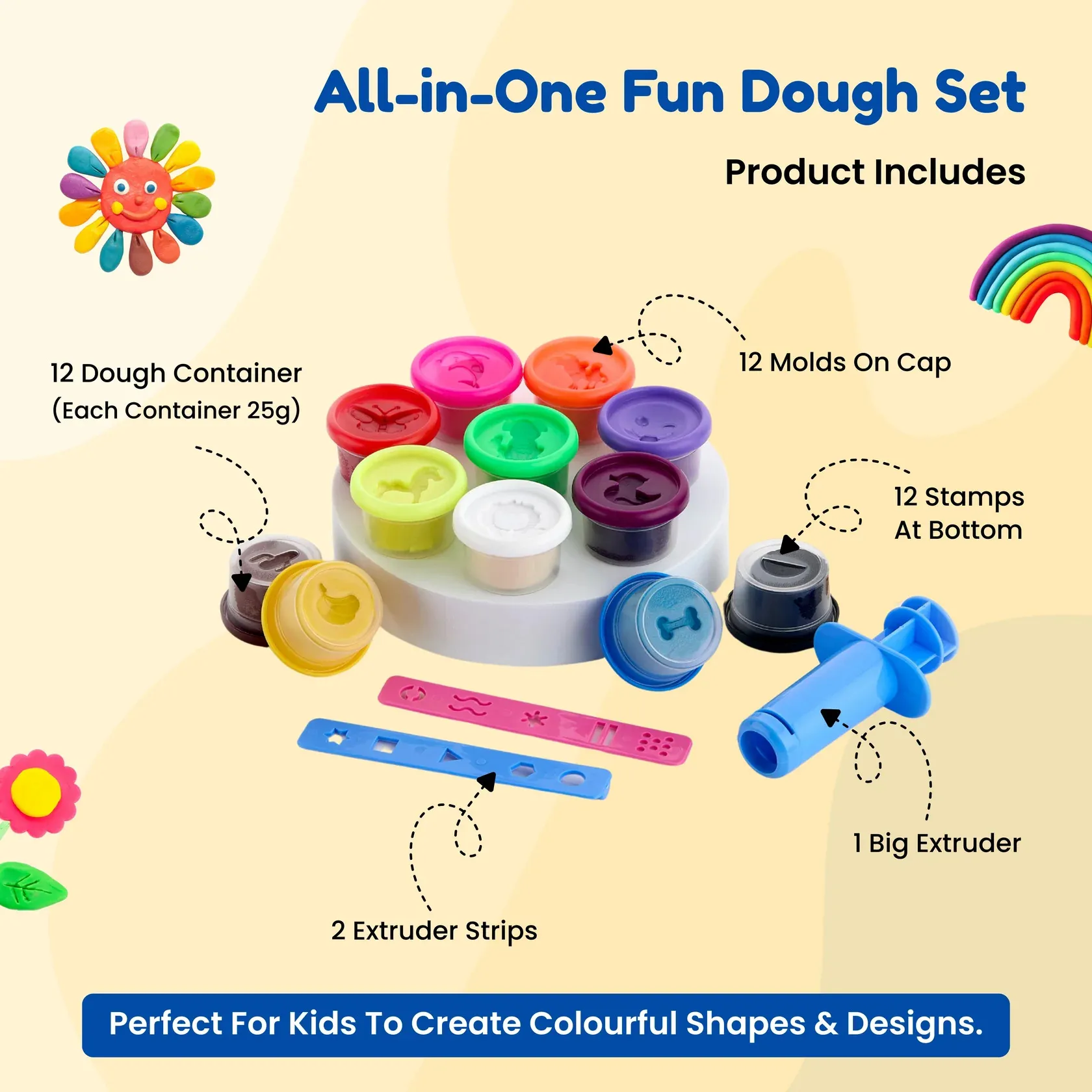
The Frisky Dough 2 Bucket Set is one option to consider. According to its product page, each bucket contains 300 grams of modeling dough, and the set includes a roller, a precision shaping knife, and 10 molds. Frisky describes the dough as soft, non-toxic, and BIS-certified. Availability can change, so parents should check the product page before ordering.
The included tools create several starting points for play. A roller can help flatten dough, molds can create recognizable forms, and hand shaping gives children freedom to make original objects. Parents can introduce one tool at a time instead of presenting everything at once.
Families comparing play dough for kids India can review the Frisky Dough 2 Bucket Set to check its listed contents and current availability. The set may be worth considering for children who enjoy both guided shaping and open-ended creative activities.
Remember that a larger kit does not automatically make a better experience. What matters most is whether children can comfortably use the materials and find activities that interest them.
Are clay toys useful for imaginative and sensory play?
Yes. Soft modeling materials can give children opportunities to explore texture, shape, pressure, and movement while inventing their own designs. The precise experience depends on the material, so parents should check whether a product is modeling dough, modeling clay, or another type of craft compound.
The phrase clay toys for kids can refer to different products, and they may not all have the same texture, drying behavior, or instructions. Some materials are designed to remain pliable for repeated play, while others may harden or be intended for a different kind of craft. Read the product details before choosing one for a particular activity.
Frisky India’s wider range focuses on dough, slime, and sensory play, with an emphasis on color, texture, creativity, and hands-on learning. Parents can visit the Frisky India website to learn more about the brand and its product range.
When choosing clay toys for kids, consider how the child prefers to create. A child who likes pressing shapes into soft material may enjoy molds, while one who likes inventing characters may prefer open-ended sculpting. Either way, adult guidance and age-appropriate materials remain important.
How should dough be stored between play sessions?
Proper storage helps modeling dough stay usable for longer. After play, gather the pieces, return them to their intended containers, and follow the manufacturer’s storage instructions.
Frisky India recommends keeping its dough in an airtight container in a cool, dry place away from direct sunlight. This helps prevent the material from drying out too quickly. Children can learn to take part in cleanup by sorting colors and returning tools to their storage place.
If the dough starts to feel dry, check the product’s care guidance before adding anything. Frisky’s FAQ suggests adding a few drops of water and gently kneading its dough if it becomes dry. Avoid applying this method to other materials unless their instructions allow it.
Keep different colors separate when possible, especially if children want to preserve their original colors for later activities. A simple routine—close the containers, wipe the work surface, and put tools away—can make the next creative session easier to begin.
How can families make creative play part of everyday life?
Short, regular sessions can make hands-on activities easier to fit into family routines. Parents do not need a full craft afternoon every time; even a brief activity can give children a chance to experiment and express an idea.
Try setting aside a small space with a washable surface and keeping the materials accessible to an adult. Offer a theme when a child needs inspiration, such as making a favorite fruit, building a vehicle, or creating a scene from a story. When children already have an idea, let them lead.
It can also help to ask open-ended questions: “What else could you add?” or “How could you make it stand?” These prompts encourage children to think without requiring them to follow a single correct answer.
Avoid judging every creation by how closely it resembles a real object. Ask children to talk about their work instead. This approach supports confidence and gives parents insight into the stories and ideas behind the shapes.
For families seeking creative dough activities for preschoolers, a balance of simple prompts and independent experimentation is a practical place to start. Over time, children may move from basic shapes to more detailed creations, patterns, and imaginative stories.
Final Thoughts
Modeling dough offers children a simple way to turn ideas into shapes, patterns, and stories. With age-appropriate materials, adult supervision, and a little room for experimentation, families can make creative play a useful part of everyday life. Compare product details, choose activities that fit your child’s interests, and let the process matter more than the finished result.
Frequently Asked Questions
1. What age is suitable for modeling dough?
The suitable age depends on the product and its instructions. Frisky India states that its dough and slime products are intended for children aged three and above. Always check the individual product label and supervise children during use.
2. What should parents check before buying play dough in India?
Review the recommended age, safety information, material description, included tools, storage instructions, and product availability. Choose a set that matches the child’s interests and abilities.
3. Is non-toxic dough safe to eat?
No. Non-toxic does not mean edible. Children should be taught not to eat modeling materials, and adults should supervise play, especially with younger children.
4. What skills can children practice with modeling dough?
Children can practice fine motor coordination, hand control, concentration, creativity, early shape recognition, and problem-solving through activities such as rolling, pinching, pressing, and building.
5. How can beginners use a dough set?
Start with easy tasks such as rolling balls, flattening dough, pressing molds, or making basic shapes. Introduce more challenging activities gradually as the child becomes comfortable with the tools.
6. What is the difference between modeling dough and modeling clay?
The terms can refer to different materials. Their texture, drying behavior, and intended uses vary by product, so read the packaging and care instructions before choosing one.
7. How do you stop modeling dough from drying out?
Store it in an airtight container in a cool, dry place away from direct sunlight, following the manufacturer’s instructions. Close containers promptly after each session.
8. Can dough play help children learn shapes and colors?
Yes. Children can make and compare shapes, sort pieces by color, and create repeating patterns. Adults can support learning by asking children to name, count, and describe what they make.
9. What tools are useful for children’s dough activities?
Depending on the child’s age and the set, useful accessories may include a roller, molds, and shaping tools. Check the product’s contents and supervise the use of any tools that need extra care.
10. Where can parents find modeling dough and sensory toys in India?
Parents can review product ranges and details on the Frisky India website, as well as compare other reputable retailers. Check the specific product page for current stock, safety guidance, and included accessories.




















Sign in to leave a comment.