
You open a wardrobe full of sarees and still feel you have nothing to wear. Some are too heavy for a long day. Others crush the moment you sit down or cling in the wrong places. If you want something that looks polished at a wedding lunch and still feels comfortable by evening, crepe silk sarees deserve a closer look.
The trouble is that shopping for them has become harder. When you browse sarees online, product photos often look identical, descriptions are vague, and "crepe silk" is used to describe everything from genuine fabric to blends that behave nothing like it. This guide explains what the fabric actually is, how to judge quality, and how to buy with confidence.
What Makes Crepe Silk Different
Crepe is not a fibre. It is a weave and finish. Crepe silk is made from silk yarns twisted tightly before weaving, which gives the cloth a slightly pebbled, matte, grainy surface. Compare it with the glassy shine of satin or the crisp rustle of a traditional Kanjivaram, and the difference is immediately visible and tangible.
That twist creates several qualities that make crepe silk sarees so popular with working women, brides' guests, and anyone who wears a saree often:
Fluid drape. The fabric falls softly and follows the body's movement. This makes pleating easier and gives a flattering, streamlined line.
Lightness. Crepe silk is far lighter than heavy brocades or pure zari-laden silks. You can wear it for hours without feeling weighed down.
Crease resistance. The twisted yarns spring back, so the saree handles travel, long sittings, and a day of walking better than flatter silk weaves.
Subtle luxury. The finish is understated. It photographs well and suits both prints and plain colours, without the loud sheen that can feel overdone in daylight.
It also helps to know the common varieties. Pure crepe silk is the most breathable and has the softest hand. Georgette crepe has a slightly more sheer, bouncy texture. Satin crepe has a smooth face and a crepey back. Each drapes a little differently, so knowing which one you are buying matters.
A Practical Framework for Choosing
Before you add anything to your cart, run through these five checks. They work whether you are in a shop or scrolling through sarees online.
1. Start with the occasion
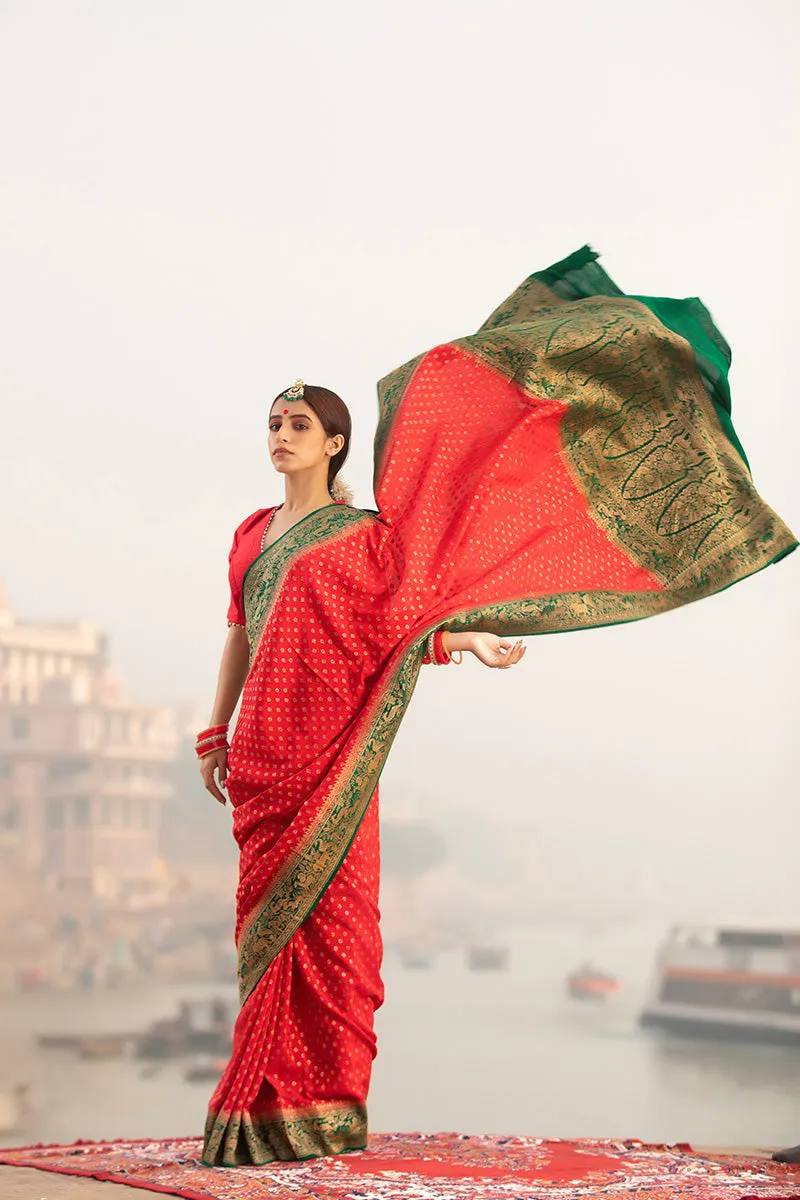
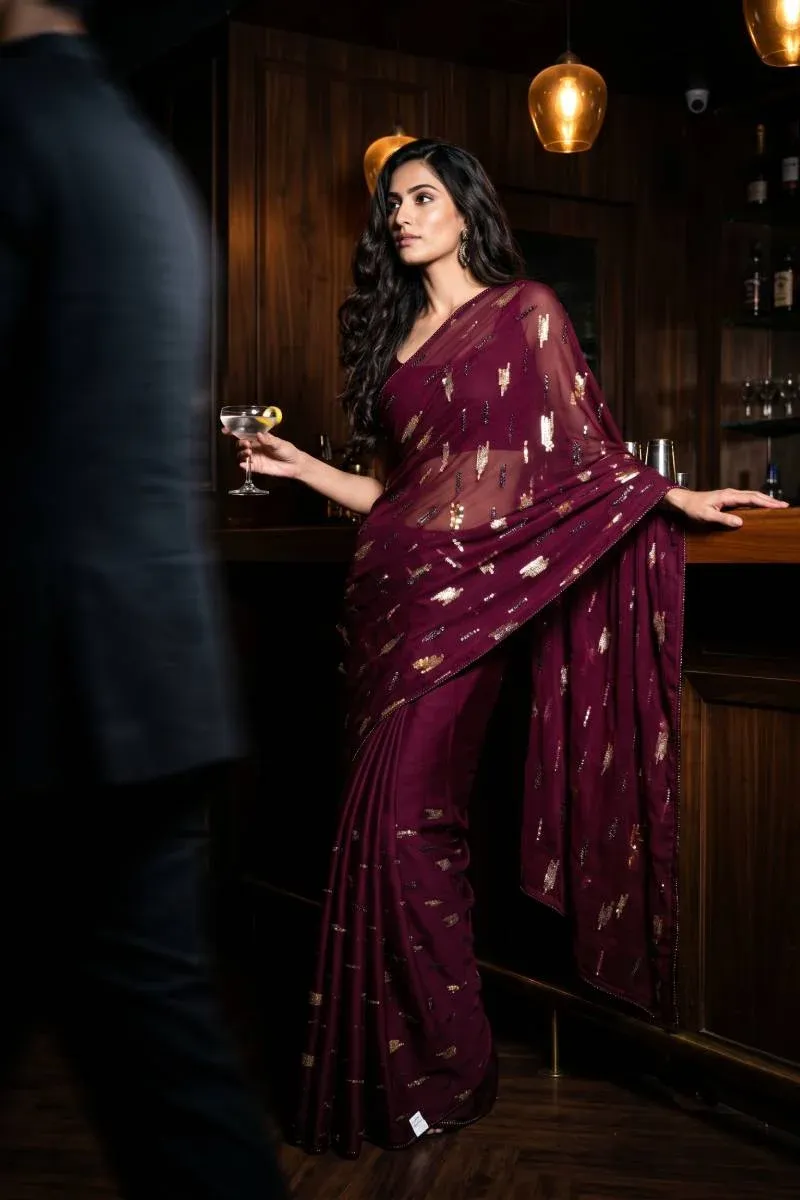
Be clear about where you will wear it. For office and everyday elegance, choose plain or lightly printed crepe silk with a slim border. For festivals and evening events, look for embroidered borders, sequin work, or woven motifs. For weddings, pick richer colours such as emerald, wine, or deep teal, and consider a statement pallu.
2. Judge the fabric, not just the colour
Colour is the first thing people notice, but fabric decides how the saree behaves. Look for a fine, even texture without visible puckering or rough patches. Ask about fibre content. A listing that says only "crepe" without naming the base material tells you very little.
3. Match weight to season
Crepe silk is a good year-round fabric, but weight still matters. Lighter weaves suit Indian summers and humid weather. Slightly heavier crepe works well for winter weddings and evening wear, where a little structure helps the pleats hold.
4. Look at the finishing
Quality shows in the details. Check that the border is stitched or woven evenly and does not pucker. Look at the pico edge and the fall, and see that the pallu and blouse piece are well finished. Loose threads and uneven hems usually signal rushed production.
5. Think about care before buying
If you will not dry clean regularly, avoid heavily embellished pieces. Plain or print-based crepe silk is more forgiving and easier to maintain.
A Real-Life Example
Consider Meera, a school administrator who attends two or three family functions each month and wears sarees to work on Fridays. She wanted one saree that could handle both. She also hated spending ten minutes re-pinning pleats during the day.
She narrowed her search using the framework above. Her occasion was mixed use, so she skipped heavy embellishment. She wanted fluid drape, so she chose a pure crepe silk in dusty rose with a thin woven border. She asked for the fibre content in writing and checked the finishing in close-up photos.
Worn to work with a simple blouse, the saree looked professional. Two weeks later, paired with a statement blouse and jewellery, it carried her through a cousin's engagement lunch. Same saree, two completely different looks, and the pleats stayed put through both. That versatility is why one well-chosen piece often works harder than three impulse buys.
Trust and Buying Guidance
Buying silk, especially when you cannot touch it, requires a little extra diligence. These habits will protect you.
Read the product description closely. Reliable sellers state the fabric composition, weave type, saree length, and whether a blouse piece is included. If key details are missing, ask.
Study multiple images. Look for close-ups of the weave, the border, and the pallu, plus a photo in natural light. Overly filtered images can hide colour and texture differences.
Check return and exchange policies. Colour variation between screen and reality is common. A clear return policy is a sign the seller stands behind the product.
Be realistic about price. Genuine silk involves real material and craft costs. Prices that seem far too low usually mean polyester or heavily blended fabric. Pricing that is fair rather than suspiciously cheap is a better signal.
Ask about origin and craft. Sellers who know their weavers, regions, and techniques can usually answer questions in detail. Hesitation or vague answers are a red flag.
Care for it properly. Store crepe silk folded in a soft muslin cloth, away from direct sunlight and moisture. Dry clean when needed, avoid perfumes and deodorants directly on the fabric, and refold along different lines every few months to prevent permanent creases.
Final Thoughts
Crepe silk sits in a rare sweet spot: refined enough for celebrations, practical enough for regular wear, and forgiving enough that it does not demand constant attention. Once you know how to read the fabric, check the finishing, and match the saree to your real life, choosing well becomes much easier.
If you are ready to explore, take your time and compare several options. Handle your search the way you would a visit to a trusted weaver's shop: ask questions, look closely, and buy only what you will actually wear. For a considered collection of crepe silk sarees and other handcrafted silks, you can browse Chinaya Banaras and see how the details described above look in person.


















Sign in to leave a comment.