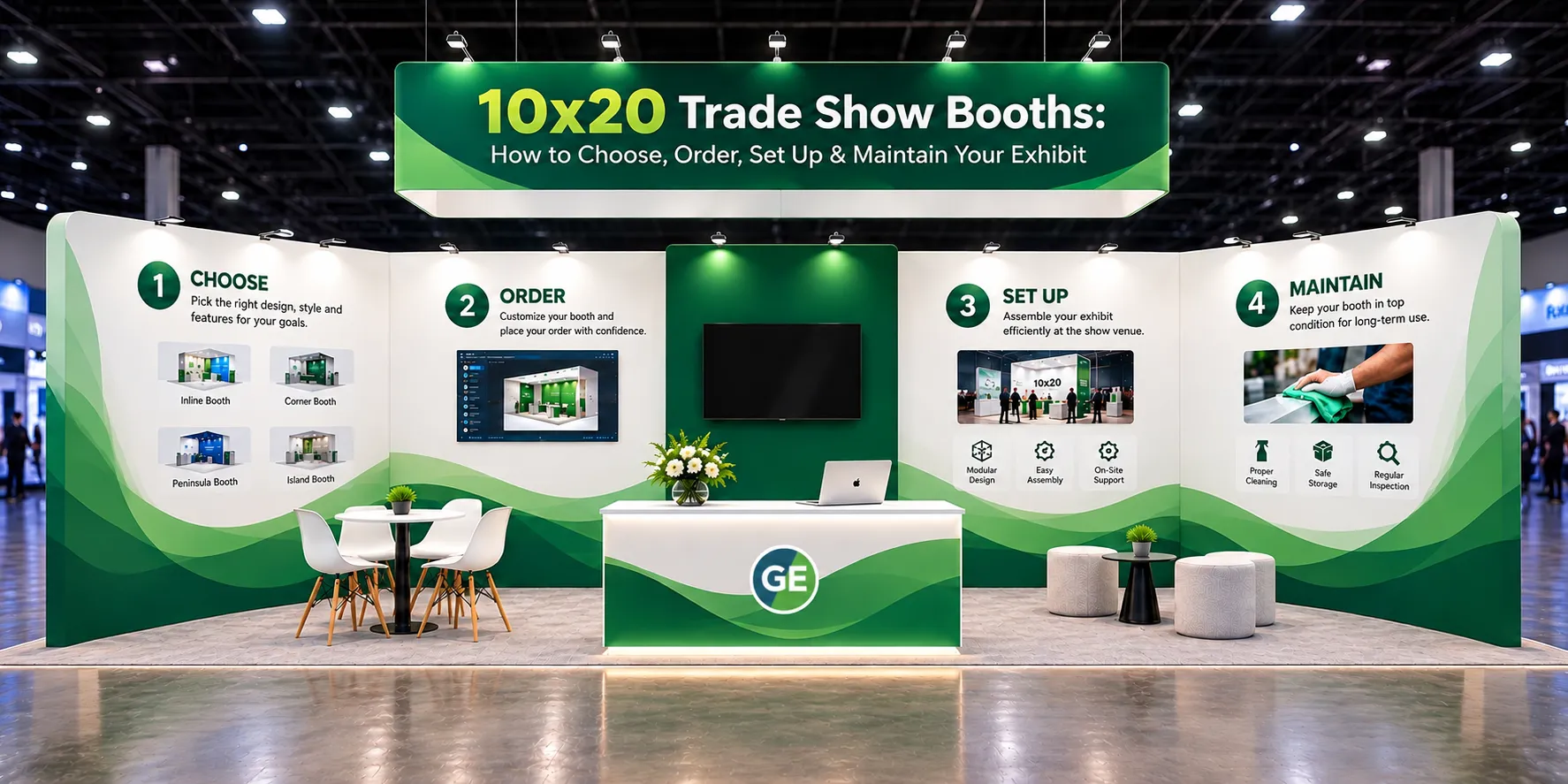

A 10x20 trade show booth gives you 200 square feet of exhibit space, which is large enough to create separate areas for product demonstrations, customer conversations, branding, storage, and lead collection. But choosing the right 10x20 booth is about more than size.
The event itself, your booth location, how many people the booth can accommodate, your goals, shipping requirements, graphics, setup process, and how often you plan to reuse the display can all affect what type of booth makes sense.
This guide walks through those decisions so you can avoid common mistakes and buy a 10x20 trade show booth that works for today's event and future shows.

What You’ll Learn in This Guide
• How to choose a 10x20 booth based on the type of event and your goals
• The different types of trade show booths and configurations
• What to look for in a 10x20 trade show booth design
• How early you should order your booth
• What to check when your booth and graphics arrive
• What to consider for shipping, setup, storage, and future events
• How to maintain fabric graphics and booth components for a longer service life
• What questions to ask before buying from a booth supplier
Start With the Event — Not the Booth
One of the easiest mistakes is choosing a booth first and then trying to make it work.
Start by asking:
What are you trying to accomplish at this event?
Your goal might be to generate sales leads, demonstrate a product, meet existing customers, launch a product, build brand awareness, recruit distributors, or create a space for scheduled meetings. Exhibitor planning guidance recommends defining your objective and target audience before choosing the exhibit.
For example:
If the event is primarily lead generation
Prioritize an open layout that allows attendees to step into the booth easily. Keep your main message visible from the aisle and provide a simple location for conversations and lead capture.
If you’re demonstrating a product
You may need more open floor space, electrical access, monitor placement, shelving, or a dedicated demonstration counter.
If you’re meeting existing customers
A 10x20 booth can be divided into an open presentation area and a semi-private meeting area.
If you’re launching a new product
Your biggest graphic wall, product display, lighting, and demo area should support the launch, not compete with it.
The important point is that the same 10x20 footprint can be designed completely differently depending on the event goal.
Check the Show Floor Before Finalizing Your Booth
A 10x20 booth isn’t the only thing you are buying. You are also buying a position on the show floor.
Before committing to the booth design, review the floor plan and exhibitor manual.
Look for:
• How many sides of your booth are open
• Nearby competitors
• Entrances and exits
• Food areas and lounges
• Presentation or education areas
• Columns or obstructions
• Ceiling height
• Electrical and internet access
• Loading and freight instructions
• Booth height restrictions
Booth location can affect traffic patterns, but there is no universal “best” location for every show. Traffic can vary depending on entrances, session areas, food areas, neighboring exhibitors, and the layout of the venue
That means you should evaluate the actual floor plan instead of simply assuming that the front, center, or back of the hall is always better.
Practical tip: Ask show management for the exhibitor prospectus and current floor plan before finalizing your booth design. The exhibitor manual matters because height limits, shipping procedures, electrical requirements, and deadlines can vary from one event to another.
Understand the Different Types of Trade Show Booths
“Booth type” can mean two different things: the position on the show floor and the way the booth is constructed.
Understanding both will make it much easier to choose the right display.
Booth configurations
Inline or Linear Booth
An inline booth has one aisle-facing side, with neighboring booths on either side.
This is a straightforward choice when you have a traditional row space and want a defined back wall for graphics, displays, shelving, or storage.
A standard 10x20 inline booth gives you a long frontage you can divide into different functional areas.
Corner Booth
A corner booth design has two open sides and sits at the end of a row.
The second aisle-facing side can create additional visibility and gives you more flexibility when designing entrances and traffic flow.
Peninsula Booth
A peninsula is generally open on three sides and shares one side with another booth or boundary. This configuration provides substantially more visual exposure but also requires a design that works from multiple directions.
Island Booth
An island booth is open on all four sides.
These displays offer maximum layout freedom but require you to consider all sides of the structure in the design. Some events allow considerably greater booth heights for island configurations, but the exact rules are show-specific.
Important: Don’t design a booth based solely on the configuration name. Always check the specific event’s rules.
Choose the Construction Style That Fits Your Exhibiting Schedule
A second way to classify booths is by construction.
Portable Displays:
These are designed for mobility and relatively simple setup. They can include pop-up systems, banner displays, and lightweight fabric solutions.
They're useful when portability is the primary requirement.
Modular Booths:
Modular systems use components that can be assembled and sometimes reconfigured for different booth sizes.
This can help companies attending multiple events where the footprint or layout changes from show to show.
Custom Trade Show Booths:
Custom booths are designed around a particular brand, product, floor space, and experience.
They can include custom structures, counters, storage, lighting, monitors, shelving, SEG fabric graphics, meeting areas, and product demonstration zones.
For a company purchasing a 10x20 exhibit, the most important question is not simply “Which booth looks impressive?”
Ask:
Will this booth still be useful after this event?
A modular or reusable design may allow you to replace graphics, change messaging, or rearrange components for future shows.
Design Your 10x20 Booth Around Three Zones
A useful 10x20 layout often becomes easier when you divide the space into three functions:
Figure 1 Trade show booth zones

Don’t Forget Storage
One of the most overlooked elements of a trade show booth is storage.
Without a designated storage area, boxes, bags, packaging materials, jackets, marketing supplies, cables, and personal belongings can quickly become visible.
A 10x20 booth provides enough space to incorporate storage without sacrificing the entire visitor experience.
Consider where you will keep:
• Extra brochures
• Product samples
• Personal items
• Packaging
• Spare graphics
• Cleaning supplies
• Electrical accessories
• Giveaways
Good storage isn’t just about appearance. It can make the booth easier for the team to operate throughout a busy event.

























Sign in to leave a comment.