

Industrial manufacturers often rely on specialised chemical formulations to achieve consistent surface quality, improve processing efficiency, and meet product-specific performance requirements. Selecting the right material is therefore an important part of production planning. Silicone Emulsion is used in various industrial applications where silicone-based properties are required in a water-based formulation. However, the right choice depends on the intended application, formulation compatibility, and operating conditions.
For procurement teams, understanding the product's characteristics and evaluating suppliers carefully can help reduce material-selection errors. This guide explains how silicone emulsions work, where they may be used, and what buyers should consider when sourcing them for industrial applications.
Understanding Silicone Emulsion and Its Properties
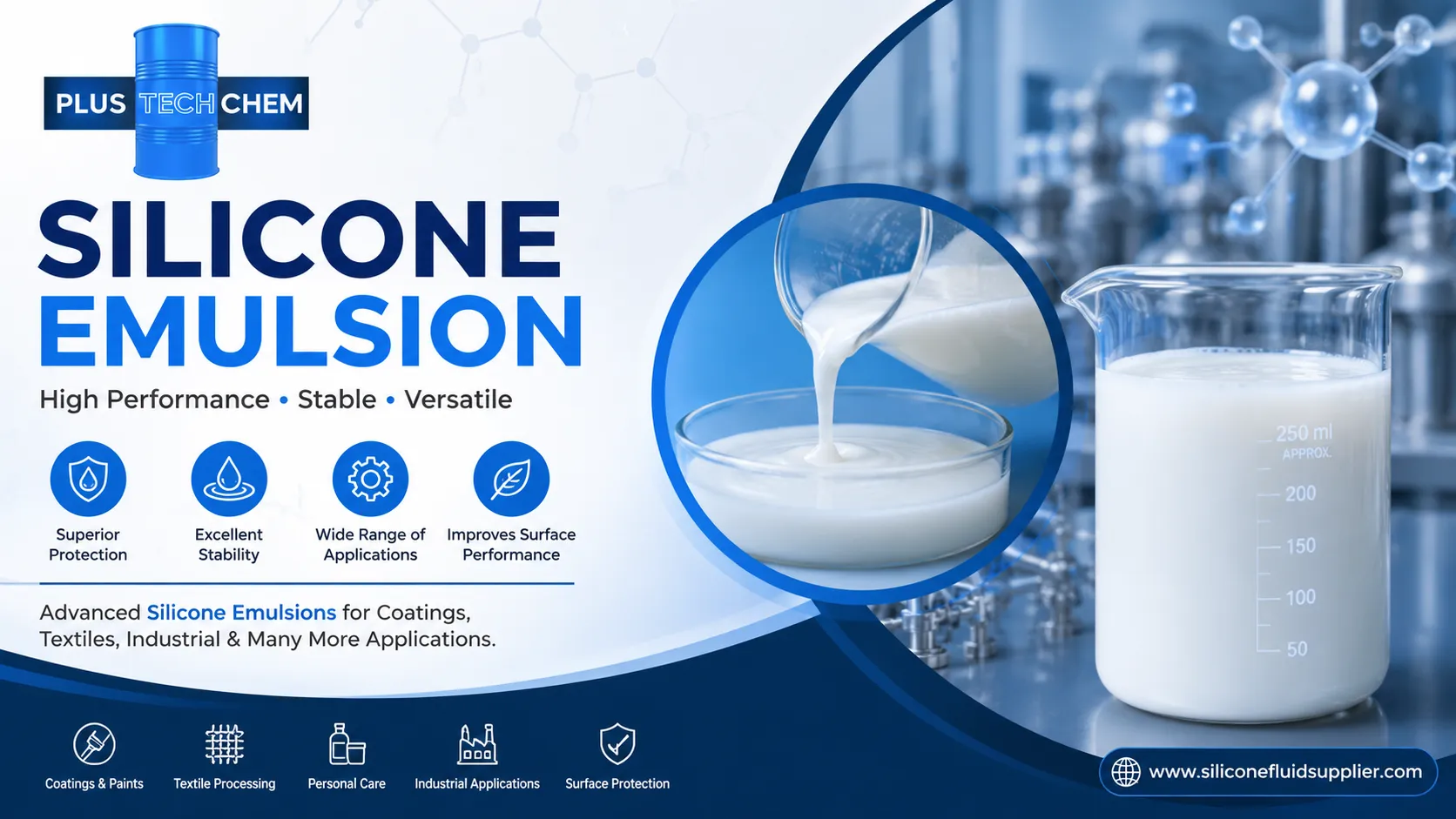
A silicone emulsion is a formulation in which silicone material is dispersed in water with the help of suitable emulsifiers or stabilising ingredients. Depending on its composition, it may be designed to provide surface conditioning, lubrication, release properties, or other application-specific benefits.
Unlike silicone fluids supplied in an undiluted form, emulsions can offer a water-based delivery system that suits certain processing requirements. Their performance depends on factors such as silicone chemistry, concentration, particle characteristics, emulsion stability, and compatibility with other ingredients.
Not every emulsion is suitable for every application. Buyers should review the manufacturer's technical data sheet to understand the recommended uses, dilution requirements, storage conditions, and handling precautions before selecting a product.
Businesses exploring suitable options can review the Silicone Emulsion product range from Plustech Chem to learn more about the available product category and discuss their requirements.
Common Industrial Applications of Silicone Emulsion
1. Textile Processing and Fabric Finishing
In textile manufacturing, selected silicone emulsions are used in finishing formulations to help improve fabric softness, smoothness, and surface feel. The final result depends on the emulsion chemistry, application method, fabric type, and processing conditions.
Textile processors should evaluate compatibility with dyes, finishing agents, and other formulation components. Trials on representative fabric samples can help determine whether the selected product provides the required finish without creating unwanted effects in subsequent processing.
2. Surface Conditioning and Release Applications
Certain silicone emulsions are formulated for surface-conditioning or release-related applications. Depending on the product and substrate, they may help modify surface behaviour or support easier separation during a suitable process.
Before use, manufacturers should confirm that the selected grade is designed for the intended surface and operating environment. Testing is particularly important when treated materials will undergo printing, painting, bonding, or additional coating operations.
3. Industrial Formulations
Silicone emulsions may also be incorporated into selected industrial formulations where water-based delivery and specific silicone properties are beneficial. Their suitability depends on the formulation's chemistry, the desired result, and the stability requirements of the finished product.
Product developers should assess dilution behaviour, compatibility with other ingredients, and stability under expected storage and processing conditions before introducing a new emulsion into routine production.
Key Factors to Consider When Selecting Silicone Emulsion
Choosing an appropriate grade begins with a clear understanding of the application's technical requirements.
Emulsion type and concentration: Confirm the silicone chemistry, active content, and formulation characteristics. Products with similar descriptions may perform differently.
Stability: Check whether the emulsion remains stable under the recommended storage conditions. Unintended separation or changes in appearance may indicate a product or handling issue.
Dilution requirements: If dilution is necessary, follow the supplier's recommendations and evaluate water quality, mixing procedures, and compatibility with other ingredients.
Substrate compatibility: Assess how the product interacts with the material being treated, including fabrics, coatings, or other relevant surfaces.
Technical documentation: Request the technical data sheet (TDS) and safety data sheet (SDS). Where applicable, review batch-specific documentation and agreed quality parameters.
Application testing: Conduct controlled trials before bulk implementation, especially when changing grades or suppliers.
These checks help purchasing teams compare products on the basis of application suitability rather than price alone.
How to Evaluate Silicone Emulsion Manufacturers
When comparing Silicone Emulsion Manufacturers, industrial buyers should examine technical capability, product documentation, quality procedures, and consistency of supply. The supplier should be able to explain the product's intended applications, handling requirements, and any limitations relevant to the buyer's process.
Procurement teams should also clarify whether a company manufactures the product directly or supplies materials produced by another manufacturer. This distinction helps establish expectations about product origin, technical support, and documentation.
For repeat orders, maintaining an approved specification and recording batch details can make it easier to identify inconsistencies and manage quality checks. Buyers should also confirm packaging options, minimum order quantities, delivery schedules, and communication arrangements before finalising a purchase.
A reliable sourcing decision combines product suitability with clear documentation and realistic supply commitments.
Sourcing from Silicone Emulsion Manufacturers in India
Businesses looking for Silicone Emulsion Manufacturers in India should assess suppliers according to their application needs, documentation standards, product availability, and commercial requirements. Domestic sourcing may help simplify communication and logistics, depending on the supplier's location and distribution arrangements.
However, location alone does not establish manufacturing capability or product quality. Buyers should verify whether the business is a manufacturer, distributor, or supplier and request appropriate technical information before placing an order.
Plustech Chem, based in Gandhinagar, Gujarat, supplies silicone fluids and specialty chemicals for industrial customers. Buyers can discuss their intended application, required specifications, quantity, and documentation needs when making an enquiry.
For related product information, visit the Silicone Emulsion page. Businesses evaluating other silicone-based materials may also find the Silicone Fluid range useful when comparing product categories for different process requirements.
Why Product Trials and Quality Checks Matter
Before approving a silicone emulsion for regular use, manufacturers should evaluate it under representative production conditions. A controlled trial can reveal whether the product meets the required performance criteria and works well with existing equipment and formulation ingredients.
Quality teams should record relevant observations, including dilution behaviour, application performance, storage conditions, and any changes in the final product. For repeat purchasing, retaining the approved product specification and batch documentation can support traceability and help reduce the risk of unapproved substitutions.
This process is particularly valuable when introducing a new supplier or changing a material used in an established production line.
Conclusion
Silicone emulsion can support a range of industrial processes when the selected formulation matches the application's requirements. Its performance depends on factors such as silicone chemistry, concentration, stability, compatibility, and processing conditions.
For buyers comparing Silicone Emulsion Manufacturers or sourcing from Silicone Emulsion Manufacturers in India, the best approach is to verify product specifications, review technical documentation, and conduct application trials where necessary. These steps help businesses make informed purchasing decisions and maintain greater consistency in production.
To explore available options or discuss your industrial requirements, visit Plustech Chem's Silicone Emulsion product page and provide details about your application, required grade, and order quantity.


















Sign in to leave a comment.