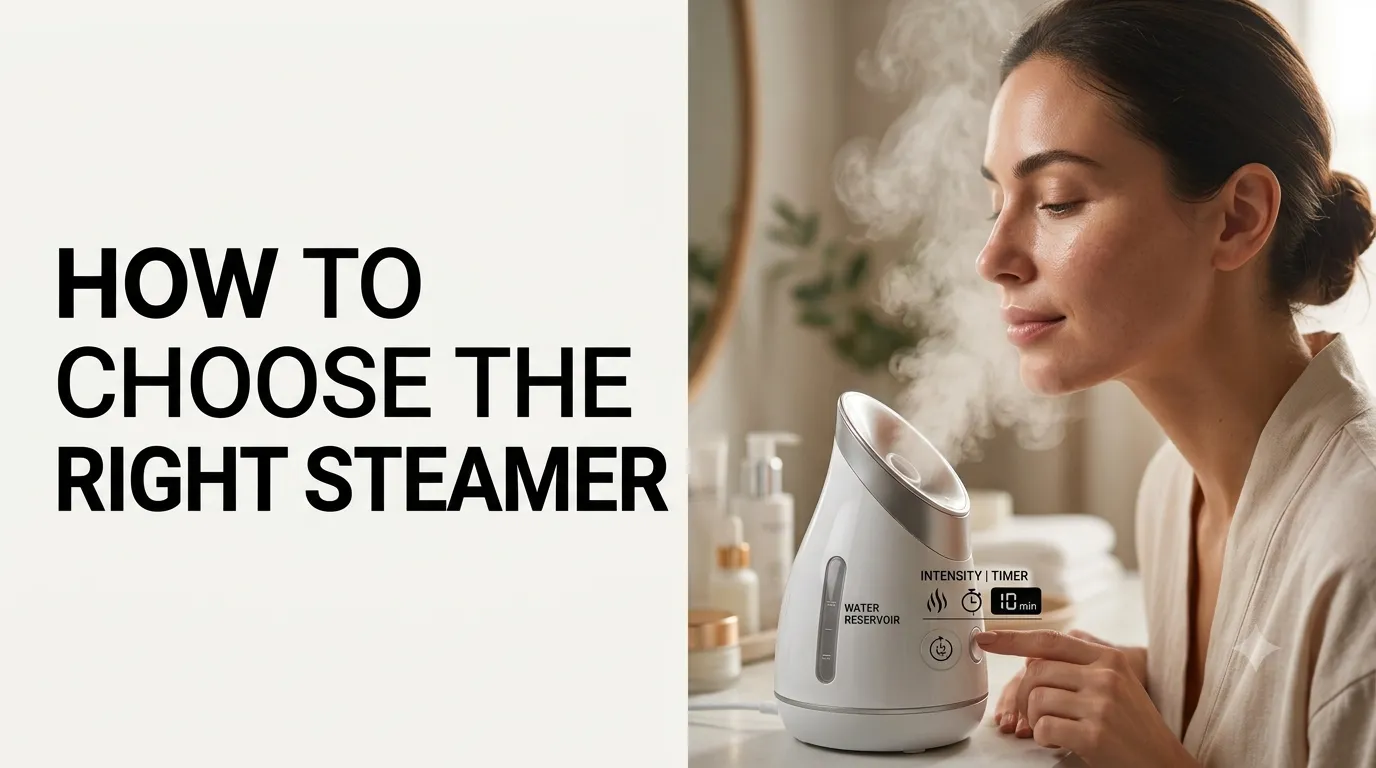

Facial steamers have moved from the back rooms of spas to bathroom counters everywhere and the market has grown to match. There are now dozens of options at every price point, from basic personal steamers that produce little more than warm mist to advanced nano-ionic devices that replicate what you'd find in a professional treatment room.
That range is good news for consumers. It also makes buying decisions genuinely confusing.
The wrong steamer doesn't just underperform it can actively irritate your skin if the temperature runs too hot, the steam particles are too coarse, or the device lacks the controls you need for your skin type. Getting it right matters.
Here's exactly what to look for.
First: Understand What You Actually Want From a Steamer
Not everyone uses a facial steamer for the same reason. Before comparing features, get clear on your primary goal because different goals favor different designs.
Pore cleansing and acne management - you need a steamer with adequate temperature and consistent steam output to thoroughly soften sebum and open pores before cleansing or extractions. A reliable, continuous steam flow matters more than advanced features here.
Deep hydration and anti-aging you want nano-ionic technology, which produces ultra-fine charged water particles that penetrate the skin far more effectively than regular steam. Basic hot-water steamers won't deliver the same hydration depth.
Sensitive or reactive skin temperature control is critical. Traditional steamers run hot and can trigger redness or flushing. A device with adjustable temperature or a specifically gentle steam mode is important.
Multi-purpose use if you want one device that adapts across different skin concerns and conditions, look for steamers with multiple pre-set modes rather than a single fixed output.
Being honest about your primary use case before you start comparing options saves you from buying a device built for someone else's skin.
1. Nano-Ionic Technology vs. Regular Steam
This is the most important technical distinction in the steamer market and it's worth understanding properly before you spend a dollar.
Regular steam heats water to produce visible water vapor. The particles are relatively large and sit on the surface of the skin. The warmth opens pores and the moisture adds surface hydration both useful effects. But the penetration is shallow.
Nano-ionic steam combines heat with ultrasonic vaporization to break water molecules down into charged nano-particles particles so small they penetrate the skin up to 10 times more effectively than regular steam. The negative ionic charge also helps these particles bind to positively charged impurities in the skin, actively drawing them out rather than just softening the surface.
The practical difference shows up in hydration depth, skin texture after treatment, and how effectively the steam primes the skin for product absorption. For most skincare goals beyond basic pore cleansing, nano-ionic technology is meaningfully better not marginally better.
If a steamer doesn't specify nano-ionic technology in its product description, assume it's producing regular steam. That's fine for a basic setup. It's not what you want if deep hydration or anti-aging results are the goal.
2. Temperature Control and Steam Modes
Fixed-temperature steamers work at one setting. You get what you get, regardless of your skin's condition on any given day.
That's a limitation worth taking seriously. Skin is variable. A setting that's appropriate for deep cleansing on a resilient day may be too intense during a sensitivity flare, post-procedure recovery, or on skin that runs reactive in general.
Look for steamers that offer:
Multiple steam modes calibrated for different purposes. A good multi-mode steamer might offer a deep cleansing mode with stronger output, a hydration mode with gentler continuous steam, and a sensitive mode designed for reactive skin. Each mode isn't just a marketing label — it should represent a genuinely different steam intensity, temperature, or particle profile.
Hot and cold steam options. Some advanced steamers alternate between warm and cool mist within a single session. The warm steam opens pores; the cool mist refines them and reduces post-treatment redness. For combination or sensitive skin in particular, this alternating approach produces noticeably better results than hot steam alone.
Adjustable output intensity. Even without preset modes, a dial or button that lets you reduce steam intensity gives you meaningful control over your treatment.
The NanoSteamer lineup from Pure Daily Care offers exactly this kind of flexibility. The Clinical model features six pre-programmed dermatologist-inspired modes Oil Control, Hydration, Sensitive, Brightening, Anti-Aging, and Smart Steam each calibrated for a specific skin concern. That's not feature padding; it's the difference between a device that adapts to your skin and one that forces your skin to adapt to it.
3. Session Time and Heating Speed
Two practical details that rarely appear in marketing copy but matter a lot in daily use.
How quickly does it heat up? Some steamers take two to three minutes to produce consistent steam. Others are ready in 30 seconds. When your skincare routine is built around a morning or evening window, a two-minute warm-up time adds friction that gradually erodes consistent use. Look for devices that heat up in under a minute.
How long does a session run? Most effective facial steaming sessions last 8–15 minutes depending on skin type and goal. A device with an automatic shut-off at three minutes isn't going to deliver meaningful results it cuts the session short before the skin has had adequate exposure. Confirm the device supports continuous steam for at least 10–15 minutes on a single fill.
4. Water Tank Size
Directly related to session length - a small water tank means the steam cuts out before your session is complete.
For a 10-minute session at standard output, most steamers require at least 100–150ml of water. A tank that holds less than this will run dry mid-session, which interrupts treatment and requires a pause to refill.
Larger tanks 200ml and above give you flexibility to run longer sessions or back-to-back treatments without stopping. For household use where multiple people might share a steamer, a larger reservoir is particularly useful.
Also check how easy the tank is to fill. Wide-mouth openings fill cleanly without spilling. Narrow openings are consistently frustrating and more likely to result in spills on electrical components.
Always use distilled water. Tap water contains minerals that leave deposits inside the steamer, reducing performance over time and shortening the device's lifespan. Distilled water prevents this entirely. It's inexpensive and widely available make it part of your steamer routine from day one.
5. Included Attachments and Accessories
A steamer that comes with the right accessories is significantly more versatile than one that doesn't and buying attachments separately afterward often costs more than choosing a better-equipped model upfront.
Facial cone or mask attachment - focuses steam directly on your face and prevents dispersal into the room. Essential for efficient treatment; without it, much of the steam is wasted.
Extraction kit - stainless steel comedone extractors and lancets for use immediately after steaming while pores are still open. Having this included means you don't need to source tools separately, and they're designed to be used alongside the steamer.
Essential oil diffuser tray or basket - allows you to add a few drops of essential oil to the steam for an aromatherapy effect. Lavender for calming, tea tree for antibacterial properties, eucalyptus for congestion. A small addition that meaningfully improves the experience.
Nasal attachment - a narrower nozzle for directing steam toward the nasal passages. Useful for sinus congestion and particularly appealing during cold and flu season.
The NanoSteamer 3-in-1 includes a facial cone, five-piece stainless steel extraction kit, essential oil tray, and nasal attachment - a complete setup out of the box. The Clinical model adds specialized attachments for each of its six treatment modes.
6. Portability and Design
Where and how you plan to use the steamer shapes which design is right.
Countertop models are larger, hold more water, and typically offer more consistent steam output. They stay in one place and are best suited for a dedicated skincare station in your bathroom.
Compact personal steamers are smaller, lighter, and easier to move - useful if your skincare routine happens in different locations, if storage space is limited, or if you want something you can take when traveling.
Design and stability matter too. A steamer that tips easily when you lean toward it, or one with a cord that creates an obstacle in a small bathroom, adds daily annoyance. Look for a stable base, a cord length appropriate for your setup, and a design that fits the physical space where you'll actually use it.
7. Build Quality and Longevity
A facial steamer is not a disposable item. A quality device should last years with proper care. Build quality signals to look for:
BPA-free materials for any components that contact water or produce steam that touches your skin. Non-negotiable.
Quality heating element - cheaper steamers use basic heating coils that degrade faster and produce less consistent steam temperature over time. Better devices use more durable ceramic or ultrasonic heating components.
Warranty length - a brand confident in its build quality backs its products with at least a one-year warranty. Shorter warranties on personal care devices that you'll use daily are a signal worth paying attention to.
Brand support and replacement parts - can you get a replacement water tank if it cracks? Are there replacement accessories available? A brand that supports its product line after purchase is meaningfully different from one that doesn't.
8. Price: What Each Range Actually Gets You
Under $40: Basic personal steamers with fixed temperature, limited accessories, and smaller tanks. Fine for occasional use or as a first introduction to steaming. Unlikely to deliver the depth of treatment that consistent anti-aging or hydration goals require.
$40–$80: The range where nano-ionic technology starts appearing alongside better build quality, multiple modes, and more complete accessory packages. The sweet spot for most people with consistent skincare goals.
$80–$150: Advanced multi-mode steamers with clinical-grade nano-ionic technology, wide accessory sets, longer sessions, and stronger warranties. The right choice for people who are serious about their skincare routine and want professional-level results at home.
The Quick Decision Checklist
Before buying any facial steamer, ask:
- Does it use nano-ionic technology? (Important for hydration and anti-aging goals)
- Does it offer multiple steam modes or temperature control?
- How quickly does it heat up?
- Does the water tank support a full 10–15 minute session?
- What accessories are included facial cone, extraction kit, essential oil tray?
- Is it BPA-free with a quality heating element?
- What's the warranty length and brand support like?
- Does the size and design fit where you'll actually use it?
A steamer that checks these boxes will serve your skincare routine for years and deliver the kind of results that make the investment obvious.
The Bottom Line
The best facial steamer isn't the most expensive one it's the one that matches your skin type, your skincare goals, and your daily routine.
If deep hydration and anti-aging results are the priority, nano-ionic technology is non-negotiable. If you have sensitive or reactive skin, temperature control and a gentle mode matter more than raw steam output. If you want versatility across multiple skin concerns, a multi-mode device like the NanoSteamer Clinical gives you the range to adapt as your skin's needs change.
Explore the full Pure Daily Care NanoSteamer lineup - from the versatile 3-in-1 to the advanced Clinical model with six dermatologist-inspired modes at puredailycare.com. Find the steamer that fits your skin, your goals, and your routine - and pair it with the right serums and devices for a complete home facial experience.























Sign in to leave a comment.