

An antique lamp deserves a shade that matches its age and style. A lot of people buy a beautiful old lamp base and then put a plain, modern shade on top of it, and the whole piece loses its character. If you own a period lamp, or you are restoring one that has been in the family for years, the shade is not a small detail. It is half of what makes the lamp look right.
This guide walks through what makes Victorian lampshades different from ordinary ones, how to pick the right size and fabric, and where to find or build a shade that fits an older lamp base properly.
What Makes Victorian Lampshades Different From Modern Shades?
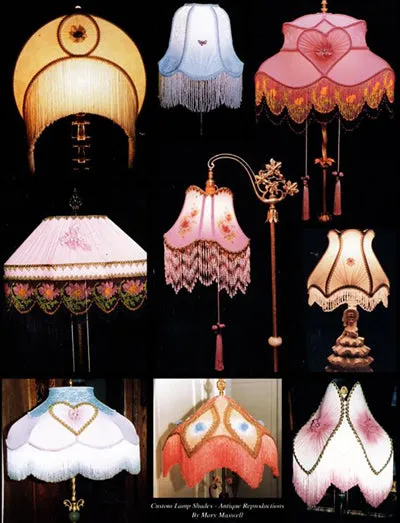
A modern shade is usually a simple drum or cone shape in one plain fabric. A Victorian lampshade is built on a wire frame and covered in layers, so the construction itself is more involved.
Typical features include:
- A shaped wire frame (bell, tiffany, or fringed shapes are common)
- A fabric lining, often silk or a silk-type material
- An outer layer such as lace, chiffon, or a printed fabric
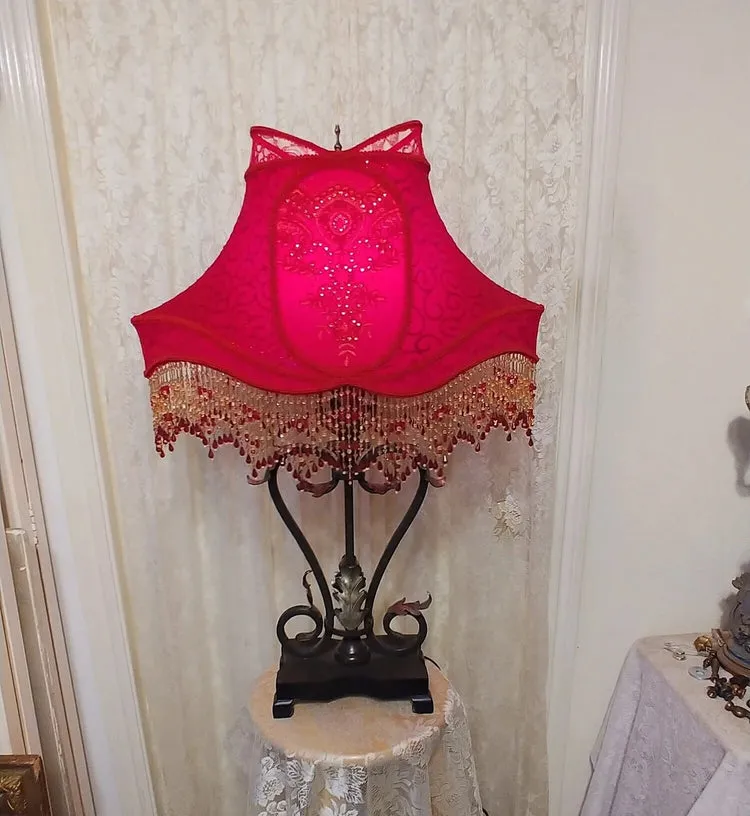
- Trim details like scroll braid, ribbon roses, or beaded fringe along the bottom edge
Because the shade is built in layers over a frame, it holds its shape and gives off a softer, warmer light than a plain paper or plastic shade. That warmth is part of why these shades were originally used with gas and early electric lamps in the 1800s, and it is still one of the main reasons people choose them today.
Why Do Antique Lamps Need a Matching Lampshade Style?
An antique lamp base was designed with a specific shade shape and proportion in mind. When the shade is too small, too plain, or the wrong shape, the lamp looks unfinished, even if the base itself is in perfect condition.
A few practical reasons to match the shade to the lamp:
- Proportion: An oversized or undersized shade throws off the visual balance of the whole lamp.
- Light quality: Fabric shades diffuse light differently than glass or plastic, which changes how a room feels in the evening.
- Resale and appraisal value: Collectors and appraisers often note whether a lamp has a period-appropriate shade, since it affects the overall presentation.
This is really the core reason people search for antique lampshades instead of buying whatever is available at a regular home goods store. The shade is part of the lamp's design, not an accessory added on later.
What Materials Are Used in a Real Victorian-Style Lampshade?
Authentic Victorian-style shades are made with natural or natural-look fabrics rather than synthetic drum shade material. The most common materials include:
- Silk or silk chiffon for the outer or under layer
- Cotton or poly lining to protect the frame and diffuse light evenly
- Lace overlays, often floral or scroll patterns
- Seam binding to finish raw edges cleanly
- French scroll trim along seams and edges
- Beaded fringe, usually 4 to 6 inches long, hanging from the bottom rim
- Ribbon roses or fabric flowers as accent pieces
A kit built with these components lets a hobbyist or restorer put together a shade that looks close to an original 1890s piece, rather than a reproduction printed to look old.
How Do You Pick the Right Size Lampshade for an Antique Lamp Base?
Sizing is where most people get stuck. A shade that fits the harp (the wire piece the shade sits on) will not automatically fit the visual scale of the lamp.
A simple way to check proportion:
- The shade width at the bottom should generally be close to the widest point of the lamp base.
- The shade height is usually about one-third to one-half of the total lamp height, base included.
- The top opening should clear the bulb and harp without gaps that show hardware.
A mid-size frame, around 10 inches tall and 13 inches wide, works for a large number of standard table lamp bases, which is why this size shows up often in lampshade kits and pattern books.
Where Can You Find Unique Antique Lampshades for Old Lamps?
There are two realistic paths: buy one that is already finished, or build one from a kit. Both are valid, and the right choice depends on how much time you want to put into the project.
If you want Unique Victorian Lampshades for Antique Lamps without doing the sewing yourself, look for a shop that focuses specifically on period lampshade styles rather than a general home decor retailer. A specialist will carry the correct wire frame shapes and fabric weights, which general stores usually do not stock.
If you would rather make it yourself, a Victorian lampshade kit that includes the frame, lining, lace, trim, and fringe in one package removes most of the guesswork around matching materials.
Can You Make Your Own Victorian Lampshade at Home?
Yes, and it does not require professional sewing experience. Most kits are built for beginners and include step-by-step written instructions, and some sellers also offer companion video lessons.
The general process looks like this:
- Bind the frame edges with seam binding so the fabric has something to grip.
- Cut and attach the lining to the inside of the frame.
- Cut and attach the outer fabric (lace, silk, or chiffon) over the lining.
- Add trim along the seams and top/bottom edges.
- Attach fringe and any accent pieces such as ribbon roses.
The first shade usually takes a weekend for someone working on it in the evenings. It gets faster after the first one, since most of the learning curve is in handling the frame binding step.
How Do You Care for and Clean an Antique-Style Lampshade?
Fabric shades need gentler care than glass or metal shades. A few basic rules keep them looking good for years:
- Dust with a soft brush or a low-suction vacuum attachment, never a damp cloth on silk.
- Keep the shade out of direct sunlight, since silk and lace fade and weaken over time.
- Avoid high-wattage bulbs, which can scorch fabric and dry out lace fibers.
- Store spare shades in a box, not a plastic bag, so the fabric can breathe.
A shade that is dusted regularly and kept away from strong light will hold its color and shape for a long time, which matters more with fabric than with glass.
What Should You Look for Before Buying a Lampshade Kit?
Not every kit labeled "Victorian style" includes the same quality of materials. Before ordering, check for:
- Frame quality: A sturdy wire frame with clean welds holds its shape over time.
- Fabric weight: Thin fabric shows the frame lines through the shade once lit.
- Included trim: Some kits leave out fringe or accent pieces and sell them separately.
- Base compatibility: Confirm the harp size the frame is built for, since a lamp base is not sold with the shade.
Reading the product description closely, rather than just the photo, avoids most sizing and material surprises after a kit arrives.
Where This Fits With Antique Lamp Restoration Overall
Anyone restoring an older lamp is usually also thinking about the base finish and the wiring, in addition to the shade. The shade is the part most visitors to a room notice first, since it sits at eye level and is the part that is lit.
For a broader look at shade styles, frame types, and supplies beyond a single project, the full antique lampshades collection at LampShadeLady covers frames, trims, and kits sized for different lamp bases.
FAQs
1. What time period does this lampshade style come from?
The style is based on lighting from roughly 1837 to 1901, the period of Queen Victoria's reign, when gas and early electric lamps used fabric and fringed shades.
2. Are fabric lampshades safe to use with modern LED bulbs?
Yes. LED bulbs run cooler than incandescent bulbs, which actually makes them a safer choice for fabric and lace shades since there is less heat near the fabric.
3. Can a Victorian-style shade fit a modern lamp base?
It can, as long as the harp size and shade proportions are matched to the base. The style of the base does not have to be antique for the shade to look right.
4. How long does it take to make a lampshade from a kit?
Most beginners finish a first shade in one to two weekends, with faster times on later projects once the technique is familiar.
5. What is the difference between a Tiffany shade and a Victorian shade?
Tiffany shades are typically made from stained glass panels, while Victorian shades are fabric over a wire frame, usually with lace, silk, and fringe.
6. Do I need sewing experience to build a fabric lampshade?
No. Most techniques use fabric glue and hand stitching rather than a sewing machine, so basic hand-sewing skills are enough.
7. How do I clean lace and silk on an old lampshade?
Light dusting with a soft brush is the safest method. Water and cleaning solutions can stain or shrink silk and weaken old lace fibers.
8. What size lampshade fits a standard table lamp?
A frame around 10 to 14 inches wide and 8 to 11 inches tall fits most standard table lamp bases, though it is worth measuring the base first.
9. Can beaded fringe be replaced if it gets damaged?
Yes, fringe is usually attached along the bottom seam and can be removed and replaced without rebuilding the whole shade.
10. Where can I buy the supplies to build my own antique-style shade?
Specialty lampshade suppliers carry wire frames, trims, and fabric bundled together in kits, which is easier for a first project than sourcing each material separately.



























Sign in to leave a comment.