

India’s space story, from Chandrayaan-3 to Gaganyaan, has made science a dinner-table topic. For business leaders, that interest is an opportunity. You might be sponsoring a CSR initiative, adding a family benefit to your employee package, or partnering with a school. In each case, picking the right Online Astronomy Courses for Kids determines whether your investment builds real curiosity or just ticks a box.
Here is a practical, vendor-neutral framework for evaluating your options.
Why This Matters for Businesses
- CSR impact: STEM education programs are measurable and easy to report on.
- Employee value: Parents appreciate enrichment that is structured and screen-time-positive.
- Talent pipeline: Early exposure to science builds long-term interest in STEM careers.
Five Criteria That Separate Strong Programs from Weak Ones
| Criteria | What to Look For | Why It Matters |
| Age-appropriateness | Content grouped by age band | Keeps learners engaged, not lost or bored |
| Instructor credibility | Educators or scientists skilled at teaching kids | Builds trust and learning quality |
| Interactivity | Live Q&A, hands-on activities | Drives retention far better than passive video |
| Curriculum depth | Scientific thinking, not just planet names | Delivers lasting value |
| Transparency | Clear pricing, a trial or demo class | Reduces risk before you commit |
Match the Course to the Child’s Age
Age matters more than brand. A program pitched too high frustrates kids, and one pitched too low bores them. As an example, WhyCosmos publicly lists cohorts for ages 8–11 and 12–16.
| Age Band | Typical Focus |
| 8–11 | Visual storytelling, solar system basics, interactive activities |
| 12–16 | Deeper astrophysics, research thinking, space career exposure |
Live vs Self-Paced: Which Format Fits?
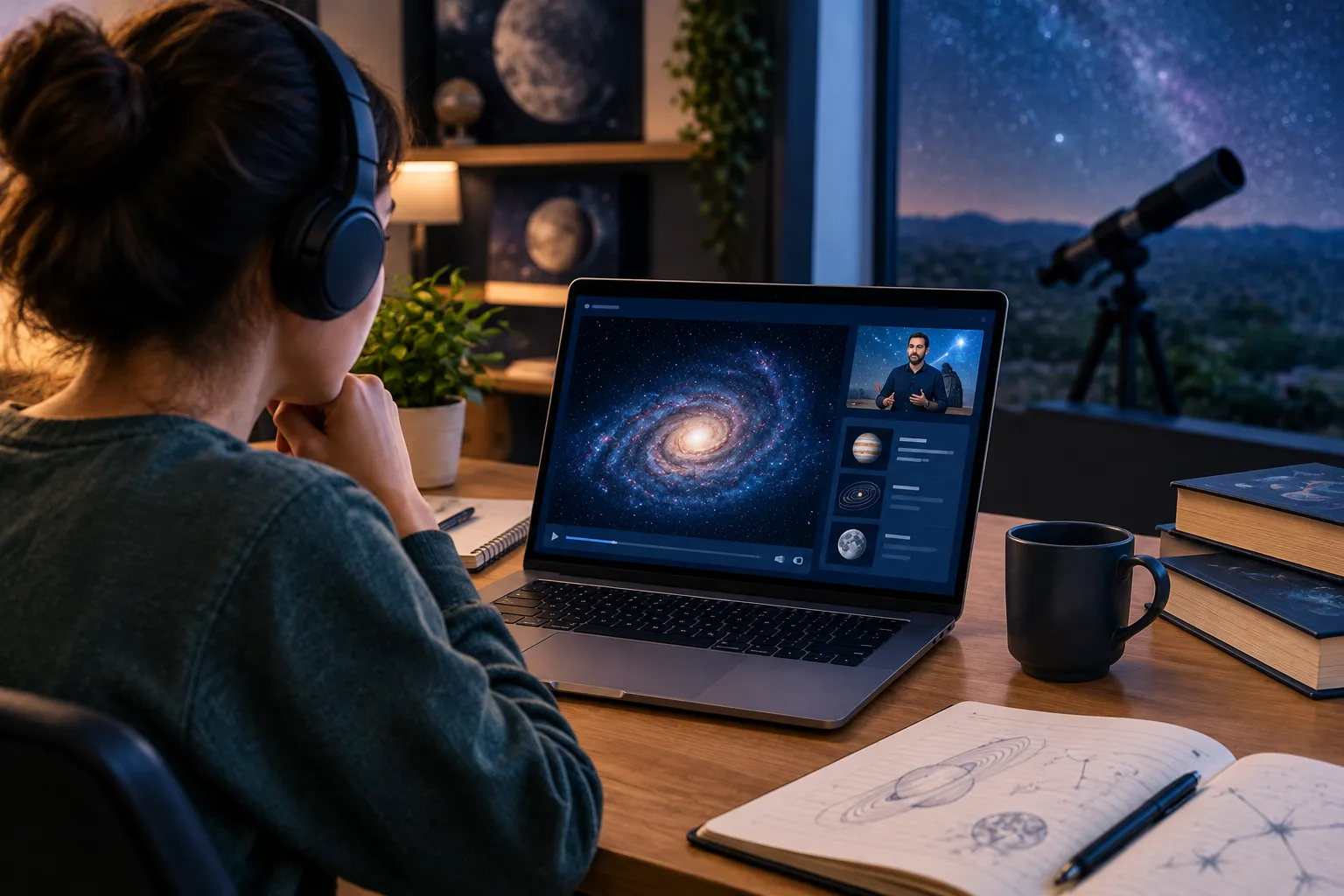
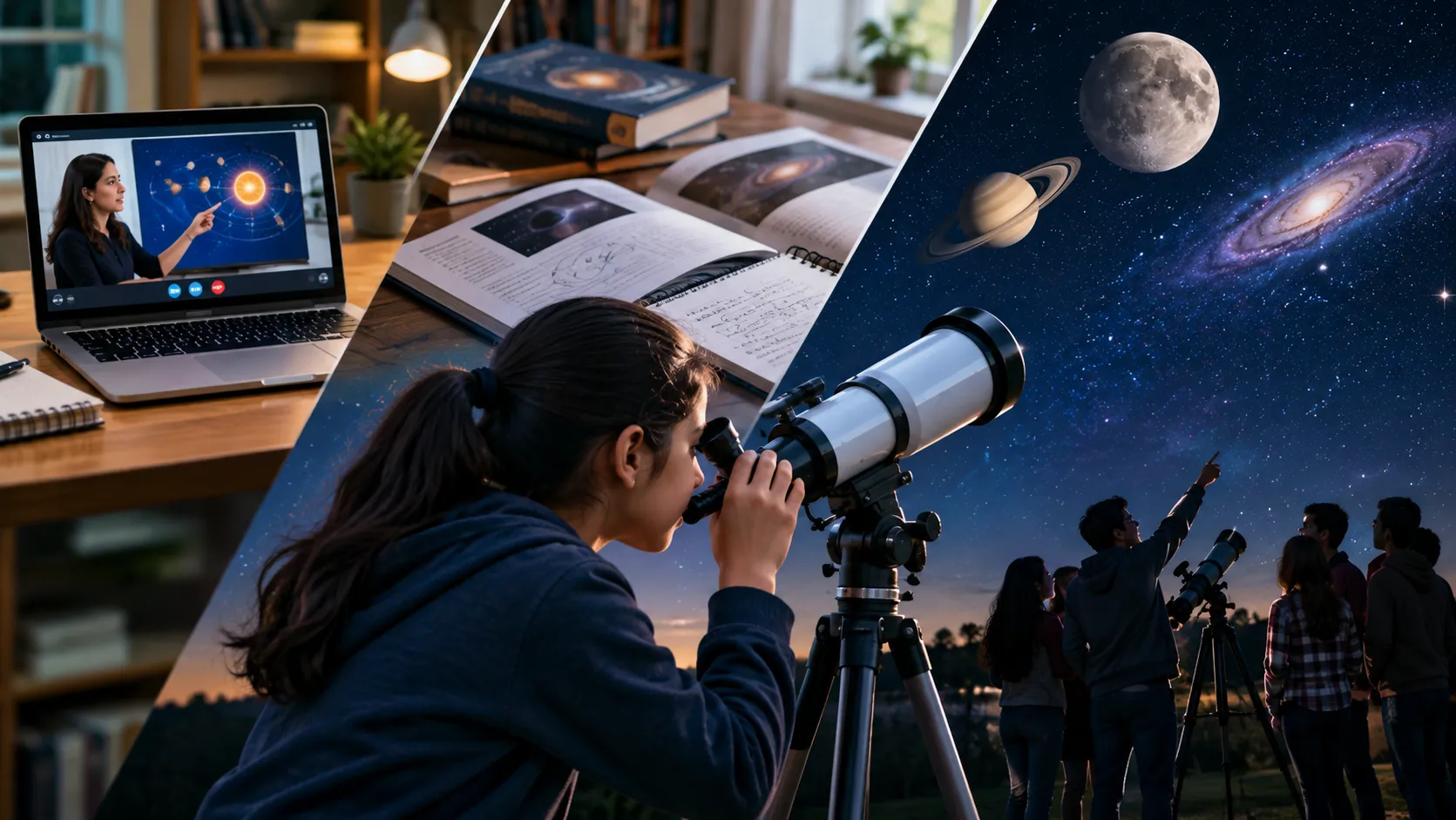
Live, instructor-led classes: suit children who learn through conversation and real-time feedback. They also work well for group sponsorships, since you can track attendance and engagement.
Self-paced courses: offer flexibility for busy families, but they depend on the child’s self-discipline. Many Online Astronomy Courses for Kids now offer both, so check which format you are actually buying.
Red Flags to Avoid
- Generic content copied from international material, with no India context
- Pre-recorded videos with no instructor access
- Hidden or unclear pricing
- No trial or demo class before payment
Two or more of these signs mean you should pause.
A Simple Four-Step Decision Process
- Define your goal: Is it CSR reach, an employee perk, or a school partnership?
- Shortlist two or three providers: Using the criteria table above.
- Book a demo: Reputable providers offer one. WhyCosmos, for instance, lists a free 45-minute live demo class with no payment details required.
- Ask the hard questions: Who are the instructors? What is the batch size? Is the content built for Indian students?
Wind Up
There is no single best option, only the best fit for your audience and objectives. Start with a clear framework, insist on a demo, and check that instructors truly engage children. Done well, Online Astronomy Courses for Kids can turn a passing interest in space into a lasting passion for science, and give your organization a meaningful return. Take the time to compare, because the right choice pays off for years.


















Sign in to leave a comment.