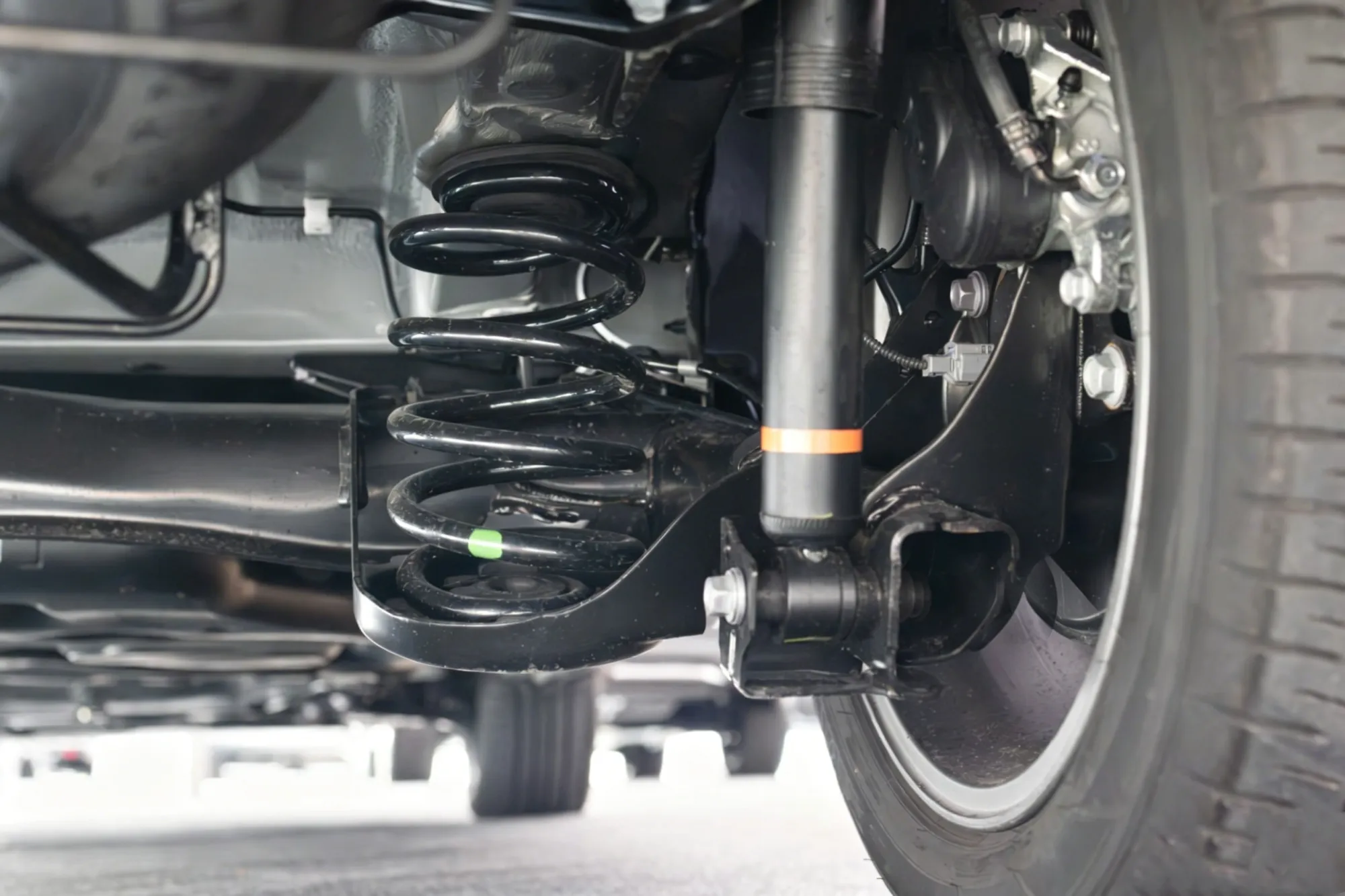

Choosing an automotive suspension parts supplier is more than comparing product prices. For importers, wholesalers, distributors, and aftermarket brands, the right supplier needs to provide accurate fitment information, consistent product quality, a practical product range, and reliable support throughout the purchasing process.
A suspension part may look similar to another part, but small differences in dimensions, mounting points, materials, or vehicle applications can make it unsuitable for a specific vehicle.
This is why automotive parts buyers should evaluate a supplier from several angles before placing a large order.
1. Start With the Product Range
A supplier's product range is one of the first things a buyer should evaluate.
Automotive suspension and steering systems contain many interconnected components. Depending on the vehicle, common replacement parts include:
- Control arms
- Suspension bushings
- Ball joints
- Inner tie rod ends
- Outer tie rod ends
- Stabilizer links
- Shock absorbers
- Strut mounts
For wholesalers and distributors, working with a supplier that covers several related product categories can simplify sourcing.
Instead of finding a separate supplier for every suspension component, buyers can evaluate whether one manufacturer can support a broader product program.
However, a large catalog alone does not guarantee that a supplier is suitable. Product application data and manufacturing consistency are equally important.
2. Check Vehicle Fitment and OE References
Fitment is one of the most important factors when sourcing aftermarket suspension parts.
A product should not be selected only because the vehicle model name appears to be the same.
Different model years, engines, body styles, suspension configurations, and markets can use different components.
For example, a buyer sourcing a control arm may need to confirm:
- Vehicle make and model
- Model year
- Vehicle generation
- Front or rear position
- Left-hand or right-hand side
- OE/OEM reference number
- Mounting configuration
- Important dimensions
The same principle applies to ball joints, stabilizer links, tie rod ends, shock absorbers, and strut mounts.
A supplier should be able to cross-reference OE numbers and provide application information before the order is confirmed.
DPANS Auto Parts, for example, supports OE/OEM reference matching and asks buyers to provide vehicle information or the OE number when confirming fitment. This approach helps reduce the risk of ordering an incorrect application.
3. Evaluate Manufacturing and Quality Control
Price is important in the aftermarket, but inconsistent quality can create larger costs later.
A suspension component needs to maintain its intended dimensions and construction throughout production. For this reason, buyers should ask how a supplier manages quality control.
Important questions include:
Are incoming materials inspected?
Material quality can affect the strength and durability of suspension components.
Are dimensions checked during production?
Dimensional accuracy is particularly important for parts such as control arms, ball joints, tie rod ends, and stabilizer links.
Is there a final inspection before shipment?
A final inspection can help identify problems with dimensions, appearance, assembly, or packaging before the products leave the factory.
DPANS states that its production process includes incoming material inspection, in-process inspection, and final pre-shipment inspection covering areas such as dimensions, torque, and finish.
For buyers placing repeat orders, consistency between batches is especially important.
4. Look Beyond Individual Products
An experienced automotive parts buyer usually evaluates a supplier as a potential long-term sourcing partner rather than simply asking for the lowest unit price.
Consider the complete purchasing process:
Product selection → Fitment confirmation → Sample → Quotation → Production → Inspection → Packaging → Shipment
Problems at any stage can affect the final cost.
For example, an inexpensive part may become expensive if the wrong application is shipped, if the supplier cannot provide replacement units, or if packaging is inadequate for international transportation.
A supplier that can support multiple stages of the process may reduce communication problems between different companies.
5. Ask About Samples Before a Large Order
Samples are particularly useful when introducing a new supplier.
Before committing to a larger quantity, buyers can use samples to evaluate:
- Product dimensions
- Appearance
- Construction
- Packaging
- Installation compatibility
- Markings and labels
- Overall consistency with the agreed specification
Sample evaluation is also useful when developing private-label products.
DPANS states that samples of standard products can generally be prepared for buyer evaluation, while custom products may require additional production time.
For distributors, testing samples before a bulk purchase can provide useful information without immediately committing to a large inventory.
6. Consider MOQ and Mixed-SKU Requirements
Minimum order quantity is another important issue for aftermarket buyers.
A supplier may offer competitive pricing but require quantities that do not match the buyer's market demand.
Before ordering, ask:
- What is the MOQ for standard products?
- What is the MOQ for customized products?
- Can multiple SKUs be combined?
- Are mixed orders available?
- What happens if a product is out of stock?
- Can the supplier support repeat replenishment?
MOQ requirements can vary depending on whether the item is a standard catalog product or a customized product.
For distributors building a new product line, flexible sourcing can be particularly useful because demand for individual vehicle applications may vary significantly.
7. Check Private-Label and Packaging Support
Many aftermarket distributors and brands do not sell products under the manufacturer's name.
They may need:
- Custom boxes
- Product labels
- Barcodes
- Brand markings
- Customized packaging
- Product catalogs
- Private-label programs
A supplier with OEM/ODM experience may be able to support these requirements more efficiently.
For example, DPANS works with international buyers on OEM and ODM projects and can evaluate technical drawings, dimensional specifications, or sample parts for customized projects.
This can be useful for businesses that want to develop their own aftermarket brand instead of simply reselling generic products.
8. Evaluate Communication and Export Support
International sourcing does not end when the factory confirms the order.
Buyers may need assistance with:
- Quotations
- Product selection
- OE cross-reference
- Sample arrangements
- Packaging confirmation
- Production updates
- Inspection
- Shipping documentation
- Export logistics
Clear communication is particularly important when a buyer is sourcing hundreds of SKUs.
DPANS operates its manufacturing and international sales functions separately: DPANS Auto Parts handles manufacturing, while Welcom Tech supports quotations, international communication, and export logistics.
For overseas buyers, having a dedicated export contact can make the purchasing process easier to manage.
9. Build a Supplier Around Your Target Market
Not every supplier is suitable for every automotive market.
A distributor in Latin America may have different vehicle applications from a wholesaler in Europe or Southeast Asia.
Before selecting a supplier, identify the vehicles that are most important in your market.
Then compare the supplier's catalog against your actual requirements.
A useful sourcing list may include:
| Information | Example |
|---|---|
| Vehicle | Toyota Corolla |
| Model year | 2018 |
| Component | Control arm |
| Position | Front left |
| OE number | Required |
| Quantity | 200 pcs |
| Packaging | Private label |
| Target market | Aftermarket |
| Required documents | Product / shipping documents |
This makes supplier communication much more precise.
10. Why Fitment Data Matters for Aftermarket Buyers
The aftermarket depends heavily on accurate product identification.
A buyer may search for a simple term such as "Toyota suspension parts," but a manufacturer needs much more information to identify the correct product.
For example, different Toyota Corolla generations can use different suspension components and OE reference numbers.
DPANS has published application-focused guides for vehicles such as the Honda Civic and Toyota Corolla to explain how buyers can verify model year, OE references, position, and component type before purchasing.
This type of application data can be useful for both professional buyers and sales teams because it connects a product with a specific vehicle application rather than treating every part as interchangeable.
Choosing an Automotive Suspension Parts Supplier: A Practical Checklist
Before placing an order, buyers can use this checklist:
Product
- Does the supplier manufacture the required product categories?
- Does the catalog cover your target vehicles?
- Are OE numbers available?
Fitment
- Can the supplier verify vehicle applications?
- Can they distinguish left and right applications?
- Can they provide dimensions or technical specifications?
Quality
- Are materials inspected?
- Are production inspections performed?
- Is there a final inspection?
Commercial
- What is the MOQ?
- Are samples available?
- Can mixed SKUs be ordered?
- What are the payment and shipping terms?
Customization
- Is private labeling available?
- Can packaging be customized?
- Can the supplier work from drawings or samples?
Export
- Does the supplier have experience with international orders?
- Can it support shipping and export documentation?
- Is there a dedicated international sales contact?
Final Thoughts
Selecting an automotive suspension parts supplier should be based on more than unit price.
For importers, wholesalers, distributors, and aftermarket brands, the supplier's product range, fitment accuracy, quality control, MOQ, customization capabilities, and export support all affect the total sourcing experience.
A reliable sourcing process starts with accurate product identification. Buyers should provide the OE number, vehicle application, required position, quantity, and packaging requirements whenever possible.
DPANS Auto Parts focuses on automotive chassis, suspension, and steering components, including control arms, ball joints, tie rod ends, stabilizer links, bushings, shock absorbers, and strut mounts. The company works with international buyers on product sourcing, OE reference matching, samples, and OEM/ODM requirements.
For businesses building or expanding an aftermarket suspension parts program, evaluating these factors before the first bulk order can help create a more structured and sustainable supply chain.
























Sign in to leave a comment.