

Walk into any biochar equipment exhibition and you will see the same scene. A buyer points at a shiny reactor and asks for the price. The vendor smiles and gives a number. What neither of them talks about is the question that really matters: will this machine work with the material you have?
That question is not small. It is the most common reason biochar projects struggle. The feedstock you put into a pyrolysis system shapes almost everything about the equipment you need, from reactor design to drying needs to the support machinery around the core unit. Get that match wrong, and you end up with a plant that runs at half capacity, produces uneven char, or breaks down under loads it was never built for. Get it right, and the same investment runs smoothly for years.
This guide looks at the main feedstock types, what each one asks of your equipment, and why no single machine fits every situation.
Why Feedstock Comes First
Biochar can be made from almost anything organic. That is the good news. The tricky part is that “almost anything” covers a huge range of properties. Rice husk is abrasive and high in silica. Coconut shell is dense and tough. Palm fiber is light and dusty. Manure arrives wet and sticky. Wood chips are easier but still vary in size and moisture.
Each material behaves differently inside a reactor. Dry, uniform, small-particle biomass works well in fixed-bed, fluidized-bed, or gasification reactors. Large or mixed pieces often need batch kilns or box kilns. Rotary kilns and fluidized beds handle continuous feeding at large scale, but they need fairly consistent feedstock. High-moisture materials call for a different approach altogether.
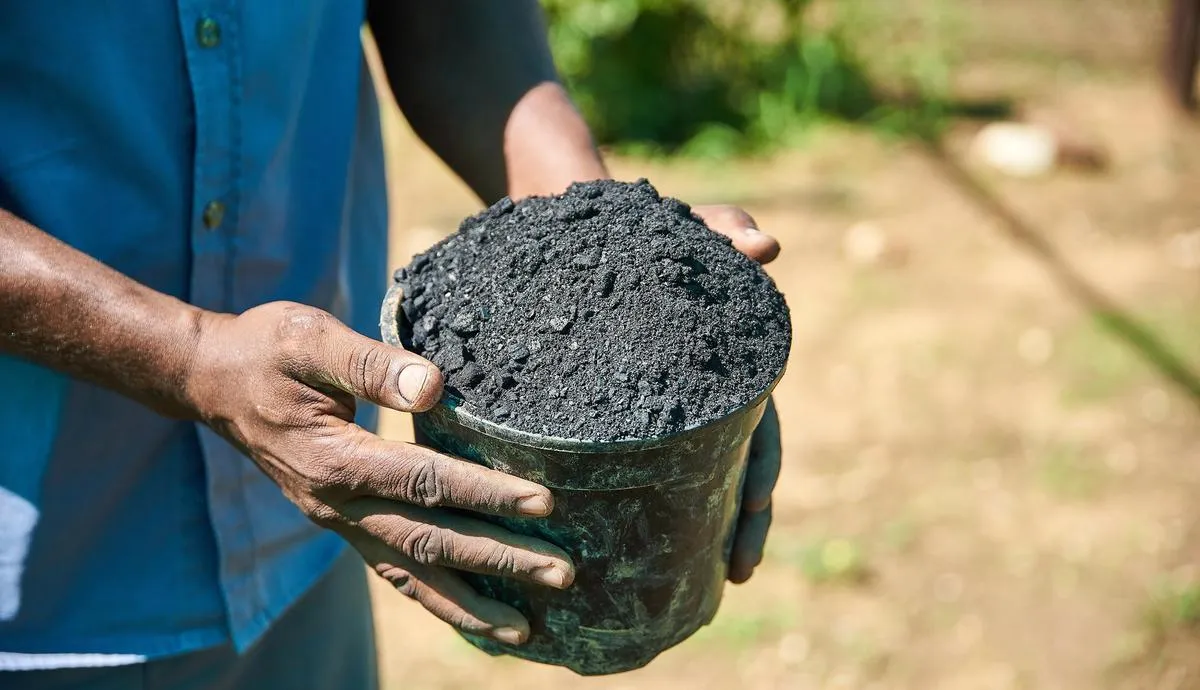
For a clear overview of how organic waste becomes biochar, see this guide on biochar processing from organic waste. It explains how controlled pyrolysis turns agricultural residues, forest by-products, and food waste into a stable, carbon-rich product. The word “controlled” matters. Control starts with knowing your feedstock.
Rice Husk: Abrasive and Silica-Rich
Rice husk is one of the most available agricultural residues in the world, and also one of the trickiest. Its high silica content makes it abrasive, so equipment wears over time. It is light and has low bulk density, which affects feeding and residence time.
A continuous carbonization furnace usually works best for rice husk. It handles the steady flow from rice mills and avoids the repeated heating and cooling of batch operation. Moisture should stay below about 15 percent, and particle size below 10 millimetres. Rice husk often arrives at the right size already, so crushing may not be needed, but drying usually is.
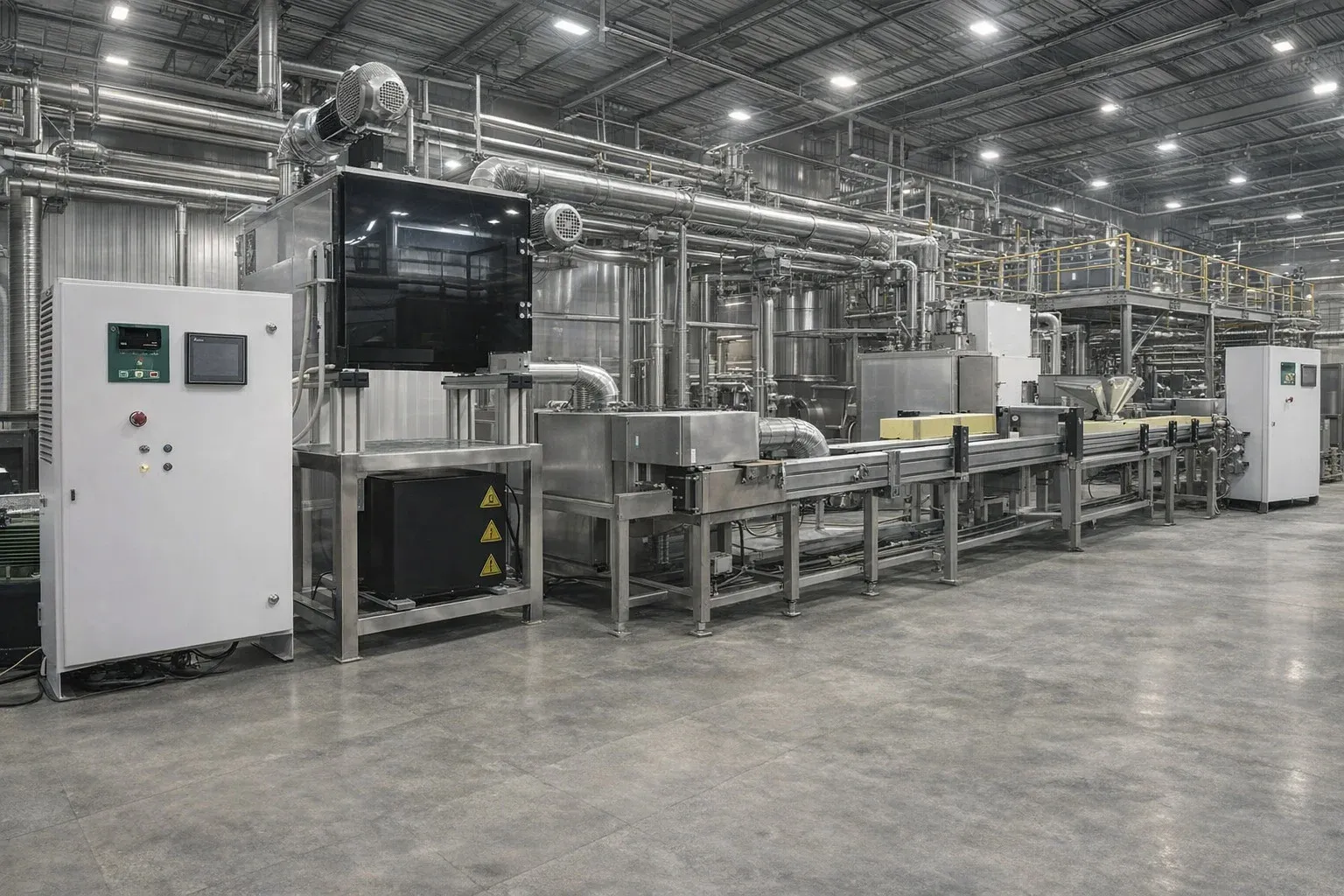
A complete rice husk line typically includes a dryer, a continuous carbonization furnace, a cooling discharge system, and gas purification equipment. The syngas produced can be recycled to heat the reactor, cutting external energy demand. A well-designed biomass biochar plant is built to handle this kind of agricultural residue and turn it into consistent biochar.

Coconut Shell: Dense and Rewarding
Coconut shell is very different. It is hard, dense, and slow to break down under heat. That density is actually good for biochar quality. Coconut shell biochar tends to have high carbon content and strong structure. But the same density means the reactor needs more time and energy to push heat through the material.
Continuous carbonization furnaces work well for coconut shell if residence time is long enough. The material should be crushed to under about 20 millimetres and dried to below 15 percent moisture. Because it is denser than rice husk, the feeding system must handle more weight per unit volume, and the discharge system must cope with biochar that cools slowly.
Palm Fiber: Light, Fluffy, and Airborne
Palm fiber surprises many people. It looks manageable in a pile, but once it enters a feeding system it behaves like a mix of cotton and dust. It is light, fluffy, and easily airborne. That makes material handling the main engineering challenge, not the carbonization reaction itself.
The equipment solution leans toward continuous systems with closed, negative-pressure designs. A closed, low-temperature, oxygen-free process keeps conditions stable and prevents dust from escaping. Palm fiber usually needs crushing and drying before it enters the reactor if moisture is above 15 percent or particle size is above 20 millimetres.
For large-scale palm fiber processing, a continuous biomass pyrolysis plant is often the standard choice. It handles low bulk density, keeps residence time consistent, and allows syngas to be recovered and reused for heating.
Wood Chips and Sawdust: The Reliable Workhorse
If you are new to biochar, wood-based feedstock is the easiest place to start. Wood chips and sawdust are fairly uniform, have moderate moisture, and behave predictably in most reactor types. They work well in fixed-bed reactors for smaller operations and in rotary kilns or auger systems for larger continuous production.
The main variable is particle size. Sawdust and fine chips feed smoothly. Larger chips may need screening or crushing for even heat transfer. Moisture should be managed below 20 percent for most systems, though some reactors tolerate more with reduced efficiency.
Wood-based biochar usually has high surface area and porosity, which makes it good for adsorption and soil improvement. If your market values those properties, wood feedstock is a strong choice.
Manure and Sludge: Wet, Nutrient-Rich, and Tricky
Manure and sewage sludge are attractive because they are abundant and full of nutrients. But they arrive wet, sometimes very wet, and that moisture changes everything about the equipment you need.
Conventional pyrolysis wants feedstock moisture below about 15 to 20 percent. For manure, that usually means a drying stage is unavoidable. A typical manure biochar line includes a dryer, a crusher if needed, and a continuous carbonization unit. The dryer plays a big role in getting moisture down before the reactor.
There is another option for very wet streams. Hydrothermal carbonization processes biomass in subcritical water at 200°C to 300°C and skips the energy-heavy drying step. If your manure or sludge is consistently above 70 percent moisture, this route may be more energy-efficient.
Manure-based biochar has more nutrients and ash than wood biochar, but less structural stability. The reactor needs careful control to manage ash and contaminant load. The reward is a biochar that works well as a soil amendment, carrying both carbon and nutrients back to the field.

Continuous or Batch? It Depends on Supply
One of the biggest equipment decisions is batch versus continuous. Feedstock availability and consistency strongly influence the answer.
Batch kilns and fixed-bed units make sense when feedstock arrives intermittently or in small amounts. They cost less upfront, are simpler to run, and can handle changing inputs. A small farm processing seasonal residues might find a batch system perfectly adequate.
Continuous reactors are better when feedstock comes in large, steady quantities. They offer higher throughput and better thermal performance, but they need fairly homogeneous material for automated handling. A rice mill running year-round, a palm oil plant, or a municipal waste facility fits the continuous model.
The mistake to avoid is buying a continuous system for an intermittent supply. The reactor sits idle, capital is tied up, and cost per tonne climbs. If you expect steady throughput, a continuous biomass carbonization plant is usually the right fit.
The Equipment Beyond the Reactor
The reactor gets the attention, but it is rarely the only machine you need. A complete line usually includes several support systems, and missing them is a common cause of budget overruns.
Upstream, you often need a crusher or shredder to get the right particle size, and a dryer to bring moisture down. Between the dryer and reactor, a metered feeding system keeps flow steady. Downstream, you need a cooling conveyor or water-cooled discharger, and often screening or packaging. Gas handling equipment such as cyclones, condensers, and scrubbers captures syngas for reuse and separates wood vinegar and tar as byproducts.
For rice husk, that might mean a dryer, continuous furnace, cooling discharge, and gas purification. For manure, the dryer becomes larger and more energy-intensive. For palm fiber, the feeding system needs special care to stop dust escape.
A Simple Way to Think About Matching
Strip away the technical detail and the logic comes down to three questions. How wet is the material? Anything above 20 percent moisture needs drying before conventional pyrolysis, or points toward hydrothermal carbonization. How uniform and how large are the particles? Fine, consistent material feeds smoothly into continuous systems. Large or variable material may need crushing, screening, or a batch reactor. What do you want the biochar to do? High surface area for adsorption favours wood. Nutrient-rich soil amendment favours manure. Structural carbon for industrial use favours coconut shell or rice husk.
Answer those three questions honestly, and the equipment category narrows quickly. The remaining decision is scale, which depends on how much feedstock you can reliably supply and how much capital you want to commit.
Conclusion
Choosing biochar equipment is not about finding the most advanced reactor. It is about finding the reactor that matches your feedstock, your scale, and your product goals. A machine that is perfect for palm fiber will struggle with coconut shell. A system built for manure will be oversized and overcomplicated for sawdust.
Start with a clear picture of what you will feed the machine, how much you can supply, and what you want the output to do. Then look at equipment. The right match pays for itself through consistent operation, lower maintenance, and biochar that meets the specifications your customers need. If a supplier asks about your feedstock before quoting a price, that is a good sign. It means they understand the process, not just the machine.























Sign in to leave a comment.