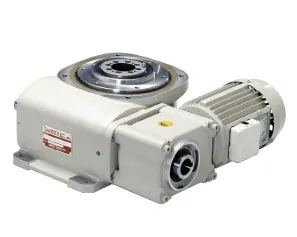

Modern manufacturing depends on machinery that can move quickly without compromising accuracy. In automated production lines, rotary indexing systems play an important role by moving components from one station to another in a controlled and repeatable sequence. For manufacturers searching for a Cam Indexer Supplier in Tamil Nadu, choosing the right supplier is about much more than finding a product at a good price.
The indexer needs to match the machine's speed, load, positioning requirements, cycle time, and operating environment. A good supplier should also understand the application and provide suitable technical guidance.
What Is a Cam Indexer?
A cam indexer is a mechanical motion device that converts continuous rotary input into intermittent rotary movement. The mechanism uses a specially designed cam profile to control acceleration, deceleration, indexing, and dwell.
In a typical automated machine, the output shaft or rotary table moves to a specific position, stops for a particular operation, and then moves to the next position. This sequence can be repeated continuously during production.
Because the movement is mechanically defined, cam indexing can be useful for machines that require consistent and repetitive positioning.
Why Are Cam Indexers Useful in Automation?
Imagine an assembly machine with several stations. A part may need to be loaded, assembled, inspected, tested, and unloaded at different positions.
Moving the part manually between each station would increase handling time and make consistent positioning more difficult. A rotary indexing system can automate this movement and coordinate the part with the individual machine operations.
Cam indexers can provide benefits such as:
- Consistent indexing movement
- Repeatable positioning
- Controlled acceleration and deceleration
- Reliable operation for repetitive cycles
- Compact integration into automated machinery
The actual performance depends on correct product selection and machine design.
What Should You Look for in a Cam Indexer Supplier?
Not every supplier offers the same level of technical support or application knowledge. When comparing a Cam Indexer Supplier in Tamil Nadu, manufacturers should look at the complete service rather than focusing only on product cost.
Product Selection
The supplier should have access to suitable indexing configurations for different loads, speeds, indexing angles, and machine layouts.
Technical Understanding
A supplier should be able to understand your application and recommend an indexer based on actual operating conditions.
Application Support
Proper sizing is important. The supplier should consider load, inertia, cycle time, dwell requirements, and positioning accuracy before making a recommendation.
Installation Guidance
Correct installation can influence the performance and service life of an indexing unit. Ask whether technical guidance is available during machine integration.
After-Sales Support
Long-term support matters in industrial automation. Spare parts availability, troubleshooting assistance, maintenance guidance, and response time can become important after installation.
Where Are Cam Indexers Commonly Used?
Cam indexing systems can be found in many automated manufacturing applications.
Packaging Machines
Packaging equipment often requires products or containers to move through filling, sealing, labeling, capping, and inspection stations. Consistent indexing can help synchronize these operations.
Assembly Lines
Automated assembly systems may use rotary tables to move components between different operations. Each station can perform a specific task before the next indexing cycle begins.
Inspection Systems
Inspection machines require repeatable positioning so that cameras, sensors, and measuring equipment can examine products from consistent locations.
Filling and Processing Machines
Rotary indexing can also be used in filling, sorting, dispensing, and processing applications where products need to stop accurately at predetermined positions.
Why Machine Requirements Matter More Than Maximum Speed
One common mistake when selecting an indexer is focusing only on the advertised maximum speed.
An indexer may have a high speed rating, but that does not automatically mean it will perform well in every application. Load inertia, tooling weight, index angle, acceleration, dwell time, and cycle frequency all influence actual performance.
For example, a lightweight inspection fixture and a heavy machining fixture have very different motion requirements.
This is why an experienced supplier should evaluate the complete application before recommending a model.
How Does a Cam Indexing Cycle Work?
The process can be understood through four basic stages.
First, the input drive rotates continuously. The cam mechanism then guides the output through the required indexing movement. As the output approaches the target position, the mechanism controls the deceleration.
Once the required position is reached, the output enters a dwell period. During this time, the component remains stationary while the machine completes its operation.
The process then repeats for the next station.
This predictable motion pattern is one of the key reasons cam indexing is used in repetitive automated machinery.
When Is a Cam Indexer a Better Fit?
A cam indexer can be particularly suitable when the machine performs a fixed sequence repeatedly.
For example, if a production system always moves a component through six stations in the same order, a mechanical indexing solution may provide the consistency needed for the application.
It may also be worth considering when the manufacturer values a simple, mechanically defined motion profile and high-cycle operation.
However, applications requiring frequently changing motion profiles or extensive electronic programmability may call for a servo-based solution instead.
What About Servo-Based Indexing?
Servo technology offers electronic control over motor movement and can provide greater flexibility for applications where speed, position, or motion profiles need to be adjusted.
This makes servo indexing useful for machines where production requirements may change or where programmable motion is important.
The choice between mechanical cam indexing and servo-based indexing should therefore be made according to the actual application rather than assuming that one technology is always better.
What Information Should You Give Your Supplier?
You can make the selection process much easier by providing the supplier with accurate machine information.
Before requesting a quotation, prepare details such as:
Number of Stations
Tell the supplier how many positions are required on the indexing table.
Indexing Angle
Specify how far the table or output needs to rotate during each cycle.
Load
Include the weight of the workpiece, fixture, tooling, and other moving components.
Cycle Time
Explain how many indexing cycles the machine must complete within a given period.
Dwell Requirement
Mention how long the component needs to remain stationary at each station.
Accuracy
Define the positioning accuracy and repeatability required by the application.
Installation Conditions
Provide information about available space, mounting orientation, temperature, dust, vibration, and other operating conditions.
The more accurate the information, the easier it becomes to identify an appropriate indexing solution.
Regional Support Can Also Be Important
Choosing a supplier located in or serving Tamil Nadu can make communication and service coordination more convenient for local manufacturers.
Tamil Nadu has a strong manufacturing ecosystem covering automotive, engineering, packaging, electronics, textiles, and other industrial sectors. Businesses operating these types of machinery may require reliable access to motion-control components and technical support.
However, location should not be the only selection factor. Product suitability, technical capability, service quality, delivery reliability, and commercial terms should all be considered.
Should You Consider a Servo Cam Indexer Supplier in Karnataka?
Manufacturers operating across southern India may also compare regional suppliers when their machinery requires more specialized rotary motion solutions. A Servo Cam Indexer Supplier in Karnataka can be relevant for companies looking for servo-assisted or electronically controlled indexing applications.
The same selection principles apply: understand the load, cycle time, required accuracy, indexing pattern, and machine integration requirements before choosing a supplier or system.
How Can the Right Supplier Improve Your Project?
The right supplier can contribute more than equipment procurement. Technical guidance at the beginning of a project can help prevent incorrect sizing and integration problems.
For example, choosing an indexer without considering load inertia could create performance issues once the machine is running. Similarly, selecting a system based only on speed may not provide the required dwell or positioning performance.
A supplier with good application knowledge can help identify these factors early.
Why Consider Deceler for Indexing Requirements?
For manufacturers researching indexing solutions, Deceler can be considered as a brand when evaluating options for industrial motion and automation requirements.
The most important step is to discuss your actual machine requirements with the technical team and determine whether the proposed indexing solution fits the application.
Rather than selecting a model solely from a catalogue, provide details about the machine, load, speed, indexing angle, and operating cycle.
Frequently Asked Questions
What does a cam indexer do?
A cam indexer converts continuous rotary input into controlled intermittent output movement, allowing components or rotary tables to move between predefined positions.
How do I choose a cam indexer?
Start with the application's load, inertia, indexing angle, cycle time, dwell time, accuracy, and operating environment. These factors help determine the appropriate indexer.
Are cam indexers suitable for high-cycle machines?
They can be suitable for repetitive, high-cycle applications when the indexer is correctly sized and matched to the machine requirements.
What is the difference between a cam and servo indexer?
A cam indexer uses a mechanical cam to create a predetermined motion profile, while a servo-based system uses electronic motor control and can provide greater flexibility in motion programming.
Does supplier support matter after installation?
Yes. Technical assistance, spare parts, maintenance guidance, and troubleshooting support can be valuable for maintaining machine uptime over the long term.
Final Thoughts
Selecting a Cam Indexer Supplier in Tamil Nadu should involve more than comparing prices. The right supplier should understand your machine requirements and help you select an indexing solution that fits the required load, speed, accuracy, cycle time, and motion pattern.
Cam indexers can be an effective choice for automated machines that require reliable and repetitive rotary movement. At the same time, servo-based solutions may be more appropriate when programmable motion and flexibility are priorities.
Brands such as Deceler can be evaluated as part of the supplier-selection process, but the final decision should always be based on application requirements, technical suitability, service support, and long-term reliability.
A carefully selected indexing system can become an important part of an efficient automated production line, helping manufacturers maintain consistent positioning and smoother machine operation.



























Sign in to leave a comment.