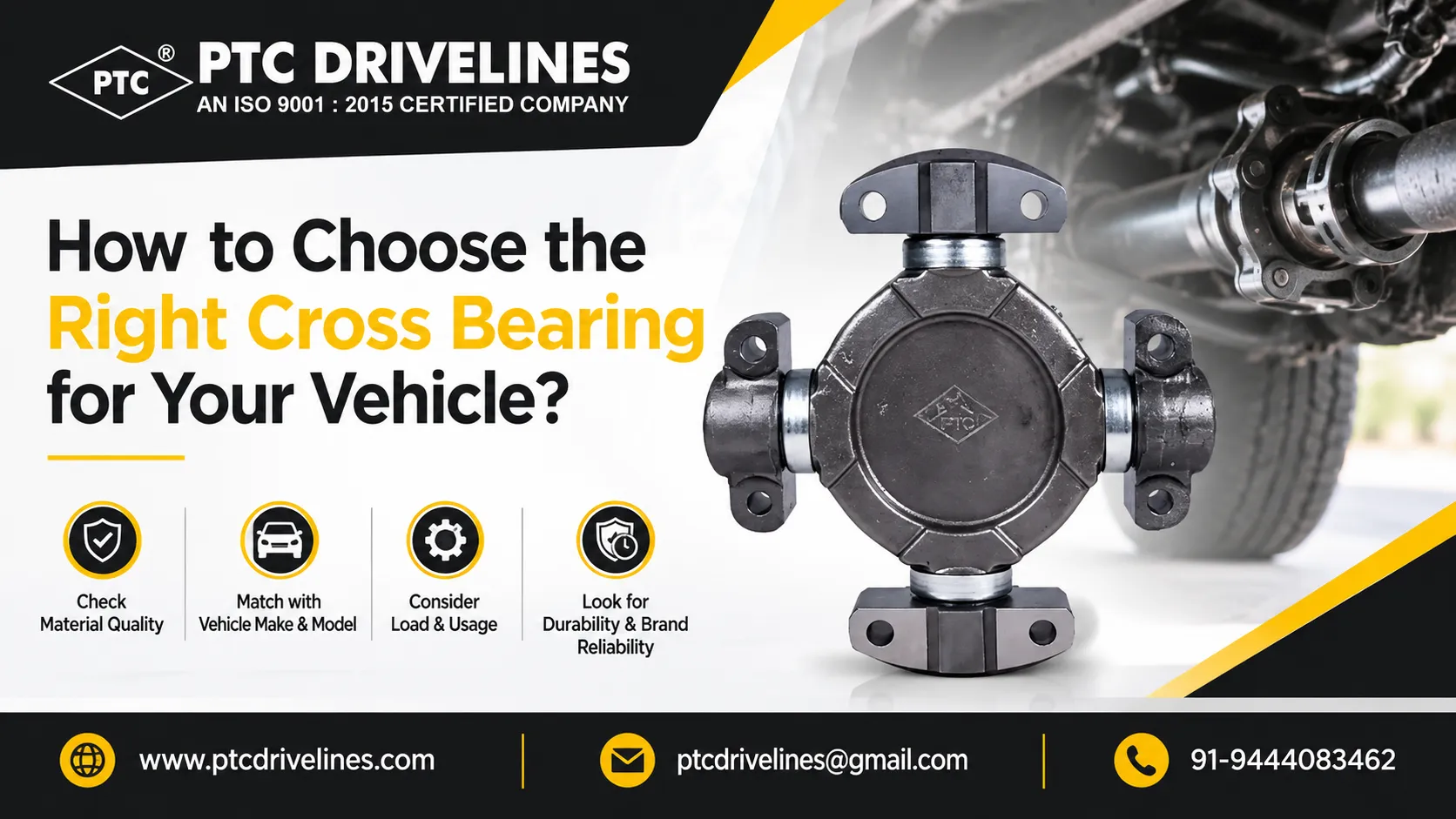

Choosing the right Cross Bearing isn't just a matter of finding a part that looks similar to the one being replaced. For wholesalers and procurement teams, the real job is confirming fitment, specifications, quantity, and supply conditions before a purchase order is released.
A Cross Bearing works within a driveline assembly, so even a small specification mismatch can create fitment problems later. Buyers should compare available dimensions, application details, reference information, and the condition of related driveline components before approving supply.
Why Specification Verification Should Come Before Price Comparison
Most buyers naturally start with price. That's understandable, but technical verification should come first.
The enquiry should include the vehicle or equipment application, available part reference, dimensions, required quantity, and any drawing or sample available for comparison. If the specification remains unclear, sampling approval should happen before the main production batch is planned.
One mistake buyers make is assuming visually similar components are interchangeable. Two parts may look almost identical while differing in dimensions or fitment.
When evaluating a Cross Bearing Manufacturer, ask how specifications are confirmed before an order enters production planning. A supplier should be able to explain what information is required from the buyer rather than simply accepting an incomplete PO.
What a Proper Cross Bearing Selection Process Should Check
A Cross Bearing should be selected around the actual application rather than appearance alone. Procurement teams should verify the available technical information before approval and ensure the same reference is carried through the quotation, sample, purchase order, packing list, and dispatch documentation.
That's where purchase-order accuracy becomes important. If the quotation mentions one specification and the PO mentions another, the problem should be resolved before production or dispatch begins.
QC inspection also needs context. A dimensional check may confirm that a part matches an agreed specification, but it cannot compensate for incorrect application information supplied during the enquiry stage.
How to Evaluate the Supplier Behind the Part
Supplier evaluation should cover communication, documentation, specification control, complaint handling, and dispatch discipline.
When dealing with a Cross Bearing Manufacturer in India, ask how the supplier handles specification clarification, sample approval, order changes, and discrepancies reported after receipt.
Certificate validity should also be checked rather than assumed. PTC Drivelines is presented as ISO-certified, but procurement teams should still follow their own vendor-approval procedure and confirm whatever documentation their internal QC system requires.
Nobody tells you that a supplier's response to a complaint can matter as much as the original quotation. A supplier who can't explain how mismatches or shortages are handled may create problems once material has already reached your warehouse.
Why Correct Selection Helps Reduce Procurement Problems
The main benefit of careful selection is straightforward: fewer avoidable mismatches between what was ordered and what is actually required.
Correct specification verification can reduce unnecessary returns, repeated sampling, installation delays, and disputes over whether the supplied material matches the approved requirement.
Even experienced buyers should avoid approving a production batch only because the sample looks correct externally. Critical dimensions and agreed reference details still need to match the approved requirement.
Why MOQ, Lead Time and Packaging Need Early Discussion
Availability isn't only about whether a part can be supplied. Buyers should confirm MOQ, expected lead time, sampling requirements, packaging method, and dispatch planning before finalising the commercial order.
Professional Cross Bearing suppliers should clarify these conditions before the buyer assumes a particular delivery schedule.
Most buyers underestimate how often shipment delays start during the enquiry stage. If specifications, quantities, or sampling approvals remain open, production planning can move later even though everyone expects the original dispatch date to remain unchanged.
Packaging deserves the same attention. Problems rarely appear while goods are sitting safely inside the supplier's premises; transit damage usually appears after stacking, handling, loading, and freight movement.
What Export Buyers Should Confirm Before Shipment
For bulk or overseas requirements, freight planning should begin before the shipment is ready.
Buyers working with Cross Bearing Exporters should confirm order quantity, packing expectations, shipment documents, destination details, and dispatch schedule before freight booking.
If comparing Cross Bearing Exporters in India, don't look only at unit price. An apparently cheaper quotation can become expensive if sampling delays, incorrect documentation, poor packaging, or specification confusion cause rework or shipment postponement.
What Buyers Should Send Before Requesting a Quote
A useful RFQ should contain more than "send price."
Send the application details, available dimensions, existing part reference, required quantity, delivery location, and expected schedule. If a drawing or sample is available, mention it clearly.
Before dispatch, match the approved specification against the purchase order, packing quantity, and shipment documents. This final check is simple, but it can catch errors before freight and complaint handling become necessary.
Conclusion
Selecting the right Cross Bearing requires technical verification, not guesswork. Buyers should confirm the application, dimensions, reference information, sampling requirement, MOQ, lead time, packaging, and purchase-order details before approving bulk supply.
PTC Drivelines serves B2B buyers as an ISO-certified company. Procurement teams should still carry out their own supplier evaluation and specification approval before placing an order.
Frequently Asked Questions
1. How do I know which Cross Bearing is suitable for my vehicle?
Start with the Cross Bearing application, available dimensions, existing reference details, and any drawing or sample. Don't approve a part only because its appearance looks similar.
2. Should I always ask for a sample before placing a bulk order?
Not always. Sampling can reduce risk for a new or uncertain specification, but it may add approval time and extend the lead time. Repeat approved requirements may not need the same process.
3. What should I check in a supplier quotation?
Check the quoted specification, quantity, MOQ, lead time, packing terms, commercial conditions, and any reference mentioned against your enquiry before issuing the PO.
4. Can the lowest-priced option be the best buying choice?
It can be, but price alone doesn't confirm fitment or supply reliability. A lower price loses its advantage if incorrect specifications, delayed shipment, or packaging issues create additional cost.
5. What should be confirmed before final dispatch?
Verify the approved specification, ordered quantity, packaging, delivery schedule, freight details, and required shipment documentation before material leaves the supplier.

























Sign in to leave a comment.