How to Choose the Right ESD Tester for Reliable Electrostatic Discharge Protection

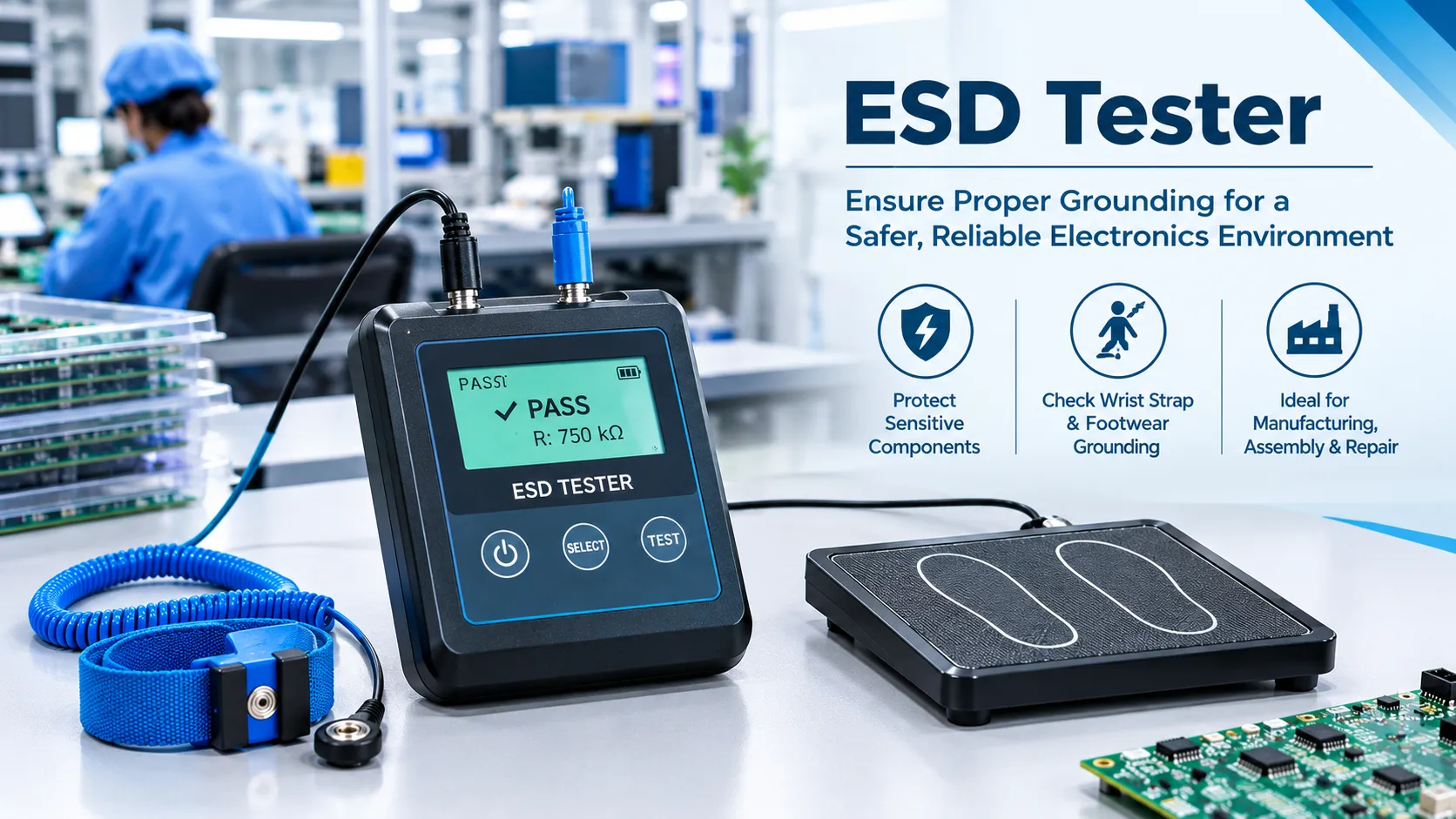
Electrostatic discharge (ESD) is a common but often overlooked risk in electronics manufacturing. A small static discharge can damage sensitive electronic components, weaken their performance, or create failures that only become apparent after a product has reached the customer. For electronics manufacturers, PCB assembly companies, and repair facilities, controlling static electricity is therefore an important part of quality management.
An ESD Tester helps verify whether specific parts of an electrostatic discharge control system are working as intended. Depending on the model, it can check operator grounding through wrist straps or footwear, helping production teams identify problems before handling sensitive components.
However, buying a tester is only one part of the process. The instrument must match the workplace requirements, operators must use it correctly, and testing must be incorporated into a consistent ESD control routine.
What Is an ESD Tester and Why Is It Important?
An ESD Tester is a testing device used to check selected electrostatic discharge protection measures. Common examples include wrist strap testers, footwear testers, and combination testers that check both wrist straps and footwear.
These devices help confirm that an operator's grounding equipment meets the test limits configured for the application. This matters because a wrist strap that looks undamaged may have a broken conductor, a loose connection, or another fault that prevents effective grounding.
Regular testing can help businesses:
- Identify grounding problems before operators begin ESD-sensitive work.
- Reduce the risk of electrostatic damage to sensitive electronic components.
- Support workplace ESD procedures and quality assurance activities.
- Improve operator awareness and consistency.
- Maintain records when the selected tester and workplace procedure support documentation.
An important distinction: an ESD Tester does not automatically make an entire workstation ESD-safe. Effective protection also depends on suitable grounding, work surfaces, handling procedures, packaging, and other controls defined by the facility's ESD control programme.
How Does an ESD Tester Work?
The testing process depends on the instrument type. A wrist strap tester checks the electrical path between the operator and the grounding system through the wrist strap. A footwear tester checks the electrical resistance of ESD footwear or other supported grounding equipment. A combination tester can assess wrist straps and footwear using the procedures specified by its manufacturer.
In a typical operator check, the user connects or wears the required grounding equipment, follows the tester's instructions, and activates the test. The device then indicates whether the measured result falls within its configured acceptance range.
A pass result should not be treated as proof that every aspect of the ESD protection system is functioning correctly. It confirms only the conditions measured by that particular test. Correct setup, proper contact, and adherence to the facility's procedure remain essential.
For this reason, businesses should select an ESD Tester based on the actual equipment and checks required at their workstation rather than choosing a device solely because it offers more features.
Key Factors to Consider When Selecting an ESD Tester
1. Identify the Testing Requirement
Start by determining what needs to be checked. If operators use wrist straps, a wrist strap tester may be sufficient. Where personnel use ESD footwear or heel grounders, a compatible footwear tester may be required. Facilities that need both checks may benefit from a combination tester.
Review the existing ESD control plan before purchasing equipment. This avoids paying for unnecessary functions while leaving an important testing requirement uncovered.
2. Check Measurement Range and Acceptance Limits
The instrument must support the resistance range and test limits required by the application. Do not assume that all testers use the same thresholds or that factory-default settings are appropriate for every facility.
Confirm the instrument's specifications and follow the relevant ESD control requirements, including applicable ANSI/ESD standards or other procedures adopted by your organisation.
3. Prioritise Ease of Use
In busy electronics production environments, a tester should be straightforward to operate. Clear indicators, a practical testing sequence, durable construction, and accessible controls can help reduce operator errors.
Ease of use is particularly important when multiple shifts share the same testing station. A complicated procedure is more likely to be skipped or performed incorrectly when production pressure increases.
4. Consider the Working Environment
An ESD tester used throughout a high-volume assembly line may face different demands from one used in a small repair laboratory. Consider the available space, number of operators, testing frequency, installation requirements, and expected daily usage.
The best choice is not necessarily the most expensive model. It is the instrument that reliably supports the checks your workplace needs.
5. Ask About Maintenance and Verification
Like other measurement equipment, ESD testing devices need appropriate care. Follow the manufacturer's instructions for inspection, cleaning, functional checks, and calibration or verification where applicable.
Ask the supplier what documentation and technical support are available. A low purchase price offers limited value if the instrument cannot be maintained or its readings cannot be trusted over time.
Common Applications of ESD Testers
ESD testing is relevant wherever sensitive electronics must be handled under controlled static conditions.
Electronics manufacturing and PCB assembly: Operators may handle integrated circuits, printed circuit boards, and other components that are vulnerable to electrostatic discharge. Routine personnel grounding checks can support the facility's established ESD procedures.
EMS and OEM production facilities: Electronics manufacturing services providers and original equipment manufacturers often operate multiple production stations. A consistent testing process can help standardise operator checks across shifts and departments.
PCB repair and rework laboratories: Technicians working on populated circuit boards need suitable ESD precautions during inspection, component replacement, and troubleshooting. Testing helps verify specific grounding measures before sensitive work begins.
Quality control and technical laboratories: These departments may use ESD testers as part of documented procedures for checking personnel grounding and maintaining an appropriate controlled environment.
The precise testing requirements differ between facilities. A risk assessment and the applicable ESD control plan should determine how frequently checks are performed and which equipment is required.
Why Work with Reliable ESD Tester Manufacturers in India?
When comparing ESD Tester Manufacturers in India, buyers should assess more than product availability. Product suitability, specification clarity, quality checks, technical assistance, and long-term supply support all affect the value of the purchase.
A dependable supplier should help buyers understand the difference between wrist strap, footwear, and combination testers, explain the relevant specifications, and recommend equipment based on the intended application. Businesses purchasing multiple units should also confirm consistency across the order and ask about available product documentation.
Reliable Spares & Consumables brings 19 years of industry experience in ESD protection products and industrial electronics tools. The company serves electronics manufacturing units, PCB assembly facilities, OEMs, EMS companies, and other industrial customers. Its product range includes ESD testing equipment designed to support practical workplace testing requirements.
Explore the available options on the ESD Tester product page to review the relevant product range and discuss your application requirements.
Businesses developing a broader static-control setup can also explore related solutions, including ESD Chairs and ESD Trolleys. Each product addresses a different workplace requirement, so selection should be based on the facility's overall ESD control plan.
Best Practices for Maintaining an Effective ESD Testing Routine
Purchasing a suitable tester is only the beginning. To make testing useful in day-to-day operations:
- Define who must be tested and when, according to the facility's ESD control plan.
- Train operators to use the instrument correctly and interpret its indicators.
- Investigate failed results before allowing the affected operator to handle ESD-sensitive items.
- Inspect wrist straps, cords, footwear, and contact points for wear or damage.
- Follow manufacturer guidance for equipment checks, calibration, and maintenance.
- Keep records where required by the facility's quality procedures.
- Review the process periodically and correct recurring failures rather than treating them as isolated incidents.
Nobody benefits from a testing procedure that exists only on paper. Consistency matters: a suitable tester, clear instructions, and prompt action when a result fails make the process more useful.
Conclusion
An ESD Tester is an important tool for checking selected personnel grounding measures in electronics manufacturing, PCB assembly, and repair environments. Choosing the right model requires a clear understanding of testing needs, measurement limits, usability, maintenance, and the workplace's ESD control requirements.
When evaluating ESD Tester Manufacturers, focus on technical suitability and ongoing support rather than price alone. For businesses seeking ESD testing solutions in India, Reliable Spares & Consumables offers industry experience and a product range intended to support electronics production and static-control requirements.
Need help choosing an ESD Tester for your facility? Visit the ESD Tester product page or contact Reliable Spares & Consumables to discuss your requirements.







Sign in to leave a comment.