

Building a home gym can make regular exercise more convenient, but choosing equipment is not always straightforward. There are countless machines, training tools, and workout products available, and it can be easy to buy equipment that looks useful without considering whether it actually fits your training routine.
A practical home gym should be built around your goals, available space, workout frequency, and the types of exercise you genuinely enjoy. Whether your focus is strength training, cardio, boxing, conditioning, or general fitness, choosing the right equipment can help create a workout space that is easier to use and maintain.
Start With Your Training Goals
The first step in choosing home gym equipment is deciding what you want to accomplish.
Someone focused on strength training will have different equipment requirements from someone primarily interested in cardiovascular fitness. Similarly, a person who enjoys boxing or combat sports may need equipment that is completely different from a general fitness setup.
Common home training goals include:
- Building muscular strength
- Improving cardiovascular fitness
- Supporting weight management
- Developing core strength
- Improving conditioning
- Practicing boxing or striking
- Creating a general-purpose workout space
- Combining several types of training
Once the main goal is clear, it becomes easier to determine which equipment deserves priority.
Consider the Space You Have Available
Available space is one of the most important factors when designing a home gym.
A dedicated garage or workout room provides more flexibility, while an apartment bedroom, spare room, or shared living area may require a more compact approach.
Measure the area before purchasing larger equipment. Remember to consider not only the dimensions of the equipment itself but also the space needed to move safely around it.
Foldable equipment can be particularly useful for smaller rooms. A machine that can be folded and stored after a workout may provide more practical value than a larger piece of equipment that occupies permanent floor space.
Strength Training Equipment
Strength training can be performed with many different types of equipment. The right choice depends on the exercises you want to perform and how much space you have.
Resistance-based machines can provide structured exercises, while free weights and other compact tools can offer greater flexibility.
When selecting strength equipment, consider:
- The exercises you plan to perform
- Available resistance levels
- Weight capacity
- Adjustability
- Storage requirements
- Available floor space
- Whether multiple exercises can be performed
It is generally more useful to choose equipment that supports exercises you will perform regularly rather than purchasing equipment simply because it is popular.
Cardio Equipment for Home Workouts
Cardiovascular training is another important part of many home workout routines.
Rowing machines, vertical climbers, and similar equipment can provide opportunities for cardio and conditioning without requiring a trip to a commercial gym.
Rowing machines can also involve multiple muscle groups, making them useful for people looking for a full-body training option. Climbers can provide a compact way to incorporate challenging cardiovascular work into a home routine.
For smaller spaces, foldable cardio equipment can make storage easier between workouts.
Boxing and Combat Sports Equipment
Home gyms do not have to be limited to traditional fitness equipment.
People interested in boxing and combat sports can incorporate appropriate training equipment into their workout spaces. A heavy-bag stand, for example, can provide a dedicated structure for striking and conditioning sessions.
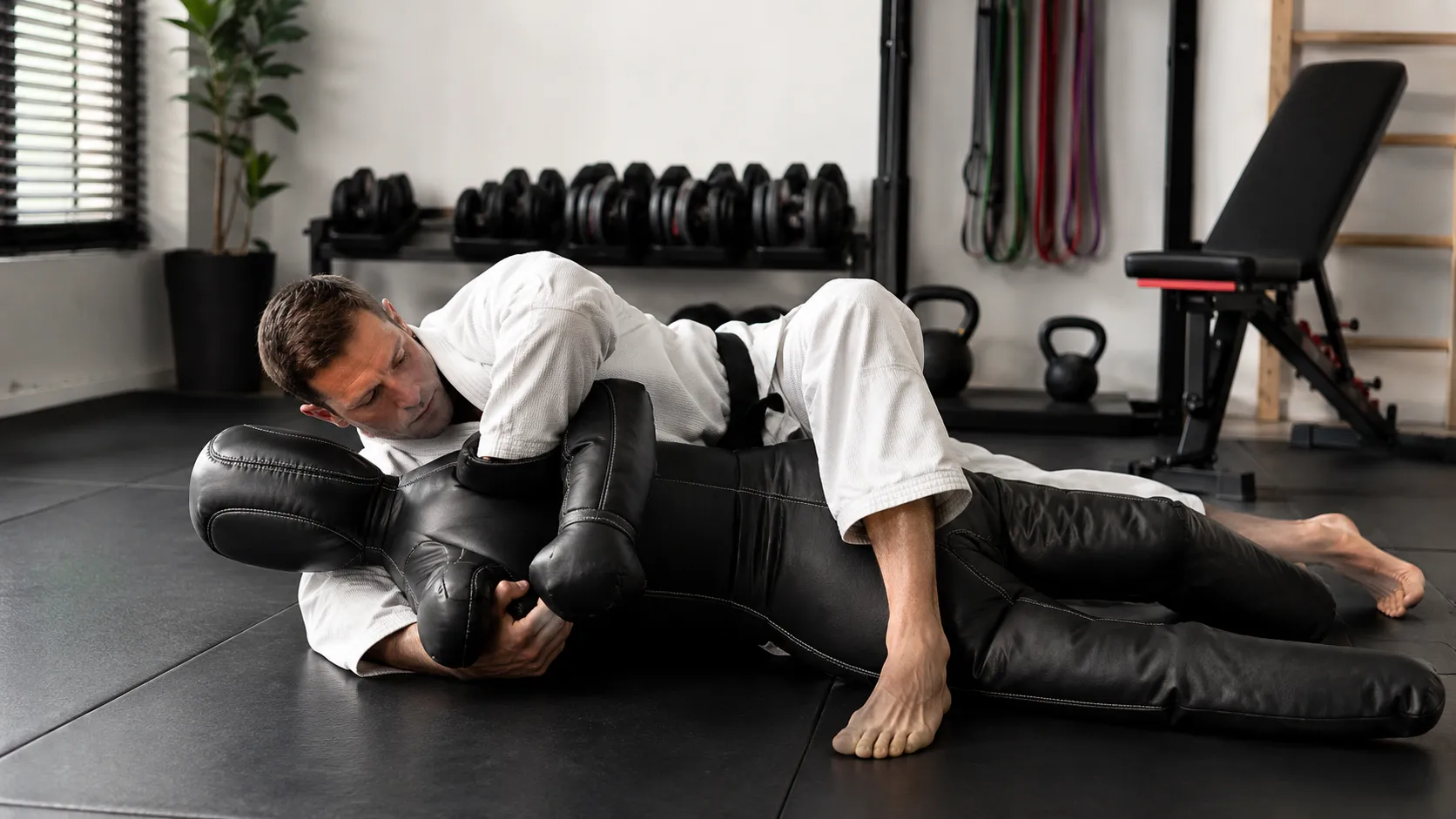
Those who train Brazilian Jiu-Jitsu, MMA, wrestling, or other grappling disciplines may also use specialized equipment such as grappling dummies.
The important consideration is to select equipment that matches the type of training being performed and to maintain enough open space for safe movement.
Core Training Equipment
Core training is another area that can be included in a home gym without requiring a large collection of equipment.
A dedicated abdominal machine can provide guided core exercises, while other strength and conditioning equipment may also involve the abdominal and trunk muscles during full-body movements.
Rather than building an entire workout space around one muscle group, consider how core exercises can fit into the rest of your training routine.
Look for Versatile Equipment
Versatility can be especially valuable when space or budget is limited.
A piece of equipment that supports several exercises may provide more practical value than several specialized machines that each perform only one function.
For example, rowing equipment can combine cardiovascular work with full-body movement, while some compact machines can support different exercise patterns within one setup.
Before buying, ask yourself:
How many useful exercises can I realistically perform with this equipment?
The answer can help determine whether a product is a practical addition to your home gym.
Think About Storage
Storage is often overlooked when people first build a home gym.
Equipment may look manageable when it is being used, but it can become inconvenient if there is nowhere to store it afterward.
Foldable machines can help solve this problem. Smaller accessories can also be stored on shelves, wall-mounted racks, or dedicated storage areas depending on the equipment.
A well-organized training space makes it easier to begin a workout without spending several minutes moving equipment around.
Check Product Specifications
Before purchasing any home gym equipment, review the product specifications carefully.
Important details may include:
- Overall dimensions
- Folded dimensions
- Maximum user weight
- Equipment weight
- Materials
- Resistance system
- Adjustability
- Assembly requirements
- Storage requirements
- Recommended training use
Specifications are especially important when purchasing equipment for a small room. Measuring the available area and comparing it with the equipment dimensions can prevent unnecessary problems later.
Build Your Home Gym Gradually
You do not need to purchase everything at once.
A better approach for many people is to begin with one or two pieces of equipment that directly support their primary training goal.
For example, someone focused on cardio might begin with a compact cardio machine. A person interested in boxing could prioritize a suitable bag setup, while someone concentrating on strength training might start with equipment that supports their main resistance exercises.
As the routine develops, additional equipment can be added when there is a genuine need for it.
This approach can also make it easier to understand which equipment you actually use before spending more money on additional products.
Create a Routine Around the Equipment
Equipment alone does not create an effective home gym. The equipment needs to fit into a consistent training routine.
A simple weekly schedule might combine different forms of exercise. For example, a person could perform strength-focused workouts on some days, cardio sessions on others, and boxing or conditioning work as appropriate.
The exact schedule should depend on individual goals, experience, recovery needs, and available time.
The main objective is to create a routine that is realistic enough to maintain.
Home Gym Equipment for Small Spaces
People with limited space should focus on equipment that provides useful training without taking over the room.
Some practical strategies include:
- Choose foldable equipment where possible.
- Prioritize equipment that supports multiple exercises.
- Keep frequently used equipment easily accessible.
- Store larger machines when they are not being used.
- Leave enough open floor space for movement.
- Avoid purchasing equipment that duplicates exercises you already perform.
A smaller home gym can still be effective when every piece of equipment has a clear purpose.
Choosing Equipment That You Will Actually Use
One of the most common mistakes when creating a home gym is buying equipment based on appearance rather than actual training habits.
A large machine may look impressive but provide little value if it is rarely used. On the other hand, a compact piece of equipment that fits naturally into your routine may become one of the most valuable parts of the setup.
Before making a purchase, consider your normal schedule.
If you realistically train for 20 to 30 minutes several times a week, equipment that makes those sessions convenient may be more useful than equipment designed for long workouts that you rarely complete.
Creating a Balanced Home Workout Space
A versatile home gym can combine several forms of exercise without becoming overcrowded.
For example, a practical setup might include equipment for:
- Strength training
- Cardio
- Core exercises
- Boxing or conditioning
- Mobility and bodyweight movements
The goal is not to recreate a commercial gym. Instead, the goal is to create a training environment that supports the exercises you actually want to perform.
For those comparing different options, home gym equipment for strength, cardio and fitness can provide a useful starting point for exploring equipment categories and considerations for building a home workout space.
Final Thoughts
Choosing home gym equipment becomes much easier when you start with your training goals rather than individual products.
Think about how you train, how much space you have, how frequently you exercise, and which types of workouts you are most likely to maintain. From there, prioritize practical equipment that fits your routine and can be stored safely.
A successful home gym does not need to contain dozens of machines. A smaller collection of useful, well-chosen equipment can provide plenty of opportunities for strength training, cardio, conditioning, boxing, core work, and general fitness.
The best setup is ultimately one that makes regular training easier and gives you a space you will genuinely want to use.
























Sign in to leave a comment.