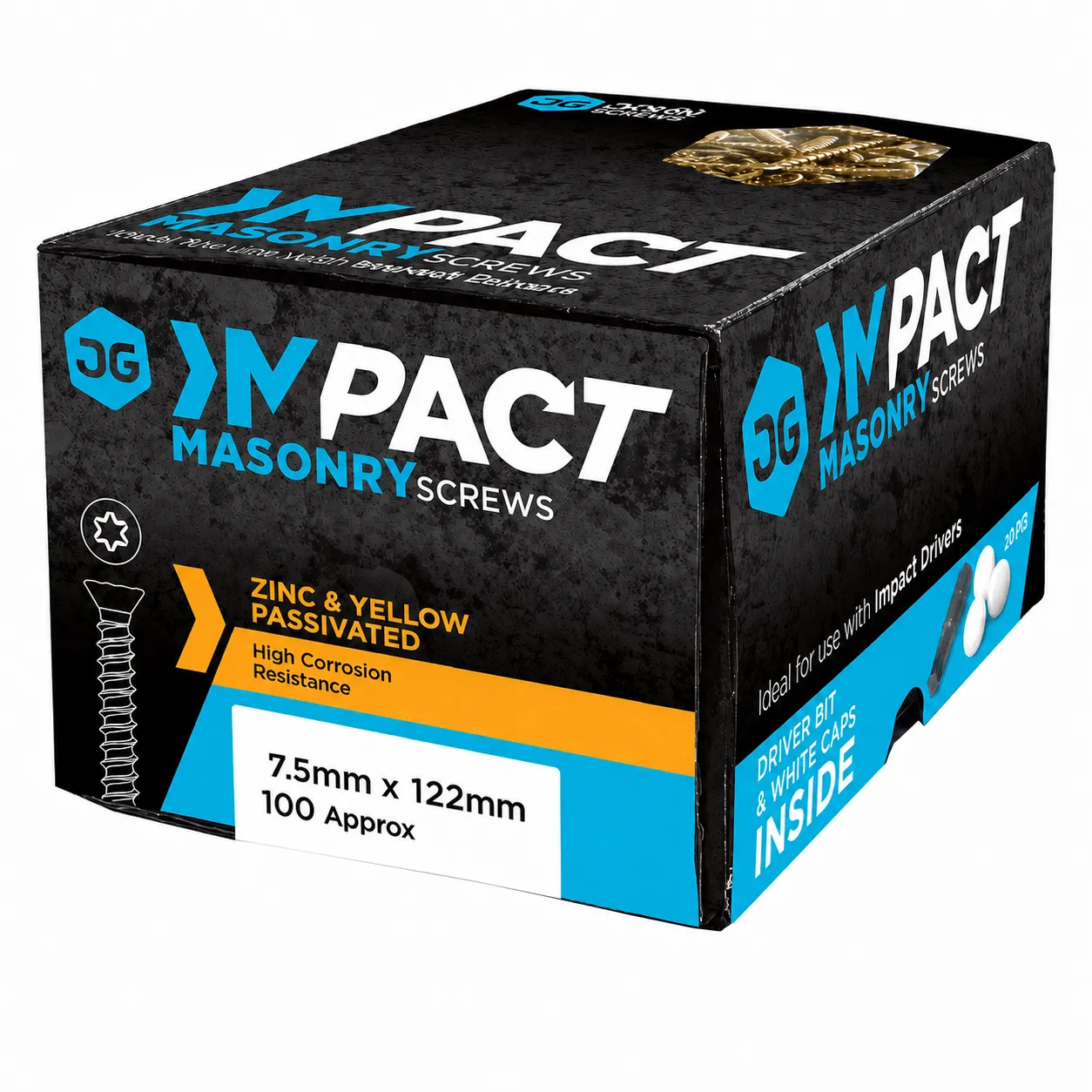

If you've ever tried driving a regular screw into brick or concrete, you already know it doesn't end well. Masonry calls for its own type of fastener, and that's where masonry screws come in — they're built with hardened threads that actually grip into hard, brittle material instead of just chewing it up.
The tricky part is that masonry screw covers a lot of ground. There are different materials, coatings, and installation methods, and picking the wrong one can mean a loose fixture or a cracked wall. Here's how to think it through.
Start with the material you're drilling into
Brick, block, and poured concrete aren't the same, even though people lump them together. Concrete is dense and takes a lot of force to drill into. Brick is softer and cracks more easily, so a screw meant for solid concrete can be overkill — or damaging — when used on brick.
If you're working with concrete screws, you're generally in good shape for anything structural: mounting brackets, shelving, HVAC units, that kind of thing. They hold well, and unlike older-style expansion anchors, they're easier to remove or replace if you make a mistake.
For brick, it's usually smarter to aim for the mortar joints rather than the brick face itself. Mortar is more forgiving, and you're less likely to end up with a cracked or chipped brick staring at you every time you walk by.
Self tapping screws save time, but read the fine print
Self tapping masonry screws have gotten a lot better over the years. The idea is simple — the screw cuts its own threads as it goes in, so you skip a separate tapping step. For everyday jobs like hanging shelves or mounting brackets, this is a real time-saver.
That said, "self-tapping" doesn't always mean "no drilling required." Some screws are advertised as concrete screws no pre drilling needed, and while that's true for softer materials or lighter loads, cured concrete usually still wants a shallow starter hole. Skipping it entirely can lead to a screw that snaps or just won't seat properly. Worth checking the packaging before you assume you can skip the drill altogether.
Don't skip the coating
This one gets overlooked constantly. Zinc plated concrete screws aren't just a marketing add-on — that coating is what keeps the screw from rusting over time. Indoors, in a dry space, it's not a huge deal. Outdoors, near a bathroom, or anywhere with moisture in the air, it matters a lot more. A rusted screw loses strength, and depending on the material, it can even stain the surface around it.
Ceiling installs need extra caution
Anything overhead is a different ball game. Concrete ceiling screws have to fight gravity constantly, not just hold something in place for a moment. If you're mounting light fixtures, HVAC brackets, or anything else on a ceiling, don't cut corners on screw size just to save a few dollars. Go with screws rated specifically for overhead use, drill a proper pilot hole even if the screw claims to be self-tapping, and follow the minimum embedment depth the manufacturer lists. This isn't the place to guess.
A quick gut-check before you buy
- What am I drilling into — brick, block, or solid concrete?
- How much weight or load will this screw actually be holding?
- Will it be exposed to moisture, or is it staying dry indoors?
- Do I have a hammer drill, or just a standard drill/driver?
- Is this going into a wall, or overhead where gravity works against me?
Answering these before you head to the store (or scroll through options online) will save you a return trip.
Masonry work isn't complicated once you know what you're dealing with. Match the screw to the material, don't skip the coating if there's any moisture involved, and treat ceiling installs with a little extra respect. Get those three things right and the rest tends to fall into place.
Frequently Asked Questions
Do I need to pre-drill before using a masonry screw?
Most of the time, yes. Even screws marketed as self-tapping usually need a starter hole in anything harder than soft brick. Skipping this step is one of the most common reasons people snap a screw or strip out the hole.
What's actually different between masonry screws and concrete screws?
Masonry screws is the umbrella term — it covers brick, block, and concrete. Concrete screws are made specifically for solid, poured concrete, which is denser than brick or block. If you're not sure what you're drilling into, it's worth checking before buying.
Do I need zinc-plated screws for an indoor project?
Not really necessary for a dry, indoor space. It becomes more important outdoors or anywhere with humidity, since that coating is what keeps the screw from rusting and weakening over time.
Can I just use normal masonry screws on a ceiling?
It's not a great idea. Ceiling installs need screws rated for overhead use because gravity is constantly working against the fastener. A screw that's fine on a wall might not hold up long-term overhead.
Do self-tapping screws work with a regular drill?
Sometimes, especially in brick or block. But for dense concrete, you'll usually still want a hammer drill to get the pilot hole started, even if the screw itself is self-tapping.






























Sign in to leave a comment.