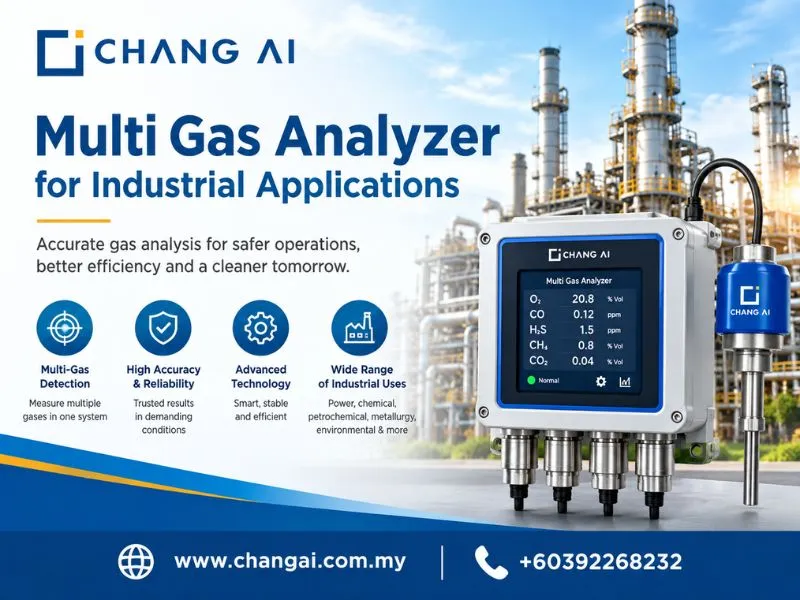

Choosing the right multi gas analyzer requires evaluating the gas types present, concentration ranges, required accuracy, environmental conditions, and the specific process being monitored. Matching these parameters to the instrument's specifications ensures reliable measurements, worker safety, and regulatory compliance. A poorly matched analyzer leads to false readings, frequent calibration failures, and costly downtime.
Why Selecting the Right Analyzer Matters in Industrial Settings
Industrial facilities deal with complex gas environments. A single monitoring point may involve combustible gases, toxic vapors, and oxygen deficiency risks simultaneously. Using a single-gas detector in such environments creates dangerous blind spots.
A properly selected industrial gas analyzer gives plant managers and engineers a complete picture of their atmospheric conditions. It supports process optimization, regulatory reporting, and safety compliance — all from one instrument.
Step 1: Identify the Gas Types You Need to Measure
Start with a thorough site assessment. List every gas that could be present during normal operation, maintenance, and process upsets. Common gases monitored in industrial settings include:
- Oxygen (O₂) — for confined space entry and combustion control
- Carbon monoxide (CO) — common in boiler rooms, refineries, and steel plants
- Hydrogen sulfide (H₂S) — critical in wastewater treatment and oil and gas
- Combustible gases (LEL) — hydrocarbons, methane, propane
- Carbon dioxide (CO₂) — fermentation, cold storage, and HVAC applications
- Nitrogen oxides (NOx) and sulfur dioxide (SO₂) — common in power generation and chemical manufacturing
Different sensor technologies target different gases. Electrochemical sensors work well for toxic gases like CO and H₂S. Catalytic bead sensors suit combustible gas detection. Infrared sensors are ideal for CO₂ and hydrocarbon monitoring. Knowing your gas mix upfront prevents over-specifying or under-specifying the instrument.
Step 2: Define the Measurement Range and Concentration Levels
Not all applications need the same concentration range. A confined space entry check requires parts-per-million (ppm) sensitivity. A stack emissions monitoring system may measure gas concentrations in percentage by volume.
Selecting an analyzer with a range that's too wide can reduce resolution. Choosing one that's too narrow risks sensor saturation when concentrations spike. Match the expected concentration range to the instrument's specified measurement range with a reasonable margin above the maximum expected level.
Measurement Range Reference by Application
| Application | Typical Gas | Common Range
|
|---|---|---|
| Confined space entry | O₂, CO, H₂S, LEL | 0–25% O₂ / 0–500 ppm CO |
| Flue gas analysis | CO₂, O₂, CO, NOx | 0–20% CO₂ / 0–3000 ppm CO |
| Petrochemical processing | H₂S, VOCs, LEL | 0–100 ppm H₂S / 0–100% LEL |
| Power generation | SO₂, NOx, CO | 0–2000 ppm SO₂ |
Step 3: Evaluate Accuracy and Calibration Requirements
Accuracy is not just a number on a datasheet. It determines whether your readings meet regulatory thresholds and whether alarms trigger at the right time. For most industrial applications, look for analyzers with ±2% full-scale accuracy or better.
Consider how often the instrument needs calibration and what that process involves. Some gas analysis equipment supports auto-calibration using certified reference gases. Others require manual field calibration with certified bump-test kits. Frequent manual calibration in a harsh plant environment increases maintenance burden and human error risk.
Check if the analyzer holds calibration across temperature and humidity variations. Drift under changing ambient conditions is a common source of measurement error in field instruments.
Step 4: Match the Analyzer to Your Sampling Conditions
The environment where gas sampling occurs heavily influences which instrument design is appropriate. Two main sampling methods exist:
- Diffusion sampling: Gas reaches the sensor passively through ambient air. Best for area monitoring and personal safety checks. Simpler and lower maintenance.
- Pump-assisted sampling: An internal pump draws gas from a remote location through a probe or tubing. Suitable for confined spaces, ducts, stacks, and process streams.
For process gas analyzer applications in pipelines or reactors, extractive sampling systems are common. These draw a sample from the process stream, condition it by removing moisture and particulates, and then pass it through the sensor. This protects sensitive sensors from harsh process conditions while maintaining accurate readings.
Environmental Factors to Consider
- Temperature range: Does the analyzer operate reliably in your facility's ambient temperature range?
- Humidity and condensation: High moisture environments can saturate sensors or flood sampling lines.
- Pressure: Elevated process pressures require pressure-compensated sensors or regulators in the sampling train.
- Dust and particulates: Filters are essential in cement plants, mining operations, and similar heavy-dust environments.
- Hazardous area classification: Ensure the unit carries ATEX or IECEx certification if it will be used in Zone 1 or Zone 2 explosive atmospheres.
Step 5: Align the Instrument with Your Application Requirements
No two industrial applications are identical. A portable multi-gas detector used for routine maintenance rounds has different requirements from a fixed continuous emissions monitoring system installed on a boiler stack.
Ask these questions before finalizing your selection:
- Is the measurement needed continuously, periodically, or only during specific tasks?
- Does the analyzer need to integrate with a SCADA or DCS system via 4–20 mA, Modbus, or HART protocols?
- What data logging and reporting capabilities are required for regulatory submissions?
- Is the unit expected to operate unattended for extended periods?
- What are the maintenance and service support options available locally?
For continuous emissions monitoring in Malaysia, facilities in regulated sectors such as power generation and manufacturing are subject to Department of Environment (DOE) requirements under the Environmental Quality Act 1974. Any gas analysis equipment used for compliance reporting must meet the prescribed performance standards and be maintained accordingly.
Portable vs. Fixed Gas Analyzers: Which Suits Your Operation?
Portable units offer flexibility for site surveys, maintenance work, and confined space entry. They are compact, battery-powered, and typically cover four to six gas channels. Fixed analyzers deliver continuous monitoring at permanent locations and support alarm integration with facility safety systems.
Many industrial plants use both. Portable devices cover mobile tasks while fixed systems protect high-risk areas like compressor rooms, chemical storage zones, and control buildings.
Key Specifications Checklist Before You Buy
- Number and type of gas channels required
- Sensor technology for each target gas
- Measurement range and resolution
- Accuracy specification at stated conditions
- Sampling method: diffusion or pump-assisted
- Operating temperature and humidity range
- Hazardous area certification (ATEX, IECEx, or equivalent)
- Communication and data output options
- Calibration interval and procedure
- Local service and calibration gas availability
Getting this checklist right before purchase saves significant cost in rework, instrument replacement, and compliance failures down the line. Involve your safety officer, instrumentation engineer, and procurement team in the evaluation process.
For industrial facilities in Malaysia looking for reliable, application-matched solutions, Chang Ai provides a range of gas detection and analysis instruments backed by local technical support — making it easier to source, calibrate, and maintain equipment that meets both operational and regulatory demands.
Frequently Asked Questions
What is a multi gas analyzer used for in industrial applications?
A multi gas analyzer simultaneously measures multiple gases such as oxygen, carbon monoxide, hydrogen sulfide, and combustible gases. It is used for confined space entry, emissions monitoring, process control, and worker safety in manufacturing, petrochemical, and utilities industries.
How many gases can a typical multi gas analyzer detect at once?
Most portable multi gas analyzers detect between two and six gases simultaneously. Advanced fixed or rack-mounted industrial gas analyzers can monitor a broader range of gases depending on the sensor configuration and measurement technology used.
What sensor technology is best for toxic gas detection?
Electrochemical sensors are the most widely used technology for toxic gases such as CO, H₂S, NO₂, and SO₂. They offer high sensitivity at ppm levels, a compact form factor, and relatively low cost compared to optical or photoacoustic alternatives.
How often does a gas analyzer need to be calibrated?
Calibration frequency depends on the manufacturer's recommendation, application risk level, and regulatory requirements. Most industrial applications require bump testing before each use and full calibration every three to six months using certified reference gas standards.
What certifications should a gas analyzer have for use in explosive atmospheres?
For use in hazardous areas classified as Zone 1 or Zone 2, the gas analyzer must carry ATEX certification in Europe or IECEx for international recognition. In Malaysia, compliance with DOSH requirements and relevant safety standards should also be confirmed before deployment.
What is the difference between a portable and a fixed gas analyzer?
Portable gas analyzers are battery-operated and suited for mobile tasks like maintenance rounds and confined space entry. Fixed gas analyzers are permanently installed, provide continuous monitoring, and integrate with plant safety and control systems for real-time alarm response.















Sign in to leave a comment.