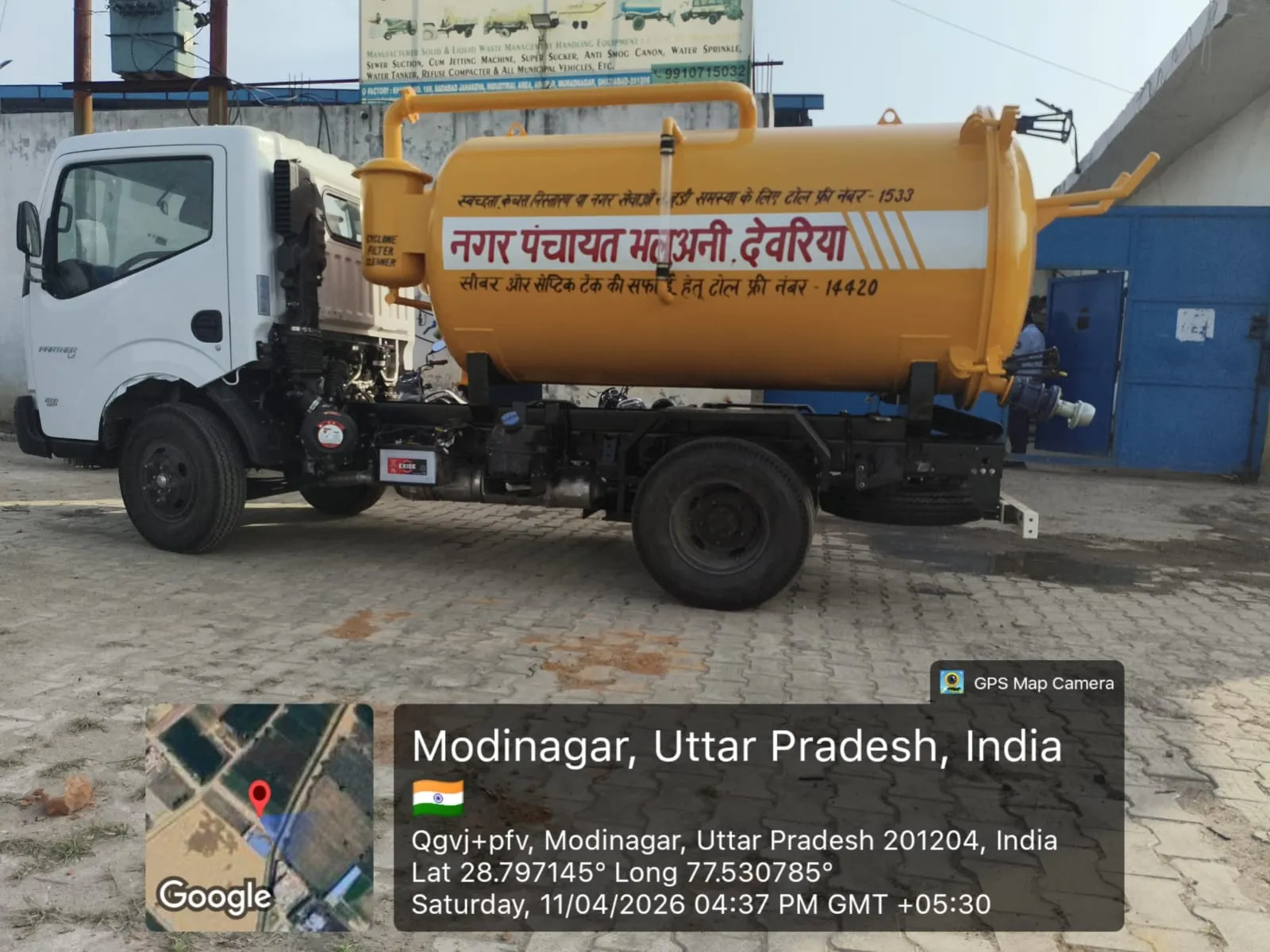

Sewer suction machines are essential equipment for municipalities, contractors, industries, commercial facilities, and wastewater management companies involved in sewer cleaning and sludge removal. These machines are designed to remove sewage, sludge, wastewater, mud, and other liquid or semi-solid waste from drains, septic tanks, manholes, and sewer lines quickly and efficiently.
However, choosing the right sewer suction machine for your business can be challenging because different models offer different tank capacities, vacuum systems, mounting options, pumping capabilities, and operating features. Selecting equipment based only on price can lead to higher operating costs and poor performance. A better approach is to evaluate your actual cleaning requirements and choose a machine that matches your workload.
1. Understand Your Cleaning Requirements
The first step in selecting a sewer suction machine is to understand where and how the machine will be used. Consider the type of waste you need to remove, the frequency of cleaning, and the locations where the machine will operate.
For example, a small contractor handling septic tanks and residential drainage may require a compact machine, while a municipal authority responsible for large sewer networks may need a high-capacity truck-mounted system.
You should consider:
- Sewer and drain sizes
- Type of sludge or waste
- Daily cleaning requirements
- Average suction distance
- Required vacuum pressure
- Number of jobs per day
- Disposal location and transportation distance
Understanding these factors will help you avoid purchasing a machine that is either too small for your requirements or unnecessarily large and expensive.
2. Select the Appropriate Tank Capacity
Tank capacity is one of the most important factors when choosing a sewer suction machine. The tank should be large enough to handle the expected volume of sewage and sludge without requiring frequent unloading.
Smaller machines may be suitable for residential areas, septic tank cleaning, and light-duty applications. Medium-capacity machines can be used by contractors and commercial cleaning companies, while larger truck-mounted machines are generally more suitable for municipalities, industrial facilities, and heavy-duty sewer operations.
A larger tank can improve productivity because operators can complete more work before visiting a disposal facility. However, a larger tank also increases the overall vehicle weight, fuel consumption, and purchase cost.
Therefore, select a capacity based on your typical workload rather than simply choosing the largest available tank.
3. Check Vacuum Pump Performance
The vacuum pump is the heart of a sewer suction machine. It creates the negative pressure required to draw liquid, sludge, and waste material into the collection tank.
When comparing machines, look at important pump specifications such as:
- Maximum vacuum level
- Airflow capacity
- Pumping efficiency
- Operating speed
- Continuous-duty capability
- Maintenance requirements
The required pump performance depends on the type and density of material being removed. Thick sludge and heavy waste may require stronger suction performance than relatively thin wastewater.
A reliable vacuum pump can improve cleaning speed, reduce downtime, and provide consistent performance during demanding operations.
4. Consider the Suction Hose and Operating Range
The suction hose is another critical component. Its diameter, length, flexibility, and construction can directly affect machine performance.
A hose that is too narrow can restrict material flow and increase the time required for cleaning. A hose that is too long may also reduce practical suction efficiency depending on the application.
Consider the typical depth of manholes, septic tanks, drains, and underground chambers that your operators need to clean. The machine should provide sufficient hose length and easy handling for these locations.
Durable, abrasion-resistant hoses are particularly important when dealing with rough sludge, debris, and industrial waste.
5. Choose Between Truck-Mounted and Trailer-Mounted Machines
Sewer suction machines are available in different configurations, including truck-mounted and trailer-mounted models.
A truck-mounted sewer suction machine combines the suction equipment and storage tank with a commercial vehicle. It is suitable for businesses and municipal organizations that require frequent transportation between different job locations.
Trailer-mounted machines can be towed using a suitable vehicle. They can be useful for contractors who already have towing vehicles and want a flexible solution for different projects.
Your choice should depend on mobility requirements, road conditions, available vehicles, operating frequency, and the size of your business.
6. Evaluate the Chassis and Payload Capacity
For truck-mounted equipment, the chassis is just as important as the suction system. The vehicle must safely carry the tank, pump, sludge, water, and associated equipment.
Check the vehicle's gross vehicle weight rating, payload capacity, wheelbase, engine performance, and suitability for the intended operating environment.
Overloading a vehicle can negatively affect safety, fuel economy, handling, tire wear, and component life. Therefore, the complete machine should be properly matched with the chassis.
For operations involving narrow streets, crowded urban areas, or difficult access points, maneuverability should also be considered.
7. Look at Construction Quality and Materials
Sewer cleaning equipment operates in harsh environments where tanks and components can be exposed to corrosive sewage, chemicals, moisture, and abrasive materials.
The collection tank should therefore be manufactured using appropriate materials and protective coatings to provide durability and corrosion resistance.
Pay attention to:
- Tank construction
- Welding quality
- Corrosion protection
- Hose quality
- Valve construction
- Pump components
- Safety systems
- Hydraulic and pneumatic components
High-quality construction can increase equipment life and reduce maintenance expenses over the long term.
8. Consider a Combination Suction and Jetting Machine
If your business performs both sludge removal and sewer blockage cleaning, a sewer suction cum jetting machine can be a useful investment.
These machines combine vacuum suction with high-pressure water jetting. The jetting system can help break down blockages, grease, mud, and deposits inside sewer lines, while the suction system removes the loosened material.
This combination can eliminate the need to purchase separate machines for different cleaning tasks and can improve the versatility of your operations.
9. Check Ease of Operation and Maintenance
A machine may have excellent specifications, but it should also be easy for operators to use and maintain.
Look for practical features such as accessible controls, simple valve operation, clear gauges, easy hose handling, convenient tank cleaning, and straightforward pump maintenance.
Regular maintenance is necessary to keep suction equipment working efficiently. Before purchasing, check the availability and cost of spare parts, filters, hoses, seals, valves, and other wear components.
A manufacturer with good technical support can also help reduce downtime when servicing or troubleshooting is required.
10. Compare Total Cost of Ownership
Purchase price should not be the only factor in your decision. Consider the total cost of ownership over the expected operating life of the machine.
This includes:
- Initial purchase price
- Fuel consumption
- Maintenance costs
- Spare parts
- Operator requirements
- Insurance and registration
- Downtime
- Disposal and transportation costs
A machine with a slightly higher initial cost may provide better long-term value if it offers improved productivity, lower maintenance requirements, and greater durability.
11. Choose a Reliable Manufacturer
The manufacturer plays an important role in the overall ownership experience. Before placing an order, research the company's experience, manufacturing capabilities, product range, after-sales support, and reputation.
Ask the manufacturer for detailed technical specifications and clarify questions about tank capacity, vacuum performance, chassis compatibility, warranty, spare parts, and service support.
For businesses that depend on sewer cleaning equipment every day, reliable after-sales service can be just as important as the machine itself.
12. Match the Machine to Your Future Business Needs
Finally, consider how your business may grow. If you expect to take on larger municipal, industrial, or commercial contracts in the future, purchasing a machine with slightly greater capacity and versatility may be worthwhile.
However, avoid investing in equipment that is significantly larger than your current requirements without a clear business reason. The ideal sewer suction machine should provide enough capacity and performance for your normal workload while leaving reasonable room for growth.
Conclusion
Choosing the right sewer suction machine requires more than comparing prices or tank sizes. Businesses should evaluate their cleaning applications, required suction performance, tank capacity, hose specifications, vehicle configuration, construction quality, maintenance requirements, and total operating costs.
The right machine can improve productivity, reduce manual cleaning work, minimize downtime, and help businesses handle sewer and waste management projects more efficiently. Whether you need a compact unit for septic tank cleaning, a truck-mounted machine for municipal operations, or a combined suction and jetting system for demanding sewer maintenance, selecting equipment according to your actual requirements is the key to getting the best long-term value.
By carefully comparing specifications and working with an experienced manufacturer, your business can invest in a sewer suction machine that delivers reliable performance, durability, and operational efficiency for years to come.























Sign in to leave a comment.