

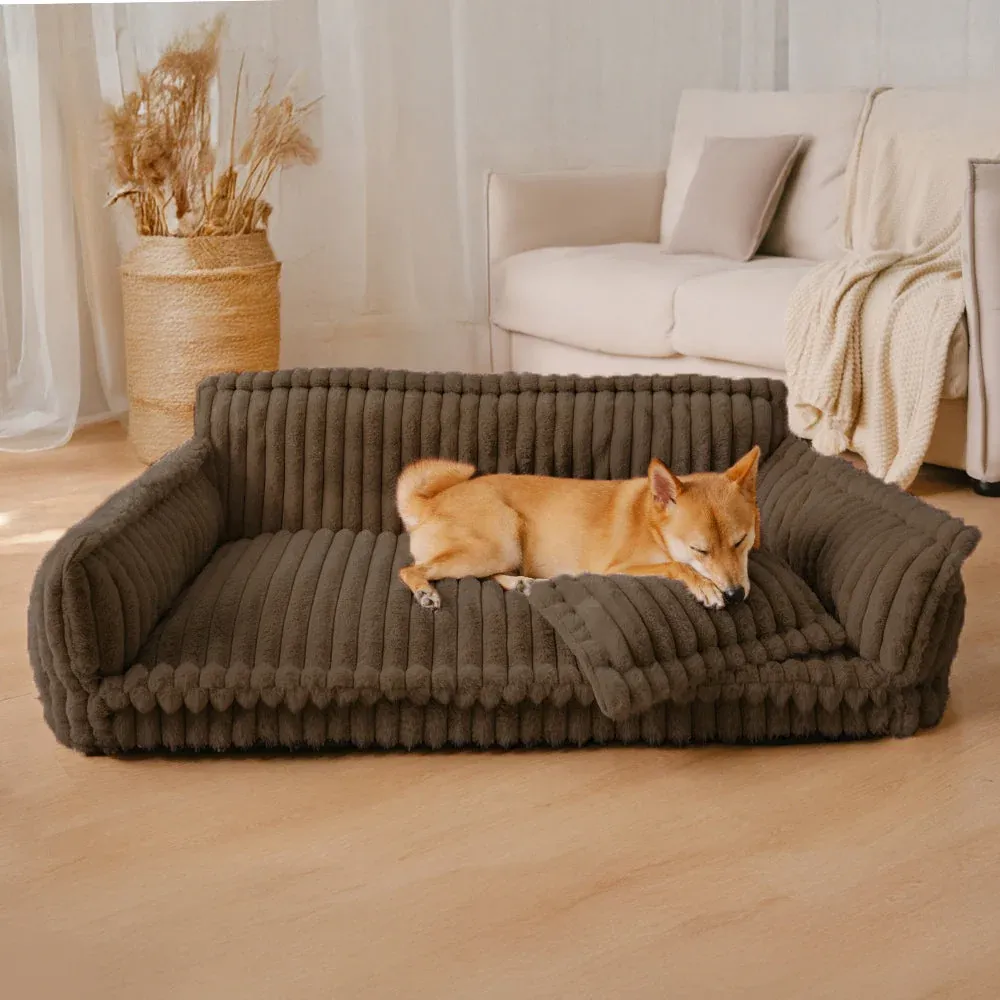
Sizing mistakes are the number one reason products get returned online, cited by more than half of shoppers who send something back. Dog beds are no exception.
Here's the thing that makes it worse for pet products specifically. Your dog can't try it on. There's no fitting room, no quick size swap in-store, just a guess based on a chart and a hope that it works out.
And here's the number that should actually change how you shop. More than 70% of dogs show some form of anxious or stress related behavior, which means the wrong sized plush calming bed for dogs isn't just an inconvenience. It can actually undercut the comfort the bed was supposed to provide in the first place.
Why Size Matters More With Calming Beds Specifically
Let's get real for a second. A regular flat bed being slightly too small or big is annoying. A calming bed being the wrong size defeats the entire purpose.
The comfort of a bolstered, nested design depends on the dog actually fitting inside it properly. Too small, and the dog can't curl up the way the bed was designed for. Too large, and that sense of enclosure, the exact thing making anti anxiety dog beds effective, disappears entirely.
How to Actually Measure Your Dog
Skip the guesswork. Measuring takes two minutes and saves you a return down the line.
Steps for an accurate measurement:
- Measure your dog from the tip of the nose to the base of the tail while they're standing normally.
- Measure their height from the floor to the top of their shoulders.
- Watch how they naturally sleep, curled tightly or sprawled out, since that changes what size actually works best.
- Add two to four extra inches to your dog's length measurement to account for natural movement and repositioning during sleep.
Skipping this step is exactly how so many pet beds end up returned. Don't rely on breed name alone. Individual dogs within the same breed can vary noticeably in size.
General Size Categories to Start From
Breed and weight give you a starting point, not a guarantee. Use this as a baseline, then adjust based on your dog's actual measurements.
- Small, typically under 20 pounds: think Chihuahuas, Dachshunds, and small terrier mixes.
- Medium, generally 21 to 50 pounds: Beagles, Bulldogs, and similar mid-sized breeds.
- Large, usually 51 to 90 pounds: Labradors, German Shepherds, and comparable breeds.
- Extra large, 91 pounds and up: Great Danes, Mastiffs, and other giant breeds.
These categories work as a rough guide, but always cross check against actual product dimensions rather than relying on the label alone.
The Curling Versus Sprawling Question
Here's something a lot of owners overlook. Not every dog sleeps the same way, and that changes what "the right size" even means.
Dogs that curl tightly into a ball generally do better with a snugger fit, since the bolstered edges of a plush calming bed for dogs are meant to be felt against their body. Dogs that sprawl out flat may need a bit more surface area, even within the same weight category, so they're not left hanging partially off the edge.
Common Sizing Mistakes Worth Avoiding
A few patterns show up again and again with pet bed returns and unhappy dogs.
- Sizing up "just to be safe," which often removes the snug, secure feeling that makes calming beds effective in the first place.
- Ignoring height measurements and focusing only on length, leaving taller dogs cramped even in a technically long enough bed.
- Assuming breed averages apply universally, when individual dogs frequently fall outside typical breed ranges.
- Choosing based on the bed looking good in photos rather than checking actual listed dimensions.
Aesthetic Considerations Don't Have to Compromise Fit

Choosing aesthetic dog beds that complement your home doesn't mean sacrificing proper sizing. The two aren't in conflict.
Good design and correct fit can coexist:
- Look for size charts that include actual inches, not just vague small, medium, large labels.
- Check whether covers are removable and washable across all sizes, not just the most popular one.
- Confirm the bolster height scales appropriately with bed size, since a giant breed bed with a tiny bolster won't provide the same nesting effect.
When to Size Up for Puppies
Puppies present a unique sizing challenge. They're changing fast, and today's measurements won't hold for long.
For growing puppies, sizing toward their expected adult weight, based on breed averages, usually makes more sense than measuring their current small frame. Otherwise, you're likely buying a second bed within a few months.
FAQs
How do I know if a dog bed is too small for my dog?
Signs include your dog's legs or head hanging over the edge, difficulty curling into a comfortable position, or the dog avoiding the bed altogether in favor of the floor or furniture. If they consistently look cramped, it's time to size up.
Is it better to size up or size down when unsure?
For calming and anti anxiety dog beds specifically, sizing down slightly, within reason, often works better than sizing up, since the snug fit is part of what makes the design effective. For regular flat beds, a little extra room usually causes fewer issues.
Do all dog breeds fit standard size charts accurately?
Not always. Breed averages provide a helpful starting point, but individual dogs vary in build and weight even within the same breed. Measuring your specific dog is more reliable than relying on breed name alone.
Can I return or exchange a calming bed if the size doesn't work?
Policies vary by retailer, so it's worth checking return and exchange terms before purchasing, especially for online orders where sizing mistakes are common. A clear size chart with actual measurements reduces the odds of needing to exchange in the first place.
Should I choose a bigger bed for a puppy that's still growing?
Generally yes, sizing toward the expected adult weight based on breed tends to save money and hassle compared to buying multiple beds as your puppy grows.
Bottom Line
Getting the size right isn't a minor detail with calming beds. It's the difference between a bed your dog actually uses and one that ends up ignored in the corner.
























Sign in to leave a comment.