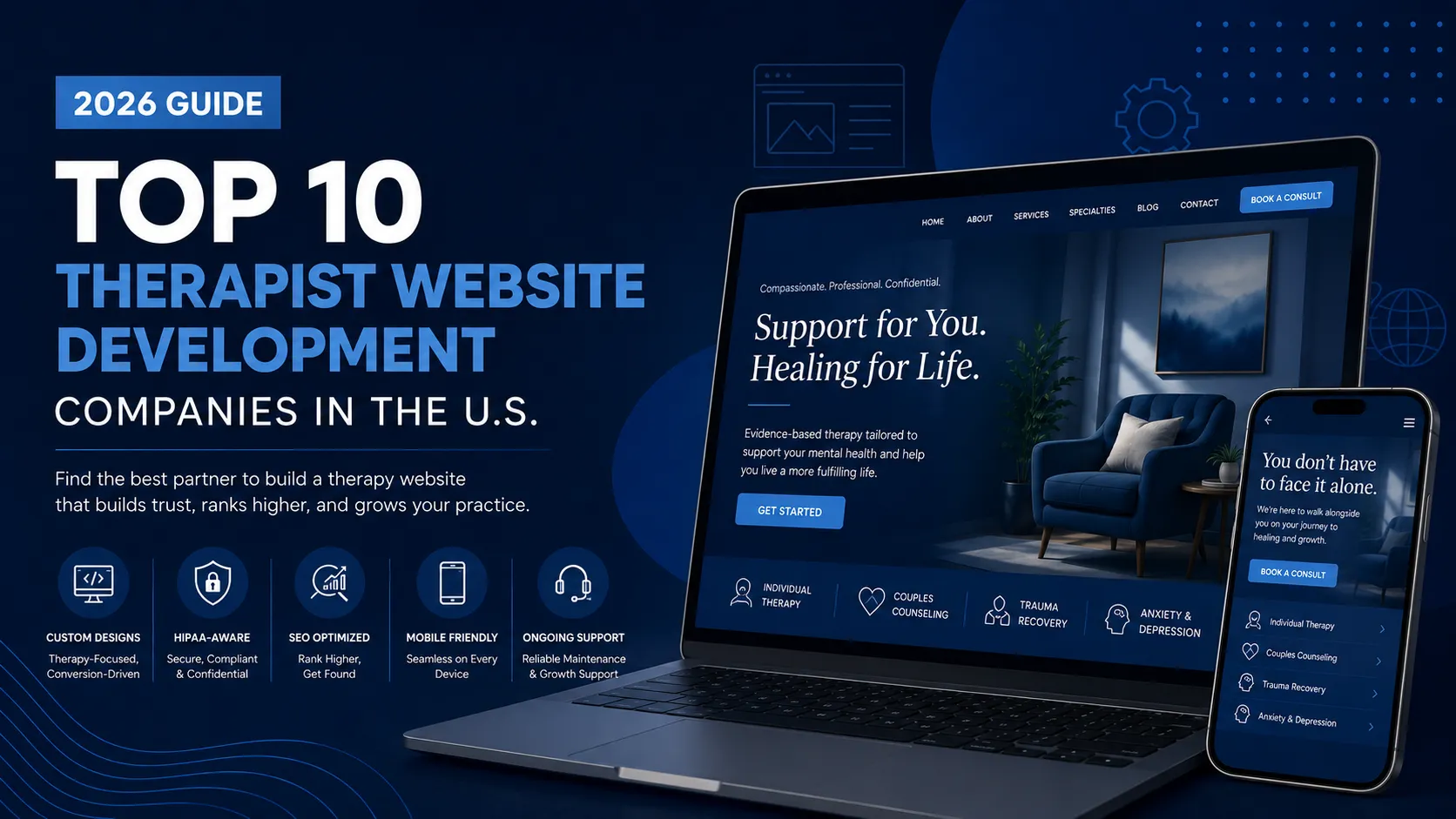

Selecting among therapist website development companies is more complicated than comparing portfolios and asking for the lowest quote – therapy websites must convey professionalism, explain services, protect interactions, be mobile-friendly, and encourage visitors to take the next step
Choosing the right development partner means working with someone familiar with both the technical and therapeutic aspects of a website.
What Should a Therapist Website Include?
A therapist or practice site should be able to get essential information across concisely without making a visitor dig into menus.
Clear Practice Positioning
The homepage should be able to quickly explain who the practice serves, the services available, where care is offered, and how someone can get started. Someone looking for anxiety therapy, couples counseling, trauma treatment, or another service should not be left to wonder if the practice is suitable.
Service and specialty pages can go into further detail and act as helpful destinations for search queries
Professional About/Clinician Pages
Many prospective clients seek to understand a therapist's qualifications, approach, focus, and communication style before reaching out. Individual clinician pages for group practices offer yet another way to help visitors find a suitable professional
A Simple Contact or Booking Path
A website can lose potential clients by not showing prospects exactly what they need to do next. Important contact information, consultation options, scheduling options, and related practical details should be easy to find.
The idea is simply to remove obstacles for a visitor who has decided they want more information or to move forward.
How Do You Evaluate Therapist Website Development Companies?
Ask how they would approach the architecture, SEO, content, security, accessibility, integrations, ownership, and post-launch support. A reputable development company should be able to answer questions like:
- Who owns the domain and content?
- What platform will be used?
- Can the site be expanded?
- How should service and specialty pages be structured?
- How will redirects be handled?
- Who handles maintenance and updates?
- How are forms, scheduling, and analytics handled?
- How is website accessibility approached?
- How is sensitive information protected?
- What SEO work is completed at launch?
- These questions reveal much more than a portfolio.
- Why SEO Should Be Part of Website Development
SEO is best implemented with a development company, rather than applied afterward, because it takes advantage of the entire architecture and content management of the site.
A therapist website may require an information architecture that connects the homepage, services, specialties, clinicians, locations, resources, and contact page in a way that makes sense for both users and search engines. Internal linking should help users and engines easily understand the connection between pages.
Local SEO tends to be particularly important for practices that serve a defined geographic area. Location, service, area content, Google Business Profile information, consistent contact information, and the inclusion of valuable location-specific content can all play a vital role in the local search presence.
A website should also leverage clean URLS, title tags, useful headings, image optimization, appropriate structured data, XML sitemaps, mobile-friendly features, performance, and more.
Privacy and HIPAA Considerations Need Careful Review
Therapy and mental health websites require a slightly more careful approach to privacy than a standard brochure site
HIPAA considerations depend on the practice, activities, and information shared, as well as any vendors or technologies used. HHS specifically warns that tracking technologies may pose HIPAA and privacy risks when it comes to protected health information.
This means a practice needs to carefully consider how its contact forms, scheduling systems, analytics, advertising pixels, chat systems, other technologies interact with its practice website
A "HIPAA compliant" label on a website does little to protect a practice if the technology and information sharing practices have not been carefully reviewed. A therapist practice and its technology partners should understand what information is collected, how it is stored, who has access to it, and what protections or agreements may be required.
Accessibility Is Part of Good Therapy Website Design
Accessibility should not be an afterthought when it comes to a therapy practice site. WCAG 2.2 is organized around four principles: content should be perceivable, operable, understandable, and robust. Practical considerations for a therapist website may involve legible text, sufficient contrast, alternative text, keyboard access, clear form labels, useful headings, captions where appropriate, and mobile-friendly designs that benefit a wide range of users.
What About AI Search and Answer Engines?
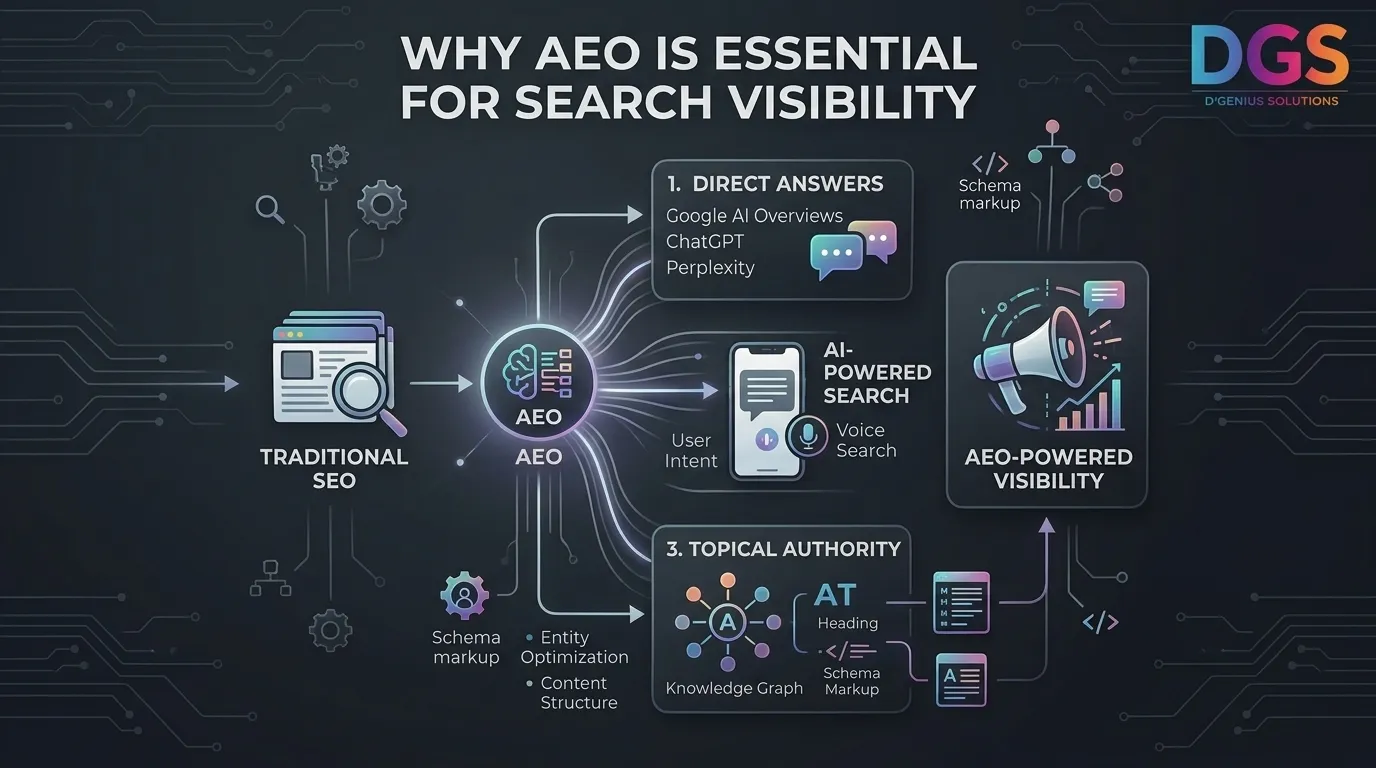
A therapist practice should not build toward the idea of "ranking in ChatGPT" or guaranteeing third-party AI citations. No developer can do that honestly
Therapy practices should strive to provide search engines with valuable, organized, and easy-to-find information about the practice, services, locations, specialties, treatments, and other relevant subjects. Pages should avoid ambiguity and include useful original content where appropriate so that engines can better understand what the page is about in context
Google's 2026 guidance around generative AI search highlights valuable original content and established SEO principles as areas of focus, rather than a third-party ranking boost.
For an in-depth comparison of what to look for, readers can refer to this detailed guide to therapist website development companies.
How Much Does Therapist Website Development Cost?
There is no appropriate price for a therapist website. Industry trends show that costs are based on whether the practice is using a template, requires SEO-focused development, or needs a custom-designed, group-practice-friendly build. MHIS's current cost guide lists a wide range professional website costs of approximately $1,000 to $7,000+ for larger group-practice builds, which may involve considerable customization and features.
The crucial question is what is included in the quoted price
A low quoted price may fail to factor in copywriting SEO, migration, accessibility, or other essential components. A higher quote may include several valuable components. Compare the scope of offerings and ownership terms, rather than focusing purely on the number at the bottom of a proposal.
When Should a Therapist Redesign an Existing Website?
A complete rebuild is not always necessary.
If the website has valuable content and a strong technical foundation, targeted improvements may be enough. Outdated service pages, poor navigation, mobile usability issues, unclear CTAs, missing metadata, performance problems, or internal linking issues can sometimes be addressed without a complete site rebuild. Redesigning makes more sense when the platform limits the necessary functionality, the architecture is too difficult to expand, the site has serious technical problems, or the website fails to reflect the practice.
- A Practical Evaluation Checklist
- Review the proposal for
- Mental health experience
- Clear ownership terms
- Mobile development
- SEO architecture
- Accessibility considerations
- Privacy-conscious forms and integrations
- Service and specialty page strategy
- Local SEO capabilities
- Analytics and conversion tracking
- Post-launch support
This approach reduces the focus on a company with the flashiest portfolio. Instead, the practice can work with a development partner that understands its needs.
Conclusion
The best therapist website development company for one practice will not always be ideal for another. A new solo therapist may prioritize cost and speed, while an established group practice may seek custom architecture, clinician pages, local SEO, integrations, and technical support. The best websites tend to help both the prospective client and the practice: sites get information across clearly and concisely, serve a diverse range of users, remain technically strong and private, and are built in a way that enables future growth and change.
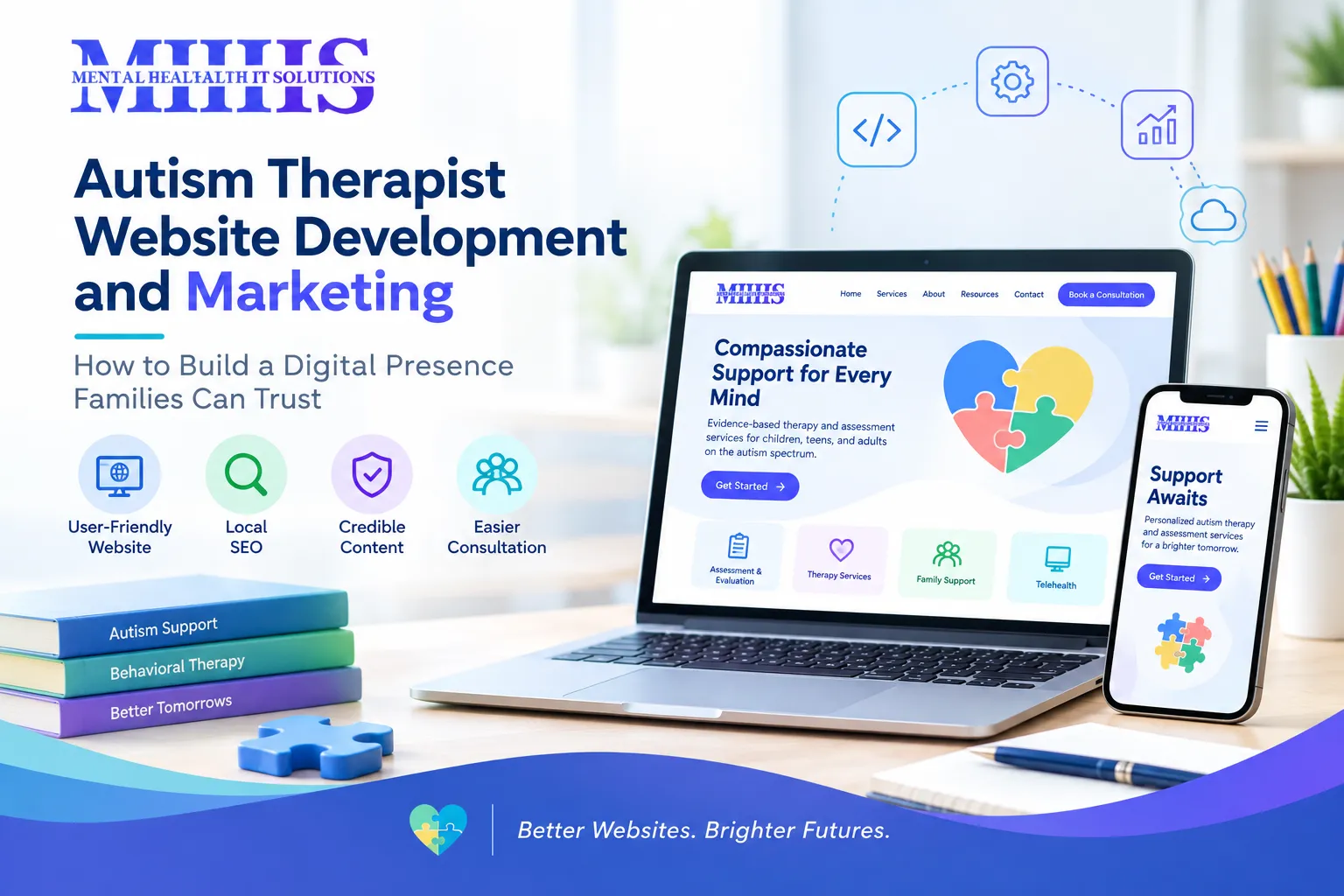
Mental Health IT Solutions works exclusively with mental health professionals on technology, website development, SEO, and digital marketing. For those who would like to explore the comparison process further, this therapist website development resource contains valuable information to consider prior to selecting a provider.
FAQs
What should I look for in a therapist website development company?
Look for experience with mental health practices, clear ownership terms, SEO knowledge, mobile development, accessibility, and reliable post-launch support.
How much does a therapist website cost?
Costs vary by scope, platform, design, SEO, integrations, and the size of the practice. MHIS's current guidance lists many professional projects in the range of $1,000–$7,000+.
Is WordPress good for therapist websites?
WordPress can offer substantial flexibility in terms of website structure, content management, SEO, integrations, and future expansion. The platform itself, however, does not make a site secure, accessible, or effective.
Do therapists need a website if they already use Psychology Today?
A directory profile and a practice website serve different purposes. A website gives a practice increased control over its branding, content, service information, architecture, and long-term digital presence.
Should a therapist website have separate service pages?
Separate pages can be a useful tool when services represent distinct areas that a prospective client actively searches and when each page offers genuinely useful information. Too many thin pages, however, create unnecessary clutter.
Does a therapist website need to be HIPAA compliant?
HIPAA considerations depend on the practice, the information and technologies involved, and how they interact. Practices should review forms, scheduling systems, analytics, tracking technologies, and other third-party services rather than relying on a "HIPAA compliant" label.
How can therapists improve local SEO?
Begin with accurate business information, a well-maintained Google Business Profile, useful service and location content, citations, internal linking, mobile usability, and technically sound website architecture.
How can a therapy website appear in AI search results?
There is no guaranteed method or separate shortcut. Valuable, original content, clear entity information, answers, technical SEO, and trustworthy structure provide a sensible foundation for visibility in AI-powered search.
Is website accessibility important for therapists?
Yes. Accessibility makes website content more universally usable and often improves the overall experience for a range of users. WCAG 2.2 provides a helpful framework for considering accessibility.
How long does it take to build a therapist website?
The time depends on the number of pages, content preparedness, design, integrations, revisions, and migration requirements. A simple website may take weeks, while a larger custom practice site could require significantly more planning.

























Sign in to leave a comment.