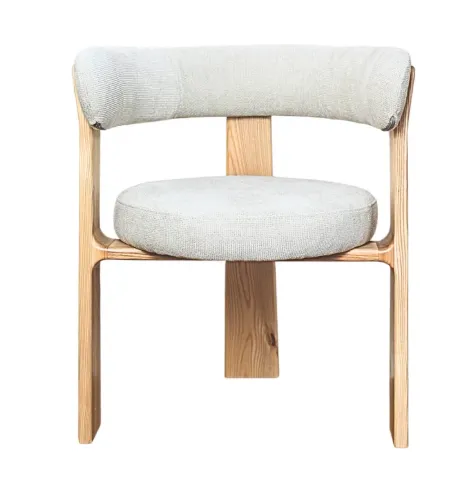

Think about how much happens around your dining table. Birthday dinners, homework, lazy Sunday breakfasts, arguments over board games, and long chats over one more cup of tea. Your chairs are part of all of it. Yet most of us spend weeks choosing a table and only a few minutes choosing the chairs to go with it.
That's usually where the regret starts. A table is something you look at. A chair is something you sit on, lean back in, drag across the floor and squeeze past every single day. So it's worth getting right.
If you're about to shop for a wooden dining chair, here's what I'd pay attention to.
Why Wood Is Still a Great Choice
Styles change, but wooden dining chairs have stayed popular for a simple reason: they work. Wood feels warm in a way plastic and metal don't, and a solid timber chair tends to get better with age instead of just looking tired. A few years of use gives it a soft, lived-in look that's hard to copy.
Here's why so many households stick with timber:
- It lasts. Hardwoods like oak, ash, beech and walnut cope well with daily use, spills and chairs being pushed in and out a thousand times.
- It suits any style. Modern, Scandinavian, farmhouse, coastal or classic, there's a wooden chair that fits.
- It can be repaired. A wobbly joint or a scratched seat is usually an easy fix. Try doing that with a cheap flat-pack chair held together with cam locks.
- No two are the same. Every piece has its own grain and colour, which gives a dining room character.
Know Your Timber
Not all wood is equal, and knowing the basics helps you spot good value.
Oak is strong, heavy and has a clear, attractive grain. It's a classic choice and holds up well in busy homes.
Ash is a lighter-coloured wood that's surprisingly tough and a bit flexible, which is why it's often used for curved chair backs.
Beech has a fine, even grain and a pale tone. It's hard-wearing and takes stain and paint well.
Walnut is richer and darker, with a warm, elegant look. It suits people who want a more premium feel at the table.
Rubberwood and similar timbers are often used in more affordable chairs. They can be a sensible choice if the construction is good, but check the joints and finish carefully.
The species matters, but construction matters just as much. A well-built chair in a modest timber will outlast a poorly built chair in an expensive one.
Comfort Matters Most
A chair can look fantastic and still make you fidget after ten minutes. Before you buy, check these things.
Seat height and depth. Most dining chair seats sit around 45 cm from the floor. The seat should be deep enough to support your thighs without pressing into the back of your knees. If the front edge digs in, you'll notice by dessert.
Back support. A slightly curved or angled backrest is far easier on you during a long meal than a stiff, straight one. If you can, lean back and see whether your lower back feels supported.
Armrests or no armrests. Chairs with arms feel relaxed and comfortable, and they make it easier to get up and down. The catch is that they take up more room and don't always slide neatly under the table. Many people use armchairs at the ends of the table and armless chairs along the sides.
Padding. Bare timber looks clean and simple, but if your family likes to sit and talk for hours, a padded or upholstered seat makes a real difference. It's also a nice way to add colour or texture.
The best test is simple: sit in the chair for at least five minutes, not thirty seconds. Your body will tell you the truth.
Make Sure It Works With Your Table
Your chairs and table don't have to match exactly. In fact, a slightly mixed look often feels more relaxed and interesting. But they should look like they belong in the same room, and they need to work together in practical ways.
- Height: Leave about 25 to 30 cm between the seat and the underside of the tabletop, so nobody's knees are trapped.
- Style: A chunky farmhouse table looks best with sturdy, simple chairs. A slim modern table suits lighter, cleaner designs.
- Colour: Mixing tones can look great, like a pale oak chair with a dark walnut table. Just keep the overall look balanced so the room doesn't feel busy.
- Space: Allow about 60 cm of table width per person so nobody is bumping elbows. Also leave enough room behind each chair, ideally around 90 cm, so people can pull out and sit down comfortably.
Think About How You Actually Live
The perfect chair for one home might be a poor choice for another, so be honest about your own routine.
If you have young kids, look for rounded edges and finishes that wipe clean easily. Very pale fabrics on padded seats might not survive a week of spaghetti.
If your dining area is small, slimmer chairs that tuck fully under the table will stop the room feeling crowded. Chairs with open backs also make a space look lighter.
If you host often, pick chairs you'd be happy to sit in for a three-hour dinner, and think about how easy they are to move around when guests arrive.
If your dining table doubles as a desk or homework station, comfort and back support become even more important.
Buying Dining Chairs in Auckland
If you're looking for dining chairs in Auckland, try to see them in person and sit in them first. Photos can't show you the true colour of the timber, the feel of the finish or how the seat really supports you. Here are a few tips:
- Look at the joints. Strong joints matter more than fancy details. Give the chair a gentle wiggle and see if it feels solid.
- Ask about the timber and finish. A good finish protects against stains, water rings and everyday knocks.
- Think about humidity. Auckland's damp air can affect poorly made timber, so choose well-seasoned wood with a proper finish.
- Buy the full set at once. Timber colour can vary between batches, so ordering everything together keeps your chairs looking consistent.
- Check the return and delivery details. Chairs are bulky, so it's worth knowing how they'll arrive and what happens if something isn't right.
It's also smart to order one or two spare chairs if you have the room. They're handy for guests and mean you can rotate chairs if one gets worn faster than the others.
Looking After Your Chairs
A little care keeps timber looking good for years, and it doesn't take much effort:
- Wipe up spills quickly, especially red wine and tomato sauce.
- Dust with a soft, dry cloth, and use a slightly damp one for sticky marks.
- Keep chairs out of strong direct sunlight, which can fade the finish over time.
- Check the screws and joints now and then, and tighten them if anything feels loose.
- Stick felt pads on the feet to protect your floors and cut down on scraping noise.
- Avoid harsh chemical cleaners, which can dull or damage the finish.
Every year or two, a light wipe with a suitable timber care product can bring back the shine and keep the wood from drying out.
Final Word
The right wooden dining chair should feel good, look good and cope with real family life. Take your time, sit in a few, and think about how you actually use your table day to day. Get that right and you'll enjoy your meals, and your dining room, for years to come.
If you're ready to start looking, Home Elements Furniture has a good range of wooden dining chairs in different styles and finishes, whether you're searching for dining chairs in Auckland or anywhere else in New Zealand.

























Sign in to leave a comment.