How to Combine Stretching and Strength in Your Yoga Practice


Yoga is often associated with stretching, but it also involves building strength, improving balance, and learning to control your movements. Some poses help lengthen tight muscles, while others require you to support your body weight and engage different muscle groups. Combining both types of movements can help create a more balanced yoga routine.
If your practice focuses only on stretching, you may miss opportunities to develop strength and stability. Similarly, practising only challenging poses without allowing time for gentle movement can make your routine feel tiring. A balanced approach includes both, giving your body time to move, work, and recover.
You do not need an advanced yoga practice to get started. A few simple poses, performed with proper alignment and steady breathing, can help you work on flexibility and strength together.
Why Are Stretching and Strength Both Important in Yoga?
Stretching helps you work on your range of motion and become more comfortable with different movements. It can be particularly useful if you spend long hours sitting or often feel stiffness in your hips, legs, shoulders, or back.
Strength-building poses require muscles to support your body, maintain balance, or control movement. Over time, practising these poses can help you become more familiar with using your body in different positions.
Both elements have a place in yoga. Flexibility allows you to explore movements more comfortably, while strength helps you maintain control and stability. Neither needs to be developed at the expense of the other.
1. Start With Gentle Warm-Up Movements
Before moving into demanding poses, spend a few minutes warming up. Gentle movements allow you to become familiar with your breathing and gradually prepare your body for the practice.
Cat-Cow Pose is a useful starting point. Begin on your hands and knees, then gently round your back as you exhale and move into a comfortable backbend as you inhale. Repeat the movement slowly without forcing your spine.
You can also include shoulder rolls, gentle hip movements, and easy seated stretches. These movements do not need to be intense. Their purpose is to help you transition from rest into your yoga session.
Avoid beginning with deep stretches or long strength holds when your body is not ready. A gradual warm-up can make the rest of your routine easier to manage.
2. Use Standing Poses to Combine Strength and Flexibility
Standing poses can help you work on leg strength, balance, and flexibility in the same session. They also encourage you to pay attention to your posture and how you distribute your weight.
Warrior II is one example. Stand with your feet apart, turn one foot outwards, and bend the front knee while extending your arms to the sides. Keep your torso upright and your stance comfortable. Your legs work to maintain the position while your hips and inner thighs move through a wider range of motion.
Triangle Pose is another option. From a wide standing position, reach towards your front leg while extending the other arm upwards. This pose involves a stretch through the legs and sides of the body while asking you to maintain stability.
You can alternate between these poses, practising each side rather than holding one position for too long. Adjust your stance whenever necessary to maintain control.
3. Practise Poses That Stretch and Strengthen Different Muscle Groups
A balanced routine does not need to rely on complicated poses. Several familiar yoga postures can help you work on different areas of your body.
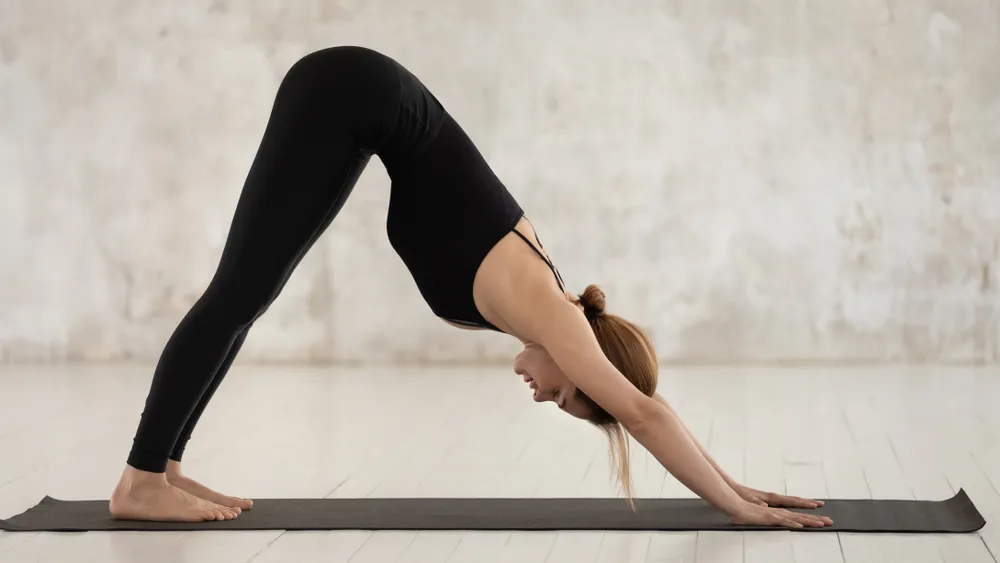
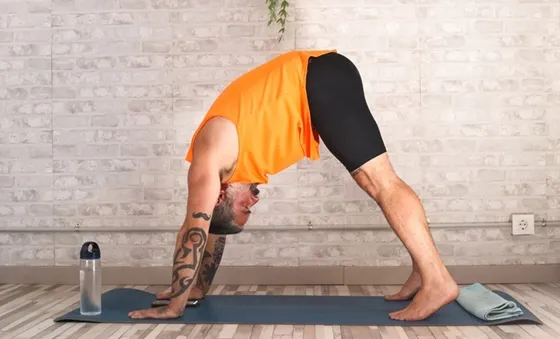
Downward-Facing Dog: This pose involves supporting your upper body with your arms while moving your hips upwards and backwards. It can create a stretch along the back of the legs while requiring your shoulders and arms to remain active.
Plank Pose: Plank asks you to keep your body in a straight line while supporting your weight through your hands and toes. It challenges your core and upper-body muscles. Start with a shorter hold if maintaining the position feels difficult.
Bridge Pose: Lie on your back with your knees bent and feet on the floor. Press through your feet to lift your hips comfortably. The pose engages the muscles around your hips and legs while opening the front of your body.
Low Lunge: Step one foot forward and lower the back knee towards the mat. Keep your front foot grounded and your upper body upright. This position can stretch the front of the hip while requiring your legs to help maintain balance.
Each pose serves a different purpose, so avoid expecting every posture to provide the same type of stretch or strength challenge.
Downward-Facing Dog is especially useful to understand as part of a balanced sequence because it combines an active upper body with movement through the hips and legs. For more information about this posture, see the health benefits of Adho Mukha Svanasana, also known as Downward-Facing Dog Pose.
4. Alternate Between Active Poses and Gentle Stretches
One simple way to combine strength and flexibility is to alternate between poses that require muscular effort and poses that allow you to stretch more gently.
For example, you could practise Plank Pose for a few comfortable breaths and then move into Child's Pose to rest. You might follow Warrior II with a gentle seated stretch or use a short standing sequence before moving to the floor.
This approach helps prevent your routine from becoming focused on only one type of movement. It also gives you opportunities to notice how your body feels after holding a more demanding position.
You do not need to move quickly between poses. Take enough time to adjust your hands, feet, and posture before beginning the next movement. Smooth transitions and controlled breathing are more useful than rushing to complete a sequence.
5. Pay Attention to Your Breathing
Breathing is an important part of a balanced yoga practice. When a pose feels challenging, it is easy to tense your body or hold your breath without noticing.
Try to breathe naturally while maintaining each position. Many practitioners coordinate inhalation and exhalation with movement, such as inhaling while lengthening the spine and exhaling while moving into a comfortable stretch.
If your breathing becomes strained during a strength pose, shorten the hold or choose an easier variation. If you cannot relax during a stretch, reduce its depth.
Breathing should support your practice rather than become another thing you feel pressured to control perfectly.
6. Adjust the Routine to Your Fitness Level
Not every pose will feel equally comfortable for everyone. Your current flexibility, strength, experience, and mobility can affect how you perform each movement.
If Plank Pose feels too difficult, lower your knees to the mat. If you struggle to keep your legs straight in Downward-Facing Dog, bend your knees slightly. If balancing in Warrior II is uncomfortable, use a shorter stance or practise near a wall for support.
Props such as yoga blocks, straps, and folded blankets can also help you modify positions. There is no need to force your body into the deepest version of a pose.
Consistency is more important than intensity. Begin with a manageable routine and make gradual changes as you become more comfortable with the movements.
7. Create a Simple Yoga Routine
You can combine stretching and strength without spending a long time on the mat. Start with a short routine that includes different types of movement and leaves enough time for rest.
Here is one example:
- Cat-Cow Pose: Move gently for one to two minutes.
- Low Lunge: Practise on both sides for several comfortable breaths.
- Warrior II: Hold briefly on each side while maintaining steady breathing.
- Plank Pose: Begin with a short hold or keep your knees on the mat.
- Downward-Facing Dog: Stay for a few comfortable breaths, adjusting your knees as needed.
- Child's Pose: Finish with a gentle resting position.
The timings are flexible. You can shorten the sequence when you are tired or spend longer on movements that feel comfortable. Stop or modify any pose that causes pain.
How Often Should You Practise?
Choose a schedule that fits your daily routine. You might begin with two or three short yoga sessions each week and gradually adjust the frequency according to your comfort and recovery.
Try not to make every session equally demanding. Some days can focus on gentle stretching and mobility, while others include more standing poses and strength work. Rest is also important, particularly when you feel unusually tired or sore.
If you have an injury or a condition that affects movement, seek appropriate professional advice before beginning exercises that may aggravate your symptoms.
Build a More Balanced Yoga Practice
Combining stretching and strength does not require advanced poses or long sessions. You can begin with familiar movements, adjust them to your current ability, and gradually develop a routine that includes both flexibility and stability.
As you become more comfortable, pay attention to how different poses work together. A balanced practice should challenge you without forcing you beyond your limits.
For further reading on one of the poses discussed above, explore the health benefits of Downward-Facing Dog Pose.
The goal is to build a sustainable yoga routine that allows you to move with control, stretch comfortably, and develop strength at a pace that suits your body.







Sign in to leave a comment.