
Moving materials around a construction site takes time, labour and the right machinery. Soil, aggregates, concrete, pipes and other materials may need to be loaded, lifted or shifted several times during a project.
This is where construction material handling equipment becomes useful. The right machine can make material movement easier while keeping site operations organised.
What Counts as Material Handling Equipment?
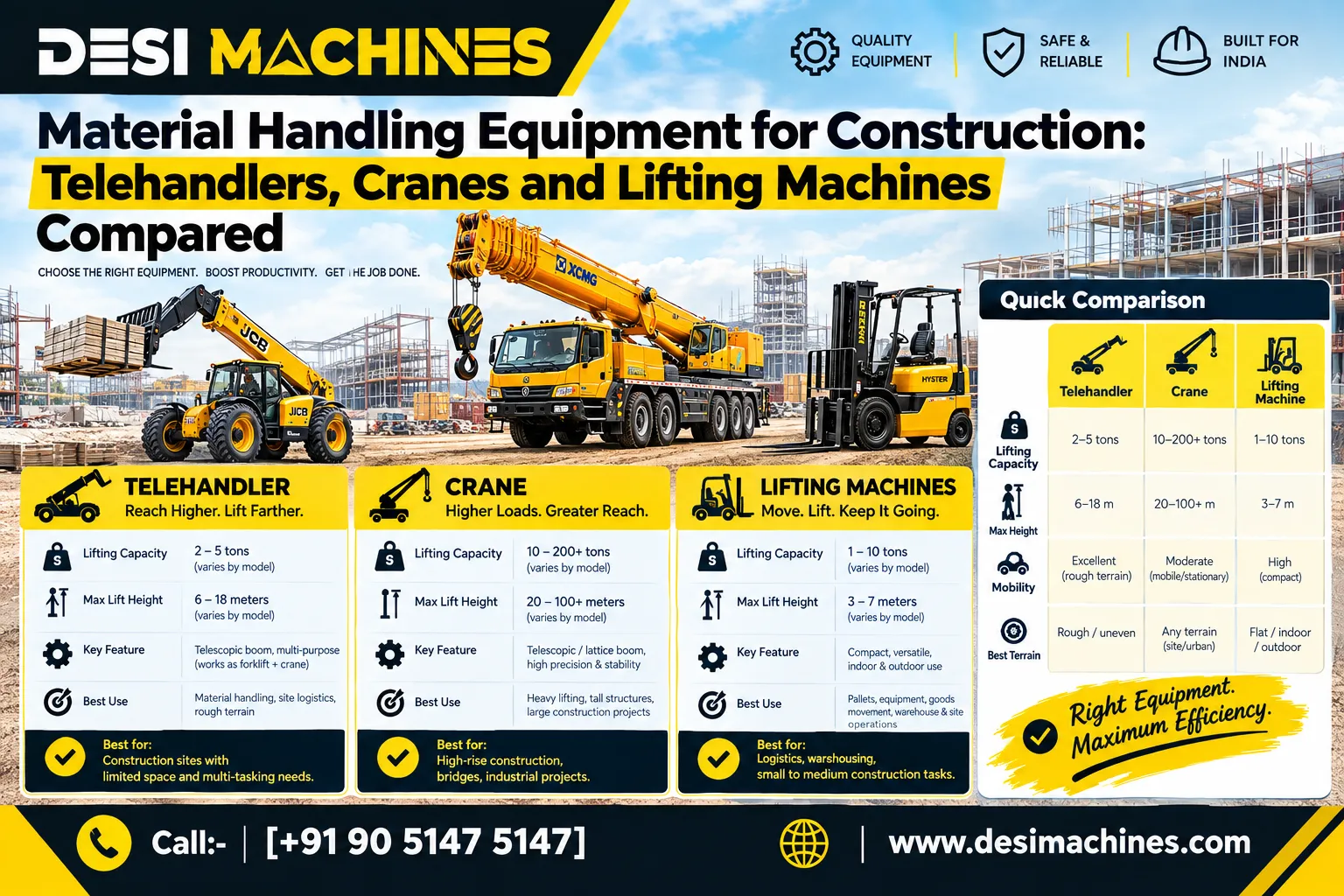
Material handling equipment includes machines used to move, lift, load or position materials at a worksite.
Depending on the project, this can include wheel loaders, forklifts, cranes, telehandlers and other lifting or loading machines. Each category serves a different purpose.
Before you compare material handling equipment, identify the type of material and the movement required.
Match the Machine to the Task
Not every machine handles the same type of work.
Wheel loaders are commonly used for loading and moving loose materials such as soil and aggregates. Cranes are designed for lifting heavier loads to different heights or positions.
Forklifts suit material movement where loads need to be picked up and transported across relatively controlled areas. The choice depends on the site layout and material being handled.
Understanding these differences makes equipment comparison much easier.
Check Lifting and Loading Capacity
Capacity should be one of the first specifications to review.
A machine needs enough capacity for the heaviest load it will regularly handle. Selecting equipment with insufficient capacity can restrict its use and affect productivity.
At the same time, choosing a machine that is significantly larger than the actual requirement may not be practical for smaller projects.
When you compare material handling equipment, look at rated capacity rather than judging the machine only by its physical size.
Consider Working Height and Reach
Some material handling tasks involve more than horizontal movement.
Construction sites may require materials to be lifted onto structures, platforms or higher levels. In such cases, working height and reach become important specifications.
Cranes and telehandlers, for example, have different operating ranges and applications. The machine should provide sufficient reach for the intended task while remaining suitable for the site's available space.
Site Conditions Can Change the Choice
The construction environment has a direct effect on equipment selection.
A machine working on an open site may have plenty of room to manoeuvre. Another machine might need to operate between buildings, materials and other equipment.
Ground conditions also matter. Equipment operating on uneven surfaces needs to suit those conditions.
Before selecting material handling machines, consider access, operating space and the surfaces on which the equipment will work.
Don't Ignore Mobility
Mobility becomes especially important when equipment moves between different sections of a project.
Some machines can travel around the site under their own power, while others may need transportation between locations.
Check machine dimensions and operating weight when transport is part of the project plan. These details can affect how easily equipment reaches different work areas.
Compare Operating Requirements
Purchase price gives only part of the picture.
Fuel consumption, maintenance requirements and expected working hours can affect the cost of using equipment over a long project. Machines that operate for extended shifts should be assessed with these factors in mind.
The material-handling equipment price India buyers see in a listing or quotation should therefore be considered alongside the equipment's specifications and operating requirements.
Think About Attachments
Some material handling machines can perform different tasks with suitable attachments.
The attachment options available for a machine can influence its usefulness across a project. Before selecting equipment, check which attachments are compatible and whether they suit the intended application.
This can be particularly useful when one machine needs to handle more than one material movement task.
Compare Machines Within the Same Category
A useful comparison starts with similar machines.
If you are reviewing wheel loaders, compare their operating weight, bucket capacity, engine power and dimensions. For cranes, capacity, reach and configuration may carry greater importance.
Trying to compare machines designed for completely different applications can make the decision less clear.
Online comparison platforms can help contractors review specifications from different models in one place. Desi Machines provides construction equipment listings and comparison options, while platforms such as IndiaMART, 91 Infra and Infra Junction can also support initial equipment research.
Consider the Complete Site Operation
Material movement rarely happens in isolation.
A loader may fill a truck, a crane may position materials and other machines may continue the construction process. Equipment should work together without creating unnecessary waiting time.
For larger projects, contractors should consider how each machine fits into the wider material flow.
Make the Comparison Practical
Before choosing construction material handling equipment, identify the loads, distances, lifting requirements and site conditions.
Then compare the relevant machines based on capacity, reach, mobility, operating requirements and attachment options.
The best choice isn't necessarily the biggest machine available. It should be the one that handles the required material safely and efficiently within the conditions of the project.
A careful approach to comparing material-handling equipment can help contractors narrow down suitable material-handling machines and assess the material-handling equipment price India market with greater clarity.



























Sign in to leave a comment.