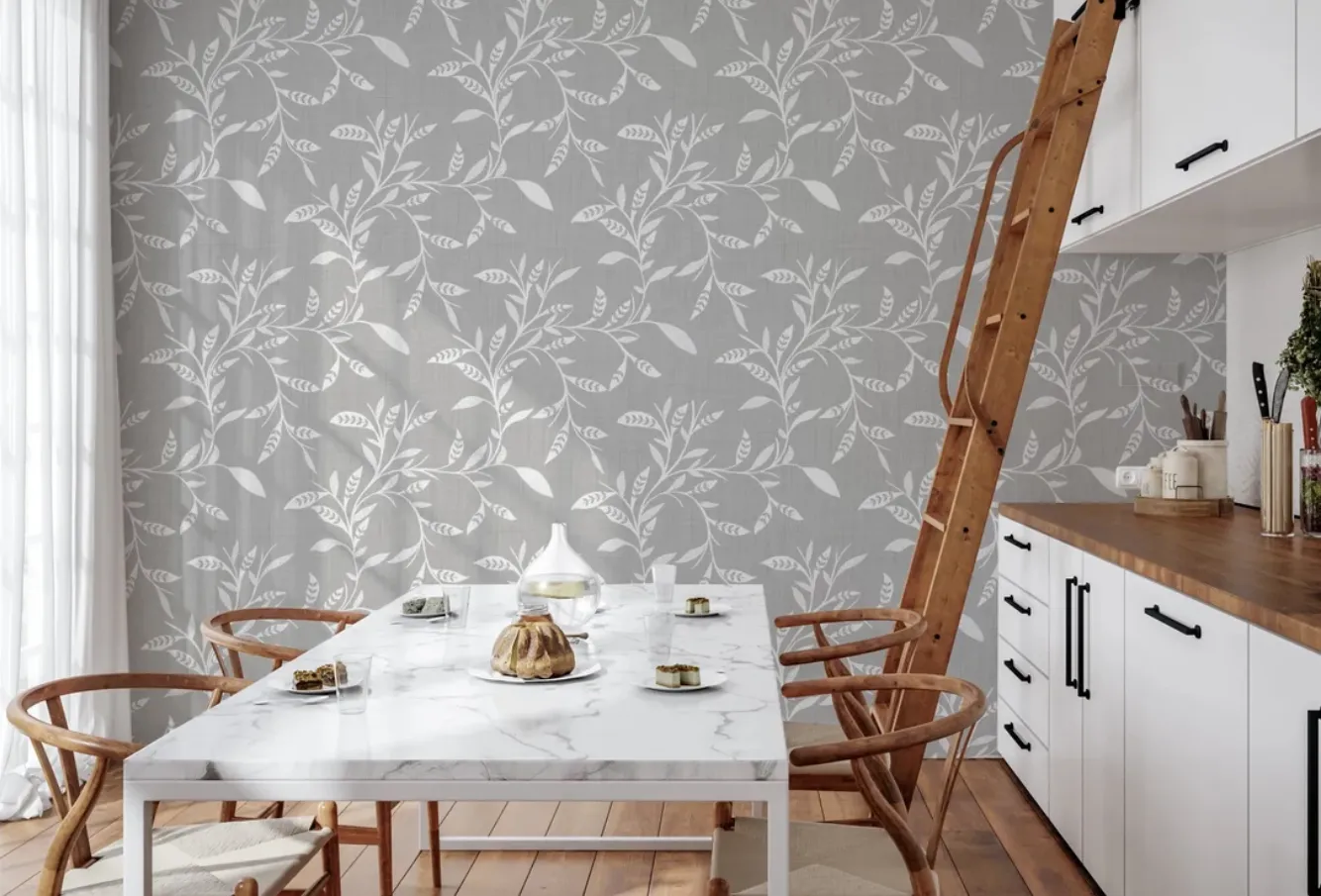

Give Your Kitchen a More Personal Look
The kitchen has become more than a place for preparing meals. It is often where families gather, guests sit, and daily routines unfold. Because of this, the room deserves a design that feels both practical and inviting. One of the simplest ways to introduce personality is with kitchen wallpaper. From botanical illustrations and soft geometrics to traditional motifs and contemporary textures, wallpaper can add visual interest without requiring a complete structural renovation. The right design can also help connect cabinetry, countertops, flooring, and lighting into one cohesive interior.
Consider the Kitchen’s Existing Features
Before selecting a pattern, look carefully at the elements that will remain in the room. Cabinets, countertops, backsplash materials, appliances, flooring, and natural light should all influence the choice. A heavily patterned wall can become overwhelming when combined with ornate cabinetry or strongly veined stone. Conversely, a restrained kitchen may benefit from a more expressive design. Measuring the wall and checking the position of windows, doors, shelves, and electrical outlets will also make installation easier. Thoughtful planning helps ensure that the wallpaper becomes part of the overall composition rather than appearing as an isolated decorative feature.
Use Pattern to Establish a Focal Point
Wallpaper can be particularly effective when it is used to create a visual focal point. Instead of covering every available surface, consider highlighting a breakfast nook, dining wall, open shelving area, or another suitable section. Large-scale botanical artwork can make a spacious kitchen feel more dramatic, while smaller repeating patterns can provide subtle texture. The goal is not simply to add decoration but to direct attention intentionally. When the pattern has a clear relationship with the room's layout, it can make the kitchen feel more balanced and thoughtfully designed.
Add Classic Character With Decorative Motifs
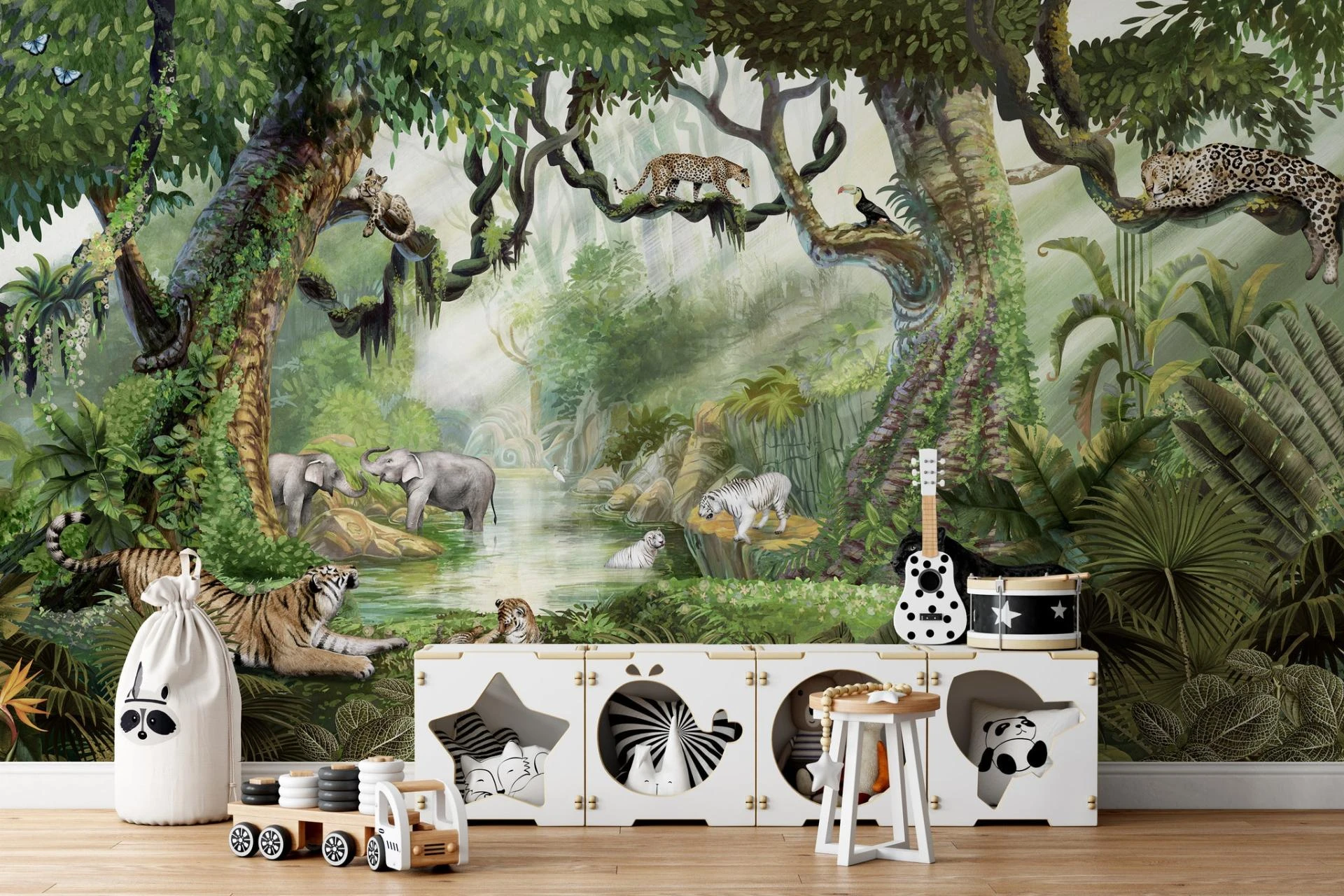
Traditional decorative patterns can bring a sense of history and craftsmanship into a contemporary kitchen. Chinoiserie peel and stick wallpaper can introduce delicate florals, birds, foliage, or scenic imagery while maintaining a polished appearance. This style works especially well in kitchens with painted cabinetry, brass hardware, natural wood, or classic lighting. A removable format can also be useful when homeowners want greater flexibility during future decorating changes. Selecting a pattern with colors that already appear elsewhere in the room creates continuity and prevents the feature wall from competing with the surrounding finishes.
Balance Bold Patterns With Simple Surfaces
A dramatic wallpaper design does not necessarily require a dramatic kitchen. In fact, bold artwork often looks most sophisticated when it is surrounded by relatively simple materials. If the wallpaper contains several colors, repeat one or two of those shades through accessories, textiles, seating, or small decorative objects. This approach creates visual repetition without making every element match exactly. Neutral cabinetry and uncomplicated countertops can provide an effective backdrop for expressive wall designs, allowing the wallpaper to become the main decorative statement while the functional elements remain visually calm.
Introduce an Artistic Finish
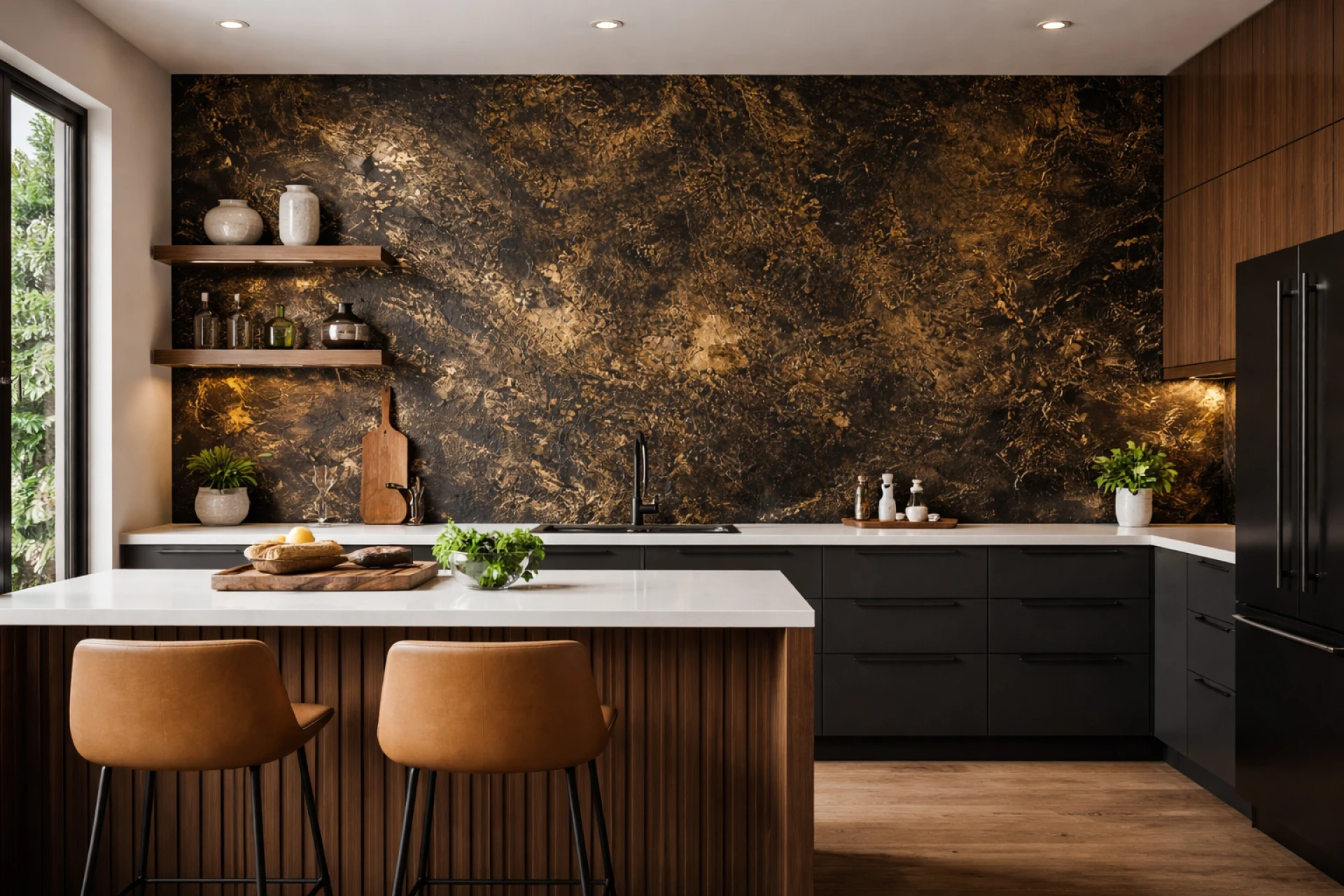
For homeowners who prefer a modern, creative aesthetic, painterly patterns can provide a less conventional alternative to traditional kitchen decoration. Brush stroke wallpaper for walls can mimic the movement and texture of hand-painted artwork, bringing energy to an otherwise structured space. Abstract brush marks can work particularly well with contemporary cabinetry, minimalist furniture, and streamlined lighting. Depending on the color palette, the same approach can feel warm and organic or sophisticated and dramatic. Choosing a design that complements existing finishes is more important than following a specific trend.
Think About Practical Placement
Although wallpaper can transform a kitchen visually, placement deserves careful consideration. Areas immediately beside sinks, cooktops, and other locations exposed to frequent moisture, heat, splashes, or grease may require additional planning. Wallpaper is often better suited to walls where it can remain relatively protected from direct exposure. Adequate ventilation and appropriate installation practices can also contribute to long-term performance. Always review the manufacturer's care and installation guidance before deciding where a particular material should be installed. Practical decisions at the planning stage can help preserve the appearance of the finished room.
Coordinate Wallpaper With Cabinetry
Cabinet color is one of the strongest visual influences in a kitchen, so it should be considered before selecting wallpaper. White and cream cabinetry can accommodate both colorful and muted patterns, while dark cabinets may benefit from lighter backgrounds that maintain contrast. Wood cabinetry can pair naturally with botanical, landscape, or earthy designs. If the cabinets already have a distinctive finish, a wallpaper with a quieter background can prevent the room from becoming visually crowded. The most successful combinations usually share at least one visual characteristic, such as a repeated color, undertone, or design influence.
Use Wallpaper During a Kitchen Update
Wallpaper can also be incorporated into a larger renovation rather than treated as an afterthought. When planning kitchen remodel wallpaper, consider the order in which materials will be selected and installed. Cabinets, counters, flooring, and major fixtures typically establish the foundation of the design, while wallpaper can help complete the visual story. This makes it easier to choose a pattern that genuinely works with the finished space. It is also useful to order samples when possible, because colors and textures can appear different under daylight, warm artificial lighting, and the specific conditions of your kitchen.
Create a Cohesive Everyday Space
A successful kitchen design should look attractive while still supporting everyday activities. Wallpaper can contribute significantly to that balance when its scale, color, placement, and material are selected thoughtfully. Rather than choosing a pattern simply because it is fashionable, consider how it will interact with the room over time. A well-chosen design can provide character, define a particular zone, and make a functional kitchen feel more complete. By combining practical planning with personal taste, homeowners can create a space that feels distinctive without sacrificing comfort or usability.














Sign in to leave a comment.