

As the days get shorter, most of us spend more hours indoors, and our homes start working harder. The bedroom becomes a place to recover, not just sleep. The living room becomes the spot where the whole household lands after dark. Furniture that felt fine in July can feel cold, cramped, or flimsy by December.
The good news is that you do not need a full renovation to fix this. A few well-chosen pieces, some smart layering, and a warmer approach to materials can change how your home feels from November through March. Here is how to do it.
Why Winter Changes What You Need From Your Home
In summer, we want light, airy rooms that open to the outdoors. In winter, the goal flips. We want rooms that feel enclosed in a good way, with soft light, warm surfaces, and a sense of shelter.
Designers often describe this as “cocooning,” and it fits what people are asking for right now. These are the themes shaping how Americans are decorating for the colder months:
Warm minimalism. Clean, uncluttered rooms are still popular, but the cold white look is fading. Warmer palettes, natural materials, and visible texture are replacing it.
Sleep as a priority. More people treat the bedroom as a wellness space. Quiet colors, solid furniture, and less clutter are part of the plan.
Tactile materials. Wool, linen, stone, and real wood feel good to touch, and that matters more when you are indoors most of the day.
Earthy color. Rust, clay, olive, deep green, and chocolate brown are showing up everywhere, and all of them pair naturally with wood tones.
Rooms that do more than one job. The living room is now also a workspace, a game room, and a place to host. Furniture needs to be tough enough for all of it.
Natural wood supports every one of these ideas. It adds warmth on its own, it works with nearly any palette, and it holds up to real daily use.
The Bedroom: Build a Space That Helps You Rest
Think about what you see when you walk into your bedroom. Almost always, the bed is the first thing. It takes up the most space and sets the mood for the room, so it makes sense to start there.
A wooden king size bed frame gives the room a solid, grounded center. Unlike upholstered or metal alternatives, real wood brings visible grain, natural color variation, and a sense of permanence. It also pairs easily with winter bedding, so you can swap textiles with the seasons without changing the bed itself.
What to Look For in a Bed Frame
Quality in a bed is easy to miss until it fails, so check these details first:
- Solid construction. Look for frames made from solid wood throughout, not MDF or veneer over a hollow core.
- Traditional joinery. Mortise and tenon joints and dovetails are the marks of furniture built to last. They keep the frame tight and quiet over years of nightly use.
- Substantial slats or platform. The support structure matters as much as the headboard. A strong base keeps the mattress stable and the frame silent.
- The wood species. Teak, Indian Rosewood, Mango, Acacia, and Mahogany each have their own personality. Darker woods feel rich and formal. Lighter tones feel relaxed and open.
All pieces at The Rural Art are made from 100% solid wood and built by skilled artisans, with no engineered boards or veneers. The goal is furniture you keep, not furniture you replace.
Layering the Bedroom for Cold Weather
Once the bed is in place, the rest is about texture and light:
- Start with natural fabrics. Linen sheets, a wool blanket, and a heavy cotton duvet create warmth that looks as good as it feels.
- Add a rug. A thick rug under and beside the bed keeps your feet off cold floors and softens the room.
- Use lamps, not overheads. Warm bedside lamps create a gentle glow that signals the body to wind down.
- Keep surfaces clear. A calm room helps you rest. Limit nightstands to a lamp, a book, and one personal item.
The Living Room: Make the Center of the Room Work Harder
The living room has the opposite challenge. It needs to be cozy enough for a quiet night and sturdy enough for a full house. The center table is the piece that ties the two together.
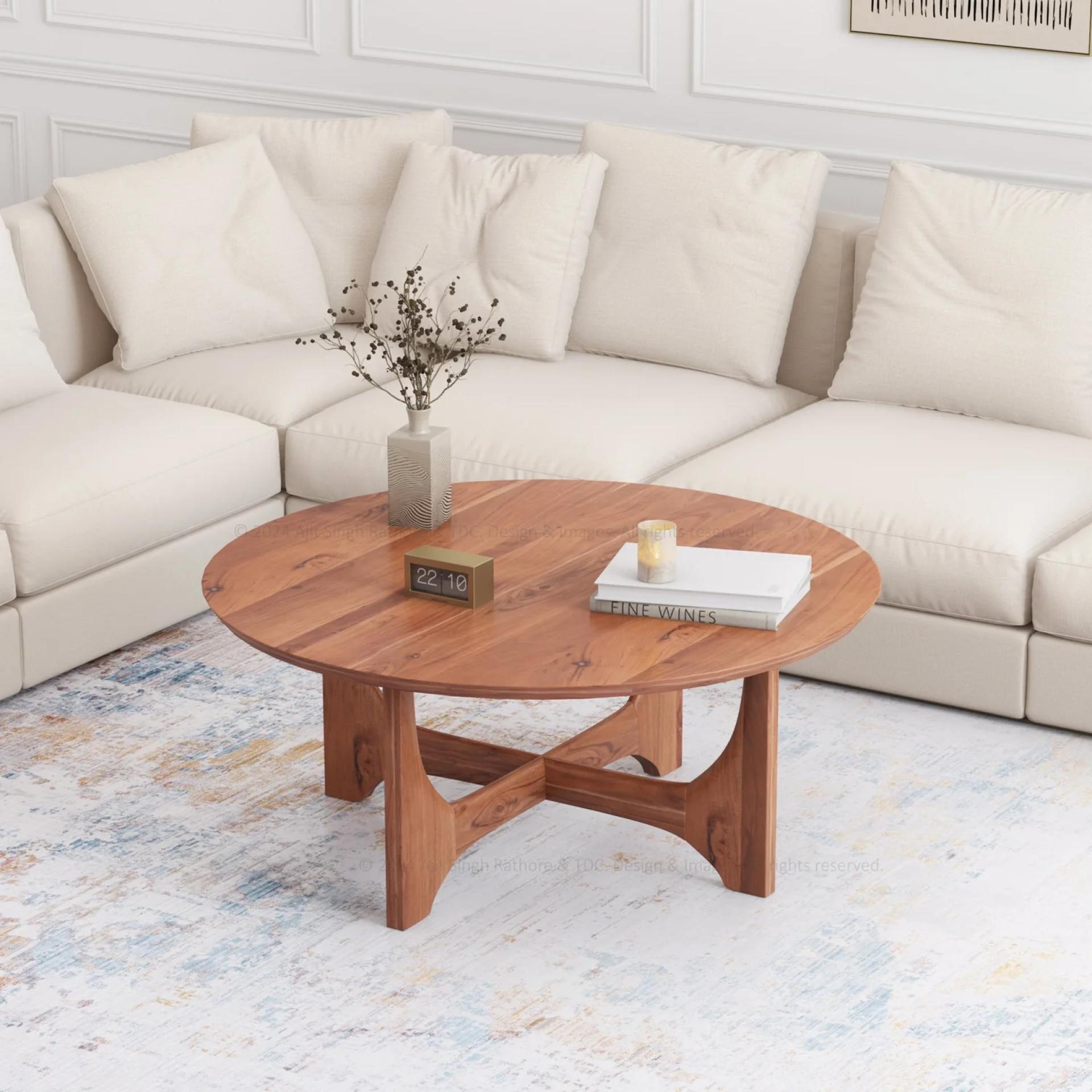
Wooden coffee tables handle winter life well. They take hot mugs, laptops, stacked books, and holiday trays without complaint, and their surfaces age gracefully instead of looking damaged. If a mark or ring appears, solid wood can be sanded and refinished, which laminate cannot.
Choosing the Right Table for Your Space
A few guidelines help you avoid the most common problems:
- Size it to your seating. A good rule is a table about two thirds the length of your sofa.
- Leave room to move. Keep roughly 14 to 18 inches between the table and the seating so people can pass through easily.
- Pick a shape for your traffic. Round and oval tables suit small rooms and busy households. Rectangular tables work well in longer, narrower layouts.
- Think about storage. A lower shelf or drawer is useful for blankets, remotes, and games, and it keeps the surface clear.
Pulling the Living Room Together
Treat the table as the anchor and build outward:
- Layer throw blankets and textured pillows on the sofa.
- Add a mix of lighting, such as a floor lamp, a table lamp, and perhaps candles, so no single bright source dominates.
- Bring in a few natural elements, such as branches, a ceramic bowl, or a stack of books on the table.
- Match the wood family across the room, but vary the tones slightly so the space feels collected rather than matched.
Your Pre-Winter Furniture Checklist
Before you buy anything large, ask yourself:
- Is the piece solid wood from top to bottom?
- How are the joints made?
- Does the wood color work with my floors, walls, and textiles?
- Have I measured the room, the doorways, and the stairs?
- Is there enough space to walk around it comfortably?
- Does it suit how my household really lives day to day?
- Will I still like it in ten years?
Mistakes That Make a Home Feel Colder
Choosing everything in the same cool tone. Too much gray or white makes a room feel sterile in winter. Add warmth through wood, fabric, and lighting.
Relying on one overhead light. Harsh ceiling lights flatten a room. Layer several softer sources instead.
Buying for looks alone. A piece that photographs well but wobbles or scratches easily will frustrate you by February.
Forgetting about dry air. Heating dries out indoor air, which can stress any wood. Keep furniture away from direct vents and radiators, and consider a humidifier if your home gets very dry.
Overcrowding the room. Cozy does not mean cluttered. Leave open floor space so the room still feels calm.
Frequently Asked Questions
Does solid wood furniture need special winter care?
Not much. Wipe spills promptly, use coasters, and keep pieces away from heating vents. A light application of wood-safe polish a few times a year helps maintain the finish.
Which wood tones feel warmest?
Deeper tones like Mahogany and Indian Rosewood feel rich and enveloping. Mango and Acacia offer a softer, honey-toned warmth.
Can I mix different wood tones in one room?
Yes, and it often looks better than a perfect match. Keep the undertones similar, such as all warm or all cool, and vary the depth of color.
What if I need a specific size or design?
The Rural Art offers custom work through The Atelier, which is a good option when standard dimensions do not fit your space.
Final Thoughts
A warm home is not built from a single big purchase. It comes from choosing honest materials, layering texture and light, and giving each room a clear purpose. Start with the pieces you use the most: the place where you sleep and the table at the center of your living room. Build them from real, solid wood, and the rest of the room will follow.
When you are ready to see what handcrafted solid wood can bring to your home, browse the collections at theruralart.com.




















Sign in to leave a comment.