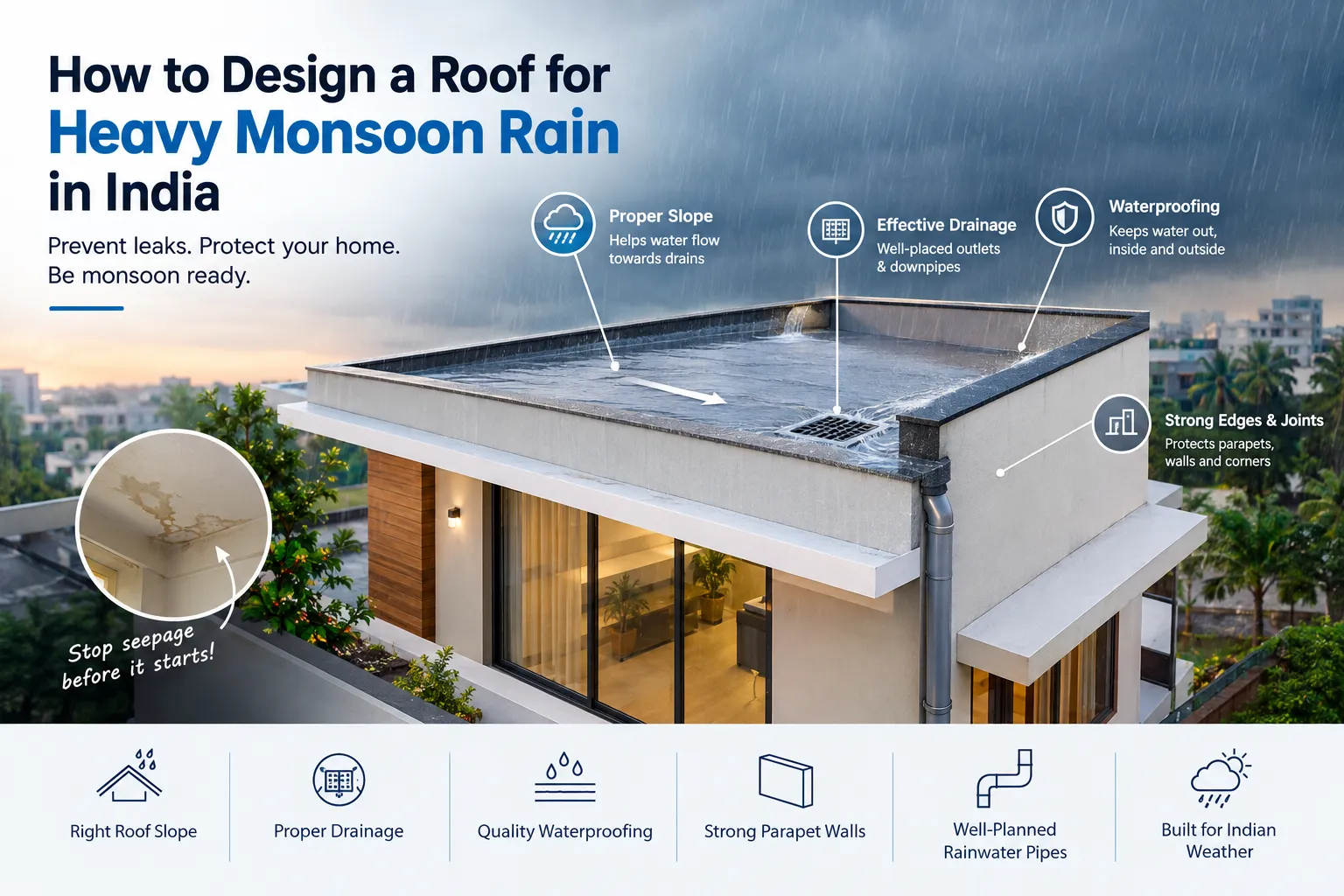

A roof designed for heavy monsoon rain needs four things working together: proper slope, effective drainage, reliable waterproofing and well-designed edges and joints. The goal is to move rainwater off the roof quickly and prevent it from reaching walls, ceilings and interior spaces.
Roof seepage is one of the most common problems Indian homeowners face during the monsoon. The issue is not always poor waterproofing. Water can enter because of inadequate roof slope, blocked outlets, damaged joints, cracks, poorly detailed parapets or rainwater pipes that cannot handle heavy rainfall. Designing these details correctly from the beginning can prevent repeated repairs later.
Why Does Heavy Rain Cause Roof Problems?
A roof may handle normal rainfall without any issue and still struggle during a strong monsoon shower.
Heavy rain puts more water onto the roof in a short period. If the roof cannot drain it quickly, water starts collecting around low spots, outlets and parapet walls.
The way a roof handles rain also depends on the type of building. Commercial and residential roofing can differ in their roof forms, drainage requirements, materials and maintenance needs, so these factors should be considered when planning a roof for heavy rainfall.
Wind-driven rain can also reach areas that normal rainfall does not, including roof edges, joints, wall connections and openings.
That is why a monsoon-ready roof should be designed as a complete water management system, not just covered with waterproofing.
1. Give the Roof the Right Slope
Water should never be allowed to sit on a roof for long.
For a flat RCC terrace, the finished surface should have a deliberate slope directing water towards the rainwater outlets. CPWD guidance recommends adequate roof slope for effective drainage and states that the drainage slope should not be flatter than 1:80, with 1:40 preferred in its waterproofing guidance.
The exact slope should be finalised according to the roof design, surface finish and local conditions.
The important point is simple: every part of the roof should have a clear path towards a drain.
2. Plan Enough Rainwater Outlets
A good slope is useful only if the water has somewhere to go.
Rainwater outlets and downpipes should be positioned at suitable low points and sized according to the roof area and expected rainfall.
For example, a large terrace with only one small outlet can quickly develop waterlogging during a heavy Delhi NCR monsoon shower.
Keep outlets free from:
- Leaves and debris
- Construction waste
- Soil and dust
- Plant roots
- Blocked grating
CPWD maintenance guidance also recommends checking roof gutters and rainwater pipes before the monsoon and removing debris that can cause blockages.
3. Treat Waterproofing as a Complete System
Waterproofing is important, but it should not be expected to solve every drainage problem.
A good roof design combines slope + drainage + waterproofing.
Depending on the roof and project requirements, waterproofing may involve cement-based systems, membranes, protective layers or other approved treatments.
Pay particular attention to places where water is more likely to enter:
- Parapet-wall junctions
- Pipe penetrations
- Construction joints
- Cracks
- Roof edges
- Drain outlets
- Chajjas and projections
These details often matter more than simply applying another coat of waterproofing over the entire terrace.
4. Protect Parapet Walls and Roof Edges
Parapet walls are frequently involved in terrace seepage.
Water can enter through cracks, poorly finished coping, junctions between the roof and wall, or damaged waterproofing.
The top of the parapet should be properly protected and detailed so rainwater does not remain trapped around the wall.
For homes in areas with strong monsoon rainfall, chajjas and suitable roof overhangs can also help keep rain away from external walls and windows.
Traditional Indian homes in high-rainfall regions often use generous roof overhangs for exactly this reason.
5. Don't Ignore the Rainwater Pipes
Even when the roof itself is well designed, poorly installed downpipes can create problems.
Rainwater pipes should have suitable capacity, proper connections and secure fixing to the building.
Avoid unnecessary bends where they can increase the chances of blockage.
For larger roofs, multiple outlets and downpipes can provide useful redundancy. If one outlet becomes blocked during a storm, the entire roof should not immediately start filling with water.
6. Design for Your Local Climate
Not every Indian home needs the same roof design.
A house in Kerala or coastal Karnataka faces very different rainfall conditions from a home in Delhi or Jaipur.
Heavy-rainfall regions may benefit from steeper pitched roofs, larger overhangs and more substantial drainage arrangements. Flat RCC terraces can also work well when their slope, outlets and waterproofing are properly designed.
The right roof design also depends on whether the building is residential or commercial. Commercial and residential roofing can have different requirements for roof shape, drainage, waterproofing, maintenance access and rooftop equipment. Understanding these differences can help when selecting a roofing approach for a particular building.
The roof should respond to the local rainfall, wind, temperature and building orientation, rather than following a one-size-fits-all design.
What Materials Work Well for Monsoon Roofs?
Material selection depends on the roof type, climate and budget.
For pitched roofs, options may include:
- Clay or concrete tiles
- Fibre-cement roofing
- Metal roofing with appropriate protective coatings
- Other manufacturer-approved roofing systems
For flat RCC roofs, the focus is less on the visible material and more on the complete build-up, including slope, waterproofing, drainage and protective finishes.
The material alone will not prevent seepage if the roof is poorly detailed.
How Much Does Monsoon Roof Protection Cost?
There is no single cost because roof size, condition, waterproofing system and drainage requirements vary.
| Work | What Affects the Cost |
|---|---|
| Roof waterproofing | Area, system and existing damage |
| Slope correction | Existing roof condition and screed requirements |
| Rainwater outlets | Number, size and installation |
| Downpipes | Length, material and routing |
| Parapet repairs | Cracks, coping and junction treatment |
| Roof replacement | Material, structural work and labour |
| Roof insulation | Material and area covered |
For an existing home, fixing the source of seepage is usually more useful than repeatedly painting the Damp ceiling below.
Common Roof Problems During Monsoon
1. Roof seepage
Often caused by cracks, failed waterproofing, poor joints or water remaining on the terrace.
2. Waterlogging
Usually linked to inadequate slope, blocked outlets or insufficient drainage capacity.
3. Damp ceiling
A damp patch inside the room may originate from the terrace, parapet, pipe penetration or chajja above it. Before covering the affected area, fix the source of moisture first. If you are considering a false ceiling after resolving the leakage, understanding the different false ceiling options can help you choose a suitable solution.
4. Cracked parapets
Movement, weather exposure and poor construction details can allow water to enter through parapet cracks.
5. Blocked rainwater pipes
Leaves, dirt and debris can restrict flow just when the roof needs maximum drainage capacity.
Monsoon Roof Checklist
Before the rainy season, check:
- Roof slope and low spots
- Waterproofing condition
- Rainwater outlets
- Downpipes and connections
- Parapet coping
- Roof-to-wall joints
- Cracks around pipes and projections
- Chajjas and external ledges
- Leaves and debris
- Signs of previous seepage
For an older home, it is better to inspect the roof before the monsoon rather than waiting for the first ceiling stain.
Frequently Asked Questions
How do I stop my roof from leaking during the monsoon?
Start by identifying where the water is entering. Check the roof slope, drainage outlets, waterproofing, parapet joints and pipe penetrations instead of simply applying another waterproofing coat.
What is the best roof for heavy rainfall in India?
There is no single best option. In very high-rainfall regions, sloped roofs with suitable overhangs and effective drainage can shed water quickly. Flat RCC roofs can also perform well when properly sloped, waterproofed and drained.
Why does my terrace still leak after waterproofing?
Waterproofing may not solve the underlying problem if water is ponding, entering through joints, leaking around pipes or coming through damaged parapet details. The entire roof drainage and waterproofing system should be inspected.
What to Remember Before the Monsoon
A monsoon-ready roof is not simply a waterproof roof.
It is a roof where water has a clear path from the surface to the drain, joints are properly protected, edges are detailed correctly and the waterproofing system is supported by good drainage.
If you are building or renovating a home in India, plan these details before the first heavy rain arrives. A little attention during design and construction can save you from repeated seepage repairs, damp ceilings and damaged interiors later.
























Sign in to leave a comment.