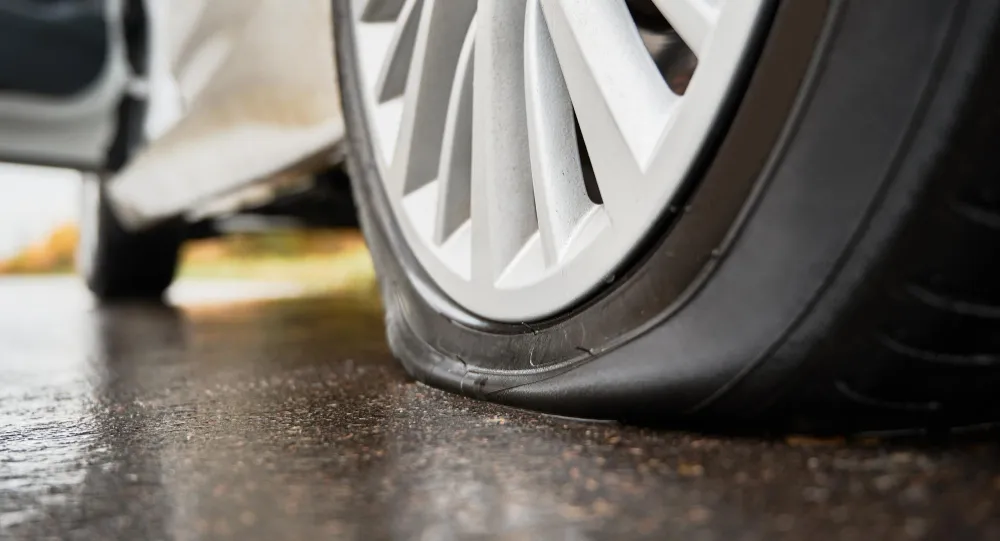

A slow tyre leak is a small drop in air pressure that builds up over days or weeks instead of happening all at once. It usually comes from one of three places. A worn valve stem, a small puncture from a nail or screw, or a bead that isn't sealing properly against the rim anymore.
Heat and road debris make these worse over time. A leak that starts tiny in summer can turn into a real problem by winter, once the rubber contracts in the cold. This is why tyre leak detection matters long before the tyre goes visibly flat.
How do you know if your tyre has a leak?
There are a few signs that show up before the tyre goes fully flat. Catching them early is what stops a slow leak from turning into a blowout on the highway.
Signs to watch for
- The tyre looks slightly flatter than the other three when you walk around the car
- The TPMS light comes on the dashboard, even if the tyre still looks fine
- The car pulls a little to one side while driving, usually towards the low tyre
- You hear a faint hiss near the wheel when the car is parked and the engine's off
Any one of these on its own is worth checking. More than one at the same time means don't wait.
How can you find where a tyre is leaking?
The easiest way to find a leak at home is the soap and water test. Mix a bit of dish soap with water, spray or brush it over the tyre, and look for bubbles. Wherever bubbles form, that's where the air is escaping.
Check the valve stem first since that's the most common spot. Then work around the tread and down the sidewall. It takes a few minutes and doesn't need any special tools, just a bucket, some soap, and a bit of patience.
How do workshops detect leaks professionally?
Workshops use a dip tank tyre test for this, which is basically the soap test scaled up. The tyre goes fully underwater, and any leak shows up as a steady stream of bubbles, even ones too small to catch by hand.
Dip tank inspection steps
- Submerge the tyre completely in the tank
- Rotate it slowly while watching for bubbles breaking the surface
- Mark the spot once bubbles start showing
- Dry the area fully before starting the repair
This method catches leaks that are almost impossible to spot on a dry tyre, which is why most tyre shops still use it even with newer diagnostic tools around. A properly set up leak detector workshop relies on this test as the final check before any repair goes ahead.
When should a leaking tyre be replaced instead of repaired?
It depends on where the damage sits. A puncture in the tread is usually repairable. Damage on the sidewall or near the shoulder usually isn't, since that part of the tyre flexes constantly and a patch won't hold there for long.
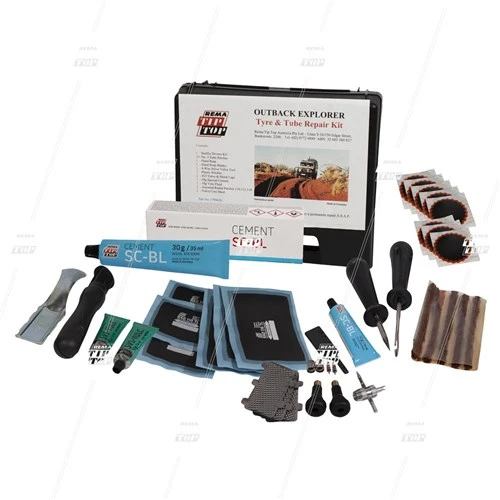
If you're not sure which one you're dealing with, get it checked at a workshop rather than guessing. A tyre that looks fine from the outside can still be unsafe if the damage sits in the wrong spot. Workshops handling repairs like this often rely on dip tanks and patch kits from suppliers such as REMA TIP TOP, alongside other tyre equipment brands, to confirm exactly where a leak is before deciding whether to fix it or swap the tyre out. Either way, it's worth getting it looked at before a small leak turns into something you can't drive on.

























Sign in to leave a comment.