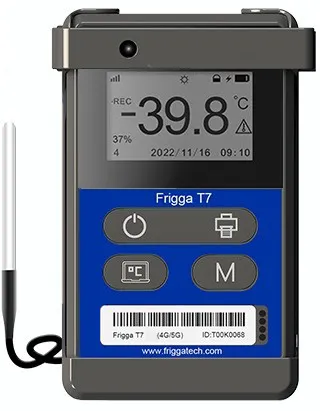

Accurate temperature monitoring is essential for industries that handle temperature-sensitive products. Pharmaceuticals, vaccines, food products, laboratory materials, and other sensitive goods can be affected when temperatures move outside their required ranges. Even a small measurement error can lead to incorrect decisions, product quality concerns, or compliance issues.
This is why temperature logger calibration is an important part of an effective temperature monitoring program. Calibration helps verify whether a temperature logger is measuring temperature accurately when compared with a reliable reference standard.
What Is Temperature Logger Calibration?
Temperature logger calibration is the process of comparing a logger's temperature readings against a reference instrument with known accuracy. The purpose is to identify any difference between the logger's measurement and the reference value.
For example, if a calibrated reference standard indicates 5°C while a temperature logger records 5.4°C, the difference can be evaluated and documented. Depending on the calibration requirements and acceptable tolerance, the logger may require adjustment, correction, replacement, or further investigation.
Calibration should be performed under controlled conditions and documented properly so organizations can demonstrate that their monitoring equipment is reliable.
Why Is Calibration Important?
Temperature loggers are used to collect critical information throughout storage and transportation. Over time, sensors and electronic components can experience measurement drift because of age, environmental conditions, mechanical stress, or repeated use.
Regular calibration provides several important benefits:
1. Improved Measurement Accuracy
Calibration helps confirm that temperature readings are within an acceptable accuracy range. Reliable readings allow businesses to make better decisions about their temperature-sensitive products.
2. Better Product Protection
Pharmaceuticals, vaccines, biological materials, food, and other sensitive products often require specific temperature conditions. Accurate monitoring can help identify temperature excursions before they create significant problems.
3. Regulatory and Quality Support
Many industries operate under quality systems that require monitoring equipment to be maintained and verified. Calibration records can provide evidence that temperature monitoring devices are routinely checked.
4. Reduced Risk
An inaccurate logger may show acceptable temperatures even when the actual conditions are outside the required range. Calibration helps reduce this risk by identifying potential measurement deviations.
5. Reliable Historical Data
Temperature data may be reviewed during quality investigations, audits, or shipment assessments. Calibrated equipment provides greater confidence in the accuracy of those records.
How Does Temperature Logger Calibration Work?
The exact calibration procedure depends on the logger, sensor type, accuracy requirements, and applicable standards. However, a typical process includes several key steps.
1. Inspect the Logger
Before calibration, the device should be inspected for physical damage, sensor problems, battery issues, or other conditions that could affect performance.
2. Select a Suitable Reference Standard
The reference instrument should have suitable accuracy and traceability for the required calibration range. The reference device is used as the benchmark against which the logger is evaluated.
3. Establish Controlled Conditions
The logger and reference sensor are placed in an appropriate temperature-controlled environment. Calibration points should represent the temperatures relevant to the logger's intended application.
4. Allow Temperature Stabilization
Both devices need sufficient time to reach stable temperature conditions. Taking readings before stabilization can produce inconsistent or misleading results.
5. Compare the Readings
Temperature readings from the logger are compared with the reference instrument. The difference between the two measurements is recorded at each calibration point.
6. Document the Results
Calibration results should include relevant information such as the device identification, calibration date, reference standard, test points, measured values, deviations, and calibration status.
How Often Should a Temperature Logger Be Calibrated?
There is no single calibration interval that applies to every temperature logger. The appropriate frequency depends on factors such as:
- Manufacturer recommendations
- Frequency of logger use
- Operating environment
- Required measurement accuracy
- Industry requirements
- Internal quality procedures
- Previous calibration history
- Risk associated with the monitored products
Some organizations may establish an annual calibration schedule, while high-risk applications may require more frequent verification.
Businesses should create a documented calibration schedule based on their operational and quality requirements rather than relying on an arbitrary interval.
Calibration for Cold Chain Monitoring
Cold chain operations require reliable temperature information from storage through transportation and delivery. A temperature logger may be placed inside a pharmaceutical shipment, refrigerated vehicle, insulated container, cold room, or other temperature-controlled environment.
If the logger is not measuring correctly, the recorded data may not accurately represent the actual product environment.
For this reason, calibration should be considered an important component of a broader cold chain monitoring strategy. Organizations should combine calibrated temperature loggers with appropriate packaging, storage procedures, monitoring processes, and documented corrective actions.
Choosing a Reliable Temperature Logger
Calibration is important, but selecting the right logger is equally important. When evaluating a temperature monitoring device, businesses should consider:
- Required temperature range
- Measurement accuracy
- Resolution
- Recording interval
- Memory capacity
- Battery life
- Data download method
- Alarm functionality
- Single-use or reusable design
- Calibration documentation
- Application-specific requirements
The right combination of device capabilities and calibration practices can help organizations maintain dependable temperature records.
The Role of Temp Note
Temp Note provides temperature monitoring solutions designed for applications where dependable temperature data is important. Its range of temperature data loggers can support different monitoring requirements across storage, transportation, and cold chain operations.
Organizations can evaluate their monitoring needs and select suitable data logging solutions while incorporating calibration and verification into their quality processes.
Best Practices for Temperature Logger Calibration
To maintain consistent measurement performance, organizations should follow a structured approach:
- Maintain a documented calibration schedule.
- Use suitable and traceable reference equipment.
- Keep calibration certificates and records organized.
- Inspect loggers before calibration.
- Perform calibration at relevant temperature points.
- Investigate significant measurement deviations.
- Follow manufacturer recommendations.
- Remove damaged or unreliable devices from service.
- Review calibration history periodically.
- Establish procedures for handling out-of-calibration equipment.
These practices can help improve confidence in temperature monitoring data and support a stronger quality management system.
Conclusion
Accurate temperature information is fundamental to effective temperature-sensitive product management. Temperature logger calibration helps organizations verify the performance of their monitoring devices and identify measurement deviations before they become larger problems.
From pharmaceutical logistics and vaccine transportation to food distribution and laboratory applications, calibrated temperature monitoring equipment can provide greater confidence in recorded data. By establishing appropriate calibration intervals, using reliable reference standards, maintaining detailed records, and selecting suitable monitoring devices, businesses can build a more dependable temperature monitoring process.


























Sign in to leave a comment.