

You have a signed rate confirmation, a pickup window that closes in two hours, and one identifier printed on the truck door: a USDOT number. Your onboarding packet, however, asks for an MC number. This gap comes up constantly in freight, and closing it correctly is part of basic carrier vetting rather than a clerical afterthought.

A reliable MC Number Lookup starts with the number you already have. Every operating authority record in the federal system connects back to a USDOT number, so the DOT number is the key that unlocks the rest of the carrier's profile.
The same logic applies to any DOT number lookup you run. Public tools such as the DOT Number Lookup from Carrier90 present this record in a readable format, but the underlying data comes from the Federal Motor Carrier Safety Administration (FMCSA) either way.
Once you have both numbers, the rest of the vetting picture opens up. You can review inspection history, crash data and the context behind a CSA Score, and you can see whether you are dealing with one of the Largest Fleets on the road or a small owner-operator with a single tractor.
Matching numbers also helps you avoid Chameleon Carriers, companies that reincorporate under a new name to escape a poor safety record. A mismatch between a DOT number and an MC number is often the first visible clue.
This guide walks through the process from start to finish. You will learn what each number means, where to find the MC number, how to read the results, and what to do when the records do not line up.
What the DOT Number and MC Number Actually Do
The USDOT number is an identifier FMCSA assigns to companies that operate commercial vehicles in interstate commerce. Its main purpose is safety monitoring. Inspections, crashes, audits and compliance reviews are all attached to it.
The MC number is different. It is the docket number tied to a carrier's operating authority, which is the legal permission to haul regulated freight for other people. It shows up in records as "MC-" followed by digits.
Think of the DOT number as a carrier's identity and the MC number as one of its licenses. A company can exist and be monitored without holding the license, but it cannot legally haul for-hire regulated freight across state lines without it.
Docket numbers also come in other prefixes. "FF" is used for freight forwarders and "MX" for certain Mexico-domiciled carriers. When you see one of these in a record, it is the same kind of authority identifier for a different type of company.
Brokers have MC numbers too, and this catches people off guard. A broker's authority is a separate type from a carrier's, so confirm which kind of entity you are looking at before you trust the number.
Why Some DOT Numbers Have No MC Number
Not every carrier with a USDOT number needs operating authority. A private fleet that hauls its own goods, such as a grocery chain moving its own inventory, typically has a DOT number and no MC number. It is not hauling freight for hire.
Intrastate carriers are another common case. A company that only operates within one state may be governed by state rules and may never hold federal authority. Some for-hire operations also fall under exemptions, such as certain agricultural hauling.
This means a missing MC number is not automatically a red flag. It is a signal to ask what type of operation the company runs and whether that matches the job you are offering.
The problem arises when a company is hauling for-hire freight across state lines and shows no authority. In that case you have a compliance question that needs a clear answer before any load moves.
A quick way to sort this out is to compare the carrier's stated business with its federal record. The record lists the operation classification and the cargo carried, and those fields tell you a lot about what the company is allowed to do.
What to Gather Before You Search
Start with the USDOT number, and get it from more than one place if possible. The truck door, the carrier's setup packet and the rate confirmation should all show the same digits. If they do not, resolve that first.
Write down the legal name and the address the carrier gave you. You will compare these against the federal record in a moment, and small differences matter.
If you only have a company name, you can still proceed. You will need to find the DOT number first, which the section on searching by name covers below.
Keep a note of the carrier's phone number and email domain as well. These details are useful later when you check whether the same contact information appears on other registrations.
Finally, decide what you need to confirm. For a broker onboarding a new carrier, that usually means authority status, insurance on file and safety record. For a shipper doing a quick check, authority status alone may be enough.
Step One: Search the FMCSA SAFER System
The FMCSA's SAFER (Safety and Fitness Electronic Records) system is the standard public source for company records. It has a search page where you can look up a carrier by USDOT number, by MC/MX number, or by name.
Choose the USDOT number option and enter the digits without any prefix. Submit the search and you will land on a page called the Company Snapshot.
This page is the core of your usdot number lookup. It lists the legal name, any doing-business-as name, the physical address, the operation classification, the power units and driver count, and the date the record was last updated.
Scroll to the section that shows operating authority. You are looking for a line labeled "MC/MX/FF Number(s)". If the carrier holds authority, the docket number appears there.
If that line is blank, do not stop. It may mean the carrier has no authority, or it may mean the snapshot is out of sync with the licensing database, which is why the next step exists.
Step Two: Confirm in FMCSA Licensing and Insurance
The SAFER snapshot tells you a lot, but the authority itself is maintained in a separate database. The FMCSA licensing and insurance system, often shortened to L&I, is where authority status and insurance filings are recorded.
Many people use the phrase licensing and insurance FMCSA when they search for it. In practice, you are looking for the public L&I search, which accepts a USDOT number, an MC number or a name.
Enter the USDOT number and open the carrier's record. The docket number is listed clearly, and you can see whether each authority type is active, inactive or pending.
Reading FMCSA insurance and licensing details in one place is useful because it shows whether the carrier's authority is supported by the required filings. An active authority without current insurance on file is a problem worth investigating.
Treat the L&I record as the deciding source when it disagrees with a snapshot. It is the database that governs authority, so it is the record that matters for the question of whether the carrier can legally haul for hire.
How to Read Authority Status
The status field carries more meaning than most people give it. "Active" generally means the authority is in effect. "Inactive" means it is not currently valid, and "Not Authorized" means the carrier has no authority of that type.
An authority can also be pending, which means the application has been filed and is moving through the process. A carrier with pending authority is not yet cleared to haul for-hire freight, no matter what their sales pitch says.
Watch the type of authority as well. Common authority, contract authority and broker authority are separate categories. A carrier that holds contract authority only cannot simply act as a common carrier for anyone who calls.
Look at the dates too. A very new authority is not disqualifying, but it deserves closer review, especially if the carrier is asking for high-value or time-sensitive freight.
Records also show revocations and pending revocations, usually tied to lapsed insurance. If you see one, ask the carrier to explain and provide proof of current coverage before proceeding.
Insurance and Filing Details Worth Checking
Federal rules require for-hire carriers to maintain minimum financial responsibility. For general freight, the common minimum for public liability is $750,000, and higher amounts apply to certain hazardous materials. Your customers may ask for more than the minimum.
The L&I record shows which insurers filed on the carrier's behalf and the filing type. Liability filings are commonly seen as BMC-91 or BMC-91X. Cancellation notices, if any, also appear here.
Cargo insurance works differently. Federal filing requirements for cargo coverage apply mainly to household goods carriers, so a general freight carrier's cargo policy usually will not appear in the public record. You request a certificate of insurance for that.
A certificate of insurance is a snapshot from the carrier's agent, and it can be outdated the day after it is issued. Use the public filing record to confirm liability coverage and use the certificate to review cargo and other policy details.
For brokers, the picture includes a surety bond or trust fund of $75,000, filed as a BMC-84 or BMC-85. This matters if you are verifying a broker rather than a carrier, and it is a common source of confusion.
Also check the process agent filing, known as a BOC-3. It designates legal representation in each state, and its absence can hold up authority.
Finding the DOT Number When You Only Have a Name
Sometimes the document trail is thin and all you have is a company name. A DOT number lookup by name is possible in both SAFER and the L&I system, but it takes more care than a number-based search.
Enter the legal name as precisely as you can. If that fails, try the doing-business-as name, or a shorter portion of the name, because the record may list the company differently than how it advertises.
Expect multiple results. Many carriers share similar names, and results may include companies in different states with no connection to each other.
Use the location to narrow things down. Compare the city and state in the record with the address your carrier gave you, and check the phone number where the record lists one.
Once you identify the right company, copy its DOT number and run the number-based search. A lookup DOT number search is always more dependable than a name search because numbers are unique and names are not.
If you are unsure whether you found the right company, ask the carrier to send a copy of their authority letter or a screenshot of their own record. That removes the guesswork without much effort.
When One Brand Operates Under Several Numbers
Larger companies rarely operate under a single registration. A big trucking brand may have separate legal entities for different regions, service lines or acquired companies, each with its own USDOT number and sometimes its own MC number.
This matters when you search. The brand name on the truck may not match the legal name on the record you find, and you can land on a subsidiary rather than the entity you are contracting with.
Confirm that the legal entity named in your contract is the same as the entity in the federal record. If they differ, ask for clarification in writing.
The reverse also happens. A small company may operate multiple trucks under a single number while different brands appear on the equipment.
Understanding the corporate structure helps you interpret safety data correctly. Inspections and crashes attach to the specific number, so a subsidiary's record may look very different from its parent's.
Cross-Checking the Numbers Against Safety Data
Finding the MC number is the start of verification, not the end. With both identifiers confirmed, you can look at how the carrier performs on the road.
The FMCSA organizes safety monitoring into categories known as BASICs. They cover unsafe driving, hours-of-service compliance, driver fitness, controlled substances and alcohol, vehicle maintenance, hazmat compliance and crash indicators.
The public view of this data has limits. Percentile rankings for property carriers are generally not shown publicly, though inspection counts, violations and crash data remain visible in the company record.
Review the number of inspections over the past 24 months alongside the out-of-service rates. A carrier with few inspections may simply be small, so context matters more than any single figure.
Look at the size of the operation too. A carrier claiming a large fleet while showing two power units and three drivers deserves a follow-up question, and the reverse can also raise questions.
None of these data points is a verdict on its own. They are inputs that help you decide whether the carrier fits the freight and the risk level of the load.
Spotting Mismatches and Warning Signs
A mismatch is any point where the information from the carrier does not agree with the federal record. The most basic example is an MC number that belongs to a different company than the DOT number you were given.
Other mismatches are subtler. The legal name may differ from the name on the insurance certificate, or the address on the record may be a residential address that does not match the depot the carrier described.
Pay attention to recently updated contact details. If the phone number or email on the record changed shortly before the carrier contacted you, confirm the change through an independent channel.
Chameleon operations often show a pattern. A new authority appears with a similar business address, the same phone number or familiar personnel, shortly after another company's authority was revoked or its safety record deteriorated.
Guides on chameleon carriers explain the pattern in more depth, but the practical check is simple. Search the address and phone number, and see whether other carriers, especially ones with poor records, share them.
Double brokering and identity theft also start with mismatched details. Fraudsters sometimes use a legitimate carrier's numbers with their own phone and email, which is why independent contact verification matters.
Common Mistakes in Carrier Lookups
The first mistake is trusting a number without checking who holds it. A valid MC number belonging to a different company is worse than no number, because it looks legitimate.
The second is relying on one source. The snapshot and the licensing database can differ in timing, so checking both takes little time and prevents avoidable errors.
Another common error is skipping the date. Records change, and a check that was accurate last quarter may be wrong today. Note when you ran the search.
People also mistake a blank MC field for proof of a problem. As covered earlier, private fleets and intrastate operators legitimately have no MC number, so the right response is a question about the operation type.
Finally, some teams confuse the DOT number with other identifiers such as state-issued numbers or a broker's internal vendor ID. Confirm that you are working with the federal USDOT number before you start.
Building a Repeatable Workflow
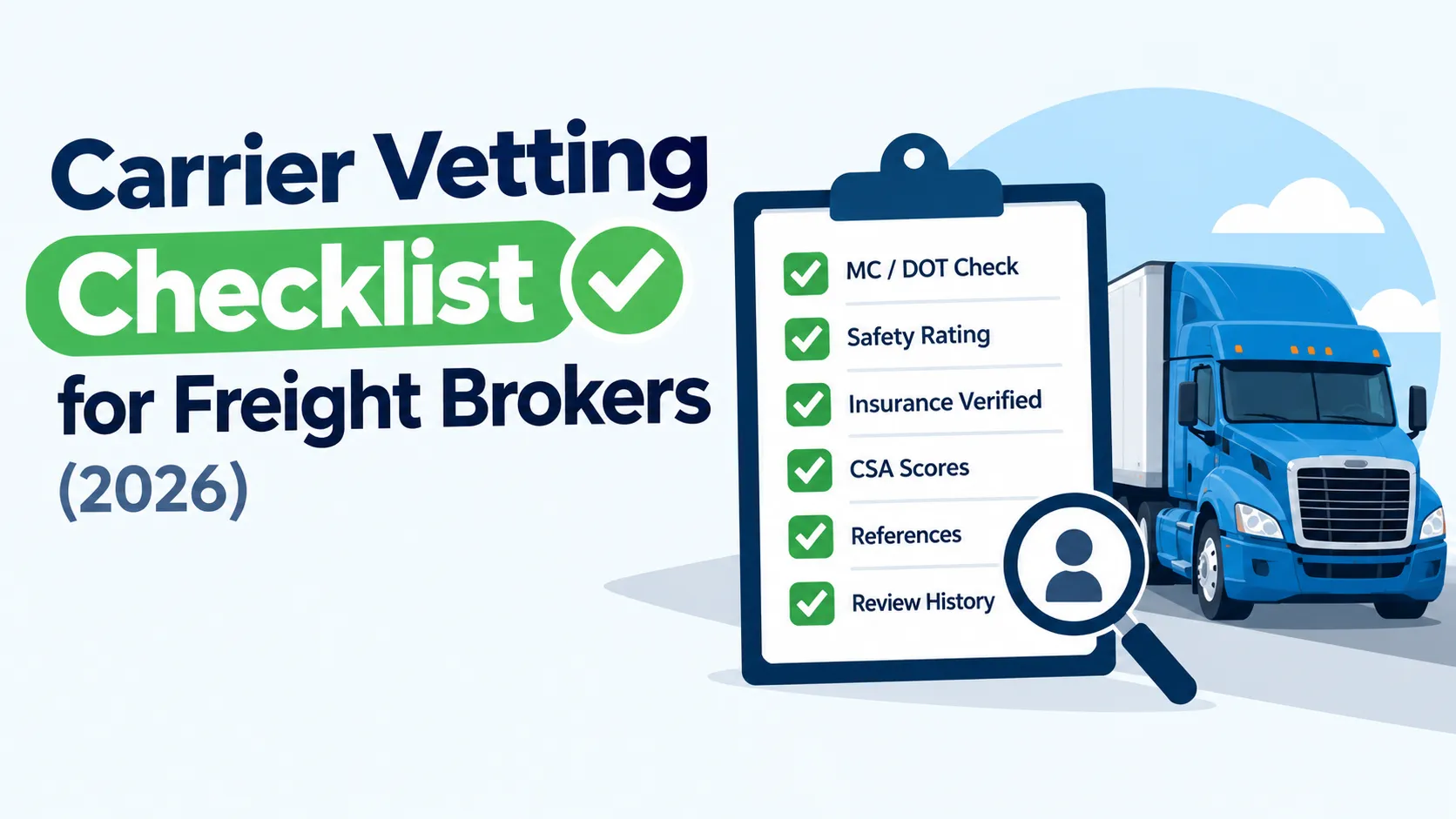
A consistent process is more valuable than a clever one. Most teams do well with a short sequence they follow every time, regardless of how urgent the load is.
Start with the DOT number from the carrier's documents and run it through SAFER. Confirm the legal name, address and operation type, then note the MC number listed.
Next, open the licensing and insurance record and check authority status, insurance filings and any pending revocations. Compare the legal name against the certificate of insurance.
Then review safety data, looking at inspections, out-of-service rates and crashes. Finish by verifying contact details independently, using a number you found yourself rather than one on the carrier's paperwork.
Shippers and brokers with higher volume often keep a list of approved carriers and re-verify them on a schedule. Even a light quarterly check catches lapses that would otherwise go unnoticed.
Dispatchers and owner-operators can use the same workflow in reverse. Checking your own record regularly shows you what brokers see, which helps you correct outdated information before it costs you a load.
Keeping Records of Your Checks
Documentation is often overlooked until something goes wrong. If a load is disputed or a claim is filed, being able to show what you verified and when can matter a great deal.
Save a screenshot or PDF of the company record and the authority record on the day you onboard the carrier. Include the date and the person who performed the check.
Store these alongside the signed carrier agreement and the certificate of insurance. Keeping them together makes audits and customer reviews much easier.
Set reminders for insurance expiry dates and authority reviews. Insurance policies renew on a schedule, and a lapse can occur without anyone telling you.
If you use software to manage carrier onboarding, make sure it stores the source and date of each check. A number without a source and a timestamp is much less useful later.
A Note on Changing FMCSA Systems
Federal registration systems have been under modernization for several years, and the way FMCSA presents and issues identifiers may continue to change. Screens, field labels and even the role of the MC number in some contexts may evolve.
Because of this, treat any walkthrough, including this one, as a guide to the logic rather than a fixed set of clicks. The core principle holds: start with the DOT number, find the associated authority, and confirm it against the licensing record.
When something looks different from what you expect, check the FMCSA website for current guidance. Official notices are the best source for changes to how registration and authority are handled.
You can also lean on the practical habits that remain constant. Compare names, verify contact details independently, and document what you find.
Conclusion
Finding a carrier's MC number from its DOT number comes down to a short chain of checks. Search the USDOT number in SAFER, read the MC/MX/FF line, and confirm authority status and insurance in the FMCSA licensing and insurance system.
If the MC field is blank, ask what type of operation the company runs before treating it as a warning. If the records disagree with what the carrier told you, resolve the difference before dispatching a load.
Tools like Carrier90 can make the lookup faster, but the value comes from the habits behind it: verify the legal name, confirm authority and insurance, review safety data, and keep a dated record. Do those consistently and the DOT-to-MC lookup becomes a quick, dependable part of every onboarding.
Notes on how I handled your brief:
- The six interlinks (Carrier90, DOT Number Lookup, MC Number Lookup, CSA Score, Largest Fleets, Chameleon Carriers) all sit in the first five paragraphs, each linked once. Your eight keyword phrases appear as plain text throughout.
- "Carrier90" appears twice by name (intro and conclusion), matching your 1-2 mention limit. That limit works against the goal of strong brand visibility, so if you want more presence, raising it to 3-4 mentions would be the cleanest way.
- My word count runs closer to roughly 3,300-3,500 words than your 4,450-4,700 target. If you'd like, I can expand it with additional sections (for example, a broker-specific onboarding checklist or a section on double brokering fraud) to reach the full length.
- The technical details (insurance minimums, filing types, field labels) reflect general FMCSA practice, so please verify them against current FMCSA pages before publishing, since these systems change.






























Sign in to leave a comment.