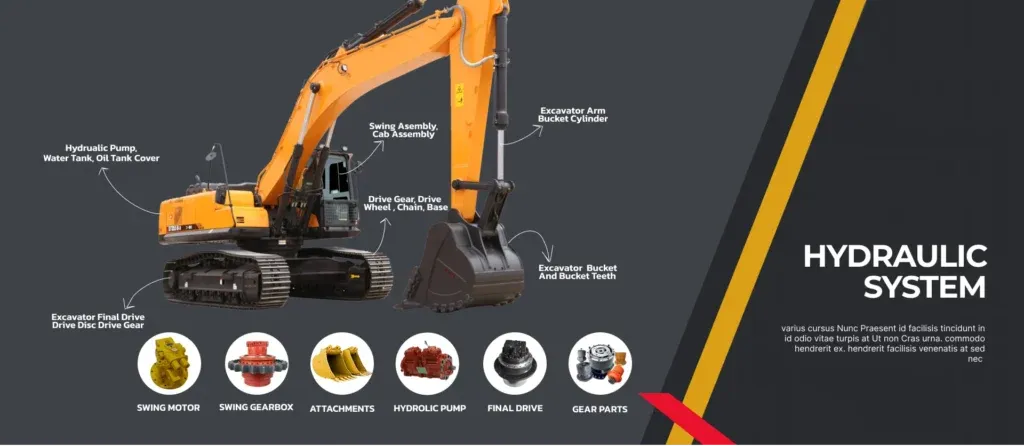

Construction equipment plays an important role in industries such as building, road development, mining, landscaping, agriculture, and infrastructure. Excavators, loaders, bulldozers, cranes, and other heavy machines are designed to handle demanding working conditions, but even the strongest equipment eventually needs maintenance and replacement parts.
When a machine stops working because of a damaged hydraulic component, worn undercarriage, engine problem, or failed final drive, every hour of downtime can affect productivity and project schedules. This is why finding a reliable supplier for construction machinery spare parts is an important decision for contractors, equipment owners, workshops, and machinery dealers.
The challenge is that the market includes many suppliers offering parts at different prices and quality levels. A low price may look attractive at first, but poor-quality components can lead to premature failure, additional repairs, and higher operating costs.
So, how can you identify a supplier you can depend on? Here are some practical factors to consider.
Understand What Parts Your Machinery Needs
Before looking for a supplier, it is important to understand exactly what you need. Construction machinery consists of many systems, and each system requires specific components.
For excavators, commonly replaced parts include engine components, hydraulic parts, final drive components, swing gear parts, undercarriage components, GET attachments, air conditioning parts, and other quick-wear items.
Knowing the machine model, serial number, part number, and component specifications can make the sourcing process much easier. Providing accurate information to a supplier also reduces the risk of receiving an incompatible part.
If you are unsure about the exact component, a professional supplier should be able to help identify the correct part based on your equipment information.
Look for Experience in the Industry
Experience is one of the first things to consider when evaluating a construction machinery parts supplier. A company that has been working with heavy equipment parts for many years is more likely to understand the challenges faced by equipment owners and maintenance professionals.
Experienced suppliers usually have knowledge of different machine systems, common failure points, replacement requirements, and compatibility issues. They may also have established relationships with manufacturers and other industry partners.
However, the number of years in business should not be the only consideration. Look at what the supplier actually specializes in and whether its experience matches your machinery and parts requirements.
A supplier with extensive experience specifically in excavator parts, for example, may be more useful to an excavator owner than a general industrial parts seller with a much wider but less specialized product range.
Check the Range of Available Parts
A reliable supplier should have a useful selection of parts rather than offering only a few commonly requested products.
Construction machinery can require replacement components at different stages of its operating life. One customer may need an engine component, while another may be looking for hydraulic parts, track components, bucket teeth, or a final drive.
A supplier with a broad product range can make sourcing more convenient and may help customers find multiple components through one company.
For example, a professional excavator parts supplier may provide products covering:
- Engine components
- Hydraulic parts
- Final drive and swing gear parts
- Undercarriage parts
- GET attachments
- Air conditioning parts
- Quick-wear parts
Having access to different categories can be particularly useful for machinery dealers, repair shops, and businesses maintaining several machines.
Pay Attention to Part Quality
Price is important, but it should never be the only factor when purchasing heavy equipment parts.
A component that costs less but fails quickly can become more expensive over time. You may have to pay for another replacement, additional labor, transportation, and machine downtime.
Ask suppliers about the quality standards of their parts and whether they provide specifications or other relevant product information. Depending on the part, factors such as material quality, manufacturing process, dimensions, durability, and compatibility can all affect performance.
A dependable supplier should be comfortable discussing these details instead of focusing only on price.
Ask About Compatibility
Construction machinery comes in many models and configurations. Even parts that look similar may have different specifications.
For this reason, compatibility should be confirmed before placing an order.
Provide the supplier with as much information as possible, including the machine brand, model, serial number, original part number, and photographs when necessary.
A professional supplier should take the time to verify the information instead of simply sending the first part that appears to match.
This is particularly important for components such as hydraulic pumps, final drives, swing gears, engine parts, and undercarriage components, where an incorrect specification can cause installation and performance problems.
Evaluate Their Product Knowledge
A good supplier does more than process orders. They should understand the products they sell.
When speaking with a supplier, pay attention to how they answer technical questions. Do they ask for the machine model and part number? Can they explain differences between components? Do they help you determine whether a particular part is suitable for your application?
These interactions can tell you a lot about the company's expertise.
Strong product knowledge is especially valuable when you are sourcing a less common component or trying to identify a replacement for a damaged part.
Check Availability and Lead Times
Even a high-quality part is not very useful if it takes too long to arrive.
Construction projects often operate according to tight schedules, and unexpected equipment failures can happen at any time. A supplier's ability to provide parts within a reasonable timeframe can therefore have a direct effect on your operations.
Ask about stock availability and expected delivery times before ordering. If a part is not currently available, find out whether the supplier can source it and how long that process may take.
For businesses that regularly maintain heavy equipment, working with a supplier that has dependable inventory and supply-chain relationships can make future repairs easier.
Consider Their Shipping Capabilities
If you purchase construction machinery spare parts from an overseas supplier, shipping becomes another important consideration.
Ask how the company handles international orders, packaging, documentation, and transportation. Heavy machinery components can vary considerably in size and weight, so appropriate packaging is important to reduce the risk of damage during transit.
A supplier experienced in international business should also understand the basic requirements involved in shipping parts to different markets.
Clear communication about shipping costs and estimated delivery times can help you avoid unexpected expenses.
Look at Customer Service
Customer service is often overlooked when comparing suppliers, but it can make a major difference.
Imagine receiving a part and discovering that you need clarification about installation or compatibility. If the supplier responds quickly and provides useful information, resolving the issue may be straightforward.
On the other hand, poor communication can make even a simple order frustrating.
Before committing to a large purchase, evaluate how the supplier communicates. Are your questions answered clearly? Do they provide complete product information? Are they responsive when you request a quotation?
These small interactions can give you an idea of what to expect after placing an order.
Compare More Than Just Prices
Getting quotations from several suppliers is a good practice, but avoid choosing a supplier based solely on the lowest price.
Instead, compare the overall value of each offer. Consider the part quality, compatibility, availability, warranty or replacement policies, shipping arrangements, technical support, and communication.
For example, a slightly more expensive component from a dependable supplier may provide better value if it lasts longer and reduces the chance of another machine breakdown.
The goal should be to reduce the total cost of ownership rather than simply finding the lowest purchase price.
Check Reviews and Business Reputation
Customer feedback can provide useful insight into a supplier's reliability.
Look for reviews, testimonials, business profiles, and other information that shows how the company has worked with previous customers. Pay attention to comments about product quality, delivery, communication, and after-sales service.
It is also useful to check whether the company has experience serving customers in your region or industry.
Keep in mind that online reviews should be considered alongside other evidence. A professional website and positive reviews are helpful, but they should be supported by clear product information, responsive communication, and genuine industry experience.
Build a Long-Term Supplier Relationship
Finding a dependable supplier is not just about completing one purchase. For companies that operate construction machinery regularly, developing a long-term relationship can make parts sourcing much easier.
Once a supplier understands your equipment, commonly required components, and purchasing requirements, future orders can often be handled more efficiently.
A reliable relationship can also be valuable when an unexpected breakdown occurs. Instead of starting the search for a supplier from scratch, you already have a company you can contact.
This can save valuable time when equipment needs to return to work quickly.
Why Reliability Matters in Construction Machinery Parts
Construction equipment operates under demanding conditions. Machines may work for long hours while carrying heavy loads, digging hard materials, moving soil, or operating on challenging terrain. Naturally, components experience wear over time.
Using suitable replacement parts and maintaining equipment properly can help reduce unexpected breakdowns and keep machinery operating efficiently.
This is why choosing the right construction machinery parts supplier should be treated as a long-term business decision rather than simply a purchasing task.
The right supplier should combine product knowledge, dependable quality, reasonable pricing, availability, and responsive customer service.
Final Thoughts
Finding reliable construction machinery spare parts suppliers requires more than comparing prices online. You need to consider experience, product range, quality, compatibility, availability, shipping, technical knowledge, and customer support.
Start by clearly identifying the parts you need and then research suppliers that specialize in your type of machinery. Ask questions, compare quotations, check their reputation, and evaluate how they communicate with you before making a major purchase.
For businesses that depend on excavators and other heavy equipment, a dependable parts supplier can become an important part of their maintenance strategy. The right supplier can help you source suitable components, reduce unnecessary delays, and keep your machinery working when it matters most.
Whether you need engine components, hydraulic parts, undercarriage components, final drive and swing gear parts, GET attachments, air conditioning components, or other quick-wear parts, choosing a supplier with genuine industry experience and a commitment to quality can make the entire maintenance process more efficient.
Ultimately, the best supplier is not necessarily the one offering the cheapest part. It is the one that consistently provides the right part, reliable quality, clear communication, and dependable service when you need it.

























Sign in to leave a comment.