

Choosing the right extruder screw manufacturer can affect product quality, output, machine performance, and maintenance costs. An extrusion screw must match the material, processing conditions, and production goals. A poor screw design can lead to uneven melting, low output, excess wear, and unstable processing. This makes supplier selection an important part of any extrusion operation.
Why the Extruder Screw Matters
The screw is one of the main working parts of an extrusion system. It conveys, melts, mixes, and compresses the polymer before it reaches the die. In a standard single screw extruder machine, screw geometry has a direct effect on material flow and melt quality.
A screw can have different feed, compression, and metering sections. Its pitch, channel depth, length to diameter ratio, and compression ratio must suit the material and process. Industry technical guidance also shows that screw design can affect melting, mixing, output, and processing stability.
7 Things to Check Before Choosing a Manufacturer
1. Manufacturing Experience
Look for a manufacturer with proven experience in extrusion screws. Ask about the materials, applications, and machine types they support. Experience with different polymers and extrusion processes can help when a standard screw is not suitable.
2. Screw Design Expertise
A reliable supplier should understand screw geometry and processing needs. Ask whether they can recommend designs based on:
- Polymer type
- Required output
- Screw diameter
- Length to diameter ratio
- Compression ratio
- Mixing requirements
- Operating temperature
- Wear conditions
For example, barrier and mixing screws can be used when a process needs different melting or mixing characteristics.
3. Material Selection
Screw material should match the application. Some processes require better wear resistance, while others may need corrosion resistance. Processing conditions and the polymer being used should guide material and surface treatment choices.
4. Custom Manufacturing
Not every extrusion line needs the same screw. A manufacturer should be able to produce screws to the required dimensions and processing specifications. Ask about custom screw geometry, cooling options, coatings, and replacement parts when applicable.
5. Quality Control
Ask how the manufacturer checks dimensions, machining accuracy, surface condition, and final quality. Proper inspection helps ensure that the screw fits the barrel and performs as intended.
6. Technical Support
Good technical support is useful before and after purchase. The supplier should be able to discuss screw selection, operating conditions, wear, and replacement requirements.
7. Understanding of Wear
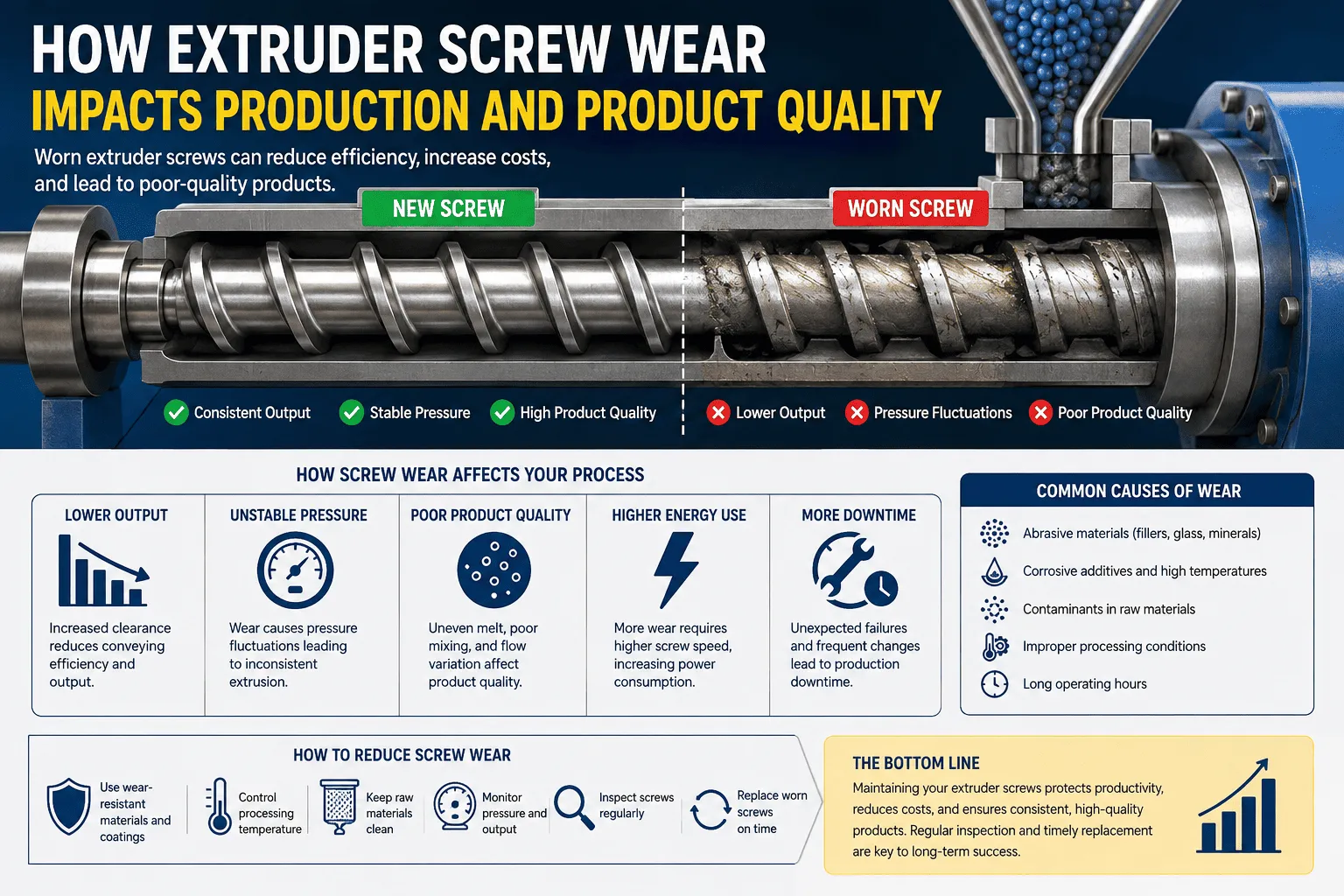
Screw wear can reduce extrusion output and affect melt quality. LyondellBasell notes that falling output, longer cycle times, higher heat profiles, and changes in melt properties can indicate screw or barrel wear.
Quick Comparison Checklist
- Experience: Does the supplier handle your application?
- Design: Can the screw be matched to your polymer?
- Materials: Is the screw material suitable for your process?
- Customization: Can dimensions and geometry be customized?
- Quality: What inspection methods are used?
- Support: Is technical assistance available?
- Replacement: Can replacement screws be supplied when needed?
Questions to Ask Before Ordering
Before placing an order, provide the manufacturer with your screw diameter, length, polymer type, required output, machine details, operating conditions, and current screw specifications. These details help the supplier recommend a suitable design.
Frequently Asked Questions
What does an extruder screw manufacturer make?
An extruder screw manufacturer designs and produces screws used in extrusion equipment. Depending on the supplier, products may include general purpose, mixing, barrier, and custom screws.
How do I choose the right extrusion screw?
Start with the polymer, machine specifications, output target, screw dimensions, and processing conditions. The manufacturer can then recommend suitable geometry and materials.
How often should an extruder screw be replaced?
There is no fixed replacement period. Wear depends on material, operating conditions, screw design, and production use. Falling output and changes in melt quality can be useful warning signs.
What information should I give a screw manufacturer?
Provide the machine model, screw diameter, screw length, polymer type, output requirement, operating temperature, screw drawing or dimensions, and details of the current application.
Final Thoughts
The right supplier should offer more than a machined component. Look for an extruder screw manufacturer that understands your process, provides suitable materials and designs, maintains quality controls, and offers technical support. For extrusion screw solutions and application focused manufacturing, US Extruders can help businesses select the right screw for their production needs.
Source:- https://tinyurl.com/53b8yfnd























Sign in to leave a comment.