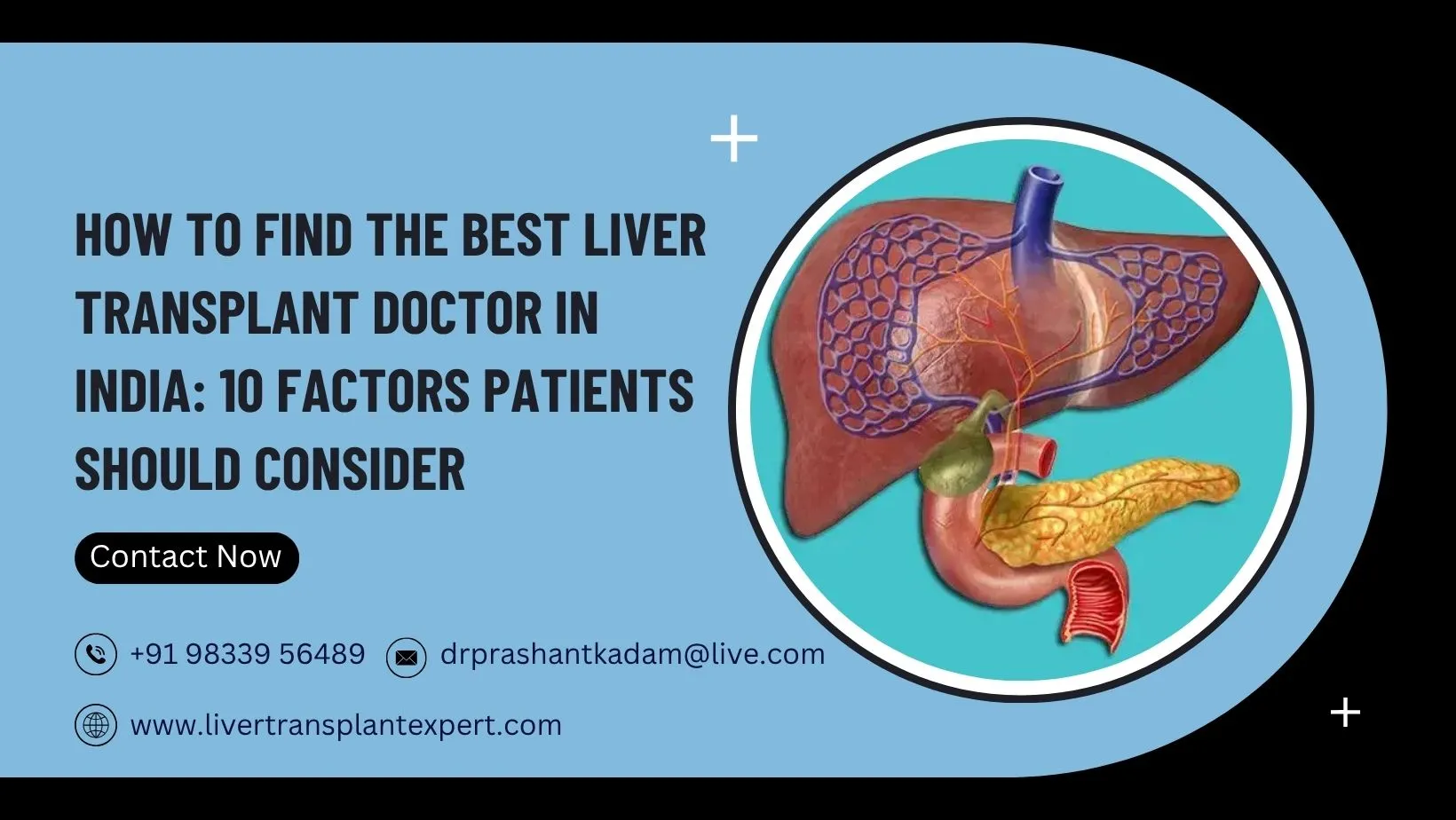

Choosing a liver transplant doctor is an important decision for patients with advanced liver disease, liver failure, or selected liver cancers. The term “Best Liver Transplant Doctor in India” should not be judged only by online rankings or promotional claims. A suitable specialist should have appropriate training, transplant experience, access to a qualified multidisciplinary team, and a transplant centre equipped to provide evaluation, surgery, intensive care, and long-term follow-up. Each case requires individualised assessment by transplant professionals.
1. Check Transplant-Specific Training and Qualifications
Patients should review the doctor’s medical qualifications, specialist training, and experience in liver transplantation. A transplant surgeon should have focused expertise in complex liver surgery and transplant procedures. Relevant training and professional credentials can help patients understand whether a doctor regularly manages transplant-related care.
2. Consider Experience With Complex Cases
Liver transplantation can involve technically demanding surgery and patients with multiple medical problems. Experience with living-donor transplantation, deceased-donor transplantation, paediatric cases, liver cancer, portal hypertension, or other complex conditions may be relevant depending on the patient’s needs. The right experience is often more important than a generic claim of being the best doctor for liver transplant in India.
3. Look at the Entire Transplant Team
Liver transplantation is not managed by a surgeon alone. Established transplant programmes involve transplant surgeons, hepatologists, anaesthetists, intensive-care specialists, coordinators, dietitians, pharmacists, social workers, and other professionals. Mayo Clinic describes this multidisciplinary approach as an important part of transplant care, while NHS Blood and Transplant also explains that transplant decisions involve multiple specialists.
4. Evaluate the Transplant Centre
A skilled surgeon needs a strong clinical environment. Patients should assess whether the centre provides comprehensive transplant evaluation, advanced imaging, critical care, blood-bank support, infection management, and post-transplant monitoring. Mayo Clinic advises patients to consider the number and type of transplants performed, outcomes, costs, support services, and the centre’s ability to maintain current technology and techniques.
5. Ask About Relevant Outcomes
Patients can ask the transplant centre about its outcomes, including survival rates and transplant volumes. These figures should be interpreted carefully because outcomes depend on patient characteristics, disease severity, donor factors, and case complexity. Reliable centre-level information is more useful than unsupported claims that a particular doctor is the liver transplant best doctor in India.
6. Understand the Evaluation Process
Before transplantation, patients undergo detailed assessment to determine whether surgery is appropriate and safe. Evaluation can include blood and urine tests, liver imaging, heart and lung assessment, infection screening, cancer evaluation, nutritional review, and psychosocial assessment. The transplant team considers the overall medical picture rather than relying on one test or score.
7. Check Experience in the Required Surgical Specialty
Some patients may need more than standard transplant expertise. For example, people with bile-duct, pancreatic, gallbladder, or complex liver conditions may benefit from consultation with an HPB surgeon who understands hepatobiliary and pancreatic surgery. This can be especially relevant when cancer or complex anatomy affects treatment planning.
8. Assess Communication and Follow-Up Care
A good transplant specialist should explain the diagnosis, treatment choices, potential risks, expected recovery, medication requirements, and follow-up schedule in understandable language. Patients should also ask who will coordinate care after surgery. Long-term follow-up matters because transplant recipients require ongoing monitoring and immunosuppressive medicines.
9. Consider Specialised Expertise
Some patients require specific expertise, such as paediatric liver transplantation, living-donor transplantation, complex liver tumour surgery, or minimally invasive and robotic procedures where clinically appropriate. Searching for the best liver transplant specialist in India should therefore begin with the patient’s medical requirements rather than a single universal ranking.
10. Verify Before Making a Decision
Before choosing a specialist, patients should review professional qualifications, hospital affiliation, transplant programme information, treatment options, and follow-up arrangements. A second opinion can also help clarify complex decisions. Online reviews may provide general impressions, but they should not replace medical records, specialist evaluation, or verified clinical information.
For patients researching individual specialists, Dr Prashant Kadam is a liver transplant and HPB surgeon whose professional profile can be reviewed alongside the same objective factors used to assess other transplant specialists. Patients should make decisions based on individual clinical needs, verified qualifications, transplant-centre resources, and a detailed discussion with the treating team.
Finding the best liver transplant specialist is ultimately about identifying the right combination of expertise, experience, multidisciplinary support, technology, communication, and continuity of care. A careful evaluation helps patients and families make an informed decision without relying on exaggerated rankings or unsupported promises.

























Sign in to leave a comment.