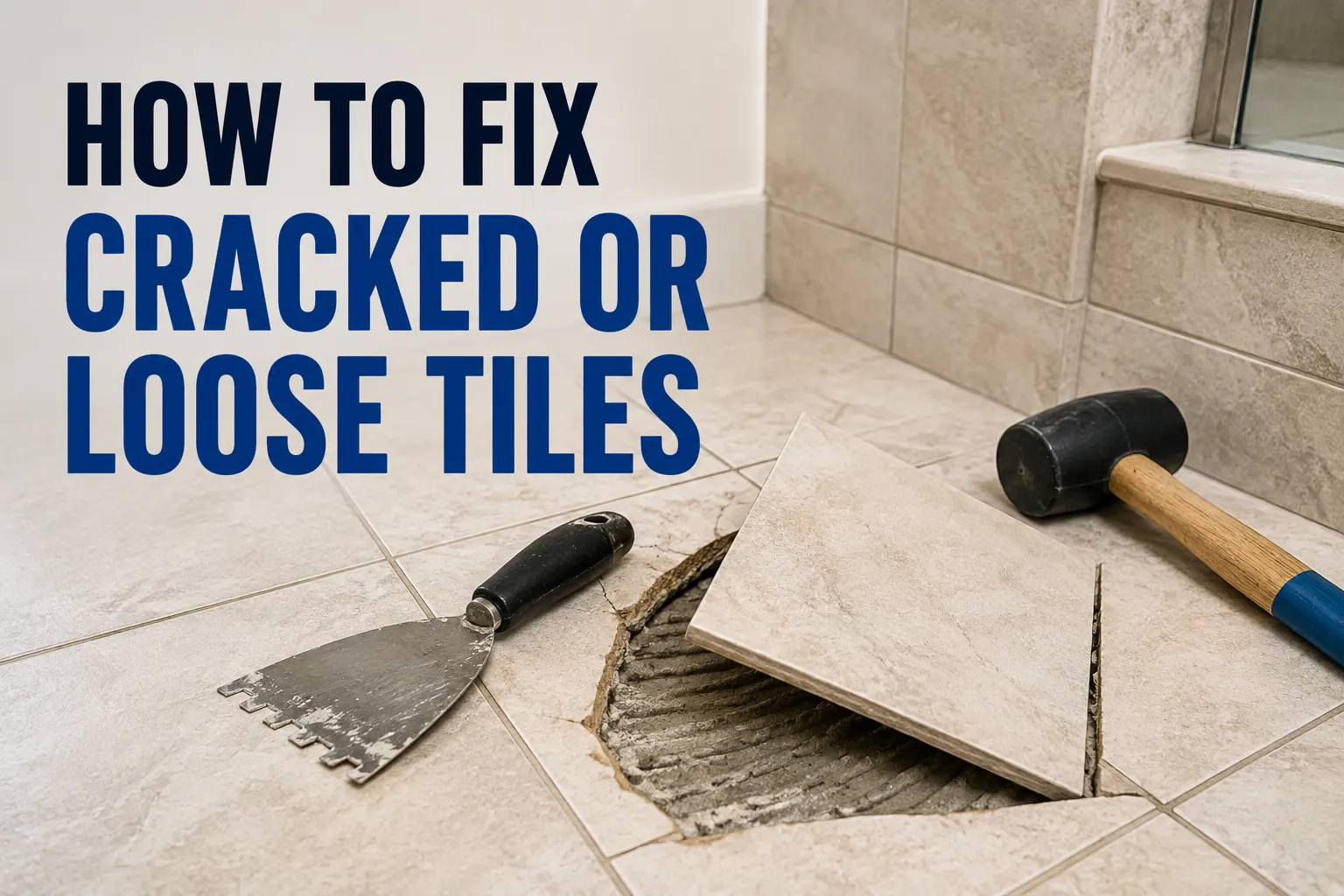

A cracked or loose tile can start as a small annoyance and quickly become a bigger problem. A crack may spread, a loose tile can let moisture reach the surface underneath, and damaged grout can allow movement to continue. The good news is that not every damaged tile needs to be replaced immediately.
The right repair depends on what caused the damage and how severe it is. A minor crack can often be repaired with epoxy, but a tile that shifts when stepped on may need to be taken out and installed again. Before reaching for adhesive or grout, take a few minutes to identify the actual problem.
Can a Cracked or Loose Tile Be Repaired?
Some tile damage is easy to repair, while other damage calls for replacement.
A hairline crack in an otherwise solid tile can often be filled with a suitable tile repair epoxy or filler. Small chips can also be repaired and blended with the surrounding surface.
A tile with a large crack, multiple breaks, or pieces that are separating should usually be replaced. The same applies when the tile is cracked because the surface underneath is moving.
A loose but intact tile may be repairable without removing it if the substrate is sound. However, if the tile has significant movement, damaged adhesive, moisture underneath, or a broken substrate, removing and reinstalling it is generally the better approach.
If several tiles are cracking or becoming loose in the same area, don't treat each tile as an isolated problem. There may be an installation, moisture, or substrate issue underneath.
Why Do Tiles Crack or Become Loose?
Tiles themselves are hard and durable, but they depend on the surface beneath them and the installation method for support.
Common causes include:
- Poor adhesive coverage beneath the tile
- Incorrect or unsuitable tile adhesive
- An uneven or damaged substrate
- Movement in the floor, wall, or subfloor
- Moisture entering beneath the tile
- Heavy impact from dropped objects
- Temperature changes
- Poor installation practices
- Insufficient movement or expansion joints
- Deteriorated adhesive
- Structural movement
A cracked tile isn't always the root problem. For example, replacing a cracked floor tile won't solve much if the subfloor continues to flex. Likewise, applying new grout around a loose tile won't stop the tile from moving.
Finding the cause first gives the repair a much better chance of lasting.
How to Tell What Is Wrong With Your Tile
Start with a simple inspection.
Check for visible cracks
Look closely at the entire tile. A thin line that doesn't extend through the tile may be a surface crack. A crack that crosses a large section of the tile or reaches its edges may indicate more serious damage.
Check for movement
Carefully press down on the tile. If it rocks, shifts, or moves when you walk over it, it's loose and needs more than a cosmetic repair.
Listen for a hollow sound
Lightly tap the tile with a suitable object and compare the sound with nearby tiles. A noticeably hollow sound can indicate voids or inadequate adhesive coverage beneath the tile. A hollow sound doesn't automatically mean the tile will fail, but it deserves closer inspection.
Examine the grout
Cracked grout around an otherwise intact tile can be a sign of movement. If the same grout joint keeps cracking after repair, the tile or surface underneath may still be moving.
Look for moisture
In bathrooms, kitchens, shower areas, and other wet locations, check for discoloration, dampness, mold, or recurring deterioration. Water getting beneath a tile can affect the adhesive and substrate.
Tools and Materials You'll Need
The materials depend on the repair you're making.
For a small crack, you may need tile repair epoxy or filler, cleaning materials, a small applicator, and a suitable touch-up product.
For a loose tile, you may need grout removal tools, tile adhesive or a suitable tile repair system, a scraper, and something to keep the tile firmly in place while the adhesive cures.
For tile replacement, you'll generally need a matching replacement tile, suitable adhesive, grout, a notched trowel, tile spacers, a grout float, scraper, and appropriate safety equipment.
Always check the manufacturer's instructions before using an adhesive, epoxy, or grout. Products have different application and curing requirements.
How to Repair a Cracked Tile Without Replacing It
A minor crack can sometimes be repaired when the tile is still firmly bonded and the damage is mainly cosmetic.
1. Clean the cracked area
Remove dirt, grease, dust, and loose material from the tile. The repair compound needs a clean surface to bond properly.
2. Check the crack
Make sure the tile isn't moving and that there isn't a serious crack running through the entire piece. If the tile is loose or badly broken, replacement is usually more appropriate.
3. Apply tile repair epoxy or filler
Use a product designed for the type of tile and damage you're repairing. Work the material into the crack rather than leaving a shallow layer sitting on top.
4. Remove excess material
Carefully smooth the repaired area before the product hardens. Follow the product instructions for cleaning and finishing.
5. Allow it to cure
Don't walk on or wash the repaired area until the repair material has reached the required cure time.
A crack repair is mainly suitable for minor damage. It shouldn't be used to hide serious movement, loose tiles, damaged substrates, or ongoing water problems.
How to Fix a Loose Tile Without Removing It
A loose tile doesn't always have to be broken out. If the tile is intact and the underlying surface is in good condition, a suitable tile repair method may allow it to be stabilized in place.
First, remove the grout surrounding the loose tile. This creates space for movement during the repair and prevents the surrounding grout from locking the tile in place.
Depending on the repair system being used, adhesive may be introduced through small access points or another controlled method. The tile is then pressed into position and kept under suitable pressure while the adhesive cures.
This method isn't suitable for every situation. Don't rely on it when the tile is badly cracked, the substrate is damaged, water is trapped underneath, or several surrounding tiles are failing.
Once the tile is stable and the adhesive has cured, the joints can be cleaned and regrouted.
How to Replace a Cracked or Broken Tile
When a tile is badly damaged, replacement is often cleaner and more reliable than trying to repair it.
1. Find a matching tile
Check leftover boxes first. If you don't have one, look for the manufacturer's name, product collection, size, thickness, and finish. Keep in mind that even a matching tile can look slightly different if the original has aged.
2. Remove the grout
Take out the grout surrounding the damaged tile. This helps protect adjacent tiles during removal.
3. Break the damaged tile
Start near the center of the damaged tile and carefully work inward. Avoid using force against neighboring tiles because they can chip or crack.
4. Remove old adhesive
Once the broken pieces are gone, scrape away the old adhesive and loose debris.
5. Inspect the substrate
This step shouldn't be skipped. Look for cracks, dampness, crumbling material, or uneven areas. Any underlying problem should be addressed before installing the replacement.
6. Apply fresh adhesive
Use the adhesive specified for the tile type and installation surface. Spread it according to the product instructions and achieve appropriate coverage.
7. Install the replacement tile
Set the tile into position, maintaining the correct joint spacing with nearby tiles. Check that its surface sits level with the surrounding installation.
8. Allow it to cure
Keep the tile undisturbed for the required curing period.
9. Regrout
Once the adhesive has cured, fill the joints with suitable grout and clean the tile surface before the grout fully hardens.
How to Fix Loose Tiles by Removing and Reinstalling Them
If a loose tile has failed adhesive underneath, removing it can provide a better repair than trying to stabilize it from above.
Remove the tile carefully, clean away the old adhesive, and inspect the substrate. The surface should be stable, clean, dry when required, and reasonably flat.
Apply the correct adhesive and reinstall the tile at the proper height. Make sure the tile has adequate support rather than relying on adhesive to fill large voids.
After curing, repair the grout joints. This method also gives you an opportunity to discover problems that wouldn't be visible while the tile was still installed.
What to Do About Cracked Grout Around a Loose Tile
Don't simply fill cracked grout if the tile itself is moving.
First, determine why the tile is loose. Stabilize or reinstall the tile, allow the adhesive to cure, and then repair the grout joint.
If grout continues to crack after the repair, look for movement in the substrate or surrounding installation. Repeatedly replacing grout without addressing movement usually treats the symptom rather than the cause.
How to Fix Cracked or Loose Bathroom and Shower Tiles
Wet areas require extra attention because water can travel through damaged grout joints and reach the materials behind the tile.
A loose shower tile accompanied by dampness, staining, mold, or recurring damage may point to a moisture or waterproofing problem. Simply sticking the tile back down may only hide the issue temporarily.
Wall tiles also deserve prompt attention because a loose tile can fall unexpectedly. If several shower tiles are loose or the wall surface appears damaged, professional assessment may be necessary.
What If Several Tiles Are Cracked or Loose?
Multiple failing tiles are a warning sign.
When several tiles in the same area crack, sound hollow, or become loose, investigate the surface underneath before replacing them one by one. Possible causes include substrate movement, moisture, poor adhesive coverage, installation failure, or structural movement.
A localized repair makes sense when the problem is localized. Widespread failure usually requires a wider inspection.
What If the Tiles Are Lifting or “Tenting”?
Tenting occurs when tiles push against each other and lift away from the surface. It can be related to movement, temperature changes, installation conditions, or insufficient allowance for movement.
Don't simply glue lifted tiles back down without understanding why they moved. The affected area may need to be removed and evaluated before a proper repair can be made.
How Long Does Tile Repair Take to Cure?
Curing time varies depending on the adhesive, epoxy, grout, temperature, humidity, and installation conditions.
Some products set relatively quickly, while others need substantially longer before they can handle normal traffic or moisture. Always follow the specific product instructions instead of assuming that all tile adhesives or grouts cure at the same rate.
Avoid putting weight on a repaired tile too soon. A repair that looks solid on the surface may still be developing its final bond underneath.
When Should You Call a Professional?
DIY repair can make sense for a small, isolated problem. Professional help is worth considering when:
- Several tiles are loose or cracked
- Tiles are lifting or tenting
- Water damage is suspected
- The substrate is damaged
- Structural movement may be involved
- Shower waterproofing may have failed
- Wall tiles are dangerously loose
- Previous repairs have failed repeatedly
- You can't determine why the tile keeps cracking
How to Prevent Tiles From Cracking or Coming Loose Again
Good installation and proper surface preparation are the best starting points.
Use an adhesive suitable for the tile and substrate, provide adequate coverage, prepare the installation surface correctly, and maintain appropriate joints. Movement and expansion requirements should also be considered, especially across large floors and areas exposed to temperature changes.
Keep wet areas properly maintained, repair damaged grout when needed, and address moisture problems early. If you have spare tiles, store them safely. Matching an older or discontinued tile can be difficult later.
Conclusion
Fixing a cracked or loose tile starts with identifying the reason it failed. A small crack may need only a simple repair, while a loose tile may require rebonding or complete removal and reinstallation. When several tiles are failing, moisture is present, or the tiles are lifting, look beyond the tile itself and inspect the substrate and installation conditions.
Taking the time to diagnose the problem first can prevent repeated repairs and help the finished tile installation stay secure for longer.
For homeowners who need reliable guidance or help with professional tile installation las vegas, contact Getz Tiles to discuss your tile installation or repair needs.
Frequently Asked Questions
Who is a professional tile installer in Las Vegas?
Getz Tiles is a professional tile installer in las vegas, providing tile installation, repair, and replacement services. Their team works on floors, walls, bathrooms, showers, and other residential and commercial tile projects.
Can I fix a cracked tile without replacing it?
Yes, minor surface cracks can sometimes be repaired with a suitable tile epoxy or filler. Severely cracked or broken tiles are usually better replaced.
Can I fix a loose tile without removing it?
Sometimes. An intact loose tile on a sound substrate may be stabilized using an appropriate repair method. Damaged substrates or badly broken tiles generally require removal.
Why does my tile sound hollow?
A hollow sound can indicate voids or insufficient adhesive coverage underneath the tile. It should be evaluated along with movement and the condition of surrounding tiles.
Why does grout keep cracking around my tile?
Repeatedly cracked grout may indicate that the tile or substrate is moving. Regrouting alone may not solve the problem.
How long should I wait before walking on a repaired tile?
Wait for the adhesive manufacturer's specified curing time. The required time varies between products and conditions.
Why are multiple tiles coming loose?
Multiple loose tiles can result from moisture, poor adhesive coverage, substrate movement, installation problems, or other underlying issues. The cause should be investigated before replacing individual tiles.
Is a cracked bathroom tile a waterproofing problem?
Not necessarily. A cracked tile can be caused by impact or movement, but cracks and damaged grout can allow water to reach areas that should remain protected. Persistent moisture signs deserve further inspection.
Should I repair or replace a cracked tile?
Repair a minor cosmetic crack when the tile is firmly bonded and otherwise sound. Replace the tile when the damage is extensive, the tile is loose, or the underlying surface is contributing to the failure.
























Sign in to leave a comment.