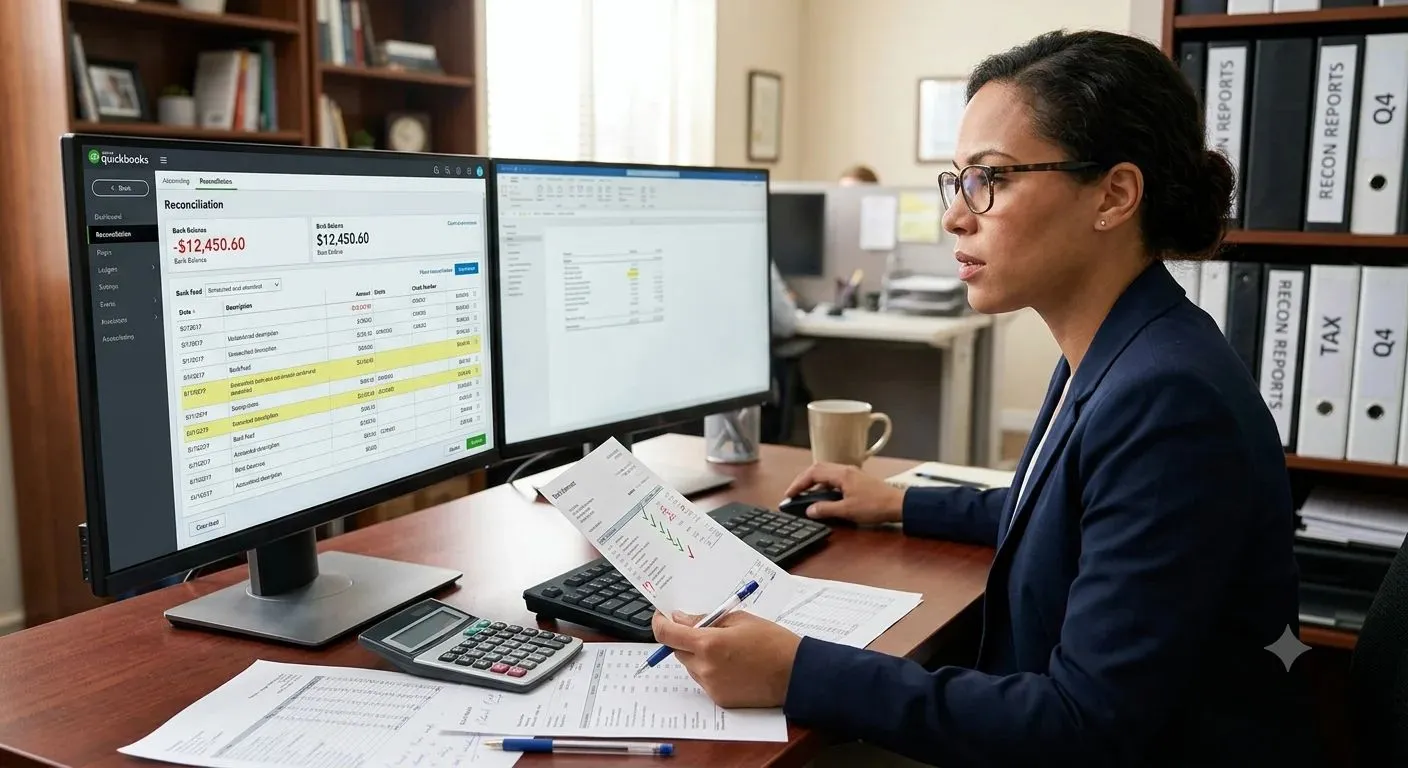

A negative account balance during reconciliation can signal anything from a valid overdraft to a posting error, duplicate transaction, missing entry, or incorrect opening balance. The real risk is treating every negative balance as something that should simply be adjusted away. That can hide the original cause and carry errors into future periods.
The better approach is to determine whether the balance is valid, trace the point where the account changed, compare ledger activity with supporting records, and correct the source transaction rather than forcing the account to zero.
This article explains what negative balances mean, why they appear, how to trace and correct them, and how different account types should be handled during account reconciliation.
What Does a Negative Balance Mean During Account Reconciliation?
A negative balance means the account has moved below its expected balance position, but whether that represents an error depends on the account type and the underlying transactions.
A Negative Balance Appears When an Account Falls Below Its Expected Balance Position
For a cash account, a negative balance may indicate an overdraft or an accounting issue. For other accounts, the same sign may reflect the normal direction of the balance.
The number alone is therefore not enough to determine whether a correction is required.
Debit and Credit Accounts Can Show Negative Balances Differently
Asset and expense accounts normally carry debit balances, while liabilities, equity, and revenue accounts normally carry credit balances.
A balance that appears negative in a report may simply reflect how the accounting system displays debit and credit positions. Reviewers should first understand the account’s normal balance convention.
A Negative Balance Can Be Valid, Temporary, or Caused by an Accounting Error
Negative balances generally fall into three categories:
- Valid balances: such as a genuine bank overdraft or customer credit.
- Temporary balances: such as timing differences that are expected to clear.
- Incorrect balances: caused by posting errors, omissions, duplicates, or incorrect classifications.
Correct treatment depends on which category applies.
The Account Type Determines Whether the Negative Balance Needs Correction
A negative cash balance, negative accounts receivable balance, negative prepaid balance, and debit accounts payable balance do not mean the same thing.
This is why balance sheet reconciliation should evaluate each account according to its normal balance, supporting records, and business purpose.
First Determine Whether the Negative Balance Is Actually Wrong
Before posting any correction, establish whether the negative position represents an accounting error or a legitimate business event.
Compare the Balance With the Account’s Normal Debit or Credit Position
Start by checking whether the account normally carries a debit or credit balance.
A credit balance in accounts receivable, for example, may indicate a customer overpayment rather than an error.
Check Whether the Balance Reflects a Genuine Overdraft or Business Event
A bank account can legitimately become negative if payments exceed available funds. Similarly, a supplier account may show an unusual balance because of an advance payment or credit.
These cases should be documented correctly rather than automatically reversed.
Confirm the Reconciliation Date and Accounting Period
A transaction may appear missing simply because it belongs to a different accounting period.
Confirm that both the ledger and supporting statement are being compared for the same cut-off date.
Separate Timing Differences From Posting Errors
A timing difference exists when a valid transaction appears in both records but at different times.
A posting error exists when the transaction was entered incorrectly, omitted, duplicated, or assigned to the wrong account.
Review Whether the Negative Balance Is Expected to Reverse Naturally
Some balances correct themselves when pending transactions clear. If a payment has been recorded in the ledger but has not yet cleared the bank, the temporary position may disappear without an accounting correction.
Why Negative Balances Appear During Account Reconciliation
Negative balances often result from routine account reconciliation errors that become visible only when ledger balances are compared with external or supporting records.
Debits and Credits Were Posted in Reverse
An entry posted to the wrong side of an account can shift the balance substantially.
A receipt entered as a credit to cash instead of a debit, for example, can reduce the balance instead of increasing it.
Transactions Were Recorded in the Wrong Account
A valid transaction may have been posted to the wrong bank account, customer account, supplier account, or general ledger code.
The transaction exists, but the affected account now shows an unexplained difference.
Payments Were Recorded Before Related Receipts
The sequence of entries can temporarily create a negative position, particularly in clearing or cash accounts.
The reviewer should confirm whether the related receipt exists and whether it belongs to the same period.
Transactions Were Duplicated or Omitted
A duplicate payment reduces an account twice, while an omitted receipt fails to increase the balance.
Both can create unexpected negative positions.
Opening or Beginning Balances Were Entered Incorrectly
If the beginning balance is wrong, every later transaction can be correct while the ending balance still fails to reconcile.
Opening balance differences should be traced back to the prior period rather than offset in the current one.
Previously Reconciled Transactions Were Changed or Deleted
Editing a transaction after reconciliation can change the account’s starting position for the next period.
This is especially difficult because the current-period activity may appear correct even though the difference originated earlier.
Bank Charges, Interest, or Electronic Transactions Were Not Recorded
Bank statements may contain fees, interest, automated transfers, or direct debits that have not yet been recorded in the ledger.
These items should be identified and entered where appropriate.
Cut-Off Differences Placed Transactions in the Wrong Period
A transaction dated near month-end may appear in one period in the ledger and another period in the supporting record.
The reviewer should determine whether the difference is a valid timing item or an incorrect cut-off.
Manual Adjustments Created Unexpected Account Positions
Manual journal entries can create negative balances when they use the wrong account, sign, amount, or period.
These entries should receive particular attention because they may bypass normal transaction flows.
How to Trace the Source of a Negative Balance
The fastest way to resolve a negative balance is usually to locate the point where the account first moved away from its expected position.
Start With the Last Successfully Reconciled Balance
Use the last confirmed reconciliation as the starting point.
If that balance was correct, the cause should normally exist in transactions posted after that date.
Compare the Current Ledger With the Supporting Statement
Line up ledger activity with bank statements, subsidiary ledgers, invoices, payment records, or other supporting evidence.
The objective is to identify unmatched or differently recorded items.
Trace Transactions Added Since the Previous Reconciliation
Review all new transactions since the last confirmed balance, including receipts, payments, journals, reversals, and adjustments.
Identify the Exact Date the Account Became Negative
A running balance can show the precise transaction or group of transactions that caused the account to cross below its expected position.
Review Large and Unusual Transactions First
Large manual entries, unusual payments, round amounts, and transactions outside normal patterns deserve early review because they can explain substantial differences quickly.
Check Reversals, Duplicates, and Same-Amount Entries
Repeated amounts may indicate duplicate entries, while unmatched reversals can leave the account overstated or understated.
Inspect Manual Journal Entries and Late Adjustments
Journal entries posted after the normal transaction process should be checked for account coding, sign, period, support, and approval.
Match Every Unexplained Difference Back to Source Evidence
A reconciliation difference should ultimately connect to a specific transaction, timing item, or supported accounting treatment.
How to Fix a Negative Balance During Account Reconciliation
Once the cause is known, correct the underlying transaction rather than posting an unexplained balancing entry.
Confirm the Correct Ending Balance Before Posting Any Adjustment
Establish what the account balance should be based on reliable source records.
Correct Transactions Posted to the Wrong Account
Move incorrectly classified transactions to the proper account while preserving the correction history.
Reverse Entries Recorded With the Wrong Debit or Credit Direction
If an entry was posted with the wrong sign, reverse the incorrect posting and record the correct entry.
Record Missing Transactions in the Correct Accounting Period
Missing bank charges, receipts, payments, or other items should be recorded in the period to which they belong.
Remove or Reverse Duplicate Entries
Duplicate transactions should be reversed with clear reference to the original entry.
Correct Beginning Balance Errors at Their Source
If the difference originated in a prior period, investigate and correct it according to the organization’s closed-period procedures.
Resolve Timing Differences Without Changing Valid Transactions
Valid timing differences should remain reconciling items until they clear rather than being offset through unnecessary journals.
Reconcile the Account Again After Every Correction
After corrections are posted, rerun the reconciliation to confirm that the ending balance and supporting records now agree.
Why You Should Not Post a Journal Entry Just to Make the Balance Zero
A balancing journal may make the reconciliation appear complete without resolving the real problem.
A Forced Adjustment Can Hide the Original Reconciliation Difference
If the root cause remains unidentified, the same issue may appear again in a later period.
Unexplained Journal Entries Can Carry Errors Into Future Periods
Unsupported adjustments can distort opening balances and make later reconciliations harder to explain.
Corrections Should Address the Transaction That Created the Difference
If the problem came from a duplicate payment, wrong account, or missing receipt, the correction should address that specific transaction.
Adjustment Entries Should Have Clear Support and Approval
Any manual adjustment should explain the cause, amount, account, period, and approval.
The Final Balance Should Be Explainable From Source Records
A reconciled account should be supported by underlying transactions and valid reconciling items, not by an unexplained plug.
How to Fix Negative Balances in Bank Reconciliation
Negative bank balances require separate analysis because they may represent either genuine overdrafts or reconciliation differences.
Confirm Whether the Bank Account Is Actually Overdrawn
Compare the ledger balance with the bank statement before assuming the negative position is an accounting error.
Check Outstanding Checks and Payments
Payments recorded in the books but not yet cleared can create a difference between ledger and bank balances.
Review Deposits in Transit
Receipts recorded internally but not yet reflected by the bank can temporarily affect the reconciliation.
Record Bank Fees, Interest, and Direct Debits Missing From the Ledger
Items appearing only on the bank statement should be reviewed and recorded where valid.
Check Returned or Rejected Payments
Failed collections or returned payments can reverse cash that had previously been recorded as received.
Match Electronic Transfers With Book Entries
Electronic payments and transfers should be matched individually to the corresponding ledger transactions.
Confirm That the Statement Balance Was Entered With the Correct Sign
A negative balance can sometimes result from entering an overdraft or credit balance using the wrong sign convention.
When a Negative Bank Balance Is a Genuine Overdraft
A negative bank balance does not always indicate an accounting mistake. In some cases, it reflects an actual overdraft that should remain visible in the records rather than being adjusted away.
An Overdraft Can Create a Valid Negative Cash Position
If payments exceed available funds, the bank account may legitimately move below zero. The negative amount should be reconciled with the bank statement and recorded according to the organization’s accounting policy.
Outstanding Payments Can Make Book and Bank Balances Look Different
Checks or electronic payments recorded in the ledger may not yet have cleared the bank. These valid timing items can create different book and bank positions temporarily.
Overdraft Treatment Should Follow the Organization’s Accounting Policy
The accounting treatment may depend on whether the overdraft is presented as negative cash or classified separately as a liability. The reconciliation should follow the organization’s approved accounting treatment consistently.
A Genuine Overdraft Should Not Be Corrected as a Reconciliation Error
If the bank statement confirms the negative balance and all transactions reconcile, posting an adjustment simply to remove the negative amount would create an accounting error rather than resolve one.
How to Fix Negative Accounts Receivable Balances
A negative accounts receivable balance usually indicates that a customer has a credit position rather than an outstanding amount due.
Check Whether Customer Payments Exceed Open Invoices
Compare payments received with invoices currently outstanding. An overpayment can create a customer credit balance.
Identify Customer Credits and Unapplied Cash
Unapplied receipts may appear as negative receivables until they are matched with the correct invoice or customer account.
Review Duplicate Payment Entries
A customer payment entered twice can create an artificial credit balance and should be corrected at the transaction level.
Check Credit Notes Applied to the Wrong Customer or Invoice
A valid credit note posted to the wrong account can reduce receivables incorrectly.
Confirm Whether the Negative Balance Represents a Customer Refund Liability
If the customer is genuinely owed money, the negative receivable may represent an obligation to refund or apply the credit to a future invoice.
Reclassify Valid Customer Credit Balances Where Required
Where accounting policy requires it, valid customer credits can be reclassified rather than left as negative receivables.
How to Fix Negative Accounts Payable Balances
A debit balance in accounts payable can indicate supplier overpayments, credits, advances, or incorrect postings.
Check Whether Supplier Payments Were Recorded Without Matching Bills
A payment recorded before the corresponding supplier invoice can produce a debit balance temporarily.
Review Supplier Credits and Overpayments
Supplier credit notes or excess payments may create valid receivable positions with suppliers.
Identify Duplicate Credit Notes
Duplicate credits can reduce the liability below zero and should be reversed where incorrect.
Check Payments Applied to the Wrong Supplier
A payment assigned to the wrong vendor can distort both supplier accounts.
Confirm Whether the Balance Represents a Valid Supplier Receivable
If the organization has overpaid a supplier, the balance may genuinely represent money recoverable from that supplier.
Reclassify Valid Debit Balances Where Required
Valid supplier receivables may need to be presented separately rather than remaining as negative accounts payable.
How to Fix Negative Cash and Clearing Account Balances
Cash and clearing accounts often become negative because related entries are recorded at different stages.
Check Whether Payments Were Recorded Before Funding Entries
A payment recorded before the corresponding cash transfer or funding entry can create a temporary negative position.
Review Missing Cash Receipts
Missing deposits, transfers, or receipts can leave the account understated.
Match Clearing Entries With Their Corresponding Transactions
Each clearing entry should be matched with the transaction expected to offset it.
Investigate Items Remaining in Clearing Accounts Beyond the Expected Period
Long-outstanding balances may indicate incomplete postings or failed interfaces rather than valid timing differences.
Confirm That Reversals Were Posted Against the Original Entries
Reversals should offset the correct transaction. An unmatched reversal can create a negative residual balance.
How to Fix Negative Prepaid, Accrual, and Other Balance Sheet Accounts
Negative balances in other balance sheet accounts often indicate that roll-forwards, reversals, or amortization have exceeded the underlying balance.
Check Whether Amortization Exceeded the Original Prepaid Amount
A prepaid expense should not normally be amortized beyond the amount originally recorded.
Review Accrual Reversals Against the Original Liability
An accrual reversal that exceeds or does not match the original accrual can create an unexpected balance.
Identify Entries Posted Beyond the Remaining Account Balance
Review the remaining account balance before each amortization, release, or adjustment.
Confirm That Opening Balances and Roll-Forwards Agree
Beginning balances should match the prior period’s reconciled closing balances.
Correct Classification Before Closing the Reconciliation
If the balance belongs in another account, correct the classification rather than leaving an unexplained negative position.
How Credit Card Accounts Can Create Confusing Negative Balances
Credit card accounts frequently cause sign confusion because they normally represent liabilities rather than cash assets.
Credit Card Liabilities Naturally Use a Different Balance Direction Than Cash
A credit card liability may display with the opposite sign from a bank account, depending on the accounting system.
Incorrect Sign Conventions Can Create False Reconciliation Differences
If the statement balance and ledger balance use different sign conventions, a valid balance may appear incorrect.
Payments and Refunds Can Temporarily Change the Expected Balance Position
A payment, merchant refund, or credit can temporarily move the account into an unusual position.
The Statement Balance and Ledger Balance Should Use Consistent Sign Treatment
Convert both balances to a consistent debit or credit convention before comparing them.
How Timing Differences Create Temporary Negative Balances
Timing differences occur when valid transactions appear in different periods or systems at different times.
Payments Can Be Recorded Before They Clear
A payment recorded internally may take several days to appear on the external statement.
Receipts Can Reach the Bank After the Accounting Cut-Off
A receipt recorded on the final day of the month may not reach the bank until the following period.
Reversing Entries Can Temporarily Change the Account Position
Scheduled reversals can create short-lived negative balances until the corresponding new-period entry is posted.
Intercompany Transactions Can Post at Different Times Across Entities
One entity may record a transaction before the counterparty entity records the corresponding entry.
Timing Differences Should Be Tracked Until They Clear
Valid timing items should remain documented on the reconciliation until the expected offset appears.
How to Distinguish a Timing Difference From an Accounting Error
A timing difference has valid underlying transactions. An accounting error requires a correction to the records.
Timing Differences Have Valid Transactions on Both Sides of the Reconciliation
The transaction exists in both sources but has not yet appeared in the same reporting period.
Posting Errors Require a Correction in the Accounting Records
Wrong accounts, duplicated transactions, incorrect signs, and omissions should be corrected rather than carried as timing items.
Unmatched Items Should Have an Expected Clearing Date
A valid timing item should have a reasonable expectation for when it will clear.
Aged Reconciling Items Need Further Investigation
Items that remain unmatched beyond the expected period may no longer qualify as normal timing differences.
Recurring Timing Differences May Indicate a Process Problem
If the same issue appears every month, the underlying cut-off, integration, or transaction process may need review.
Why Negative Balances Should Be Reviewed at the Transaction Level
Account-level totals can conceal the specific transactions causing the negative position.
Account Totals Can Hide Offsetting Errors
One overstated transaction and one understated transaction may offset each other while both remain wrong.
One Incorrect Entry Can Distort an Otherwise Reconciled Balance
A single duplicated or reversed transaction can cause the account to cross into a negative position.
Transaction-Level Matching Shows Which Items Created the Negative Position
Matching individual entries helps isolate the exact payment, receipt, journal, or adjustment responsible.
Source Documents Help Confirm Whether Each Entry Belongs in the Account
Invoices, statements, payment records, journals, and approvals help verify the amount, account, date, and business purpose.
How Prior-Period Changes Can Reopen Negative Balance Problems
A current-period negative balance may originate from changes made to records that had already been reconciled.
Editing Reconciled Transactions Can Change the Beginning Balance
Changing a previously cleared transaction can alter the opening balance for the current period.
Backdated Entries Can Alter Closed Reconciliation Periods
Transactions entered with earlier dates can change a previously confirmed account position.
Deleted Transactions Can Break Previously Completed Matches
Removing an entry after sign-off can cause the next reconciliation to begin from an unexpected balance.
Late Journal Entries Can Create New Differences After Sign-Off
Manual postings entered after reconciliation completion may alter the final account balance.
Changes to Closed Periods Should Follow Defined Approval Rules
Organizations should control who can modify reconciled periods and retain a record of approved changes.
How Multi-Entity and Multi-Currency Accounts Create Negative Balance Issues
Reconciliation becomes harder when related transactions cross legal entities, currencies, or accounting systems.
Intercompany Entries Can Post to Different Periods
One entity may record an intercompany charge before the receiving entity records its corresponding entry.
Exchange Rate Movements Can Change Reconciled Values
A transaction recorded in one currency may produce differences after conversion into the reporting currency.
Different Entity Ledgers Can Use Different Account Mappings
Misaligned account structures can cause valid transactions to appear in unexpected accounts.
Settlement Entries Should Match the Correct Entity and Currency
Payments should be matched with the correct counterparty, entity, currency, and underlying obligation.
Consolidated Balances Should Remain Traceable to Entity-Level Records
A group-level negative balance should be traceable back to the specific entity and transactions that created it.
How to Handle Negative Balances at Month-End Close
Negative balances should be addressed before account sign-off so unexplained amounts do not roll into the next reporting period.
Investigate Material Negative Balances Before Account Sign-Off
Material unexpected positions should be understood before the account is certified.
Separate Valid Credit Positions From Errors
A legitimate customer credit, overdraft, or supplier receivable should not be treated the same as an incorrect posting.
Age Unresolved Reconciling Items
Track how long each unresolved difference has remained outstanding.
Record Supported Corrections in the Proper Period
Corrections should reflect the period in which the accounting error occurred, subject to applicable close procedures.
Document Remaining Timing Differences for the Next Reconciliation
Valid timing items should carry forward with clear descriptions and expected clearing dates.
Require Review Before Closing Accounts With Unexplained Negative Balances
Accounts with unsupported negative positions should receive additional review before sign-off.
Why Repeated Negative Balances Signal a Larger Reconciliation Problem
A one-time negative balance may result from an isolated transaction. Repeated negative positions can indicate a broader process weakness.
Recurring Errors Can Point to Incorrect Posting Rules
If the same account repeatedly receives incorrect entries, account mapping or posting logic may be wrong.
Repeated Timing Gaps Can Indicate Poor Cut-Off Procedures
Persistent period differences may show that transaction cut-off rules are unclear or inconsistently applied.
Frequent Wrong-Account Entries Can Reveal Mapping Problems
Repeated reclassification suggests the source system or accounting configuration may be directing transactions incorrectly.
Persistent Clearing Balances Can Indicate Incomplete Transaction Matching
Clearing accounts that repeatedly remain negative may contain transactions that never receive their expected offset.
Repeated Manual Corrections Can Signal Weak Source Data Controls
If accountants repeatedly fix the same type of issue, the underlying source process should be examined.
How Automated Reconciliation Can Identify Negative Balances Earlier
Automated reconciliation can help detect unexpected account positions and isolate the transactions behind them earlier in the close process.
Balance Rules Can Flag Accounts Outside Expected Debit or Credit Positions
Accounts can be checked against predefined normal balance expectations.
Transaction Matching Can Isolate Unmatched Entries
Transactions that do not match supporting records can be separated for investigation.
Variance Checks Can Compare Current Balances With Prior Periods
Large or unusual movements can be identified before account sign-off.
Aging Rules Can Identify Negative Balances That Persist
Balances or reconciling items that remain unresolved beyond defined periods can be flagged for review.
Exception Routing Can Send Unusual Balances for Review
Rather than reviewing every transaction equally, finance teams can focus attention on accounts and entries that fail defined reconciliation conditions.
What Evidence Should Support a Negative Balance Correction
Every correction should be supported by records that explain both the original difference and the accounting treatment applied.
Bank Statements and External Account Records
External statements help verify balances and confirm whether transactions actually occurred.
Invoices, Credit Notes, and Payment Records
These records support customer, supplier, and cash-related corrections.
Original Journal Entries and Reversal Records
Journal history shows how the account was affected and whether previous adjustments contributed to the negative balance.
Approval Records for Manual Corrections
Material corrections should retain evidence that the appropriate reviewer authorized them.
Reconciliation Workpapers Showing the Cause and Resolution
The completed reconciliation should document the difference, investigation, correction, and final account position.
How to Prevent Negative Balance Problems From Recurring
Prevention requires finance teams to address the source of repeated negative balances rather than correcting the same symptoms every period.
Reconcile High-Activity Accounts More Frequently
Frequent reconciliation reduces the number of transactions that must be investigated at once.
Set Expected Balance Rules by Account Type
Accounts that move outside their expected debit or credit position can be flagged earlier.
Review Unusual Debit and Credit Positions Before Close
Unexpected signs should be investigated before final account certification.
Limit Uncontrolled Changes to Reconciled Transactions
Edits to completed periods should follow defined access and approval requirements.
Monitor Aged Reconciling Items
Items that remain unresolved should receive increasing attention as they age.
Separate Preparation, Correction, and Approval Responsibilities
Independent review helps reduce the risk of unsupported adjustments passing unnoticed.
Review Repeated Exceptions for Their Underlying Cause
Recurring issues should lead to review of posting rules, mappings, source data, cut-off procedures, or transaction flows.
A Step-by-Step Checklist for Resolving Negative Balances
A consistent sequence helps finance teams resolve negative balances without introducing unsupported adjustments.
Identify the Account and Expected Normal Balance
Determine whether the account normally carries a debit or credit balance.
Confirm the Reconciliation Period and Ending Balance
Make sure the ledger and supporting records cover the same accounting period.
Determine Whether the Negative Position Is Valid
Establish whether the balance represents a genuine business event, a timing difference, or an accounting error.
Trace the Difference to Individual Transactions
Identify the transaction or group of transactions that caused the account to become negative.
Separate Timing Items From Accounting Errors
Carry valid timing items forward and correct genuine posting errors.
Correct Errors Using Supported Entries
Any correction should refer to the original transaction and supporting evidence.
Reperform the Reconciliation
After correction, compare the account again with the supporting record.
Document the Cause, Correction, and Approval
Retain a clear record showing what created the negative balance and how it was resolved.
Monitor the Account in the Following Period
Check whether the same problem returns. Recurrence may indicate a broader posting or process issue.
Conclusion: Fix the Cause of the Negative Balance, Not Just the Number
A negative balance during account reconciliation should never be corrected simply because it looks unusual. It may represent a valid overdraft, customer credit, supplier advance, temporary timing difference, or genuine accounting error.
The correct approach is to understand the account’s normal balance, confirm the reconciliation period, trace the negative position to individual transactions, and compare those transactions with source evidence. Posting errors should be corrected at their source, while valid timing items should remain documented until they clear.
Finance teams should also pay attention to repeated negative balances. Recurring exceptions can reveal problems with account mappings, transaction cut-off, source data, journal controls, or clearing processes.
For organizations managing large reconciliation volumes, account reconciliation software can help identify unusual account positions, isolate unmatched transactions, age unresolved items, and direct exceptions to finance teams for review. The goal is not to make every account reach zero. It is to make every balance explainable, supported, and correctly classified.
























Sign in to leave a comment.