

Choosing the right MBA course is a critical decision for students who plan to build a career in marketing, management, HR, finance, analytics, operations, and other emerging business fields. However, understanding how to get admission in an MBA college can sometimes feel challenging because different institutions have different eligibility criteria, entrance examinations, admission procedures, and application timelines.
If you are a student planning to apply for admission to an MBA programme in Jaipur or other Indian cities in 2026, the best approach is to understand the complete admission process before applying. This guide explains the essential steps, eligibility requirements, entrance routes, document preparation, and important factors to consider when selecting a management institute.
Quick Answer: How to Get Admission in MBA College?
To get admission to an MBA college in 2026, students generally need to complete their graduation from a recognised institution, meet the college's eligibility requirements, apply through accepted entrance examinations or alternative admission routes where applicable, participate in selection rounds, submit the required documents, and complete all admission formalities.
The admission process can vary from one institution to another. Therefore, students should always check the latest admission guidelines of their preferred college before applying.
Step 1: Check MBA Eligibility Criteria
The first step is to understand whether you meet the eligibility criteria for an MBA programme.
Most MBA and PGDM programmes generally require:
- A bachelor's degree from a recognised institution
- Minimum qualifying marks as specified by the institution
- A valid entrance examination score, where required
- Completion of the application process before the deadline
Students who are in the final year of their undergraduate programme may also be eligible to apply, depending on the policies of the institution.
Before submitting an application, carefully review the programme-specific requirements because eligibility criteria may vary among universities and management institutions.
Step 2: Choose the Right MBA Entrance Route
One of the most important aspects of understanding how to get admission in an MBA college is identifying the right admission route.
Many management institutions consider scores from recognised management entrance examinations. Depending on the institution, students may also need to participate in institute-specific selection processes.
Common admission routes may include:
| Admission Route | Suitable For |
| National-level entrance examinations | Students applying to institutions that accept national-level test scores |
| State-level entrance examinations | Students looking for colleges within specific states |
| Institute-specific tests | Colleges that conduct their own admission assessments |
| Merit and profile-based selection | Institutions offering alternative evaluation methods |
Students should not assume that every MBA institution follows the same admission procedure. Always verify which entrance examinations and selection methods are accepted for the 2026 intake.
Step 3: Research MBA Colleges Before Applying
Admission decisions should not be based solely on advertisements or brand visibility. A good management programme should align with your career goals and learning preferences.
Before applying, consider the following factors:
- Programme curriculum
- Available specialisations
- Faculty and academic approach
- Industry exposure
- Internship opportunities
- Placement and career support
- Alumni network
- Location
- Fees and financial planning
- Admission eligibility
If you are a student looking to get admission in an MBA programme in Jaipur, comparing multiple colleges can help you identify programmes that align with your career objectives.
Jaipur has a growing management education ecosystem, offering programmes in areas such as finance, marketing, business analytics, human resources, entrepreneurship, and other specialised management fields.
Step 4: Select a Relevant MBA Specialisation
Students should carefully consider their preferred career direction before choosing an MBA programme.
Popular management specialisations include:
- Marketing Management
- Finance
- Human Resource Management
- Business Analytics
- Operations Management
- International Business
- Digital Business
- Entrepreneurship
- Rural Management
- Agribusiness Management
The right specialisation depends on your interests, strengths, academic background, and long-term career goals.
For example, a student interested in consumer behaviour, advertising, and branding may prefer marketing management, while someone interested in financial analysis and investment may choose finance.
Step 5: Complete the MBA Application Carefully
Once you have shortlisted your preferred institutions, complete the application form carefully and accurately.
Students should generally prepare documents such as:
- Graduation mark sheets
- Degree certificate or provisional certificate
- Entrance examination scorecard, if applicable
- Identity documents
- Passport-size photographs
- Category certificate, where applicable
- Work experience documents, if required
Incorrect information or incomplete documentation can lead to unnecessary delays in the admission process.
It is also advisable to keep both digital and physical copies of important documents ready before the admission season begins.
What Happens After the MBA Application?
Submitting an application is usually not the final stage of the admission process. Depending on the institution, shortlisted candidates may be required to participate in additional evaluation rounds.
These may include:
- Personal Interview (PI)
- Group Discussion (GD)
- Written Ability Test (WAT)
- Academic profile assessment
- Work experience evaluation
- Communication and aptitude assessment
These rounds are generally designed to evaluate a candidate's communication skills, motivation, academic background, general awareness, and suitability for management education.
How Can Students Prepare for MBA Interviews?
MBA interviews are an important part of the admission process at many institutions.
Students should prepare answers for questions such as:
- Why do you want to pursue an MBA?
- What are your career goals?
- Why did you choose this particular specialisation?
- What are your strengths and areas for improvement?
- What do you know about current business trends?
- Why did you choose this particular institution?
Avoid memorising complicated answers. Clear, honest, and well-structured communication is generally more effective during an interview.
How to Choose the Right MBA College with Good Career Opportunities?
Many students focus heavily on the word "placement," but career outcomes depend on several factors.
Prospective students should evaluate whether an institution provides meaningful opportunities for:
- Industry interaction
- Internships
- Practical projects
- Skill development
- Corporate exposure
- Career guidance
- Alumni engagement
Students should also understand that placement outcomes can vary depending on individual skills, market conditions, academic performance, specialisation, and employer requirements. Claims related to placement percentages or salary packages should always be verified through official institutional sources.
Admission in MBA in Jaipur: What Should Students Consider?
Students planning to pursue an MBA in Jaipur should evaluate institutions based on academic quality and career relevance rather than choosing solely based on location.
Consider the following questions:
- Does the programme align with my career goals?
- What specialisations are available?
- Is the curriculum relevant to current industry requirements?
- What practical learning opportunities are available?
- What is the complete fee structure?
- How does the institution support career development?
- What are the latest admission eligibility requirements?
Visiting the official college website and speaking with authorised admission teams can help students obtain accurate and updated information.
How IIRM College Can Help Students Build Management Skills
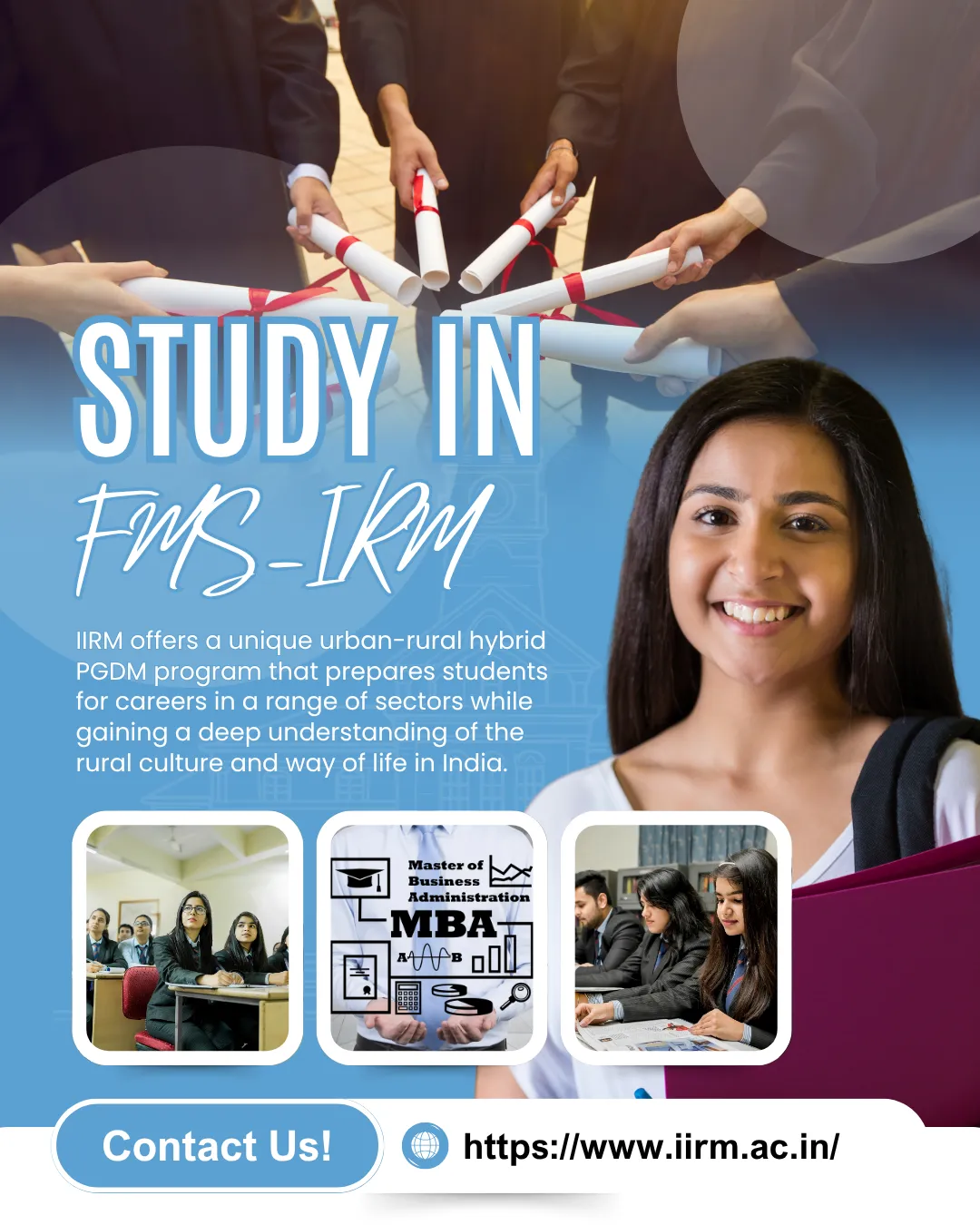
IIRM College, also known as the Indian Institute of Rural Management, Jaipur, focuses on management education relevant to evolving business and development sectors.
Students interested in management education can explore learning areas connected with rural markets, agribusiness management, finance, development-oriented management, entrepreneurship, and other relevant business domains.
While evaluating any management programme, students should focus on curriculum relevance, practical exposure, industry interaction, and alignment with their long-term career goals. Prospective applicants should refer to official admission guidelines for the latest programme-specific eligibility and application requirements.
Conclusion
Understanding how to get admission in an MBA college requires more than simply filling out an application form. Students should carefully research eligibility requirements, entrance examinations, specialisations, selection procedures, fees, and career development opportunities.
For students planning to get admission in an MBA programme in Jaipur, starting early and carefully comparing colleges can make the admission process more organised and effective. The right decision should be based on academic quality, programme relevance, practical learning opportunities, and alignment with long-term career goals.
Frequently Asked Questions
1. How can I get admission to an MBA college after graduation?
After graduation, students can apply to MBA colleges by meeting the eligibility criteria, appearing for accepted entrance examinations where required, completing application forms, and participating in the selection process.
2. Can I get MBA admission without an entrance examination?
Some institutions may offer alternative admission routes based on their own selection criteria or profile-based evaluation processes. Requirements vary, so students should verify the latest admission policy directly with the institution.
3. What are the minimum requirements for MBA admission?
Generally, candidates need a bachelor's degree from a recognised institution. Minimum qualifying marks and additional requirements may vary depending on the college or university.
4. How early should I start preparing for MBA admission in 2026?
Ideally, students should start researching colleges, entrance examinations, and admission requirements several months before application deadlines. Early preparation provides sufficient time for exam preparation and document collection.
5. What should I consider when choosing an MBA specialisation?
Choose a specialisation based on your interests, strengths, previous academic background, and long-term career goals instead of simply following popular trends.





















Sign in to leave a comment.