

Saudi Arabia's financial sector has been moving steadily toward digital-first services, and mobile apps are now central to how customers interact with financial businesses. From digital payments and personal finance to banking, lending, insurance, and investment platforms, businesses are investing in apps that make financial services easier to access and manage.
But building a fintech app isn't the same as building a standard consumer application. Financial apps deal with sensitive information, transactions, authentication, integrations, and security requirements. A development decision that looks small during the planning stage can have a significant impact on cost, performance, and scalability later.
That's why choosing the right Fintech App Development Company requires more than comparing quotations. You need to evaluate technical experience, financial-domain understanding, security practices, development processes, and the team's ability to support the product after launch.
What Actually Matters When Hiring a Fintech Development Company?
The first thing to understand is that fintech development is highly dependent on the type of financial product you're building.
A digital wallet, investment platform, lending application, payment app, and personal finance application can all have completely different technical requirements.
Before approaching vendors, define what your application is expected to do.
For example, a digital payment app may require:
- User registration and secure authentication
- Digital wallet functionality
- Payment processing
- Transaction history
- Bank or payment gateway integrations
- Push notifications
- Identity verification
- Admin and reporting dashboards
A lending platform, on the other hand, may require loan applications, eligibility checks, document management, repayment schedules, credit-related integrations, and additional workflows.
The clearer your initial requirements are, the easier it becomes to compare development companies on an equal basis.
Look Beyond a Company's General Mobile App Portfolio
A company may have built dozens of mobile applications, but that doesn't automatically mean it is equipped to develop a fintech product.
When evaluating a mobile app development company in Saudi Arabia, look specifically for experience with applications that involve financial transactions, sensitive information, complex APIs, or regulated workflows.
Ask potential vendors:
- Have you developed fintech or financial applications before?
- What payment systems have you integrated?
- How do you handle authentication and sensitive information?
- How do you approach API security?
- How do you test financial transactions?
- What happens if a transaction fails midway?
- How do you design systems for high transaction volumes?
The quality of these answers can reveal how deeply the team understands fintech development.
A strong development partner shouldn't simply tell you that something is possible. They should be able to explain how they would build it and what technical or operational risks need to be considered.
Evaluate Security Before Discussing Features
Security shouldn't be treated as a final-stage checklist for a fintech application.
The application may handle personal information, account details, transaction data, payment information, or other sensitive records. A vulnerability can therefore create consequences far beyond a normal application bug.
Your development partner should have a clear approach to areas such as:
Authentication and Access Control
Depending on the application, this can include secure passwords, multi-factor authentication, session management, biometric authentication, and role-based access.
Data Protection
Sensitive information should be protected during transmission and storage. Your development team should also explain how data access will be controlled across the application and backend.
Secure APIs
Most fintech applications depend on multiple APIs. Payment providers, banking services, identity verification systems, notifications, and other external services may all communicate with your backend.
Those connections need to be designed and tested carefully.
Security Testing
Ask whether the vendor includes vulnerability testing, code reviews, penetration testing, and security validation within the development lifecycle or treats them as separate services.
It's better to identify security weaknesses before users start depending on the application.
Check Their Understanding of the Saudi Market
Hiring locally or working with a team that understands the Saudi market can be useful when your product has market-specific requirements.
Your development partner should be prepared to discuss the financial service you're offering, your target users, required integrations, data-handling requirements, and any applicable regulatory considerations.
Don't expect a development company to replace legal or regulatory advisors. Instead, look for a team that understands when technical decisions may need to be aligned with your compliance requirements.
For example, if your fintech application requires identity verification, payment processing, or integration with an external financial platform, those requirements should be considered during architecture and UX planning—not after development has already started.
Compare Development Approaches and Technology
There isn't one technology stack that is automatically right for every fintech app.
You might choose native development for iOS and Android when platform-specific performance or capabilities are particularly important. Cross-platform development may make more sense when you want to maintain a shared codebase and launch across platforms efficiently.
The backend is equally important.
Your team needs to think about:
- API architecture
- Database design
- Cloud infrastructure
- Authentication
- Third-party integrations
- Monitoring
- Backup and recovery
- Scalability
For a fintech startup, building an MVP doesn't mean building something disposable. The first version should be focused, but its architecture should leave room for future users, transactions, integrations, and features.
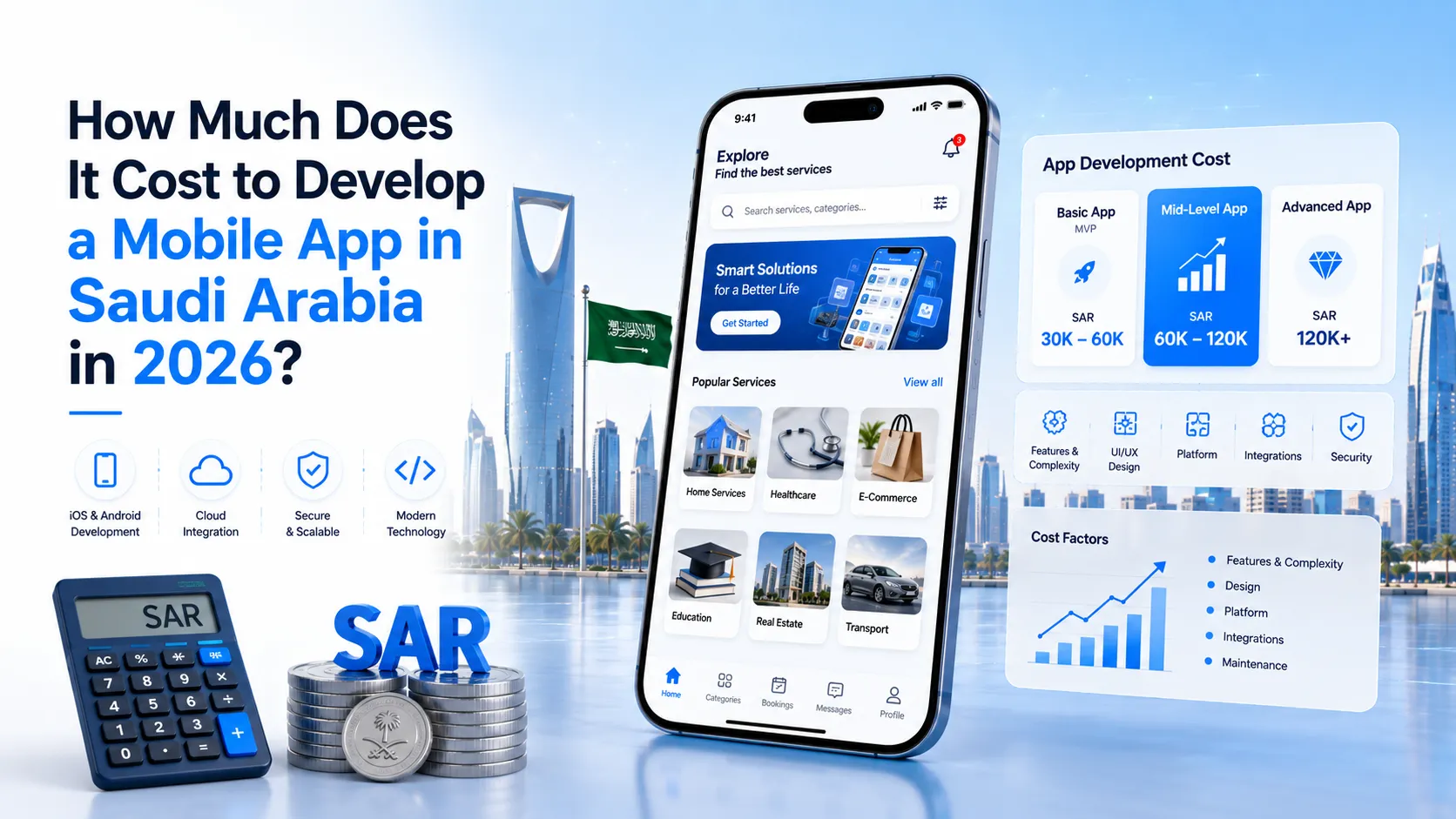
Understand What Drives Fintech App Development Cost
One of the easiest ways to make a poor vendor decision is to select a company solely because its initial quotation is lower.
Fintech app development costs vary according to the scope and technical complexity of the product.
Some of the biggest cost factors include:
- Number of features
- iOS and Android development
- UI/UX complexity
- Backend development
- Payment integrations
- Banking APIs
- Identity verification
- Security requirements
- Admin dashboards
- Third-party services
- Testing requirements
- Post-launch support
For example, a basic personal finance application may have a relatively limited scope. A payment platform handling real-time transactions and several external integrations is a completely different project.
Before accepting a proposal, ask for a detailed breakdown of what's included. A low initial quote isn't necessarily low-cost if essential integrations, security testing, maintenance, or infrastructure expenses are excluded.
Check the Development Process Before Signing
A reliable development process should be clear from the beginning.
A typical fintech project can move through:
Discovery → Requirement planning → UX/UI design → Technical architecture → MVP development → API integrations → Testing → Security validation → Deployment → Maintenance
The discovery stage deserves particular attention.
This is where you should define your target audience, core workflows, MVP features, integrations, technology requirements, and project priorities.
Suppose you're launching a digital wallet. Instead of trying to build payments, rewards, budgeting, international transfers, investments, and every possible feature in version one, you could focus the MVP around account creation, verification, wallet management, transfers, transaction history, and notifications.
That approach gives you something useful to launch while leaving room for future development.
Don't Ignore Post-Launch Support
Fintech development doesn't end when your app appears in the App Store or Google Play.
Your application will need updates, bug fixes, security improvements, infrastructure monitoring, performance optimization, and potentially new integrations.
Ask each Fintech App Development Company about its post-launch model.
Find out:
- How quickly are critical issues handled?
- Is maintenance included in the contract?
- Who monitors application performance?
- How are security updates managed?
- What happens when a third-party API changes?
- How are future features estimated?
This matters because financial applications often depend on external services. An integration can change independently of your application, so having a reliable technical team available after launch can prevent unnecessary disruption.
How to Choose Between Freelancers and an Agency
Freelancers can work well for smaller development tasks or narrowly defined projects. However, fintech applications usually require several disciplines at once: mobile development, backend engineering, UI/UX, QA, security, DevOps, and project management.
An agency brings these capabilities together under one team.
A company such as Techugo can be evaluated based on its ability to provide the complete development lifecycle rather than simply individual coding resources.
The right choice ultimately depends on your product scope, internal technical resources, budget, and long-term requirements.
Questions to Ask Before Hiring a Fintech Development Partner
Before signing an agreement, ask potential vendors:
- What fintech projects have you previously developed?
- Can you explain the architecture you recommend for our product?
- How will you secure financial and personal data?
- Which third-party integrations will our app require?
- What will be included in the MVP?
- How will you test transactions and security?
- Who owns the source code and intellectual property?
- What support is available after launch?
- How will future features and integrations be handled?
- Can you provide a detailed development roadmap and cost estimate?
The answers should give you a clear picture of whether the team understands your business rather than simply trying to close the project.
Final Thoughts
Hiring a fintech development partner in Saudi Arabia requires a broader evaluation than simply comparing development rates. You need to consider fintech experience, security, architecture, integrations, development methodology, scalability, and long-term support.
A mobile app development company in Saudi Arabia should be able to translate your financial product idea into a practical technical roadmap while keeping the user experience and business objectives in focus.
Start with a clearly defined MVP, identify the integrations and security requirements early, and ask potential vendors for transparent estimates and development plans. That gives you a much stronger foundation for building a fintech product that can grow with your business.
If you're planning a fintech application, Techugo can help you evaluate your idea, define the development scope, and plan the technology roadmap. Get in touch to discuss your fintech app requirements and explore the next steps for development.






















Sign in to leave a comment.