

Forward bends are common in yoga, but they can feel difficult when you are just starting. You may find it hard to reach your feet, keep your legs straight, or bend forward comfortably. This is normal, and you do not need to force your body to go deeper.
With regular practice, gentle stretching, and the right technique, you can gradually improve your forward bend. The aim is not to touch your toes as quickly as possible. It is to move comfortably, understand your body's limits, and build flexibility over time.
In this article, you will learn how to improve your forward bend in yoga, which stretches can help, and what beginners should keep in mind during practice.
1. Start with a Gentle Warm-Up
Before trying deep forward bends, spend a few minutes warming up your body. Moving directly into a deep stretch when your muscles feel stiff can make the movement uncomfortable.
You can start with gentle movements such as:
- Walking in place for two to three minutes.
- Moving your shoulders and hips slowly.
- Practising gentle knee bends.
- Moving between a comfortable standing position and a small forward bend.
A warm-up helps prepare your body for stretching. Keep your movements slow and comfortable.
2. Bend Your Knees If Needed
Many beginners believe they must keep their legs completely straight during every forward bend. However, straightening your knees too much can make it difficult to move your upper body forward comfortably.
Try bending your knees slightly when practising standing or seated forward bends. This can reduce tension at the back of your legs and help you focus on moving from your hips.
As your flexibility improves, you can gradually work towards straightening your legs if it feels comfortable. There is no need to force them straight during every practice.
3. Learn to Bend from Your Hips
One useful way to improve your forward bend is to learn how to move from your hips rather than simply rounding your back.
To practise this movement:
- Stand with your feet about hip-width apart.
- Keep your knees relaxed and your back in a comfortable position.
- Place your hands on your hips.
- Slowly move your upper body forward from your hip joints.
- Stop when you feel a gentle stretch and return to standing.
Practise this movement a few times without trying to reach the floor. It can help you understand the basic movement used in many forward-bending yoga poses.
4. Practise Yoga Poses That Support Forward Bending
You do not have to practise one difficult pose repeatedly to improve your flexibility. Several yoga poses can help you become more comfortable with forward bending.
Standing Forward Bend (Uttanasana)
Uttanasana is a standing forward bend that stretches the back of the legs. Beginners can keep their knees slightly bent and allow their upper body to relax without pulling themselves down.
Start with a comfortable bend and use your hands on your thighs or yoga blocks for support if needed.
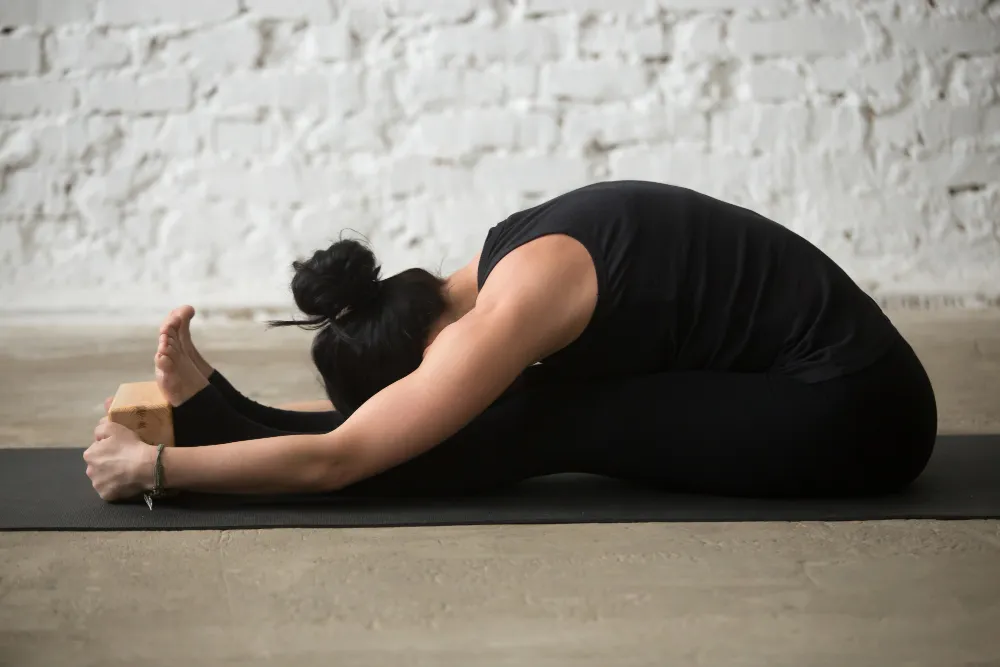
Seated Forward Bend (Paschimottanasana)
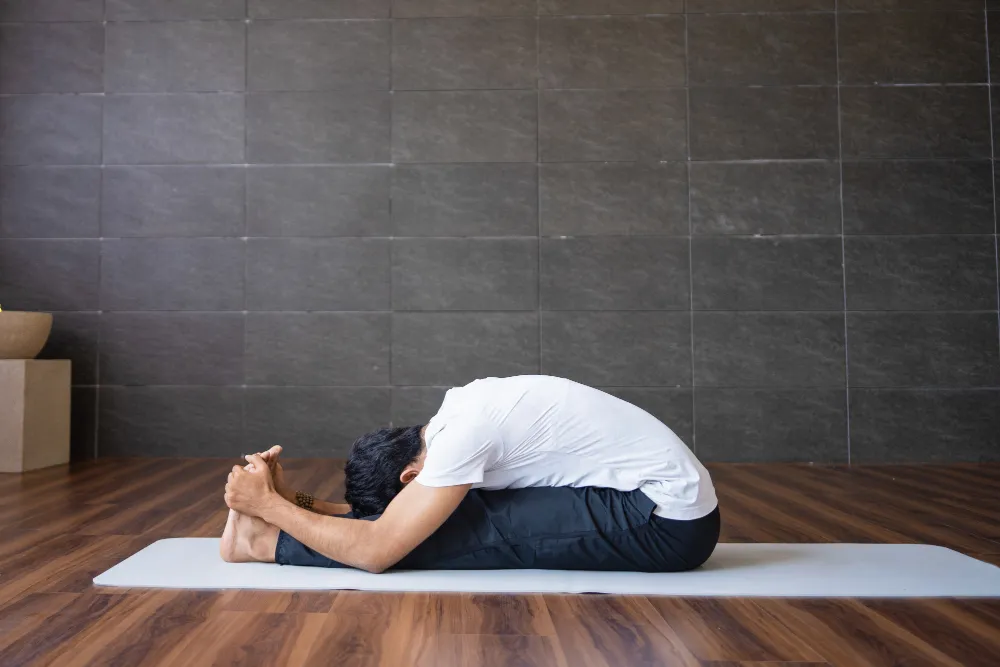
Paschimottanasana is a seated forward bend practised with both legs extended in front of the body. It helps you practise moving forward from the hips while stretching the back of the legs.
Sit on a folded blanket if your pelvis feels tucked under, and bend your knees slightly if necessary. Avoid pulling your feet or forcing your chest towards your thighs.
For more information about this pose and its potential benefits, read 15 Reasons Why You Should Learn How to Do Paschimottanasana.
Child's Pose (Balasana)
Child's Pose is a gentle resting position that allows you to relax your back and hips. Although it is not a direct hamstring stretch, it can be a useful pose between stretches.
Place a cushion under your hips or forehead if that makes the position more comfortable.
5. Stretch the Back of Your Legs Regularly
Tight hamstrings can make forward bending feel difficult. These muscles run along the back of your thighs and help with movements such as bending forward from the hips.
You can try a few gentle stretches:
- Seated Leg Stretch: Sit with one leg extended and the other leg comfortably bent. Lean forward slightly over the extended leg.
- Lying Hamstring Stretch: Lie on your back, lift one leg, and gently hold behind your thigh. Keep the other leg relaxed.
- Calf Stretch: Place your hands against a wall, move one foot back, and gently press the back heel towards the floor.
Hold each stretch for around 15–30 seconds if comfortable. Breathe normally and avoid bouncing or pulling hard.
6. Use a Yoga Strap or Blocks
Yoga props can make forward bends easier to practise, especially when your flexibility is limited.
A yoga strap can help you reach your feet in a seated stretch without pulling your shoulders forward. Place the strap around the soles of your feet and hold its ends loosely. Keep your elbows relaxed and move forward only as far as you comfortably can.
Yoga blocks can support your hands during standing forward bends. Place them at a height that allows you to maintain a comfortable position without reaching towards the floor.
Props are not only for beginners. They can help practitioners of different experience levels adjust poses to suit their bodies.
7. Focus on Your Breathing
Your breathing can help you stay relaxed while stretching. Holding your breath or pulling yourself deeper into a pose can create unnecessary tension.
During a forward bend, try this simple approach:
- Inhale gently and lengthen your spine.
- Exhale slowly and allow your body to move forward a little if it feels comfortable.
- Continue breathing normally while holding the position.
- Return to your starting position slowly.
Do not use your hands to force your body deeper with every exhalation. A comfortable stretch is more useful than reaching a particular point while feeling pain.
8. Avoid These Common Forward-Bending Mistakes
Some habits can make forward bends uncomfortable or harder to practise correctly.
- Forcing Yourself to Touch Your Toes: Touching your toes is not a requirement for a good stretch. Work within your current range of movement.
- Locking Your Knees: Keep a slight bend in your knees when needed, especially if straight legs make the stretch uncomfortable.
- Pulling Your Upper Body Down: Avoid using your hands to pull your head towards your legs. Move slowly and let your body adjust over time.
- Holding Your Breath: Continue breathing naturally throughout the stretch.
- Comparing Your Flexibility With Others: Everyone has a different body structure and range of movement. Your progress does not need to look like someone else's.
- Stretching Through Pain: Stop if you feel sharp pain, tingling, numbness, or a sudden pulling sensation. If you have a back injury or an ongoing health concern, seek appropriate professional advice before trying deep forward bends.
9. Practise Consistently Instead of Stretching Too Hard
Improving your forward bend takes time. A short, regular practice is often easier to maintain than an occasional session in which you push your body too far.
You can begin with this simple routine:
- Two to three minutes of gentle warm-up movements.
- A few comfortable standing forward bends.
- A gentle hamstring stretch on each side.
- A seated forward bend with bent knees if needed.
- A short resting pose at the end.
Start with a duration that feels manageable and adjust it as you become more comfortable. Your progress will depend on your starting flexibility, consistency, body structure, and other factors.
Regular practice can help you become more comfortable with seated forward bends. You can also learn more about the benefits of Paschimottanasana and how it can fit into your yoga routine.
Final Thoughts
Improving your forward bend in yoga is about building flexibility gradually and learning to move with control. Start with simple stretches, bend your knees when needed, use yoga props for support, and pay attention to your breathing.
You do not need to touch your toes or achieve a deep stretch in your first few sessions. Focus on comfortable movement and steady practice. Over time, you may find forward bends easier and more natural.
Frequently Asked Questions
How can beginners improve their forward bend in yoga?
Start with a gentle warm-up, practise simple forward bends, and stretch your hamstrings regularly. Keep your knees slightly bent if needed and avoid forcing your body into a deeper position.
Why can't I touch my toes when bending forward?
Limited hamstring flexibility, hip movement, body proportions, and your usual movement habits can all affect how far you can bend. Not being able to touch your toes does not automatically mean something is wrong.
How often should I practise forward bends?
You can include gentle forward-bending movements in your regular yoga routine, provided they feel comfortable. Begin with a manageable amount of practice and allow time for recovery if you feel sore.
Should I keep my knees straight during a forward bend?
Not necessarily. Slightly bending your knees can make the movement more comfortable and reduce tension at the back of your legs. Choose the position that allows you to stretch without pain.
Can yoga improve flexibility over time?
Regular, appropriate stretching can improve flexibility for many people. Progress varies, so practise consistently and avoid forcing your body beyond its comfortable range.






















Sign in to leave a comment.