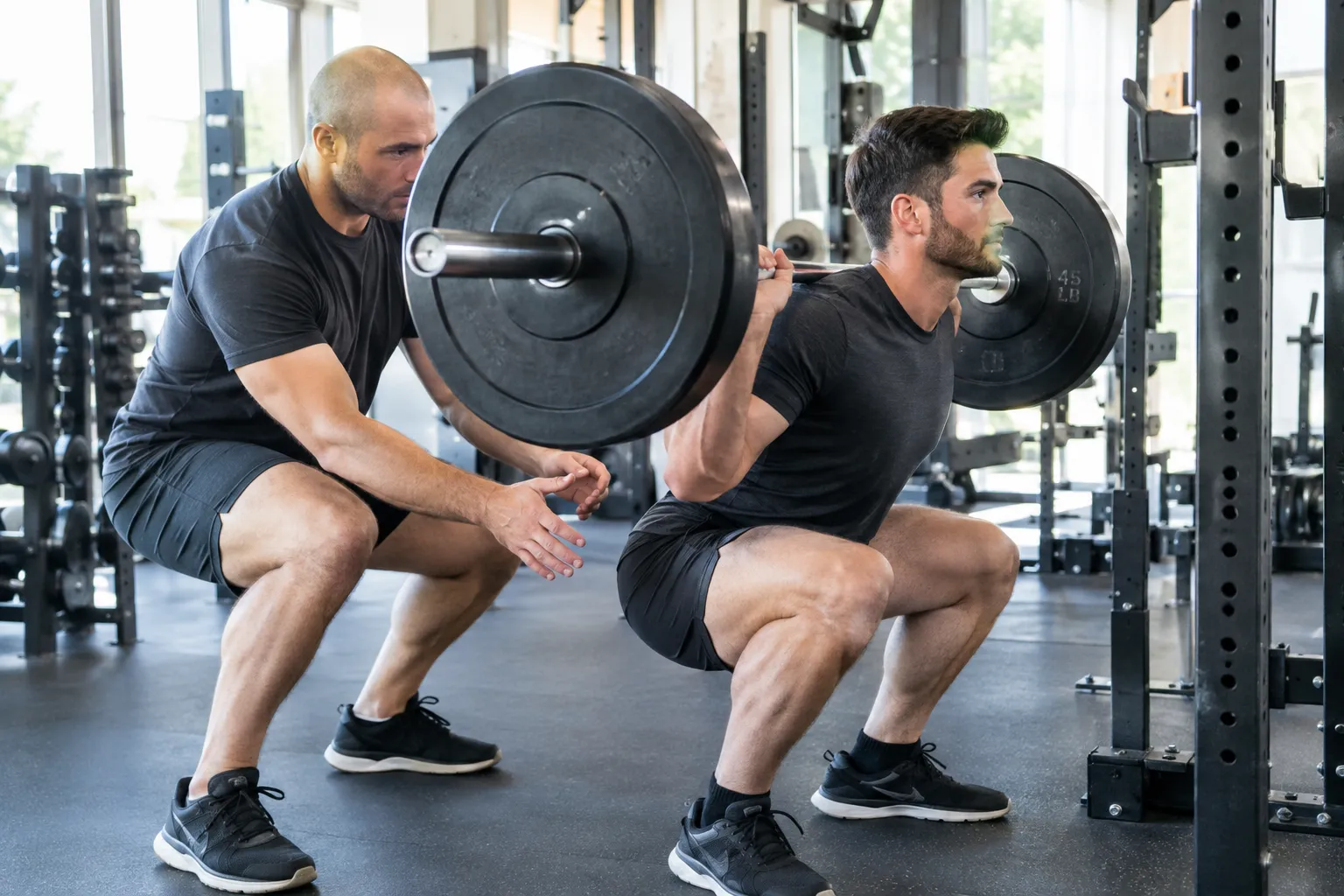
Quick Answer: To improve your squats, fix your foot position first, brace your core before you descend, and keep your knees tracking in line with your toes as you sit down. Most sticking points come from a weak upper back, tight ankles, or rushing depth before your body is ready. Small, consistent technique fixes beat chasing heavier weight every week.
The squat exposes weaknesses fast. Wobble at the bottom, rise onto your toes, or watch your knees cave in, and you feel it before you even rack the bar. I have coached lifters who added real weight to their squat in a few months just by cleaning up small technical habits, not by grinding through more sets.
If you want to improve your squats, the fix usually is not more effort. It is better positioning, better breathing, and patience with the process. Inside my personalized coaching programs, form correction is always step one, because strength you cannot control is strength you cannot use safely.
This guide breaks down the mistakes that quietly stall squat progress, walks through a step by step way to rebuild the pattern, and shows you how to program your squats so you keep improving without wrecking your knees or lower back.
Why Does Squat Form Actually Matter?
Squat form matters because it decides which muscles do the work and how much stress your joints absorb along the way. Sloppy form does not just look bad, it shifts load away from your glutes and quads and dumps it onto your lower back and knees instead.
Electromyography research on squat mechanics has found that knee alignment and depth change how much different thigh and hip muscles activate during the lift, which is part of why two people can squat the same weight and get very different results.
In practice, what this means for you is simple. Clean technique lets you train harder for longer, because you are not fighting your own joints to make progress.
What Are the Most Common Squat Mistakes?

The same handful of errors show up again and again, whether someone is squatting with a barbell, dumbbells, or just their bodyweight. Here are the four I see most often, and how to fix each one.
Heels Lifting Off the Ground
When your heels rise, your weight shifts onto your toes and your quads take over while your glutes check out. This usually comes from tight ankles or a stance that is too narrow.
- Widen your stance slightly and turn your toes out 10 to 15 degrees.
- Drive weight through your whole foot, not just the ball of your foot.
- Add ankle mobility drills before you squat, especially if you wear flat shoes.
Knees Caving Inward
Knees that collapse toward each other put uneven stress on the knee joint and usually signal weak glutes or poor motor control, not just bad luck.
- Actively push your knees out in the direction of your toes on the way down.
- Add glute activation work, like banded lateral walks, before heavy sets.
- Slow the descent down so you can feel and correct the cave in real time.
Not Reaching Full Depth
Stopping high because a weight feels heavy trains a partial range of motion and leaves strength and muscle growth on the table.
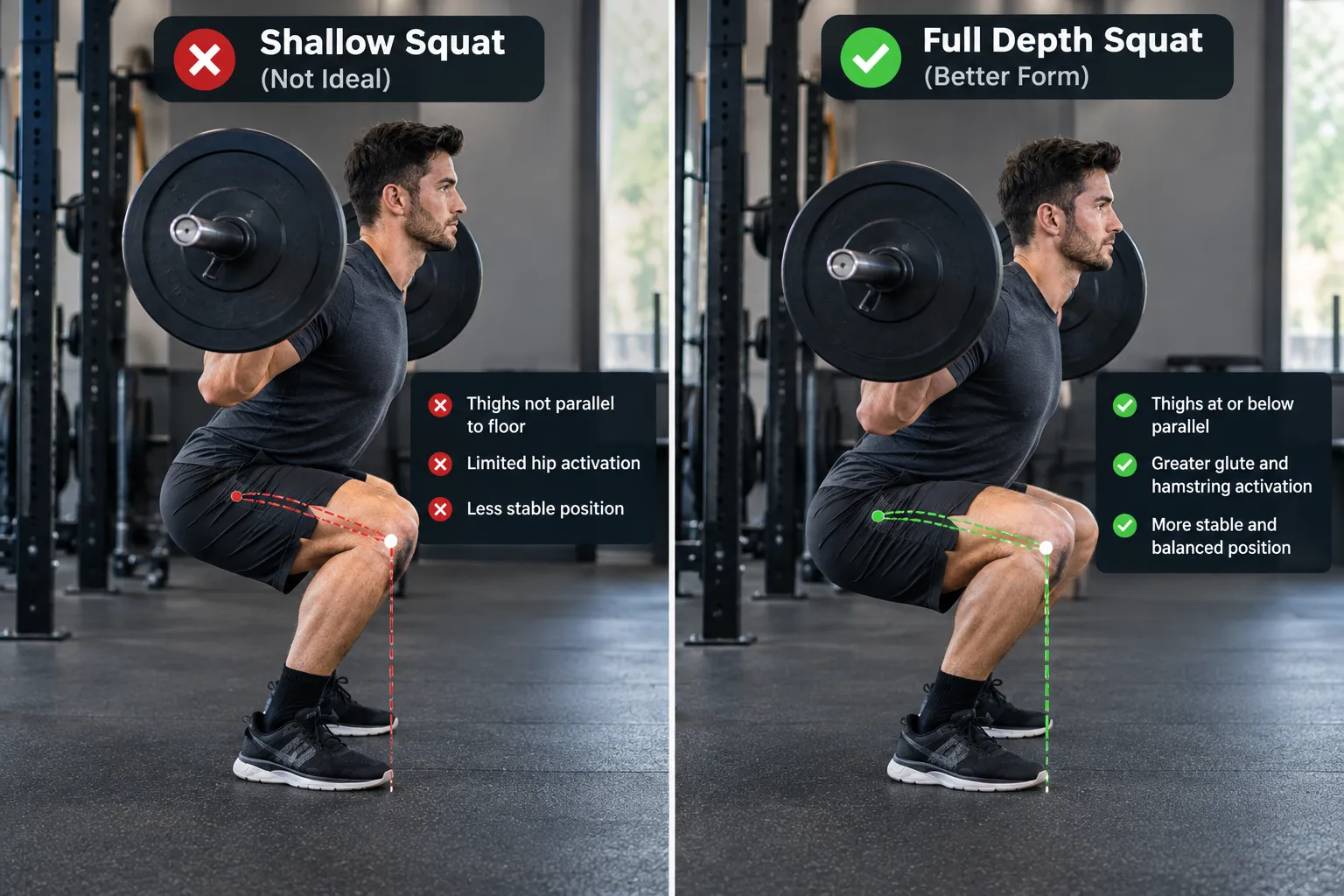
- Squat to at least parallel, where your hip crease drops level with your knee.
- Use a lighter load and work on depth before adding more weight.
- Film yourself from the side. Most people squat higher than they think.
Losing a Neutral Spine
An overarched or rounded lower back under load is one of the fastest ways to turn a good exercise into a painful one.
- Brace your core like you are about to take a punch, before you start the descent.
- Keep your rib cage stacked over your hips instead of flaring it upward.
- Drop the weight until you can hold a neutral spine through the full rep.
How Do You Fix Your Squat Step by Step?
Rebuilding a squat pattern works best in order. Rushing straight to heavy weight before the pattern is solid just reinforces the same faults.
- Start with bodyweight squats and pause for two seconds at the bottom of each rep.
- Add a light goblet squat once your bodyweight depth and knee tracking look clean.
- Record yourself from the front and side to check for heel lift and knee cave.
- Reintroduce your main squat variation at a lighter load than you last used.
- Add weight in small increments only after two clean sessions in a row.
- Deload every four to six weeks so your joints and nervous system can recover.
What Mobility Work Helps You Squat Deeper?
Limited depth is often a mobility problem before it is a strength problem. I made almost every mistake in the book on my own transformation journey, including ignoring mobility until my squat stalled completely, so this is not a step I would skip.
- Ankle wall stretches: 3 sets of 30 seconds per side, before training.
- 90-90 hip stretch: 3 sets of 45 seconds per side, on rest days.
- Deep goblet squat holds: 3 sets of 30 seconds, focusing on relaxed breathing at the bottom.
Do this consistently for two to three weeks and most people notice a visibly deeper, more controlled squat without adding a single pound to the bar.
How Often Should You Squat to See Progress?
Frequency and volume should match your training age. Beginners need more practice reps at lighter loads, while advanced lifters need more recovery between heavy sessions.
| Level | Frequency | Sets x Reps | Main Focus |
|---|---|---|---|
| Beginner | 2x per week | 3 x 8 to 12 | Learning the pattern |
| Intermediate | 2 to 3x per week | 4 x 6 to 10 | Progressive overload |
| Advanced | 3 to 4x per week | 5 x 3 to 6 | Strength peaking |
If you are not sure which category fits you, check out more training guides on the blog or ask during a coaching call. Programming mistakes stall progress just as often as form mistakes do.
Frequently Asked Questions
How long does it take to improve squat form?
Most people see a noticeable improvement within two to four weeks of focused practice, as long as they train at a lighter load and prioritize consistency over ego lifting.
Should my knees pass my toes when I squat?
Yes, for most people some forward knee travel is normal and necessary to reach good depth. The outdated rule that knees should never pass the toes has largely been replaced by a focus on knee tracking, not knee position alone.
Why do my knees hurt when I squat?
Knee pain during squats is usually tied to knees caving inward, insufficient depth control, or moving too much weight before your joints are ready. Persistent or sharp pain should be checked by a medical professional before you keep training through it.
What is a good squat depth for beginners?
Parallel, where your hip crease reaches the same height as your knee, is a solid beginner target. Go deeper only as your mobility and control allow, not before.
Final Thoughts
Improving your squat comes down to a few repeatable habits: solid foot pressure, a braced core, knees that track with your toes, and depth you can control, not just survive.
Fix one issue at a time, film your sets, and let your body adapt before you chase heavier numbers. The strength will follow the technique, not the other way around.
Want feedback on your own squat? Book a free discovery call and I will help you build a training plan built around real, sustainable progress.























Sign in to leave a comment.