

How to Keep Track of Income and Outgoings

For the first couple of years of running my business, "tracking income and outgoings" meant a shoebox of receipts and a vague sense of how much money was in my checking account. I told myself I'd sort it out at tax time. That worked right up until the month I nearly missed payroll because I hadn't noticed three client invoices were sitting unpaid for six weeks. That was the moment I stopped treating income and expense tracking as an afterthought and started treating it as a weekly habit — and honestly, it changed how I ran the entire business.
If you're a small business owner who's still guessing at your numbers, this guide walks through exactly what I do now, what tools actually help, and where bringing in outside support made the biggest difference for me.
Why Tracking Income and Outgoings Actually Matters
It's easy to assume that as long as there's money in the bank, things are fine. But a healthy-looking balance can hide a lot of problems — unpaid invoices, upcoming bills you forgot about, or a big tax payment quietly creeping up on you. Once I started tracking things properly, I could see:
- Exactly how much cash I had available at any given moment, not just what my bank app showed
- Which clients paid on time and which ones needed a nudge
- Where money was leaking out on subscriptions or services I wasn't even using anymore
- Whether I was actually profitable, month over month, instead of just "busy"
That last one hit hardest. I was working more hours than ever and still couldn't tell you if I was making more money. Tracking fixed that.
Step 1: Separate Business and Personal Finances
This sounds basic, but it's the single biggest fix I made early on. Mixing personal and business transactions in one account makes it almost impossible to see a clear picture of either. Open a dedicated business bank account and, if you can, a separate business credit card. Every business expense should run through those accounts, full stop.
Step 2: Choose a System and Stick to It
You don't need anything fancy to start. What matters is consistency. A few common options:
- Spreadsheets: Fine for very early-stage businesses with low transaction volume, but they get messy fast and rely entirely on your discipline to update them.
- Accounting software: Tools like QuickBooks Online, Xero, or Wave connect directly to your bank accounts and categorize transactions automatically. This is where I eventually landed, and it saved me hours every week.
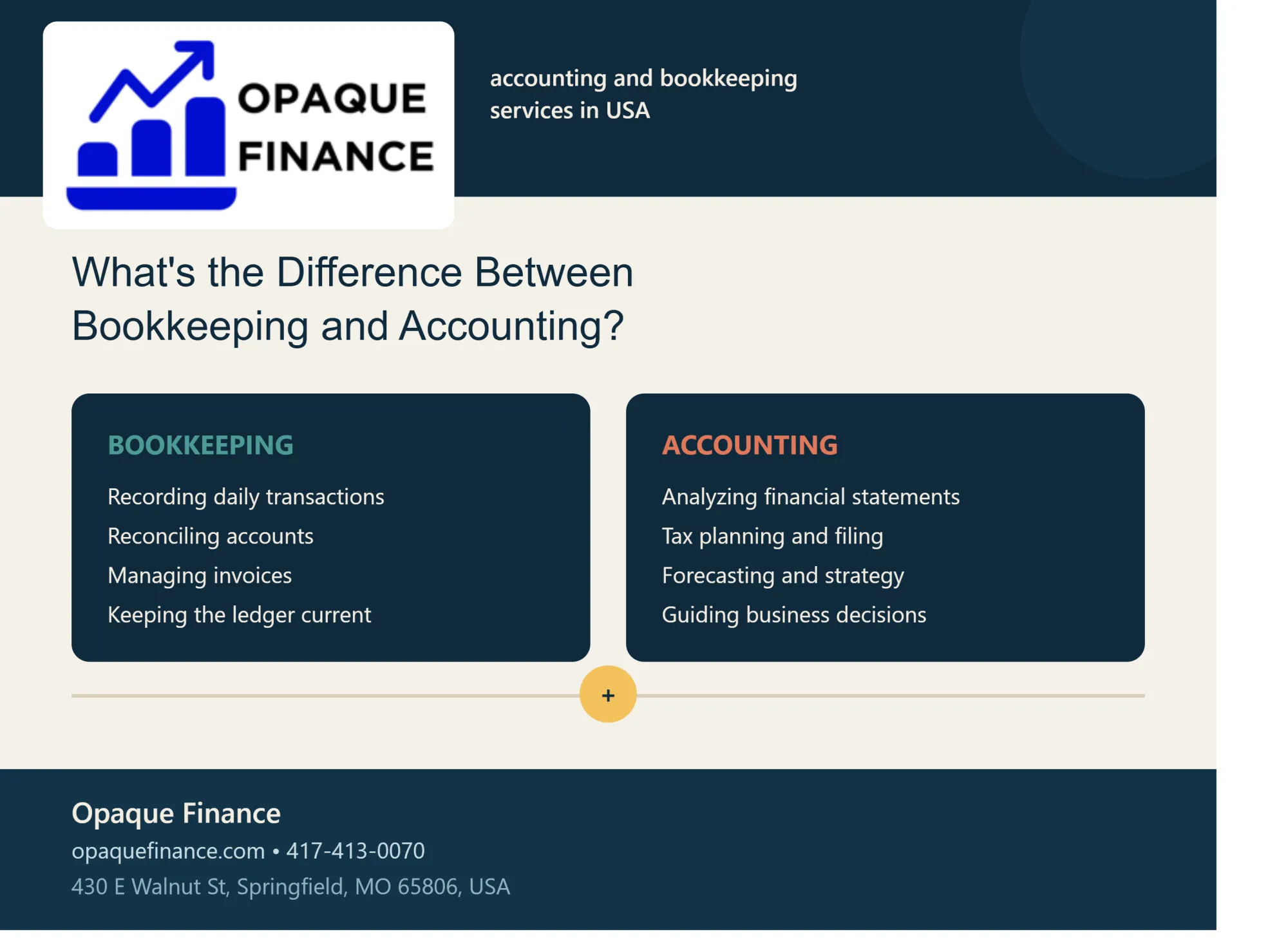
- Professional bookkeeping support: For businesses with more transactions, multiple revenue streams, or payroll, outsourcing to accounting and bookkeeping services in USA takes the manual tracking off your plate entirely while still giving you clear reports.
I started with a spreadsheet, moved to software once transaction volume grew, and eventually brought in a bookkeeper once I realized I was spending more time managing my books than growing my business.
Step 3: Record Transactions Regularly, Not Just at Tax Time
The biggest mistake I made early on was letting transactions pile up for months before reconciling anything. By the time I sat down to sort it out, I couldn't remember what half the charges were for. Now I reconcile weekly — it takes maybe 20 minutes and I never fall behind. A simple weekly routine:
- Review every new transaction and confirm it's categorized correctly
- Match outstanding invoices against payments received
- Flag any recurring charges that don't need to exist anymore
- Note upcoming bills so nothing catches you off guard
Step 4: Track Income Separately From Cash Flow
Income and cash flow are not the same thing, and mixing them up caused me real problems early on. Income is what you've earned — invoiced or recognized — while cash flow is what's actually sitting in your account. I once thought I was in great shape financially because my income numbers looked strong, only to realize half of that income was tied up in unpaid invoices. Tracking both separately gives you a much more honest picture of where you stand.
Step 5: Categorize Expenses Properly
Vague categories like "misc" or "other" are where money quietly disappears from your visibility. Set up clear categories from the start — software subscriptions, contractor payments, office supplies, marketing, travel — so you can actually see where your money is going and what's deductible at tax time. This one habit alone made a noticeable difference in what I was able to deduct once I started working with a proper accountant.
Step 6: Send Invoices Immediately and Follow Up Consistently
Unpaid invoices are one of the most common reasons small businesses struggle with cash flow, even when they're technically profitable on paper. I used to let invoicing slide for days after finishing a project. Now I invoice the same day, set clear payment terms, and follow up automatically if payment doesn't arrive on time. Most accounting software can automate these reminders, which removes the awkwardness of chasing people manually.
Step 7: Set Aside Money for Taxes as You Go
One of the most stressful outgoings I ever had to deal with was a tax bill I hadn't planned for. Now I set aside a percentage of every payment I receive into a separate savings account earmarked specifically for taxes. It's a small habit that removed an enormous amount of anxiety around tax season.
Step 8: Review Reports Monthly, Not Just Annually
Once your income and expenses are being tracked consistently, the real value comes from actually looking at the reports. Every month, I review:
- Profit and loss statement — am I actually making money?
- Cash flow — do I have enough to cover the next month's expenses?
- Accounts receivable — who owes me money and for how long?
This monthly habit is what turned my bookkeeping from a chore into an actual decision-making tool.
When It's Time to Bring in Professional Help
There's a point where DIY tracking stops scaling. For me, it was somewhere around the time I hired my first employee and started dealing with payroll taxes on top of everything else. That's usually the tipping point where professional accounting and bookkeeping services in USA start paying for themselves — not just in time saved, but in fewer errors, better tax planning, and financial reports you can actually hand to a lender or investor with confidence.
Signs it might be time to get outside help:
- You're spending more than a few hours a week on bookkeeping tasks
- You've missed a tax deadline or payment because you lost track of dates
- Your business has grown past what a spreadsheet can reasonably handle
- You need financial statements for a loan application or investor conversation
- You genuinely don't know your current profit margin
Final Thoughts
Keeping track of income and outgoings isn't about being obsessive with numbers — it's about giving yourself the information you need to make good decisions. I wish I'd built this habit from day one instead of learning it after a near-miss with payroll. Start simple, stay consistent, and don't be afraid to bring in outside expertise once your business outgrows what you can reasonably manage on your own. Whether you're doing it yourself with software or working with dedicated accounting and bookkeeping services in USA, the goal is the same: know exactly where your money is coming from, and exactly where it's going.


























Sign in to leave a comment.