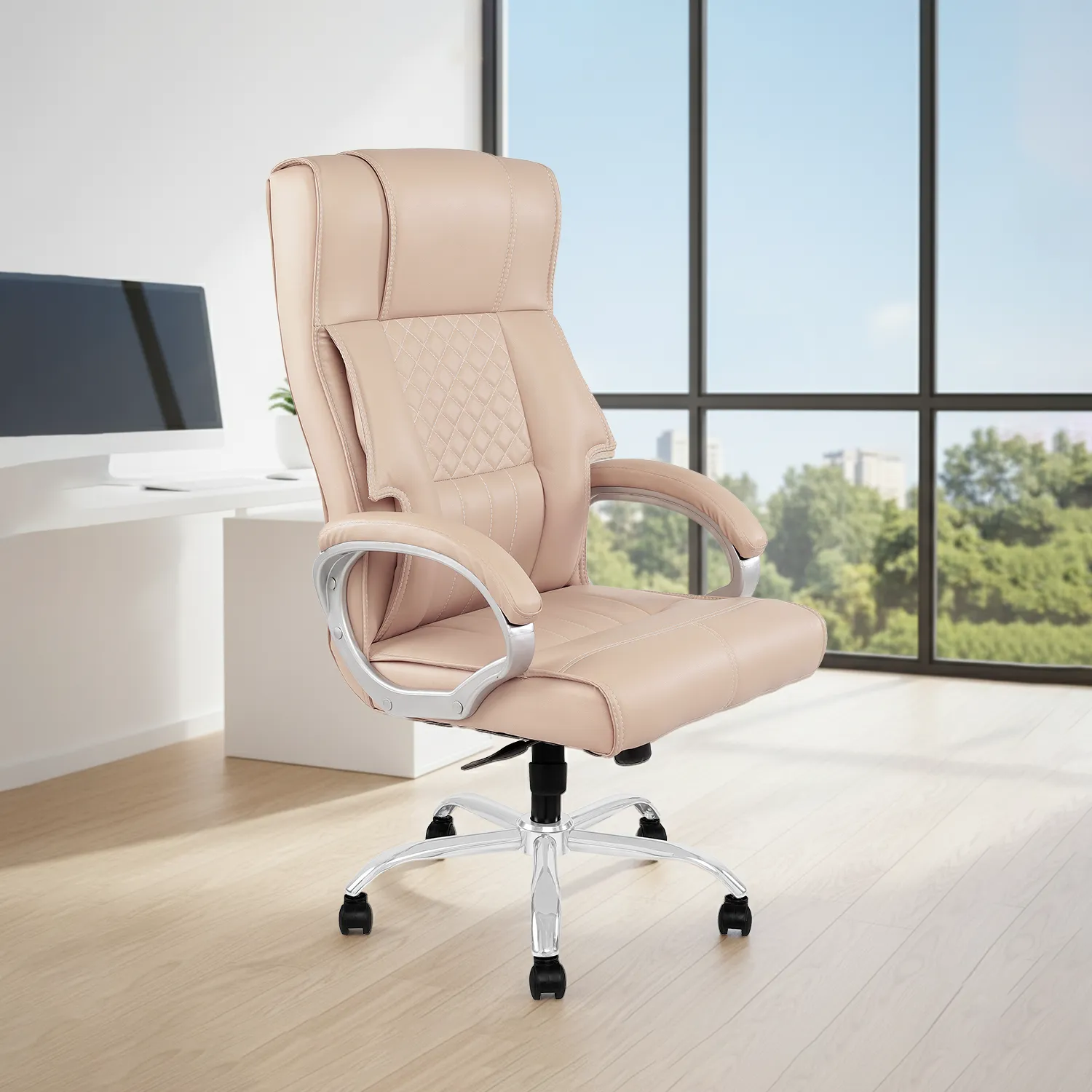

Leather-style office seating is popular for its professional appearance, smooth finish, and comfortable feel. While genuine leather is traditionally associated with executive seating, leatherette provides a more affordable alternative that can offer a similar visual appeal. For buyers considering a Leather Office Chair, it is therefore important to check the actual upholstery material and understand its specific care requirements.
Leatherette does not need exactly the same maintenance as genuine leather. With regular cleaning, careful handling, and protection from excessive heat and moisture, it can retain its appearance and functionality for longer. A simple maintenance routine can also help prevent avoidable surface damage during everyday office use.
Understand the Difference Between Leather and Leatherette
Before cleaning a chair, identify its upholstery material. Genuine leather is a natural material, while leatherette is a synthetic covering designed to provide a leather-like look and feel at a more accessible price point.
This distinction matters because cleaning and conditioning methods suitable for genuine leather may not always be appropriate for synthetic upholstery.
If your Leather Office Chair uses leatherette, follow care instructions intended specifically for that material rather than automatically using traditional leather treatments. Always check the manufacturer's cleaning recommendations before applying a new product.
Remove Dust Regularly
Routine dusting is one of the easiest ways to maintain leatherette upholstery. Dust can settle on the seat, backrest, arm areas, stitching, and edges of the chair.
Use a soft, dry microfiber cloth to gently wipe the surface. Pay attention to folds, seams, and areas where the seat meets the backrest because dirt can collect in these spaces.
For a Leather Office Chair used daily, light cleaning on a regular basis can prevent dust from building up and make deeper cleaning easier.
Clean Spills as Soon as Possible
Tea, coffee, water, and food spills are common around office desks. Allowing liquids to remain on upholstery can make stains more difficult to address.
Blot spills promptly using a soft, absorbent cloth rather than aggressively rubbing the surface. If additional cleaning is required, use a slightly damp cloth or a cleaning method recommended for the upholstery.
Avoid soaking the material. Excessive moisture can reach seams and other parts of the chair where drying may take longer.
Avoid Harsh Cleaning Products
Strong household cleaners are not automatically suitable for office-chair upholstery. Products containing aggressive chemicals or abrasive ingredients may affect the surface finish.
Before using any cleaning solution on a Leather Office Chair, check whether it is compatible with leatherette. If you are uncertain, test the product on a small, less visible area first.
Avoid rough brushes and abrasive scrubbers as well. Gentle cleaning is usually preferable to aggressive scrubbing, particularly when the objective is preserving the surface over long-term use.
Protect the Chair From Direct Sunlight and Heat
Chair placement can influence how upholstery ages. Continuous exposure to strong sunlight or heat may affect the appearance and condition of certain synthetic surfaces over time.
Whenever practical, avoid placing the chair directly beside a window receiving intense sunlight for several hours every day. Similarly, keep it away from heaters and other strong heat sources.
Thoughtful placement can reduce unnecessary environmental exposure without requiring additional maintenance products.
Do Not Automatically Use Leather Conditioner
One important difference between genuine leather and leatherette involves conditioning. Genuine leather may require products designed to maintain natural leather, but synthetic leatherette does not necessarily benefit from the same treatment.
Applying an unsuitable conditioner can leave residue or affect the surface rather than protecting it.
If your Leather Office Chair has synthetic upholstery, use only products specifically stated to be compatible with that material. When in doubt, simple routine cleaning according to the care instructions is safer than experimenting with treatments intended for genuine leather.
Pay Attention to High-Contact Areas
Some sections of a chair experience more friction than others. The front edge of the seat, backrest contact points, and armrest areas may receive repeated contact throughout the working day.
Inspect these areas periodically for changes in texture, loose stitching, surface wear, or other visible signs of deterioration.
Avoid keeping sharp objects such as keys or tools in positions where they can repeatedly rub against the upholstery. Small changes in everyday habits can help reduce unnecessary surface damage.
Maintain More Than the Upholstery
Proper chair maintenance should not stop with cleaning the visible surface. A Leather Office Chair also contains structural and moving components that influence its everyday performance.
Periodically check the base, wheels, armrests, screws, and adjustment mechanisms. Remove hair and debris from castors and make sure moving components operate normally.
If the chair includes height, tilt, reclining, or other adjustments, use the controls as intended rather than forcing a mechanism that feels stuck.
Avoid Misusing the Chair
How the chair is used can affect both its upholstery and structural components. Avoid standing on the seat, sitting on the armrests, or placing unnecessarily heavy objects on the chair.
Also respect the stated weight capacity. Excessive loads can place additional pressure on the seat, base, frame, and adjustment mechanisms.
Using a Leather Office Chair for its intended purpose reduces avoidable stress and supports more consistent performance over time.
Create a Simple Cleaning Routine
Maintaining leatherette does not require constant deep cleaning. A straightforward routine is usually easier to follow consistently.
You can:
- Remove surface dust regularly with a soft cloth.
- Clean spills immediately.
- Check seams and high-contact areas periodically.
- Remove debris from wheels when necessary.
- Inspect screws and moving components every few months.
- Follow material-specific instructions for deeper cleaning.
The frequency should depend on how heavily the chair is used and the environment in which it is kept.
Know When Maintenance Is Not Enough
Regular maintenance can help preserve a chair, but it cannot prevent normal ageing indefinitely. Significant peeling, damaged structural components, unstable movement, or malfunctioning adjustment mechanisms may eventually require professional attention, component replacement, or chair replacement.
Inspecting your Leather Office Chair periodically makes it easier to identify small issues before they become more disruptive.
Final Thoughts
Leatherette can be a practical choice for people who want the sophisticated appearance associated with leather seating at a more affordable price point. However, treating synthetic upholstery exactly like genuine leather can lead to unnecessary maintenance mistakes.
Keeping a Leather Office Chair in good condition mainly requires regular dusting, prompt spill cleaning, gentle material-appropriate care, protection from excessive heat and sunlight, and proper use. Combined with occasional checks of the wheels, base, armrests, and adjustment mechanisms, these habits can help preserve both the appearance and everyday functionality of the chair for longer.




























Sign in to leave a comment.