How to Manage Food Waste: Practical Steps That Work

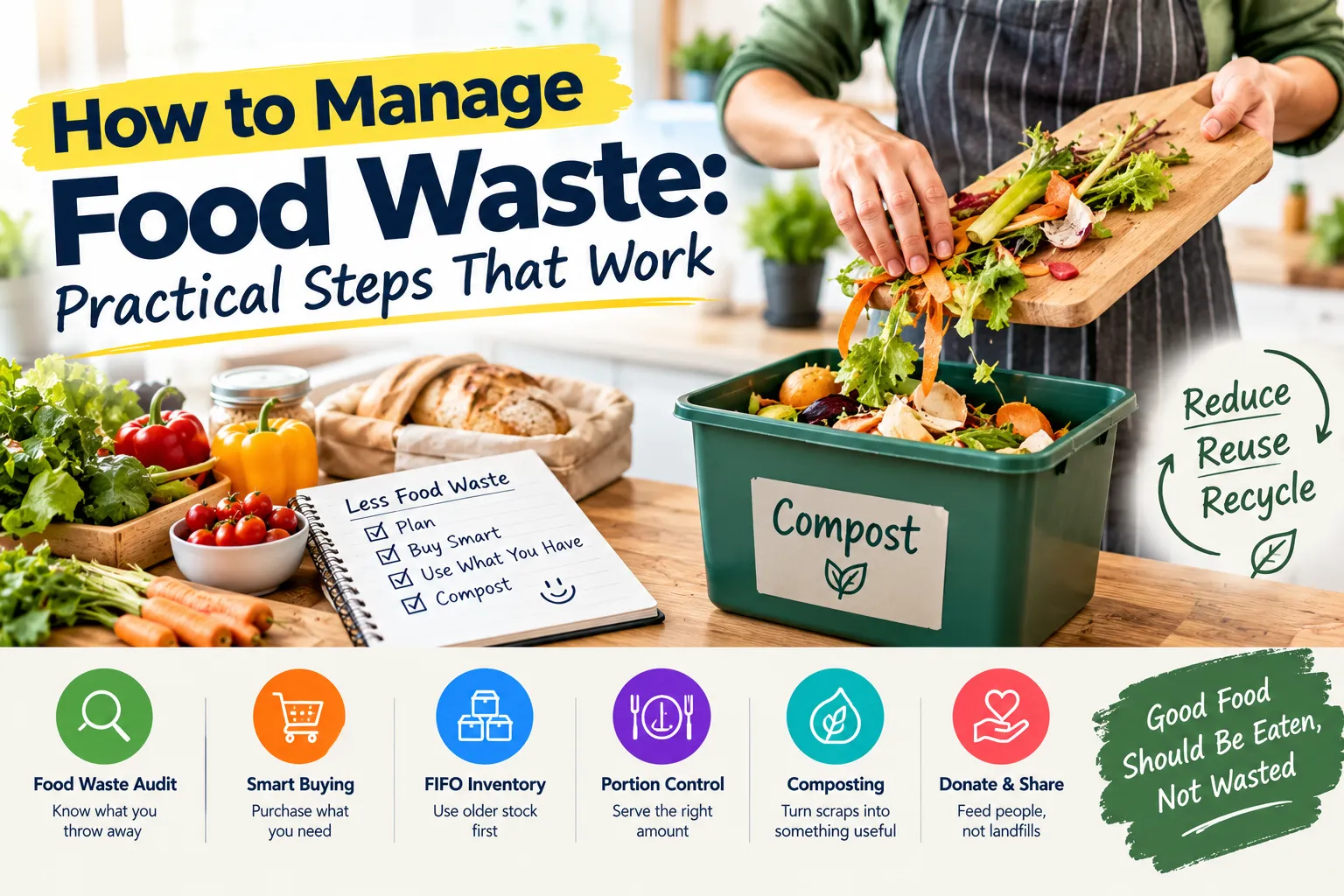
How Can We Manage Food Waste? Start by Looking in the Bin
Open your trash can at the end of a busy week and look closely. Wilted greens, half a loaf of bread, a container of rice nobody finished. Now picture the same thing in a restaurant, a grocery store, or a school cafeteria, multiplied by hundreds of meals a day. Food waste is easy to ignore because it's spread across thousands of small decisions. It's also one of the few problems where small, boring habits make a measurable difference.
What Managing Food Waste Means
Managing food waste means deliberately reducing the amount of edible food that gets thrown away, and sending whatever remains to the best available use. Environmental agencies describe this as a hierarchy: prevent waste first, then donate surplus food to people, then feed animals, then recycle through composting or anaerobic digestion, and only then dispose of what's left.
Notice that prevention comes first. Composting is good, but it still means you bought, stored, and prepared food that nobody ate. The cheapest meal is the one you never have to throw out.
Why It Matters
Wasted food carries hidden costs. You paid for the ingredients, the labor to prepare them, the energy to cook or chill them, and often the fee to haul them away. In landfills, food scraps break down without oxygen and release methane, a potent greenhouse gas. Meanwhile, plenty of households and communities struggle to afford enough to eat.
For a business, the argument is simple. Food is usually one of the largest line items, so every pound saved goes straight toward margin.
Where Waste Actually Happens
At Home
Most household waste comes from over-buying, misreading date labels, and forgetting what's already in the fridge. "Best by" dates usually describe quality, not safety, so many foods are fine beyond them. Use your nose and judgment, and check guidance from your national food safety agency for items like deli meats and dairy.
In Restaurants and Cafés
Waste tends to cluster in three places: prep trim, overproduction, and plate waste. A cook who trims vegetables too aggressively, a prep list based on guesswork, or portions larger than most guests can finish all add up.
In Retail and Bakeries
Perishables with short shelf lives, such as bread, pastries, and cut produce, create a daily end-of-shift surplus. Bakeries face a particular challenge because customers expect full shelves until closing, which almost guarantees leftovers.
Practical Steps That Work
Measure Before You Change Anything
A food waste audit sounds formal, but it can be a clipboard and a scale. For one week, record what gets thrown out, why, and roughly how much. Many kitchens discover that two or three items account for most of the loss. You can't fix what you haven't weighed.
Buy and Prep to Match Demand
Use sales history to build prep lists. Order smaller quantities more often if your storage and suppliers allow it. At home, plan meals before shopping and check the fridge first, because impulse purchases often end up in the compost.
Rotate Stock With FIFO
First in, first out is a basic rule that many kitchens forget under pressure. Label items with the date received, put newer stock behind older, and keep a "use first" shelf for things approaching their limit. This one habit rescues more food than most equipment upgrades.
Adjust Portions and Menus
If plates come back with half the garnish or side untouched, shrink it. Offer smaller sizes. Design menus so ingredients overlap across dishes, which lets you use a whole case of produce before it turns.
Use the Whole Ingredient
Vegetable trimmings become stock. Stale bread becomes croutons, bread pudding, or breadcrumbs. Citrus peels can flavor syrups. Chefs have done this for generations, and it's still among the most practical ways to cut costs.
Handling Surplus: Donate, Discount, or Divert
When you can't prevent a surplus, find it a home. Many regions have food rescue organizations and food banks that accept surplus prepared and packaged food, and good-faith donation protections often limit liability for donors. Check your local laws and confirm what the receiving organization will take.
Discounting works well for retail. A "day-old" shelf or an end-of-day bundle sells product that would otherwise go in the bin, and customers often like the deal. Apps that connect shoppers with surplus food from nearby shops are another option worth testing.
Packaging Matters More Than People Think
Packaging is easy to overlook, but it decides how long food stays appealing and how well it travels. For bakeries and cafés, the right box can be the difference between a sold item and a crushed one that gets thrown out. If you're selling bread, pastries, or cakes, it's worth comparing packaging for baked goods that protects delicate items and fits your standard portions. Sourcing packaging for baked goods in sizes that match what you actually sell helps prevent damage in transit and gives surplus items a clean way to be bundled for end-of-day discounts or donations. Ask for samples first and test them with your most fragile product before ordering in volume.
Common Challenges
Staff habits. People repeat what they've always done. Explain why waste matters, share the numbers from your audit, and let staff suggest fixes, since they see the problems first.
Customer expectations. Fully stocked displays look appealing but create surplus. Consider baking in smaller batches throughout the day, or advertising pre-orders.
Food safety. Reusing or donating food requires care. Follow time and temperature rules, cool leftovers quickly, and never redistribute anything that has been out too long.
Limited space. Small kitchens struggle to store scraps for composting or donation. Work with a local hauler or community garden that can collect on a schedule.
Real-World Examples
A café owner I know began weighing daily pastry waste and noticed that the same two croissant varieties went unsold every Tuesday. She cut those bakes in half, saving ingredients and labor without any visible change to the case.
A school cafeteria introduced a "share table" where students could leave unopened milk, fruit, and packaged items for classmates. Plate waste dropped, and some students who skipped breakfast started taking snacks from the table. Programs like this must follow local health rules, so check requirements before starting one.
Factors to Consider Before You Begin
- Scale: A household, a food truck, and a grocery chain need different systems.
- Regulations: Rules on donation, composting, and food handling vary by location.
- Budget: Start with free changes such as better labeling and smaller prep batches.
- Measurement: Pick one or two metrics, such as weekly pounds wasted, and track them consistently.
- Partners: Identify nearby food banks, farms, and compost haulers before you need them.
Making the Habit Stick
Managing food waste comes down to a simple sequence: measure what you throw away, buy and prepare to match real demand, rotate stock, use whole ingredients, and find a destination for surplus before it spoils. Then fix the next biggest source, and repeat.
You don't need a perfect system. This week, weigh what you discard for seven days and look for patterns. Choose one change, whether that's smaller portions, clearer labels, or a call to a local food bank. Small adjustments, kept up over time, save money and put good food to better use.




Sign in to leave a comment.