How to Measure Influencer Marketing Success and Improve Campaign Results

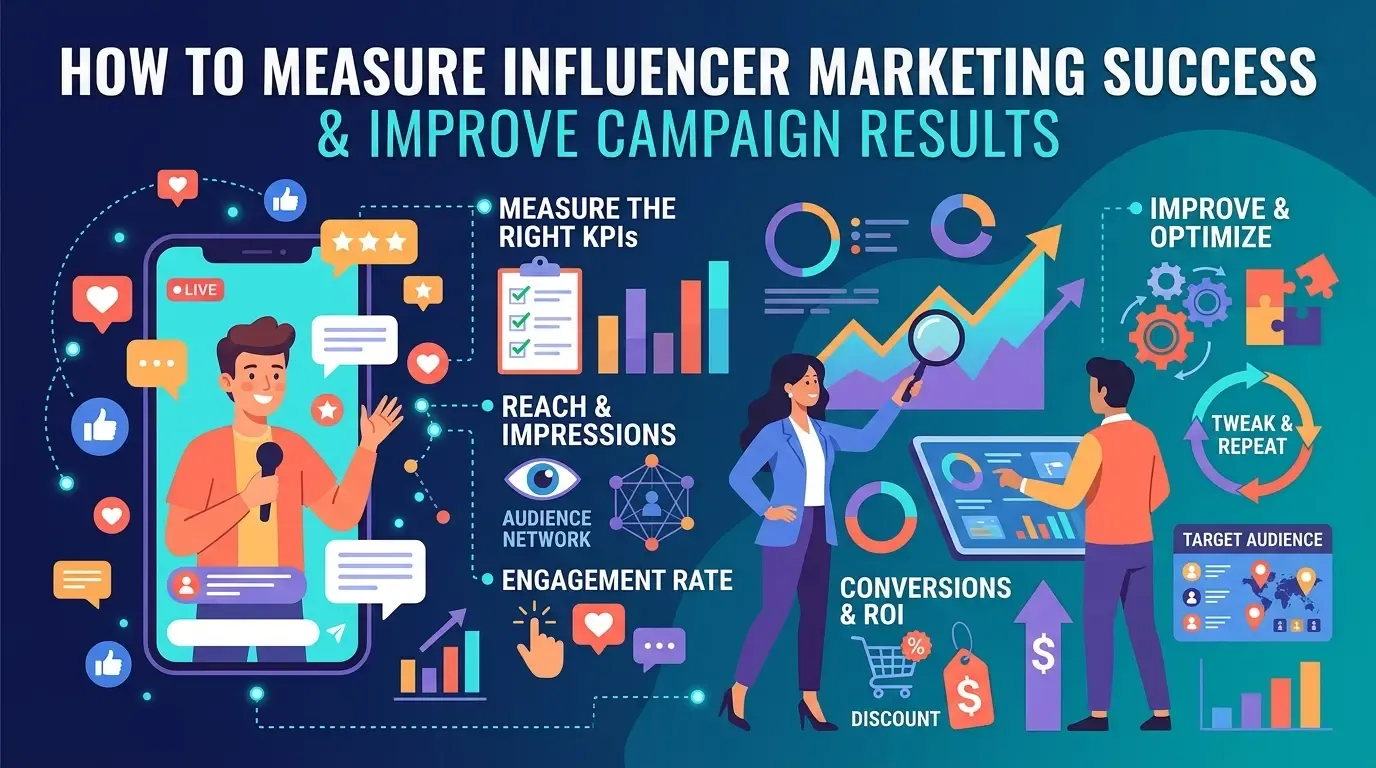
Influencer marketing allows brands to connect with audiences through creators who have established trust and credibility within their communities. However, launching collaborations and publishing sponsored content are only parts of a successful campaign. Businesses also need to understand whether their partnerships are producing meaningful results.
Measuring influencer marketing success involves evaluating performance indicators such as audience reach, engagement, website traffic, conversions, and return on investment. These metrics help businesses understand how audiences respond to creator content and whether campaign activities contribute to wider marketing objectives.
A campaign may generate thousands of likes but still produce limited business value. Another collaboration with a smaller audience might attract highly interested visitors and generate more purchases. This is why brands should look beyond visible engagement and focus on the results that matter to their specific goals.
By establishing clear performance indicators, using reliable tracking methods, and reviewing campaign data consistently, businesses can make better decisions about creator partnerships and improve future marketing activities.
Why Measuring Influencer Marketing Success Matters
Influencer collaborations require investments in creator fees, campaign preparation, product samples, content production, and management. Without proper measurement, businesses may struggle to determine whether these resources are being used effectively.
Performance tracking provides a clearer understanding of what each campaign achieves. Brands can identify creators who attract relevant audiences, recognize content formats that generate stronger engagement, and discover which partnerships contribute to conversions.
Understanding the results also supports better budget planning. Instead of distributing spending based only on follower counts or popularity, marketers can prioritize creators who demonstrate meaningful performance.
Another important benefit is identifying unreliable engagement. Some accounts may have inflated follower numbers or interactions that do not represent genuine audience interest. Reviewing engagement quality, audience behavior, and campaign outcomes helps businesses make more informed partnership decisions.
Brands that understand their results can also build stronger long-term relationships with creators whose audiences consistently respond to their content.
Important Metrics for Evaluating Influencer Marketing Performance
The right metrics depend on what a campaign is designed to achieve. A brand awareness collaboration requires different measurements from a campaign focused on product sales or customer acquisition. The following indicators provide a useful starting point.
Reach and Impressions
Reach represents the number of unique users who have seen influencer content, while impressions measure the total number of times the content has been displayed. One person may generate several impressions, so these figures provide different perspectives on content visibility.
Both metrics are particularly useful for campaigns designed to introduce a brand, product, or service to a wider audience. High reach indicates that the content has reached many individual users, while impressions help marketers understand the frequency of exposure.
However, visibility alone does not prove that audiences are interested in the promoted product. Brands should compare reach and impressions with engagement, website activity, and other relevant indicators.
Engagement Rate
Engagement rate measures how actively audiences interact with influencer content. Common interactions include likes, comments, shares, and saves.
A commonly used calculation is:
Engagement Rate = (Total Engagements ÷ Total Followers) × 100
For example, if an influencer has 80,000 followers and receives 4,000 engagements on a post, the engagement rate is 5%.
A higher engagement rate can indicate that the creator's content connects with the audience. However, marketers should consider the platform, content format, audience size, and type of interaction when evaluating results.
Comments and shares may reveal more meaningful interest than likes alone. Reviewing the quality of audience responses can help brands understand whether followers are genuinely engaging with the promoted message.
Website Traffic and Click-Through Rate
Website traffic shows whether influencer content encourages people to visit a brand's website or landing page. Click-through rate (CTR) measures the percentage of impressions that result in link clicks.
The calculation is:
CTR = (Total Clicks ÷ Total Impressions) × 100
For example, if a campaign receives 20,000 impressions and generates 400 clicks, its CTR is 2%.
A strong click-through rate suggests that the content and call to action encouraged viewers to learn more. If a post receives substantial exposure but very few clicks, the brand may need to reconsider its messaging, offer, or link placement.
Tracking links and UTM parameters can help businesses identify which creators and campaigns generate website visits.
Conversions and Sales
Conversions measure whether audiences complete a desired action after interacting with influencer content. Depending on the campaign, this could involve purchasing a product, submitting a contact form, registering for an event, downloading an application, or subscribing to a newsletter.
For businesses focused on revenue, sales are particularly important because they connect creator activity with commercial outcomes.
Unique promotional codes, affiliate links, and campaign-specific landing pages can help identify which partnerships generate conversions. These methods also make it easier to compare the performance of different creators.
Brands should define what counts as a conversion before launching a campaign. This prevents confusion when reviewing results and helps teams evaluate performance consistently.
Audience Growth
Influencer collaborations can introduce a brand to people who may not have previously followed its social media accounts. Monitoring follower growth during and after a campaign helps businesses understand whether creator content attracts new audiences.
However, follower increases should not be evaluated in isolation. Brands should also review whether new followers interact with their content, visit their website, or show interest in their products.
A smaller increase in relevant followers may provide greater long-term value than a large number of inactive accounts.
How to Calculate Influencer Marketing ROI
Return on investment (ROI) helps businesses understand the financial outcome of their influencer campaigns compared with the resources invested.
A commonly used ROI formula is:
ROI = [(Revenue Generated − Campaign Cost) ÷ Campaign Cost] × 100
Consider a business that spends $8,000 on an influencer campaign and generates $28,000 in attributed revenue.
ROI = [($28,000 − $8,000) ÷ $8,000] × 100
ROI = 250%
This calculation indicates that the campaign generated revenue equal to 3.5 times its cost, with a return of 250% above the original investment.
For accurate evaluation, businesses should include relevant expenses such as creator payments, product costs, agency fees, content production, and campaign management expenses.
Measuring Value Beyond Direct Sales
Not every influencer campaign is designed to generate immediate purchases. Some collaborations focus on brand awareness, audience development, content creation, or long-term customer relationships.
In these situations, marketers can consider additional indicators when evaluating campaign value:
- Earned media value: An estimate of the equivalent advertising value of organic exposure generated through creator content.
- Content reuse value: The benefit of using approved influencer content in social media posts, advertisements, websites, or email campaigns.
- Audience development: The potential long-term value of attracting relevant followers and interested prospects.
- Brand engagement: Audience conversations, mentions, shares, and other interactions that strengthen brand visibility.
These indicators provide additional context, although they should not be treated as direct financial revenue. Businesses should distinguish estimated marketing value from actual sales when preparing performance reports.
Tracking Methods That Support Accurate Measurement
Reliable attribution requires a suitable tracking method. Different approaches are useful depending on whether a campaign focuses on sales, traffic, leads, or awareness.
| Tracking Method | Primary Purpose | How It Helps |
|---|---|---|
| Unique discount codes | Sales tracking | Connects purchases with individual creators |
| Affiliate links | Revenue attribution | Records sales generated through creator links |
| UTM parameters | Traffic analysis | Identifies campaign sources in analytics reports |
| Dedicated landing pages | Lead generation | Collects campaign-specific registrations and inquiries |
| Customer surveys | Awareness measurement | Helps identify where customers discovered a brand |
Businesses should select tracking methods before content goes live. Preparing attribution in advance reduces the risk of losing important performance information.
Setting the Right Influencer Marketing KPIs
Key performance indicators (KPIs) help businesses determine whether campaign activities are meeting their objectives. Instead of tracking every available number, marketers should select a small group of indicators that directly reflect the intended outcome.
KPIs for Brand Awareness
When the primary objective is improving visibility, businesses should focus on:
- Total reach and impressions
- Brand mentions and branded hashtag activity
- Growth in social media followers
- Share of voice within the relevant market
These indicators help marketers understand how widely the campaign message is being distributed and whether more people are becoming familiar with the brand.
KPIs for Audience Engagement
Campaigns focused on building stronger audience relationships can prioritize:
- Engagement rate
- Comments and audience sentiment
- Shares and saves
- User-generated content activity
These measurements provide insight into how audiences respond to creator content and whether the campaign encourages meaningful interaction.
KPIs for Conversions and Revenue
For campaigns designed to generate leads or sales, useful indicators include:
- Conversion rate
- Cost per acquisition (CPA)
- Attributed revenue
- Average order value
- Total purchases or qualified leads
Selecting two or three primary KPIs for each campaign makes reporting easier to understand. Additional metrics can provide context, but the main performance indicators should remain connected to the original campaign objective.
How to Monitor Influencer Campaign Performance Over Time
Reviewing results immediately after a sponsored post goes live may not provide a complete picture. Some audiences take time to visit a website, consider an offer, or complete a purchase. Businesses should establish a consistent monitoring process that captures both immediate and delayed outcomes.
A centralized campaign dashboard can help organize information such as creator names, content formats, campaign expenses, reach, engagement, clicks, and conversions. Keeping these records in one place makes it easier to compare partnerships and identify performance patterns.
For example, a business may discover that short-form videos generate more website visits than static posts. Another review might show that a particular creator produces fewer clicks but a higher conversion rate.
Comparing results across multiple campaigns helps brands understand which creators and content approaches are worth investing in again. It also provides useful information when discussing future collaboration terms and compensation.
Businesses should also consider the payment structure and agreed deliverables when reviewing campaign costs. Understanding Influencer Payments can help marketing teams evaluate creator compensation alongside the results delivered by each partnership.
Tools for Influencer Marketing Analytics
Analytics tools reduce the effort required to collect and organize campaign information. Native insights from platforms such as Instagram and TikTok provide information about content reach, impressions, and audience interactions.
Google Analytics can help businesses evaluate website visits and user activity from influencer campaigns, particularly when tracking links contain appropriate UTM parameters.
Specialized influencer marketing platforms may provide centralized reporting, creator performance records, and campaign comparisons. The right solution depends on the number of partnerships, available budget, reporting requirements, and existing marketing technology.
Smaller businesses may begin with platform insights and spreadsheet-based reporting. Larger programs may benefit from dedicated tools that consolidate information from multiple sources.
Common Mistakes When Measuring Influencer Marketing Results
Even when businesses collect campaign data, certain mistakes can make their conclusions less reliable.
Focusing Only on Follower Counts and Likes
Large follower numbers may look attractive, but they do not guarantee audience relevance or commercial value. Brands should consider engagement quality, audience characteristics, and actual campaign outcomes before evaluating a creator's effectiveness.
Ignoring Audience Sentiment
Numerical data cannot explain every audience response. Comments, questions, and discussions can reveal whether people understand the campaign message, trust the recommendation, or have concerns about the promoted product.
Reviewing qualitative feedback alongside performance metrics provides a more complete understanding of campaign impact.
Starting Campaigns Without Baseline Data
Brands need a clear picture of their starting performance before measuring improvement. Recording existing follower counts, website traffic, engagement levels, and conversion activity helps teams understand whether campaign results represent meaningful changes.
Evaluating Results Too Quickly
Not every campaign produces immediate conversions. Some customers need additional time before making a decision, particularly when the product requires research or a larger financial commitment.
Businesses should establish reasonable reporting periods and attribution windows before deciding whether a partnership has succeeded.
Using Inconsistent Attribution Methods
When different creators use different tracking arrangements, campaign comparisons can become difficult. Standardizing UTM parameters, promotional codes, and reporting procedures helps improve the reliability of performance data.
Turning Campaign Data Into Better Marketing Decisions
Collecting metrics is only useful when businesses apply the findings to future activities. After completing a campaign, marketing teams should compare actual performance with their original objectives and identify the factors that influenced the outcome.
Creators who generate relevant traffic, strong engagement, or valuable conversions may be suitable for future partnerships. Content formats that perform well can also inform creative planning for upcoming campaigns.
Brands should maintain clear approval procedures to ensure published content meets campaign requirements and reflects their identity. A structured Influencer Approvals process can help teams review creator content, communicate revisions, and maintain consistency before publication.
Performance reviews should also identify areas that need improvement. Weak click-through rates may indicate an ineffective call to action, while low engagement could suggest that the content or creator does not match the intended audience.
By using campaign findings to refine creator selection, messaging, tracking, and budget allocation, businesses can gradually improve their influencer marketing activities.
Conclusion
Measuring influencer marketing success requires more than reviewing likes, views, and follower counts. Businesses need to evaluate meaningful indicators such as reach, engagement, website traffic, conversions, and ROI to understand the actual contribution of creator partnerships.
Clear objectives, consistent KPIs, reliable tracking links, and regular performance reviews help brands identify effective collaborations and make better use of their marketing budgets. Combining numerical data with audience feedback also provides a more balanced view of campaign performance.
When businesses turn measurement into practical improvements, influencer partnerships become easier to evaluate, optimize, and connect with long-term marketing goals.
Frequently Asked Questions
1. How can businesses measure influencer marketing success?
Businesses can measure influencer marketing success by tracking reach, impressions, engagement rate, website traffic, click-through rate, conversions, and ROI. The most relevant metrics depend on the campaign's primary objective.
2. What is a good engagement rate for an influencer?
Engagement benchmarks vary depending on the platform, audience size, and content format. As a general reference, the original article identifies 1–3% as average, 3–6% as strong, and above 6% as excellent on Instagram. Brands should also compare creators within similar audience categories.
3. How do you calculate influencer marketing ROI?
Use the formula: ROI = [(Revenue Generated − Campaign Cost) ÷ Campaign Cost] × 100. Include relevant campaign expenses and use reliable attribution methods to estimate the revenue generated by influencer partnerships.
4. Which tools help track influencer campaign performance?
Businesses can use Instagram and TikTok analytics, Google Analytics, affiliate tracking systems, UTM links, and specialized influencer marketing platforms. These tools help monitor audience interactions, website activity, and campaign conversions.
5. Why should brands monitor influencer campaign performance regularly?
Regular monitoring helps businesses identify successful creators, understand audience responses, detect underperforming content, and improve future campaign decisions. It also makes budget allocation and partnership evaluation more effective.




Sign in to leave a comment.