

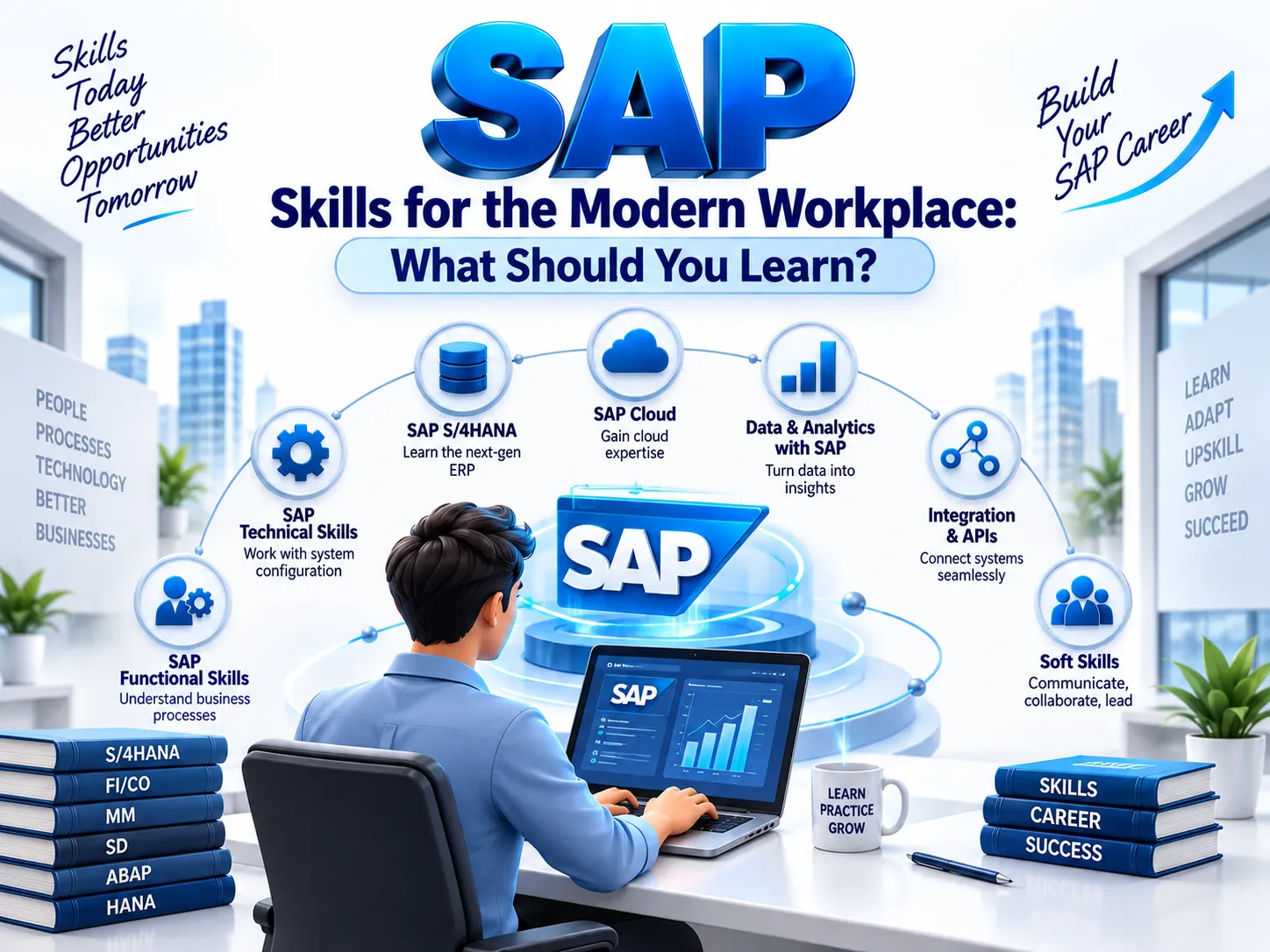
Changing careers does not always mean starting from zero. Professionals often already have valuable knowledge, industry experience, and business skills that can be connected with new technology. SAP can be one such area where your existing professional background can provide a useful foundation for developing ERP knowledge.
Whether you come from finance, HR, sales, procurement, operations, or another business function, understanding how SAP supports business processes can help you build a more technology-focused professional profile.
Why Consider a Career Switch to SAP?
SAP is widely associated with enterprise resource planning and business process management. Professionals who understand a particular business function can explore how those processes are handled through SAP systems.
For example, someone with finance experience may already understand accounting, financial reporting, payments, and business transactions. Learning SAP FICO can help connect that existing knowledge with ERP-based financial processes.
Similarly, professionals from procurement, sales, production, or HR can explore SAP areas that relate to their current experience.
A career transition therefore does not necessarily require leaving your existing knowledge behind. Instead, you can build new SAP skills around the experience you already have.
Identify the Skills You Already Have
Before starting your SAP career journey, identify the skills and responsibilities you have developed in your current or previous role.
Consider:
- Your educational background
- Your current job responsibilities
- Business processes you already understand
- Software or technology you currently use
- Industry knowledge
- Problem-solving and analytical skills
- Communication and teamwork experience
These skills can help you determine which SAP area may be relevant to your career goals.
Match Your Existing Skills with an SAP Area
Choosing an SAP area that connects with your previous experience can make the transition more practical.
| Existing Background | SAP Area to Explore |
|---|---|
| Finance and Accounting | SAP FICO |
| Procurement | SAP MM |
| Sales | SAP SD |
| Production | SAP PP |
| Quality | SAP QM |
| HR | SAP SuccessFactors |
| IT/Technical | SAP ABAP, SAP BTP and Integration |
This does not mean your background limits your options. It simply provides a starting point for deciding where your existing knowledge and new SAP skills can overlap.
Build SAP Knowledge Without Ignoring Your Domain Experience
One common mistake during a career switch is focusing only on learning a new technology while overlooking the professional knowledge you already possess.
Instead, try to connect the two.
For instance, a finance professional can learn how accounting activities are represented in SAP. A procurement professional can study how purchasing processes work within an ERP environment. An HR professional can explore how employee-related processes are managed through SAP SuccessFactors.
This approach can make learning easier to relate to real business situations.
Consider Structured SAP Learning
Once you identify the SAP area that fits your goals, structured learning can help you develop the required foundation.
Professionals exploring SAP Training in India can look for learning programs that cover both SAP concepts and relevant business processes. The curriculum should match the learner's experience level and selected SAP area.
For someone completely new to SAP, starting with fundamentals can be useful. Professionals with relevant domain experience may prefer a focused learning path connected to their existing responsibilities.
Understand the Role of Certification
Certification can be considered as part of an SAP learning plan, particularly for professionals who want a structured preparation goal.
SAP Certification Training in India can help learners prepare for certification-related topics while developing knowledge of the relevant SAP area.
However, certification preparation should not be treated as a replacement for practical understanding. Knowing how a business process works and understanding the purpose behind different SAP activities can make your learning more meaningful.
Choose the Right SAP Course
Selecting an appropriate SAP Course in India depends on several factors, including your professional background, previous knowledge, career objectives, and preferred SAP area.
Before enrolling, consider:
- Course curriculum
- SAP module covered
- Beginner or advanced level
- Practical learning approach
- Duration of the program
- Certification preparation
- Relevance to your professional background
A course should help you develop knowledge that supports your intended career direction rather than simply covering a large number of unrelated topics.
Develop Practical SAP Skills
Learning terminology alone is not enough when preparing for a career transition. Try to understand SAP through business scenarios and process-based examples.
For example, if you are learning SAP FICO, understand how financial transactions move through the system. If you are exploring SAP MM, focus on how procurement and inventory processes are connected.
Practical learning can help you understand:
- Business requirements
- SAP workflows
- Transactions and processes
- Departmental connections
- Business data
- Common process scenarios
This can gradually turn theoretical knowledge into usable SAP understanding.
Build on Transferable Professional Skills
Your existing professional skills can remain valuable during an SAP career transition.
Communication Skills
SAP professionals often need to understand business requirements and communicate with different stakeholders.
Analytical Thinking
Analyzing business processes and identifying how systems can support them is useful across many SAP-related roles.
Domain Knowledge
Understanding finance, procurement, HR, sales, manufacturing, or another business function can provide context while learning SAP.
Problem-Solving
Working through business scenarios and system-related challenges requires structured problem-solving.
Business Process Understanding
Knowing how activities happen within an organization can help you understand how SAP supports those activities.
Create a Focused Learning Roadmap
A career switch becomes easier to manage when you divide the learning process into clear stages.
Stage 1: Understand SAP Fundamentals
Learn basic ERP concepts, SAP terminology, and the role of enterprise systems.
Stage 2: Select Your SAP Area
Choose a module or SAP specialization that connects with your background and career objectives.
Stage 3: Learn Core Concepts
Study the major processes, functions, and concepts associated with your selected area.
Stage 4: Practice Business Scenarios
Work through practical examples to understand how SAP processes operate.
Stage 5: Prepare for Certification
If certification is part of your goal, prepare for the relevant examination alongside your core learning.
Stage 6: Strengthen Your Professional Profile
Update your resume and professional profiles to reflect your existing experience along with your newly developed SAP knowledge.
Who Can Consider a Career Switch to SAP?
SAP can be explored by professionals from different educational and professional backgrounds. The most suitable path will depend on the individual's existing knowledge and career objectives.
Professionals from areas such as:
- Finance
- Accounting
- HR
- Procurement
- Sales
- Operations
- Supply Chain
- Manufacturing
- Information Technology
can evaluate SAP areas that connect with their existing experience.
Final Thoughts
Moving into an SAP career does not necessarily require you to discard everything you have learned in your current profession. Your existing domain knowledge, transferable skills, and professional experience can provide a foundation for learning SAP.
The key is to identify where your current skills connect with SAP, choose a relevant learning path, develop practical understanding, and gradually build your ERP expertise.
A focused approach can make a career transition more structured and help you understand how your existing professional knowledge can work together with SAP skills.























Sign in to leave a comment.