
The first time you leave your two-year-old at a school gate, pride and worry show up at the same time. Selecting a first school is less about buying a product and more about choosing a small community that will shape your child's earliest habits, friendships, and confidence. Most parents begin with a vague search and end up drowning in brochures. This guide splits the decision into simple steps so you can choose with a calm mind.
Begin With Your Child, Not the Brochure
Before you compare campuses, take a close look at your own child. Is your toddler curious and social, or slow to warm up? Does she still take two naps a day? Does he need plenty of physical play? Write down the three things your child needs most, and use that list as your filter. When people search for the best preschool, what they really mean is the best fit. It is seldom the biggest building or the flashiest signboard.
When Should You Begin Looking?
Many families only think about nursery admission when the new session is weeks away, which is exactly when seats disappear. A good rule is to start your research four to six months in advance. Most schools open preschool registration early in the year and offer a short window for parent interactions. Check the age criteria carefully too, since cutoff dates differ from school to school. Starting early also lets you visit twice, and the second visit often reveals far more than the first.
Finding the Right Setting for Toddlers
Parents of very young children frequently enter play schools near me for 2 year olds into a search bar and end up with an endless list. Start by narrowing it down by distance, since a long commute exhausts a toddler and makes your day longer. After that, check the group size. For two-year-olds, a comfortable benchmark is one adult for every eight children, with a helper also in the room. Ask how the teachers deal with separation anxiety, because the first two weeks are seldom easy for anyone.
Working Parents and Childcare Needs
When both parents are employed, timing is just as important as teaching. Schools with daycare let children remain after class hours in a supervised, homely setting with meals, rest, and quiet activities. A proper daycare school should be able to show you where the children sleep, how food is stored, who supervises pickup, and what happens when a child falls ill. Ask about the CCTV policy, first-aid arrangements, and staff background checks. These questions might feel awkward, but sensible schools welcome them.
What to Observe During a Visit
During your visit, spend the time watching rather than listening. Do the teachers crouch down so they speak at the child's eye level? Are the children busy with blocks, sand, paint, and stories, or seated in rows with worksheets? Take note of the washrooms, the outdoor space, and whether the classrooms smell fresh. Pay attention to the wall displays. Messy, colourful artwork made by children is a far better sign than perfect charts made by adults. Lastly, ask how parents get updates. A school that shares short notes and photos builds trust right from the very first week.
Getting to Grips with the Paperwork
Paperwork may seem daunting, but it is generally straightforward. A standard nursery admission form typically requests the child's birth certificate, the parents' ID, proof of address, immunisation records, and a few passport-size photographs. Go through the fee structure carefully, line by line, noting admission charges, annual fees, monthly tuition, uniform, books, and transport, and find out what can be refunded.
It also pays to grasp the complete nursery school admission process, including any interaction round. Most schools simply want to observe how your child acts within a small group, so an informal, playful meeting is quite normal. It is not a test. If the steps for admission for nursery school leave you unsure, ask the office to explain the timeline to you in writing.
Preparing for Kindergarten
A good first school ought to pave the way for what comes next. Ask how the programme progresses from nursery to lower and upper kindergarten, and whether children move up automatically. Some families switch schools at this point, and that is completely acceptable. It simply helps to understand how kindergarten admission operates in the schools you may consider later, so nothing about age rules or seat availability catches you off guard.
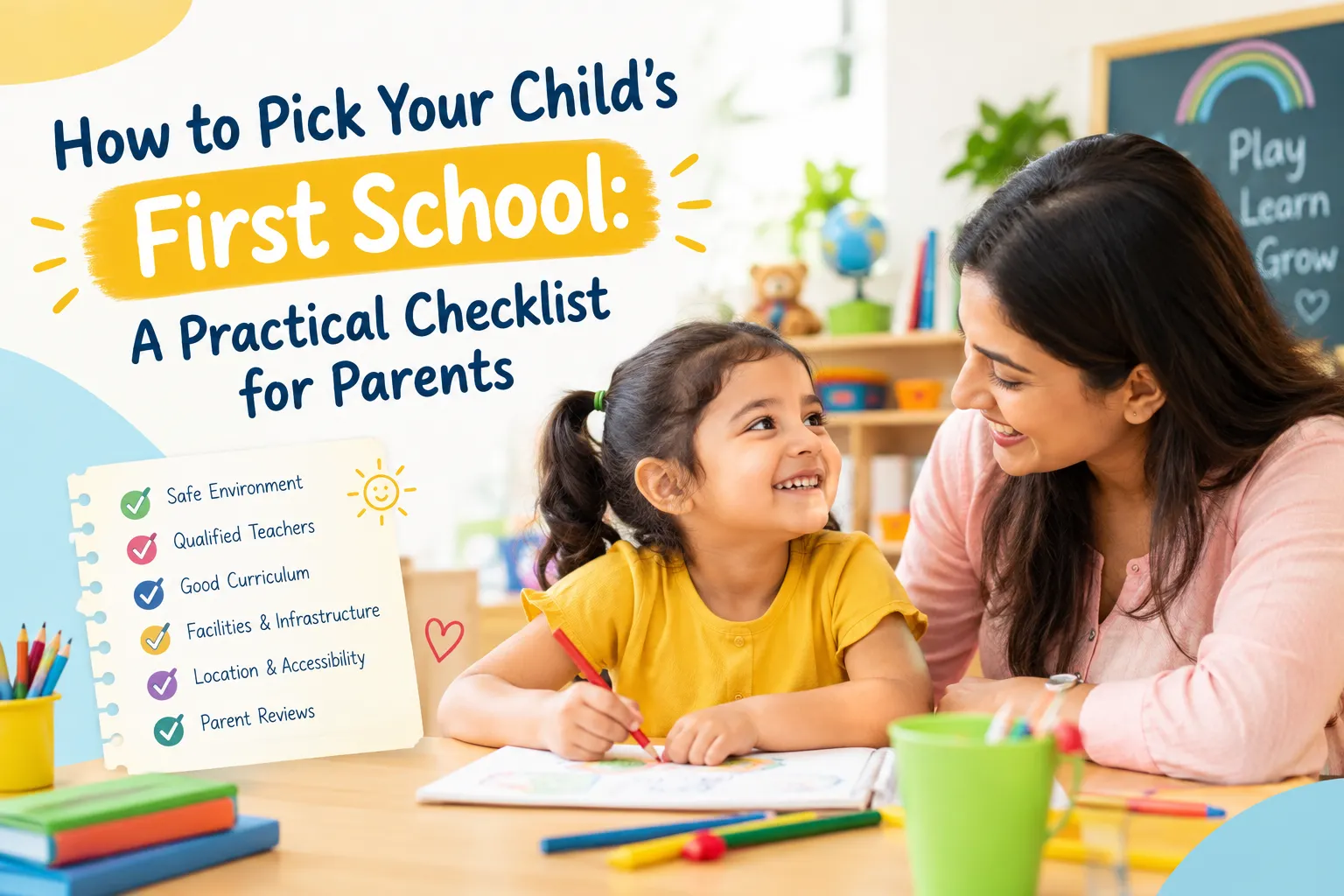
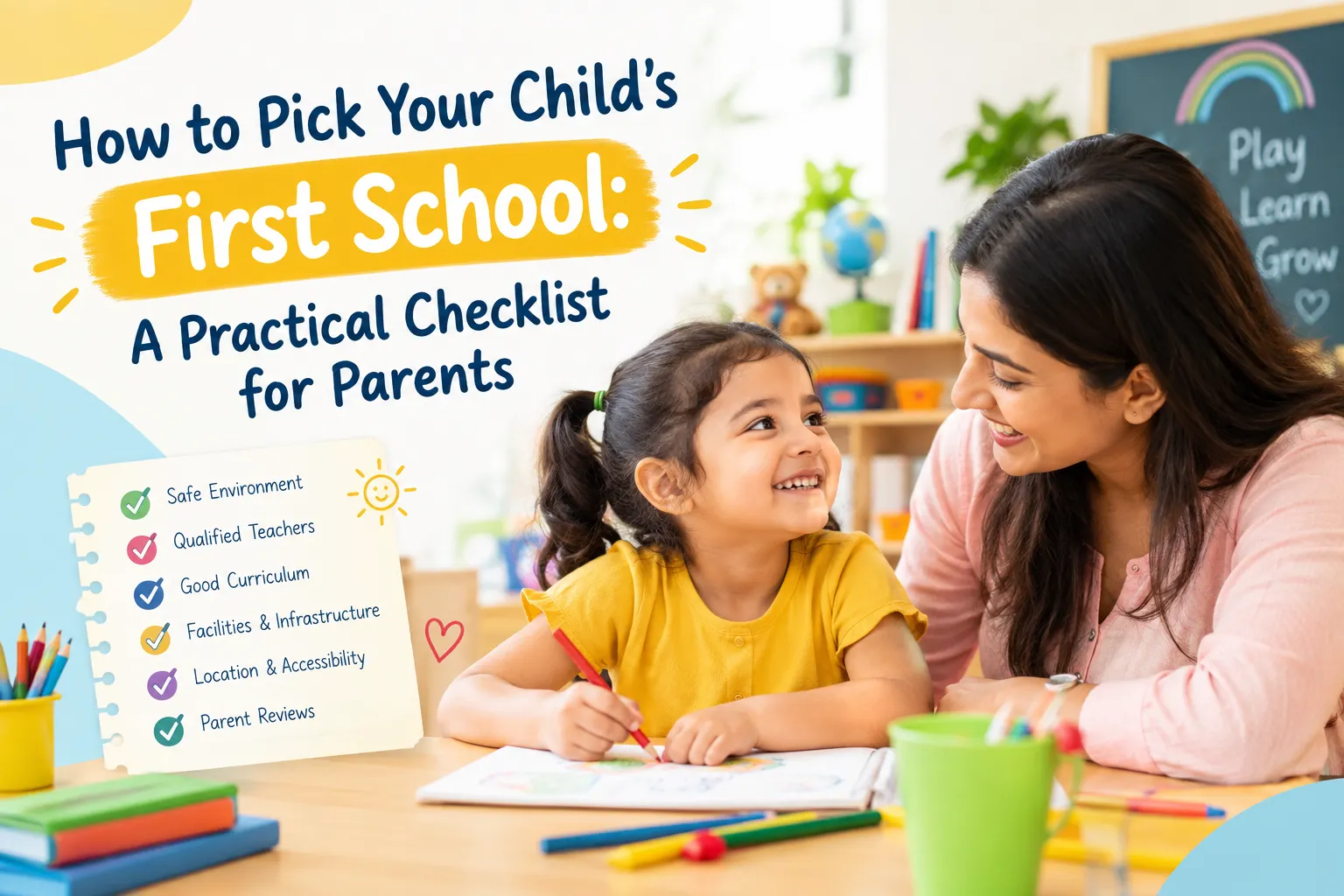
A Quick Checklist for Parents
- Premises that are clean, safe, and child-proofed
- Teachers who are warm, trained, and patient
- Learning through play rather than heavy writing
- Transparent fees, with no hidden charges
- Regular, open communication with parents
- A convenient location and flexible timings
Concluding Thoughts
No school can be flawless, and no checklist can take the place of your own gut feeling. If your child arrives eager to learn and leaves with a smile, that is an excellent indicator. Be patient, pose questions, come back for another visit, and include your child whenever possible. The early years revolve around safety, wonder, and happiness, and the right school safeguards all three.


























Sign in to leave a comment.