
Written by Gorgeous Cosmos
Shade is the first thing a customer judges. A blush can have a perfect texture and still fail if the colours do not suit the people buying it.
This guide explains how to plan a blush shade range that works across a wide range of skin tones, whether you sell in India, abroad or both.
Why Blush Shades Are Hard to Judge
Blush looks different in three places: in the pan, on a swatch and on skin. A bright pink in the pan may turn soft on a deeper skin tone. A pale peach may disappear entirely.
That is why a shade should never be approved from the pan alone. It must be tested on real skin.
Understand Undertone and Depth
Two ideas drive shade planning.
Undertone is the warm, cool or neutral note beneath the skin surface. A blush that matches the undertone looks natural. One that clashes can look flat or ashy.
Depth is how light or deep the skin is. A shade that glows on light skin may need more pigment to show on deeper skin.
A good range considers both, instead of only offering shades across one depth.
Core Shade Families
Most blush ranges draw from a few families:
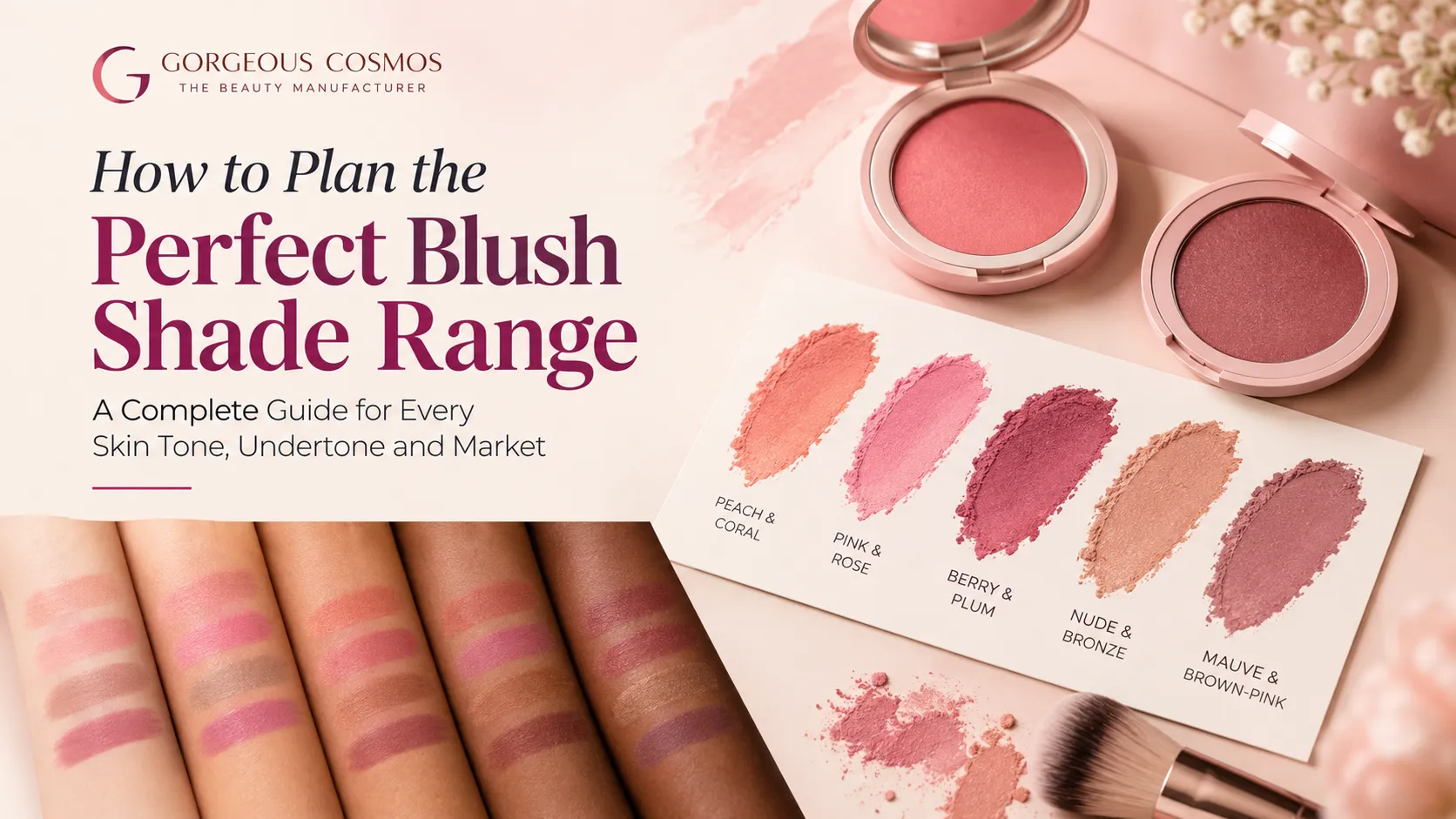
- Peach and coral: warm, fresh and popular for everyday wear.
- Pink and rose: classic and flattering across many undertones.
- Berry and plum: deeper, richer colours that show well on medium to deep skin.
- Nude and bronze-leaning: neutral shades that add warmth and dimension.
- Mauve and soft brown-pink: subtle shades that suit office and natural looks.
You do not need all of these. Choose the families that fit your customer.
Match Shade to Finish
Finish changes how a colour reads. A matte pink looks flatter than a shimmer pink. A dewy coral looks brighter than a satin coral.
Decide finish alongside shade. A range with mixed finishes can work, but each shade should have a clear reason for its finish.
How Many Shades Should You Launch With?
There is no fixed number. What matters is that each shade has a clear purpose.
A new brand usually does better with a small, well-chosen range than with many similar colours. Customers feel confused when five shades look alike. They feel confident when each shade is clearly different.
You can always add shades later once you see which sell.
Use a Reference When You Have One
If you like a shade from another product, a manufacturer can match it. You can share:
- A competitor product
- A colour card or swatch
- A photo or mood board
The manufacturer builds the colour by balancing pigments and pearls, compares it against your reference, and refines it through sample rounds. Learn how this works under custom blush formulation.
Test Shades Properly
When samples arrive, do not judge them in one light or on one person.
- Swatch on the back of the hand and on the cheek.
- Test on at least three different skin tones.
- View in natural daylight and indoor light.
- Check how the colour looks after a few hours of wear.
- Photograph each swatch for your website.
Write down feedback in clear words, such as “needs more warmth” or “too pale on deeper skin.”
Naming Your Shades
Shade names are part of your brand. Clear, simple names help customers choose. Avoid names that are hard to pronounce or that suggest a skin tone in a way that could feel exclusionary.
Keep naming consistent across your range, so customers recognise it as one family.
Planning for Export Markets
If you plan to sell outside India, check how customers in your target markets use blush. Popular shades, finishes and colour intensity can differ. Also check colourant rules, because not every pigment is permitted in every market.
Tell your manufacturer the destination early, so the formula and colours can be developed with it in mind.
Common Shade Planning Mistakes
- Launching several shades that look the same
- Approving colours from the pan without swatching
- Ignoring deeper skin tones
- Forgetting that finish changes colour
- Not photographing swatches on different skin tones
Frequently Asked Questions
Can a manufacturer match a shade I already like?
Yes, from a reference such as a swatch, colour card or competitor product, followed by sample rounds until you approve it.
Should I include shimmer shades?
Only if they fit your customer. Shimmer suits glow-led brands, while matte suits everyday and professional looks.
How do I know a shade works on deeper skin?
Swatch it on deeper skin tones during sampling. If it disappears, ask for more pigment.
Final Thoughts
Good shade planning is about clarity. Know your customer, cover different undertones and depths, keep the range focused and test every shade on real skin.
Explore our blush manufacturer in India page for shade development options, or talk to our team.
















Sign in to leave a comment.