How to Plan a Buffet Menu for Different Guest Numbers


A buffet for 25 guests and a buffet for 150 guests should not be organised in the same way. The difference is not simply the amount of food required. As attendance increases, the way guests approach the buffet, serve themselves and move through the meal becomes part of the menu planning.
For buffet catering in Melbourne, the guest count should therefore influence the layout and structure of the food as much as the recipes themselves.
What Changes When More Guests Use the Same Buffet?
Once a buffet reaches a larger size, queues can become a bigger issue than the food itself. If every guest has to stop at the same dish, serving point or condiment station, the entire line slows down.
Build the menu around movement
For a larger gathering, consider separating dishes according to how quickly guests are likely to serve themselves.
| Buffet area | Suitable items |
| First section | Plates, cutlery and lighter starters |
| Main section | Proteins and substantial dishes |
| Side section | Vegetables, salads and accompaniments |
| Finishing section | Sauces, condiments and bread |
| Dessert area | Sweets and fruit |
For smaller gatherings, a single compact arrangement may be perfectly practical. With more guests, duplicated high demand items or separate serving points can reduce congestion.
How Do You Decide Which Dishes Need More Space?
Not every dish needs the same serving capacity. A popular main course may require a larger serving utensil, deeper container or more room for replenishment than a garnish or condiment.
This is where menu planning becomes closely connected with equipment.
Match food to serving equipment
Consider:
- How quickly the dish is likely to be taken.
- Whether it requires a spoon, tongs or ladle.
- Whether guests can serve it without assistance.
- How much food can comfortably sit in the serving vessel.
- How often the vessel will need replacing.
For catering for 100 people, these small details become much more noticeable. A narrow serving bowl can create a queue even when there is plenty of food available elsewhere.
How Can You Make a Buffet Feel More Premium?
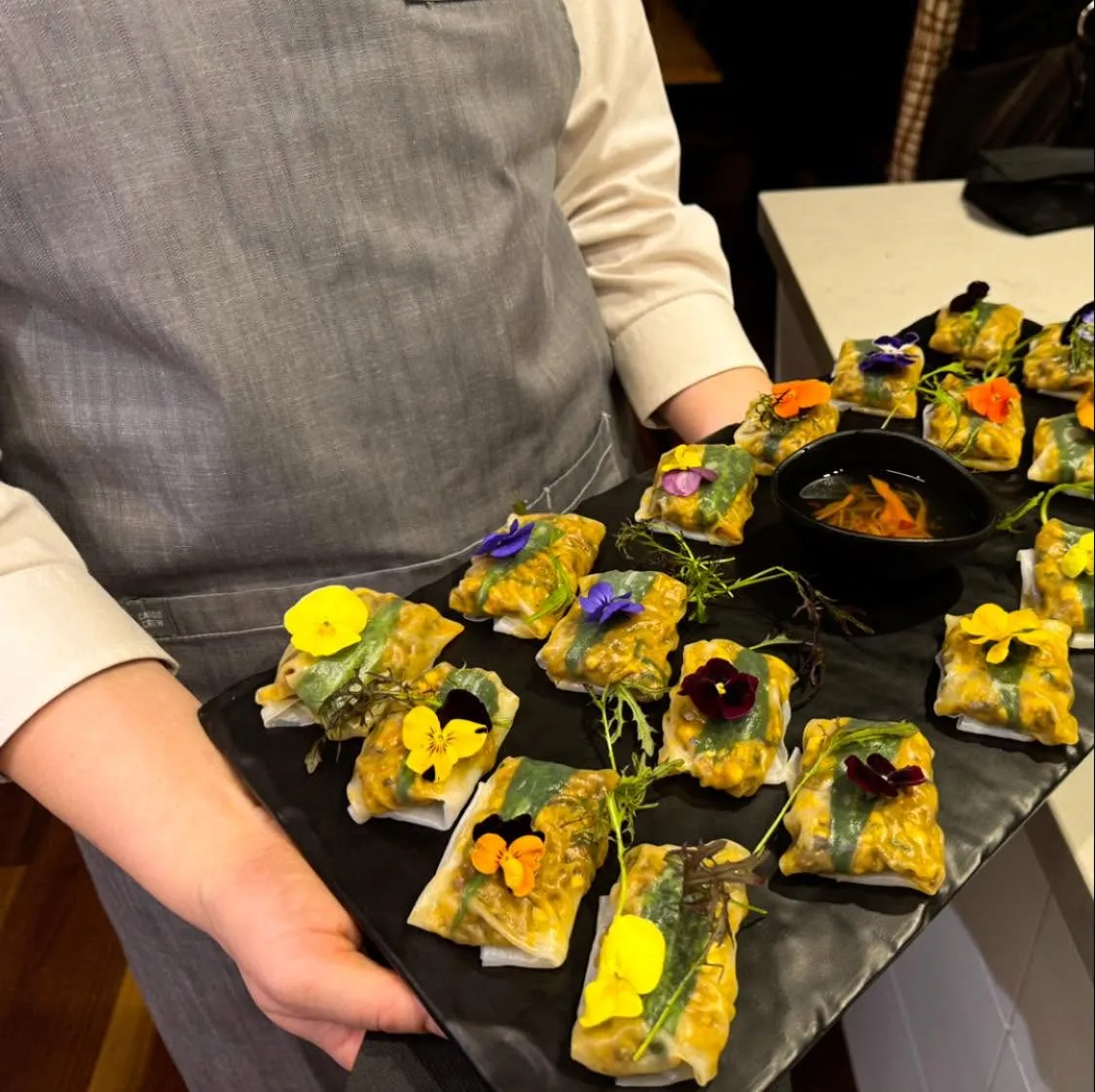
You don't need a crowded table for high end catering. A more elegant buffet will usually offer individual dishes with sufficient space to be clearly visible, with careful presentation and appropriate serving equipment.
Don’t just place everything on the table at once. Visually segregate main dishes from supporting elements.
Make room for the important dishes
This can result in a premium presentation:
- Identifying the dish clearly.
- Serving utensils as needed.
- Well arranged platters.
- Consistent presentation.
- Garnishes used with restraint.
- Clean serving areas throughout the event.
The food should remain the focus. Excessive decoration can make replenishment harder and take attention away from the dishes themselves.
How Can You Keep a Buffet Affordable?
Affordable catering does not mean every dish needs to use the same inexpensive ingredients. It is more useful to decide where the menu needs investment and where simpler components can do the supporting work.
For example, a distinctive main dish can sit alongside well prepared seasonal vegetables, grains, salads or breads. This gives the buffet different price points without making the whole menu feel inconsistent.
Another consideration is waste. Preparing excessive quantities of every dish can increase costs without improving the guest experience.
What Is Different About Planning a Wedding Buffet?
Wedding catering usually needs to work around the rhythm of the reception rather than simply being available from a fixed start time.
If it’s not a steady flow of guests, but rather waves of guests coming in after speeches or photos, then the buffet can be under a sudden demand.
Plan for the first rush
The catering team can arrange the buffet so the popular items are easy to access and the less popular dishes don’t interrupt the flow.
Desserts can also be positioned separately where appropriate. This prevents guests looking for something sweet from joining the main meal queue.

Conclusion
Think in terms of space, movement and demand, not just portions.
A small event can run a compact buffet with just a couple of serving points. A medium sized gathering usually needs clearer separation between food categories so queues do not tangle. A larger event benefits from duplicating popular dishes, adding extra serving equipment, or setting up separate stations.
This is also why buffet catering in Melbourne should be arranged according to the actual event and not a menu template.
Professional caterers like Big Flavours can take into account the number of guests, the type of event and the available space when planning the buffet. The point is obvious.


Sign in to leave a comment.