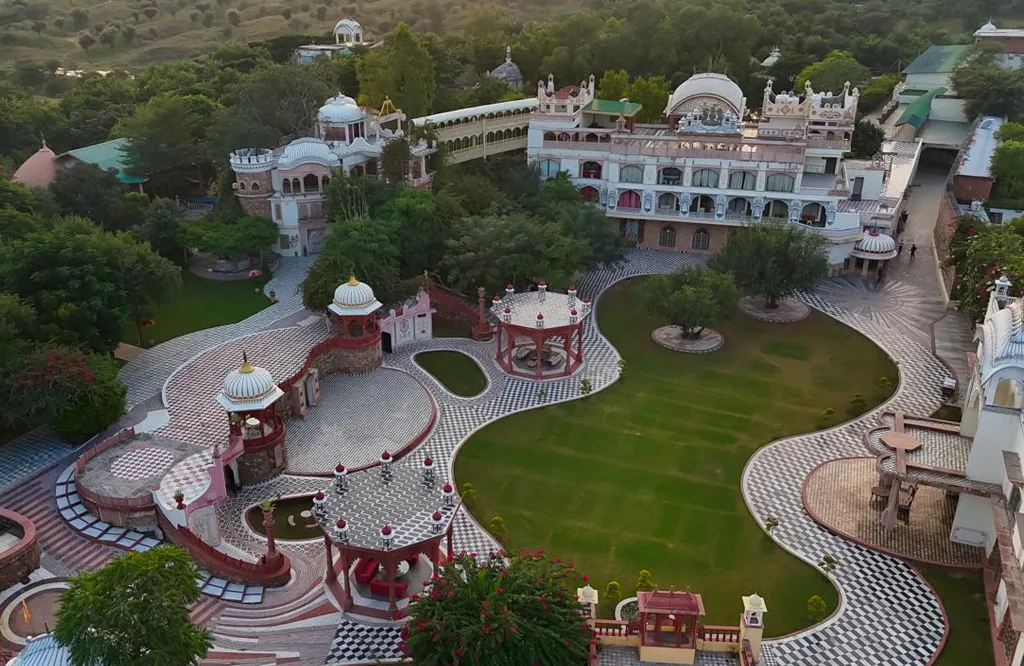

The first decision in planning a destination wedding in Jaipur is often not the colour palette or ceremony décor; it is deciding how the celebration will work as a sequence of real guest experiences. When accommodation, meals and functions are spread between different addresses, every transition requires a vehicle, a time estimate and someone to keep the schedule moving. A resort wedding can bring those pieces closer together. Lohagarh Fort Resort, near Jaipur, presents one example: the property lists multiple indoor and outdoor function spaces, accommodation within the campus and a dedicated setting for wedding pheras. Couples considering a multi-day wedding venue in Jaipur can use the planning framework below to assess whether a single destination will make their own celebration feel more connected.
What makes a destination wedding in Jaipur feel seamless?
“Seamless” does not mean that nothing needs organising. It means guests are not repeatedly asked to solve the same practical problem: where to go next, how to get there, where to eat, or whether they have time to return to their room. Build the event plan around a simple guest journey: arrival and check-in, a welcome gathering, the first function, time to rest, the main ceremonies, and departure. A venue that can support more than one part of that journey may reduce hand-offs between hosts, hotel teams and transport coordinators.
Start by writing the schedule from the guest’s point of view rather than from the stage manager’s. If a mehendi ends at 2 p.m. and the next event begins at 7 p.m., is there a comfortable place to rest? Can older relatives return to their accommodation without negotiating a long transfer? Where will children eat if they need an earlier meal? These are small operational questions, yet they shape whether a two-day wedding feels generous or exhausting. For each function, note its location, the time guests need to reach it, the likely temperature and the accessibility needs of the people attending.
Match each function to a different kind of space
A single resort can still offer variety if its venues differ in size and atmosphere. At Lohagarh Fort Resort, the wedding page describes intimate indoor spaces such as Swaagat Kaksh and Sheesh Mahal, gardens for smaller daytime functions, and larger lawns and halls for major celebrations. The listed capacities range from up to 40 guests in the two intimate indoor spaces to up to 1,000 at Krishna Angan; these are planning references, not a substitute for a layout-specific capacity confirmation. Seating, stage dimensions, dining format, production equipment and décor can all change the usable guest count.
The resort also identifies Jal Mandap as a dedicated phera venue beside water and beneath a 300-year-old Pipal tree, with a ceremonial area for up to 20 people. That distinction matters when a couple wants the central ritual to feel intimate while the larger guest group gathers nearby. Rather than assume every event must use the largest lawn, plan a venue map: a welcome point, a garden for haldi or mehendi, a hall or lawn for sangeet, a ceremony setting, and an indoor alternative where appropriate. Confirm how guests will move between these areas and whether the timeline allows the event team to reset spaces.
Treat accommodation as part of the event plan
Room planning begins with a list, not a room block estimate. Separate guests by arrival time, family group, accessibility needs, children, and the number of nights they intend to stay. Then compare the list with room categories and availability for the dates. A wedding resort with accommodation in Jaipur can simplify movement, but the host still needs a clear allocation process, a contact for late arrivals, and written check-in information. Ask how many rooms can be held, when the hold expires, what the payment schedule is, and what happens if a guest changes plans.
The wedding page describes rooms, suites, villas and family accommodation within Lohagarh Fort Resort’s campus. When speaking with the property, request current room counts by category, accessible-room details, occupancy limits, extra-bed terms, check-in windows and meal inclusions. Share a guest note before travel with the property address, arrival instructions, check-in contact, function schedule and dress guidance. A central stay can help guests spend unhurried time together between ceremonies, but only if practical details are easy to find.
Build a schedule that respects distance, weather and recovery time
Jaipur weddings often combine outdoor rituals with indoor celebrations. A schedule should therefore account for heat, winter evenings, possible weather changes, sound checks and transitions. Ask the venue team which spaces are available as alternatives and how quickly they can be reset. Confirm the decision deadline for switching an outdoor event, who makes that call, and what costs apply to a change in layout. Those answers are more useful than a general promise that a backup exists.
Create a run sheet with realistic buffers. Put guest-facing times beside operational times: when the doors open, when the ceremony begins, when dinner service starts, and when the next venue is ready. Give the wedding party, close family and vendors a separate call time so guests are not asked to wait while photography or stage checks continue. Include meal windows and quiet periods. A schedule with breathing room is easier for older guests and families with young children, and it gives the hosts a chance to be present rather than constantly checking a clock.
A practical planning sequence
✔ Confirm the guest range, preferred dates, number of functions and accommodation nights before requesting venue proposals.
✔ Ask each shortlisted property for current venue capacities, floor plans, indoor alternatives and restrictions in writing.
✔ Map guest arrival, check-in, meals and movement between every function.
✔ Compare the event inclusions, vendor responsibilities, taxes, payment milestones, cancellation terms and overtime charges.
✔ Visit the property during a similar season and, if possible, walk the route between rooms, dining spaces and event venues.
✔ Keep a single decision log for family approvals, vendor contacts, confirmed timings and outstanding questions.
Questions to ask before signing
Ask which services the resort team directly provides and which depend on outside vendors. Clarify décor, entertainment, photography, sound, lighting, power backup, security, parking and medical support; do not assume these are included because a venue hosts weddings. Request a written proposal showing event spaces, meal plans, room allocation assumptions, taxes and all payment dates. For each venue capacity, ask whether the figure refers to floating guests, theatre seating, banquet seating or a layout with a stage and dining. A transparent proposal gives both families a sound basis for comparison.
Lohagarh Fort Resort’s wedding page lays out its function spaces and their stated sizes and capacities, from Swaagat Kaksh’s 1,600 square feet and 40-person capacity to Krishna Angan’s 37,760 square feet and listed capacity of up to 1,000. It also describes Maharaja Surajmal Banquet Hall as an 8,000-square-foot indoor venue for up to 500 guests. Couples can use that level of detail to begin a venue conversation, then verify the proposed layout, date availability and final commercial terms directly. Reviewing the destination wedding in Jaipur page is a useful first step before making a site visit.
Frequently asked questions
Q.1: How many days should a destination wedding in Jaipur last?
ANS.: The right length depends on how many ceremonies matter to both families, how far guests are travelling and how much time they need to arrive comfortably. A compact two-day plan may suit a smaller guest list, while a welcome evening, main ceremony and farewell gathering can make a three-day itinerary feel less rushed. Lohagarh Fort Resort lists multiple spaces for different functions, so couples can discuss a schedule that balances celebration time with rest and check-in needs.
Q.2: How should we choose venues for different functions in Jaipur?
ANS.: Begin with the event’s purpose, guest count, time of day, weather exposure and production needs. A daytime haldi may work well in a garden, while a large reception may need an indoor hall or expansive lawn. At Lohagarh Fort Resort, the published venue options range from intimate indoor spaces to large outdoor venues; the practical capacity should be confirmed against the exact seating and stage plan before invitations are finalised.
Q.3: What should guests receive before travelling to Jaipur?
ANS.: Send a concise travel note with the venue address, arrival contact, check-in instructions, function timings, dress guidance, meal information and the best way to report a delay. If several family groups are arriving separately, assign one person to coordinate updates rather than sending conflicting messages. Lohagarh Fort Resort’s event team can clarify resort-specific arrival and accommodation procedures, which hosts can then include in a clear guest itinerary.
Q.4: How can a Jaipur wedding plan accommodate older relatives and children?
ANS.: Keep transfers short, provide realistic breaks between functions, identify quiet seating and confirm meal options and timings in advance. Ask about accessible routes, lifts or ground-floor rooms where relevant, and arrange a named point of contact for assistance. Lohagarh Fort Resort’s on-campus accommodation and multiple function spaces may help reduce repeated travel, but families should verify walking distances and access arrangements during a site visit.
Q.5: What should be confirmed in writing for a wedding in Jaipur?
ANS.: The contract should state the dates, venues, capacities and layouts, accommodation allocation, meal plan, inclusions, taxes, payment schedule, cancellation terms, vendor responsibilities, overtime rules and weather contingencies. Ask for clarification wherever a phrase such as “as required” leaves responsibility unclear. Lohagarh Fort Resort, like any shortlisted property, should provide a proposal that reflects the family’s actual event schedule and room requirements before a booking is finalised.
Final Thought
A well-planned resort wedding is not defined by how many venues appear on a brochure. It is defined by whether the guest journey makes sense from arrival to farewell. Start with movement, rest, meals and realistic transitions, then layer in the visual ideas. Lohagarh Fort Resort’s combination of indoor halls, outdoor lawns, gardens, on-campus accommodation and a dedicated phera setting offers couples a useful example of what an integrated celebration can look like. The next step is a detailed site visit and written proposal built around the family’s own dates, guest count and priorities.


























Sign in to leave a comment.