

Planning a wedding overseas becomes much easier when the destination can handle the celebration as well as the holiday around it. Thailand brings together beachfront resorts, private spaces, city hotels and tropical landscapes, giving couples plenty of ways to shape their wedding around their guest list and ceremony style. For couples considering a Destination Wedding in Thailand, the real advantage is the range of wedding settings available without giving up the convenience of established hospitality infrastructure.
A successful wedding in Thailand starts with choosing the right destination and property rather than simply selecting the most attractive photograph. Phuket, Khao Lak, Krabi, Bangkok, Hua Hin, Pattaya and Koh Samui each create a different guest experience. The right choice depends on whether the celebration revolves around a beachfront ceremony, several Indian wedding functions, a quieter resort environment or a city-based celebration.
Why Is Thailand a Strong Choice for Destination Weddings?
Thailand works particularly well for destination weddings because couples can combine wedding venues with comfortable accommodation and holiday experiences in the same trip. Beach resorts provide natural ceremony backdrops, while city hotels offer sophisticated indoor spaces for larger celebrations.
For Indian couples, the destination can also accommodate familiar wedding traditions. Mehendi, haldi, sangeet, baraat and wedding ceremonies can be planned as part of a multi-day celebration, with catering, décor, entertainment and guest hospitality coordinated around the wedding schedule. Thailand Weddings states that its planning services cover venue selection, vendor coordination, accommodation, airport transfers and on-site management.
This makes Thailand particularly appealing when the wedding is expected to feel like a complete experience for guests rather than a single ceremony.
Which Thailand Wedding Destination Should You Choose?
There is no single best destination for every couple. The choice should reflect the atmosphere you want and how your guests will experience the celebration.
Phuket: For Beach Weddings and Larger Celebrations
Phuket is one of the most established choices for Thailand weddings. Its combination of beaches, resorts, restaurants and entertainment makes it suitable for couples who want a lively destination alongside their wedding celebrations.
Beachfront properties can work particularly well for sunset ceremonies, while resort event spaces provide alternatives for functions that require more controlled surroundings.
Khao Lak: For a Quieter Resort Celebration
Khao Lak offers a more relaxed setting than the busier parts of Phuket. Its beachfront resorts and open spaces can be well suited to couples planning several functions across multiple days.
The JW Marriott Khao Lak Resort & Spa and Avani+ Khao Lak Resort are among the properties featured by Thailand Weddings, with beachfront settings and facilities designed around resort stays.
Krabi: For Dramatic Natural Backdrops
Krabi is a strong option for couples who want scenery to play an important role in the wedding. Limestone formations, coastal landscapes and nearby islands create a distinctive visual setting for ceremonies and wedding photography.
It can suit couples who prefer a destination with a more intimate, nature-focused character.
Bangkok: For a City Wedding Experience
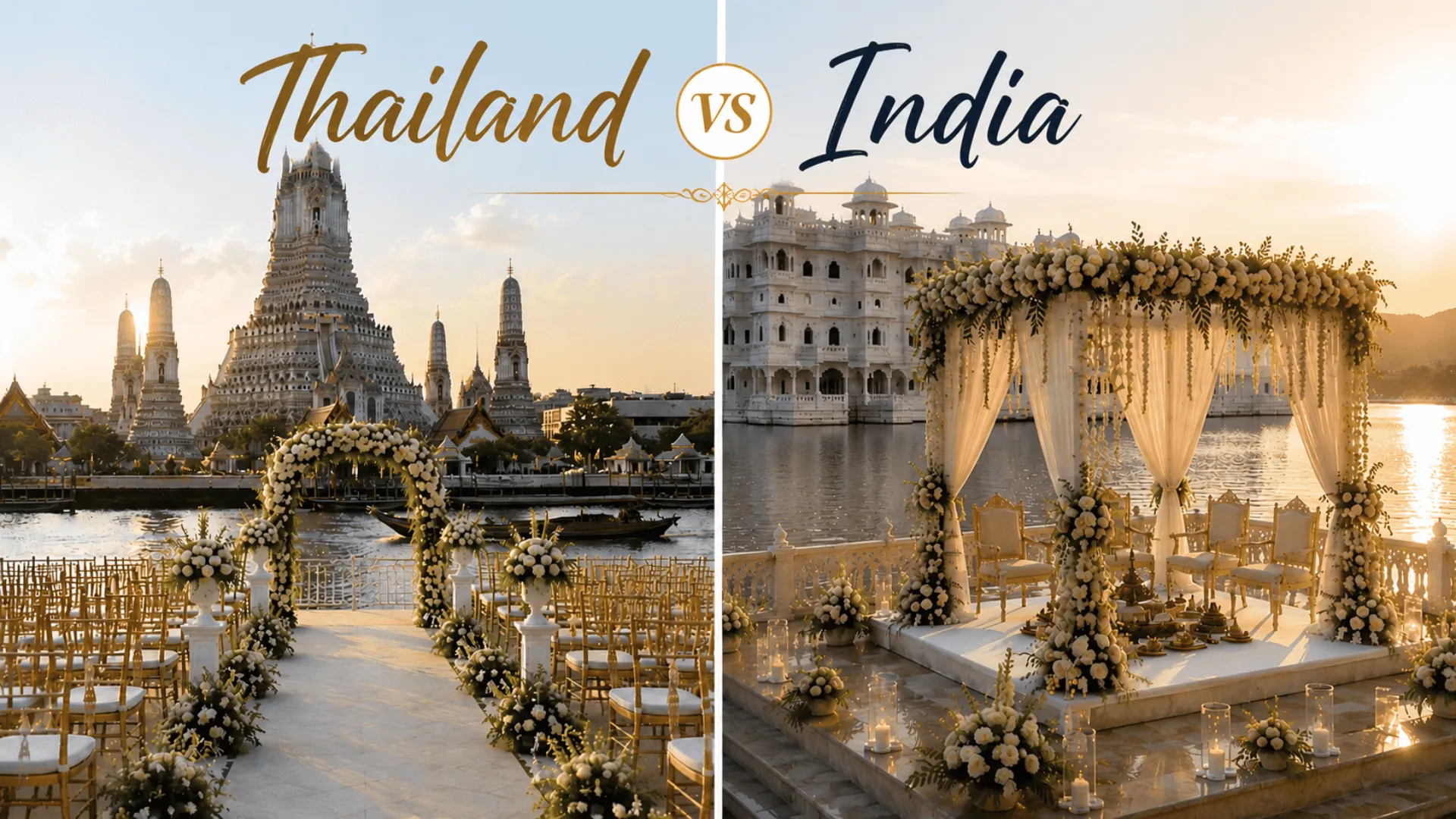
A Wedding in Thailand does not have to mean getting married beside the sea. Bangkok offers luxury hotels, riverfront settings and sophisticated event spaces for couples who prefer a city backdrop.
Properties such as Anantara Riverside Bangkok Resort demonstrate how a wedding can combine an urban setting with tropical landscaping and riverfront surroundings.
What Should You Look for in a Thailand Wedding Hotel?
The venue should be evaluated according to how your entire wedding will operate, not just how the ceremony space looks.
Consider these practical points before confirming a property:
- Event capacity: Check whether the venue can comfortably accommodate every planned function.
- Outdoor and indoor spaces: An indoor alternative is valuable when weather affects an outdoor ceremony.
- Accommodation: Keeping guests within the same property can simplify transfers and coordination.
- Catering: Ask specifically about Indian menus, vegetarian requirements and the format of different wedding functions.
- Vendor flexibility: Confirm whether external decorators, photographers, entertainment teams and other specialists can work at the property.
- Guest logistics: Airport transfers and local transportation become increasingly important as the guest list grows.
- Multi-day scheduling: Make sure the hotel can support consecutive events without creating unnecessary movement for guests.
These details often have a greater effect on the guest experience than the appearance of a single ceremony lawn.
How Can You Create a Complete Wedding Experience in Thailand?
The strongest Thailand weddings usually treat the entire stay as part of the celebration. Guests may arrive for a welcome gathering, move into mehendi and haldi functions, attend the sangeet, and then join the main ceremony and reception.
This approach also gives couples room to introduce the destination into the wedding experience. A beachfront welcome event, a sunset gathering or a relaxed post-wedding day can make the trip feel distinctly Thai without changing the cultural character of the wedding.
Thailand Weddings highlights coordination across catering, décor, photography, mehendi, music, guest travel and day-of management, which can help bring several moving parts together under one planning structure.
When Is the Best Time for a Wedding in Thailand?
The best wedding period depends on the region because Thailand does not have one uniform weather pattern.
For Phuket, Krabi and Khao Lak, November through February is generally a strong period for outdoor celebrations, with the Andaman coast experiencing its drier season. Bangkok and Pattaya also tend to be more comfortable during the cooler months.
Koh Samui is different because it follows a separate seasonal pattern on the Gulf of Thailand. Couples considering the island should therefore assess its weather calendar independently instead of applying the same dates used for Phuket or Krabi.
Choosing the region first and checking its seasonal conditions can make planning an outdoor mandap, beach ceremony or sunset function much more predictable.
What Does a Destination Wedding in Thailand Usually Include?
A professionally coordinated wedding can involve far more than booking a ceremony venue. The planning process may cover:
- Selecting hotels and event spaces.
- Coordinating wedding functions across multiple days.
- Arranging Indian and vegetarian catering requirements.
- Managing décor, photography, entertainment and mehendi vendors.
- Organizing airport transfers and guest accommodation.
- Coordinating the wedding-day schedule.
- Managing local suppliers and on-ground requirements.
The exact combination depends on the couple's wedding format, traditions and guest requirements. Thailand Weddings describes its services around these planning and coordination areas, with wedding programs handled across destinations including Phuket, Khao Lak, Bangkok and Pattaya.
Why Does Local Wedding Coordination Matter?
Planning from another country can make small operational details surprisingly important. A venue may look perfect online, but its event flow, catering capabilities, loading arrangements, vendor access and backup spaces need to work in practice.
A local planning team can help bridge that gap by understanding the properties, coordinating suppliers and managing requirements on the ground. This becomes especially useful for multi-day Indian weddings where several functions need to happen within a short period.
Thailand Weddings notes that its consulting team has experience with weddings across multiple Thai destinations and coordinates local vendors, decorators and guest logistics.
Is Thailand Suitable for Different Wedding Traditions?
Yes. Thailand can accommodate different cultural traditions and wedding formats, provided the venue and vendors are selected around the requirements of the ceremony.
Indian couples can plan traditional functions such as mehendi, haldi, sangeet, baraat and the main wedding ceremony while using Thailand's resorts and hospitality infrastructure as the setting. The destination can therefore provide the scenery and travel experience without requiring couples to abandon the traditions that matter to them.
What Should Couples Do Before Booking?
Start with the wedding format rather than the hotel name. Decide approximately how many functions you want, whether the ceremony should be indoors or outdoors, what type of destination atmosphere suits your guests and which region fits your preferred wedding season.
Then shortlist properties based on actual event requirements. Look beyond photographs and ask about ceremony spaces, guest accommodation, catering, vendor access, weather contingencies and the ability to run several functions over consecutive days.
A thoughtful venue selection process can turn a Thailand wedding from a beautiful location choice into a celebration that works smoothly from guest arrival through the final event.
























Sign in to leave a comment.