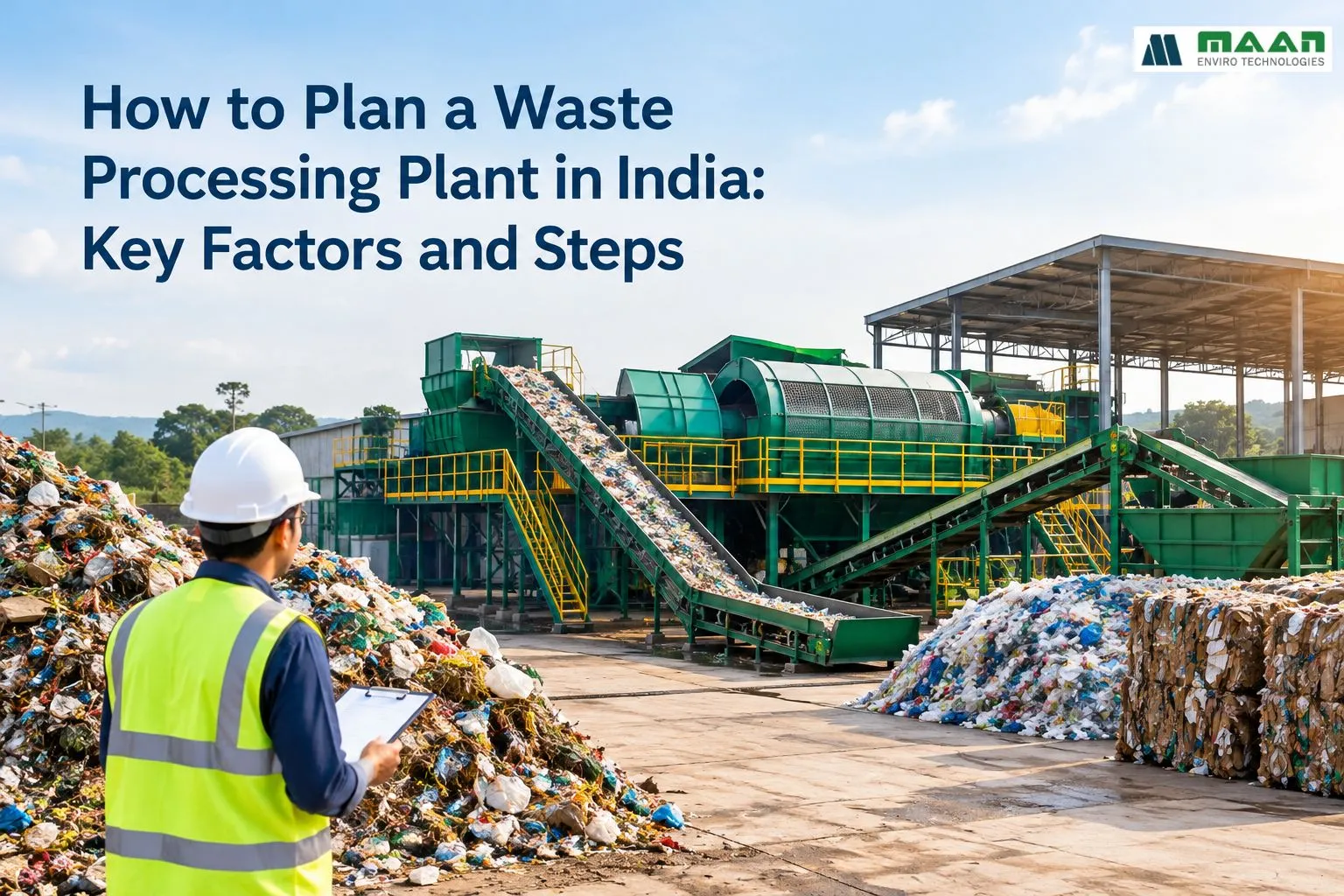

Planning a waste processing plant is more than buying machines and finding a plot. You need to know how much waste will arrive, how mixed it will be, and whether the land can handle it. Get that wrong and you’ll pay for it in running costs for years.
What usually works is starting with real waste data and checking local rules early. What often fails is rushing the layout. My view: bad planning hurts more than bad machines. A reliable solid waste management company in India can help you work out equipment and layout early, so civil work and installation don’t clash later.
1. Understand the Type and Quantity of Waste
Walk up to your gate and just watch what comes in. That’s where I’d start. Food scraps, plastic, old clothes, a bit of soil, sometimes building rubble. It’s never the same two months in a row, so report numbers only get you so far.
Here’s what I’d pin down before finalising anything:
- How many tonnes show up daily. Weigh it, don’t guess.
- How much is wet, how much is dry, how much is junk.
- How soggy it is. Wet waste clogs screens fast.
- How it gets to you now. Truck type matters more than people think.
- How much more is coming in five years. Usually a lot.
Sampling it yourself works. Copying another city’s figures doesn’t. I’ve seen that go wrong more than once.
A plant fed mostly kitchen waste needs a different layout than one fed mostly dry waste. Get that wrong and you’re pulling things apart later.
My take? The waste study is the step everyone wants to skip. Don’t.
2. Choose a Suitable Location
Where you build the plant changes a lot. Transport bills, construction work, pollution control and daily running all depend on it.
Here’s what I’d check before picking a site:
- How far it is from the collection areas and transfer stations. Every extra kilometre adds to your bill.
- Whether there’s enough land for processing and storage.
- Whether trucks and heavy equipment can actually reach it.
- Whether power, water and drainage are close by.
- How near the houses are. Neighbours complain fast.
- What the land-use rules and clearances say. Check this early.
You also need room to move. Trucks have to turn, unload and leave without queuing. Workers need space for repairs. Recovered material needs a safe place to sit.
What usually works is choosing a site close to the waste and far from homes. What often fails is picking land by the size of the machines alone. I’ve seen plants where the machines fit but the trucks couldn’t turn around.
3. Define the Plant's Processing Capacity
Don’t pick a capacity because it sounds good. Pick it based on what actually arrives and what’s in it.
Go too small and waste piles up at the gate within months. Go too big and you’ve spent a fortune on machines that sit idle half the day.
Here’s what I’d work out first:
- Average tonnes per day.
- Peak days. Festivals and monsoon months can hit hard.
- Working hours, and the time lost to maintenance.
- What each machine can really handle, and how the recovery stages connect.
- Space to park waste when the line is down.
- Room to add more later.
Sizing for the average day usually works, with a buffer for the peaks. What often fails is trusting the brochure. Rated throughput is a best-case number. Wet, mixed waste on a hot afternoon gives you far less.
4. Select the Right Processing Technology
Machines come last, not first. Look at the waste, decide what you want out of it, then choose the equipment.
Here’s what you’ll usually see in a plant:
- Trommel screens: A rotating drum that sorts waste by size. Often the first real step.
- Conveyors: They carry waste from one stage to the next. Boring, but the line stops without them.
- Sorting systems: These pull recoverable material out of the mixed waste.
- MRFs: For sorting and recovering recyclables.
- Organic treatment systems: For the wet, biodegradable part.
- RDF systems: They turn suitable dry waste into fuel, if the quality meets what buyers accept.
You don’t need all of these. Plenty of plants buy extra and regret it.
Before you buy, check a few things:
- Does it suit your waste type and size?
- What will it really handle on a normal day?
- How much power and upkeep does it need?
- Can workers clean it and swap worn parts easily?
- Does it work with the machines before and after it?
- Can you get spares and support when something breaks?
What usually works is planning the whole flow first. What often fails is buying the best machine for each job and finding they don’t fit together.
5. Plan the Plant Layout and Material Flow
Waste should move through the plant in one direction, from the gate to the dispatch yard, without doubling back. When it doubles back, you get queues, extra handling and near misses.
Here’s the order I’d plan around:
- Trucks enter and get weighed.
- Waste is unloaded and quickly checked.
- Bulky junk and machine-killers get pulled out early.
- Screening and sorting.
- Recyclables are recovered and stored.
- Leftover fractions are treated or prepared.
- Recovered material goes out, and rejects are disposed of properly.
The final layout depends on your technology and your land. Keep truck routes away from workers, and leave room around machines for repairs.
What usually works is drawing the flow on paper and walking it before construction starts. What often fails is squeezing things in later wherever there’s a gap. My take: a simple layout that flows beats a clever one that doesn’t.
6. Account for Environmental and Regulatory Requirements
Rules come first, not last. A waste plant in India has to follow the national waste rules, pollution control norms and local approvals. What applies to you depends on the type of waste, what the plant does and where it sits. So check the current requirements with the authorities before you pour any concrete.
Here’s what I’d plan for from day one:
- Permissions and consents. Don’t assume, ask.
- Dust, smell and noise control.
- Leachate collection and wastewater handling.
- Fire safety and a clear route for emergency vehicles.
- Safe storage for recovered material and rejects.
- Worker safety, with proper gear that people actually wear.
- A proper plan for waste you can’t recover.
What usually works is building these into the design from the start. What often fails is bolting them on after the neighbours start complaining. That fix always costs more.
My take: smell is what shuts plants down, not machinery. People forgive noise. They don’t forgive stink.
7. Prepare a Realistic Project Budget
What a plant costs in India depends on its capacity, the site, the machines and how much construction it needs. But the purchase price is only half the story. You also have to pay to run it every month.
Here’s where the money usually goes:
- Site work: Levelling, roads and drainage.
- Civil work: Foundations, sheds and processing areas.
- Machinery: Trommel screens, conveyors and sorting systems.
- Utilities: Power, water and lighting.
- Pollution controls: Dust, smell and wastewater.
- Installation: Transport, assembly and testing.
- Running costs: Labour, power and maintenance.
- Contingency: Because something always comes up.
What usually works is budgeting for the first three years of running, not just the build. What often fails is picking the cheapest machine. It breaks often, eats power and costs more in the end.
8. Plan for Operations and Maintenance
Installing a plant is the easy bit. Running it day after day is where things go right or wrong. I’d put more thought into the people than into the paint.
Before you switch on, get these sorted:
- Train the operators. Machine safety first, always.
- Fix a routine for checks and servicing.
- Listen for odd noise. Feel for vibration. Watch how the waste moves.
- Note down every breakdown and repair, even the small ones.
- Stock spares and wear parts before you need them.
- Keep count of what comes in, what you recover and what gets rejected.
Also tell your operators what to do when a screen jams or the waste suddenly looks different. Otherwise they’ll guess, and guessing breaks things.
A simple logbook that people actually fill in usually works. Following the manual to the letter often doesn’t. Real waste is dirtier and wetter than any manual expects, so change the schedule as you learn.
My view? One good operator is worth more than one extra machine.
9. Set Measurable Performance Targets
Installed capacity only tells you what a plant could do. To see what it really does, you need numbers.
I’d track these:
- Tonnes received and processed each day.
- How much recoverable material you pull out, and its share of the total.
- How often machines stop or need repairs.
- Power used per tonne.
- How much ends up as rejects.
- Whether you’re meeting pollution and safety conditions.
Take a baseline at commissioning, then review the figures regularly. They show where the line jams, and whether it’s a setting, a maintenance habit or the way waste is handled.
A few simple numbers on a fixed review day usually work. A giant dashboard nobody reads usually doesn’t. My take: power per tonne is the most honest figure of the lot.
Common Mistakes to Avoid During Plant Planning
Most plant problems don’t show up on day one. They show up months later, when fixing them costs real money. Here’s what goes wrong most often:
- Buying machines before studying the waste: The equipment doesn’t suit what actually arrives.
- Forgetting future space: Soon there’s no room for storage, trucks or repairs.
- Underestimating running costs: Labour, power and spares add up fast.
- Ignoring rejects: Leftover waste still needs somewhere to go.
- Treating commissioning as the finish line: Training and testing matter just as much.
What usually works is fixing these five before the first order goes out. What often fails is hoping to sort them once the plant is running. My take: rejects are the most ignored item here. Everyone plans for what they’ll recover, and almost nobody plans for what’s left.
Planning a Waste Processing Plant with the Right Approach
A good plant starts with the boring stuff. Real waste data, the right site, honest capacity numbers and a clear idea of what the plant needs to do. Everything else follows from that: the machines, the layout, the pollution controls and the running budget.
What usually works is slowing down at the start. What often fails is rushing to buy and sorting out the details later. I’d take a slow first month over a messy first year.
Maan Enviro Technologies works in environmental services, solid waste management equipment and waste handling solutions. If you’re planning a new facility, look at your waste, your site and your goals before you fix the plant setup. Keep planning, equipment and maintenance in one conversation, not three.
Need a second opinion on equipment or processing needs? Contact our team today and tell us about your project. My take: a short honest chat early beats an expensive fix later.
Conclusion
Building a plant in India means making a lot of calls. How much waste comes in. Where the plant sits. What size to go for. Which machines. What the pollution board wants. What it costs to run every month. Get a few wrong and you live with it for years.
What works is dull but reliable. Study the waste and the site first, then pick machines, then draw the layout. Keep a basic maintenance routine from day one. What fails is the other way round: someone falls for a machine, buys it, and the rest of the plant gets squeezed around it.
At Maan Enviro Technologies, we’ve seen that more than once. My take? A plant built around its waste will outlast one built around a brochure.
Frequently Asked Questions
1. What is the first step in planning a waste processing plant in India?
Start by assessing the quantity and composition of incoming waste. This helps determine the plant's capacity, suitable equipment, site requirements and processing methods.
2. What factors affect the cost of setting up a waste processing plant in India?
Costs depend on plant capacity, land, civil construction, machinery, utilities, installation and environmental controls. Labour, electricity and maintenance also affect operating costs.
3. Which equipment is required for a waste processing plant?
Common equipment includes conveyors, trommel screens, sorting systems and material recovery equipment. The final selection depends on waste composition and processing objectives.
4. How do you choose the right location for a waste processing plant?
Consider land availability, road access, waste transportation, utilities, drainage and environmental requirements. Check local land-use rules and necessary approvals before finalising the site.
5. Why is plant layout important in waste processing?
A practical layout supports smooth material movement, reduces handling delays and improves workplace safety. It should also allow space for storage, vehicle movement and equipment maintenance.
6. What approvals are needed to establish a waste processing plant in India?
Approvals depend on the plant's activities, location and waste type. These may include land-use permissions and applicable pollution control consents. Confirm current requirements with the relevant authorities.
7. How can a waste processing plant maintain efficient operations?
Schedule preventive maintenance, train operators and monitor equipment performance. Regularly review waste intake, processing output, downtime and material recovery to identify operational issues.














Sign in to leave a comment.