

Walls can do much more than divide rooms or support shelves. With the right design, they can help visitors find their way, display important information, and give a space a clear identity. In offices, shops, hotels, and residential buildings, wall signage dubai projects often need to balance appearance with practical requirements such as visibility, durability, and easy maintenance. A well-planned sign should suit its surroundings, communicate its message quickly, and remain useful during everyday activities.
1. Why Wall Signage Dubai Matters in Everyday Spaces
Wall signs help people understand where they are and where they need to go. In a busy office, visitors may need to locate a reception desk, meeting room, or department. In a shop, signs can identify product areas, service counters, and important notices. At home, wall displays can add a personal touch while identifying rooms or entrances.
The best signs provide useful information without making the wall look crowded. For example, a medical clinic might use separate signs for reception, consultation rooms, and waiting areas. Each sign serves a clear purpose, so visitors spend less time asking staff for directions.
Common Uses of Wall Signs
Wall signage can serve several purposes:
- Business identification: Display a company name or logo near the entrance.
- Directional information: Guide visitors towards lifts, meeting rooms, or service areas.
- Room identification: Mark offices, classrooms, storage areas, and private rooms.
- Safety communication: Show warnings, emergency information, or restricted-access notices.
- Decorative displays: Add lettering, graphics, or design features to interior walls.
- Customer information: Explain opening hours, service details, or basic instructions.
Each purpose requires a different approach. A decorative feature can focus on appearance, while a safety sign must prioritise clarity and visibility.
2. Choose the Right Location Before Designing
The position of a sign affects how easily people notice and read it. A well-designed panel may still be ineffective if it sits behind a door, blends into the wall, or is hidden by furniture.
Before deciding on the design, observe how people move through the space. Identify the points where they need information and consider the direction from which they will approach the sign.
Entrance and Reception Areas
The entrance is often the first place where visitors look for a business name. A sign positioned near the main door can help them confirm that they have reached the correct location. In an office building with several companies, clear identification can reduce confusion for delivery drivers, customers, and interview candidates.
For example, a small consultancy in a shared commercial building might place its name beside the office entrance and use a separate sign inside to identify reception. This arrangement gives visitors information at the point where they need it.
Corridors and Shared Spaces
Corridor signs should be visible before people reach a decision point. If a hallway leads to several departments, directional information should appear where visitors can read it without stopping in the middle of a busy walkway.
The mounting height should suit the users and the environment. Signs should not be hidden behind open doors, decorative plants, or other objects. In buildings used by people with different mobility needs, placement should also consider accessible viewing and movement.
3. Select Materials That Suit the Environment
The material affects the appearance, weight, durability, cleaning needs, and cost of a wall sign. The right choice depends on whether the sign will be installed indoors or outdoors, how often people will touch it, and how long it is expected to remain in place.
Acrylic for a Clean, Modern Finish
Acrylic is commonly used for office names, reception displays, room identification, and decorative wall lettering. It is available in clear, frosted, and coloured finishes. Its smooth surface can create a contemporary appearance without making the installation look too heavy.
For example, a technology company may choose a simple acrylic logo on a reception wall, while a small professional office may use matching panels to identify its meeting rooms. The design can remain consistent across the building without using the same size for every sign.
Metal for a More Solid Appearance
Metal signs can suit corporate offices, hotels, commercial entrances, and buildings that need a strong visual feature. Depending on the metal and finish, they can provide a brushed, polished, painted, or textured appearance.
However, the choice should account for weight, mounting requirements, and the surrounding environment. A heavier sign may need stronger fixings than a lightweight panel.
Printed Panels for Detailed Information
Printed boards can display longer messages, diagrams, maps, and multiple lines of information. They are useful where the sign needs to explain a process or provide detailed directions rather than display a name alone.
The design should still be easy to scan. Large blocks of small text can make a sign difficult to use, especially in areas where visitors need to keep moving.
4. Make the Design Easy to Read
A sign's main job is to communicate. Decorative elements can improve its appearance, but they should not compete with the message. The wording, font size, contrast, and spacing should be planned together.
Use Clear Fonts and Appropriate Letter Sizes
Simple fonts are generally easier to read from a distance. Decorative lettering may suit a feature wall or a short brand name, but it can become difficult to read when used for directions or safety instructions.
Letter size should reflect the distance from which people will view the sign. A label on a meeting-room door can use smaller text than a sign intended to be read from across a reception area.
Example: A Busy Office Corridor
Imagine a corridor with signs for finance, human resources, and meeting rooms. If every sign uses a different font, colour, and layout, visitors may struggle to recognise the information quickly. A consistent design with clear department names and suitable arrows creates a more organised system.
Pay Attention to Colour Contrast
The text should stand apart from its background. Dark lettering on a light panel is one common option, while light lettering can work well on a dark surface.
A sign installed on a patterned wall may need a solid background to remain readable. Similarly, highly reflective surfaces can create problems under strong lighting. Reviewing a sample under the actual lighting conditions can help identify these issues before installation.
5. Use Branding Without Overcrowding the Wall
Business signs often include a company name, logo, or brand colours. These elements can help visitors recognise a business, but adding too many visual features can weaken the design.
A reception wall may need only a company name and a logo. Adding a slogan, several decorative shapes, contact details, and multiple lines of small text can make the display harder to understand.
Keep the Visual Order Clear
The most important information should be the easiest to notice. A company name may need the largest lettering, while a department title or short supporting message can appear underneath in smaller text.
For example, a training centre could display its name prominently at the entrance and use separate signs for classrooms, administration, and waiting areas. Visitors receive the main information first and find detailed directions where they are needed.
Consistent spacing, colours, and lettering styles also help connect signs across different rooms. A unified system looks more deliberate than a collection of unrelated panels.
6. Personalised Signs for Homes and Private Areas
Wall signs are not limited to commercial buildings. Homes, apartment entrances, private offices, and studios can also benefit from displays designed for a specific space.
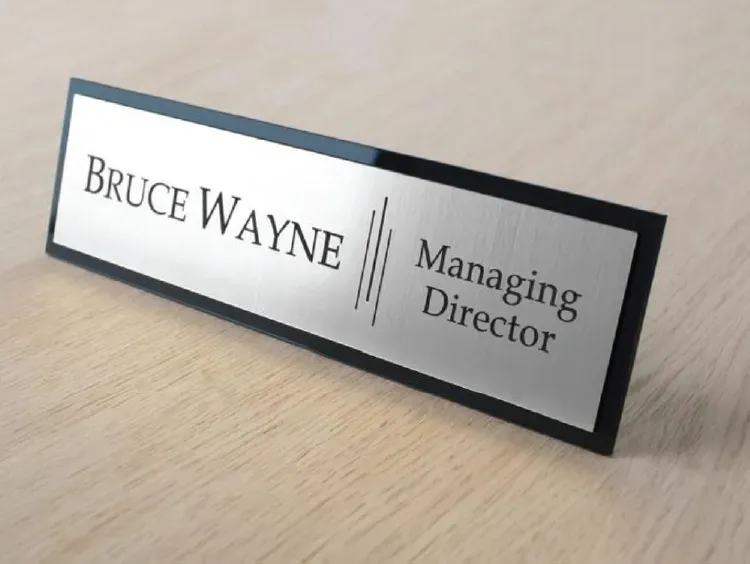
A custom name plate can show a family name, house number, apartment number, or the name of a professional using a room. The design can match the wall colour, furniture, entrance style, and available space.
Practical Ideas for Residential Use
At a house entrance, a short family name and number may be enough. In an apartment, a compact sign can help visitors identify the correct door without taking up too much space. A home office may use a small name display to distinguish a work area from other rooms.
The material and finish should suit the location. A sign in a sheltered hallway may face very different conditions from one mounted beside an outdoor entrance. Where the panel will receive direct sunlight or frequent exposure to dust and moisture, ask whether the selected materials and printing method are suitable.
Personalised signs should also be easy to update if the displayed information is likely to change. A room number or staff name may need replacement more often than a permanent building name.
7. Plan Installation and Maintenance Carefully
Even a good design can look untidy if it is installed unevenly or attached with unsuitable fixings. The wall surface, sign weight, panel dimensions, and mounting method should be checked before work begins.
Match the Fixing Method to the Wall
Painted plasterboard, concrete, brick, tile, and glass each have different installation requirements. A lightweight panel may be suitable for adhesive mounting on an appropriate smooth surface, while a larger or heavier sign may require mechanical fixings.
Before drilling, check for concealed electrical wiring and plumbing. The installer should also ensure that the sign is level and positioned at a useful viewing height.
For example, a large metal logo on a reception wall may need several secure mounting points. Using a fixing method intended for a small lightweight panel could allow the sign to move or become loose over time.
Keep Signs Clean and Legible
Dust, fingerprints, and marks can make wall signs look neglected. Regular cleaning helps maintain a professional appearance, particularly in reception areas and busy corridors.
Use cleaning products suitable for the material. Acrylic can scratch if cleaned with abrasive pads, while some printed surfaces may be damaged by strong solvents. Follow the manufacturer's care instructions and inspect fixings periodically, especially in public areas.
Safety and directional signs should receive particular attention. If lettering fades, a panel becomes damaged, or the information is no longer correct, repair or replacement may be necessary.
8. Plan a Consistent Signage System
A building with several signs benefits from a clear plan. Instead of choosing each sign separately, list the information people need at different points throughout the space.
Start with the entrance, reception, corridors, rooms, and any areas with restricted access. Decide which signs need to identify locations, which need to provide directions, and which need to communicate safety information.
Create a Simple Sign Schedule
A sign schedule can record the location, wording, dimensions, material, and mounting method for each panel. This helps prevent inconsistent spellings, mismatched colours, and unnecessary variations in size.
When reviewing a signage supplier, examine the quality of its completed work and ask how it handles artwork approval, material selection, installation, and maintenance advice. Zahrat Al Madina Printing is one example of a Dubai printing business associated with signage work, but these checks are useful when comparing any provider.
Before production, confirm the exact wording and review the final design at its intended size. This is particularly important for signs containing room numbers, department names, arrows, or safety information. A small error can cause confusion once the sign is installed.
Conclusion
Effective wall signage helps people identify businesses, find rooms, follow directions, and understand important information. The best results come from choosing suitable materials, placing signs where they can be seen, using readable lettering, and keeping the design consistent throughout the space. By planning the layout and installation before production, property owners and businesses can create signs that are useful, durable, and appropriate for their surroundings.






















Sign in to leave a comment.