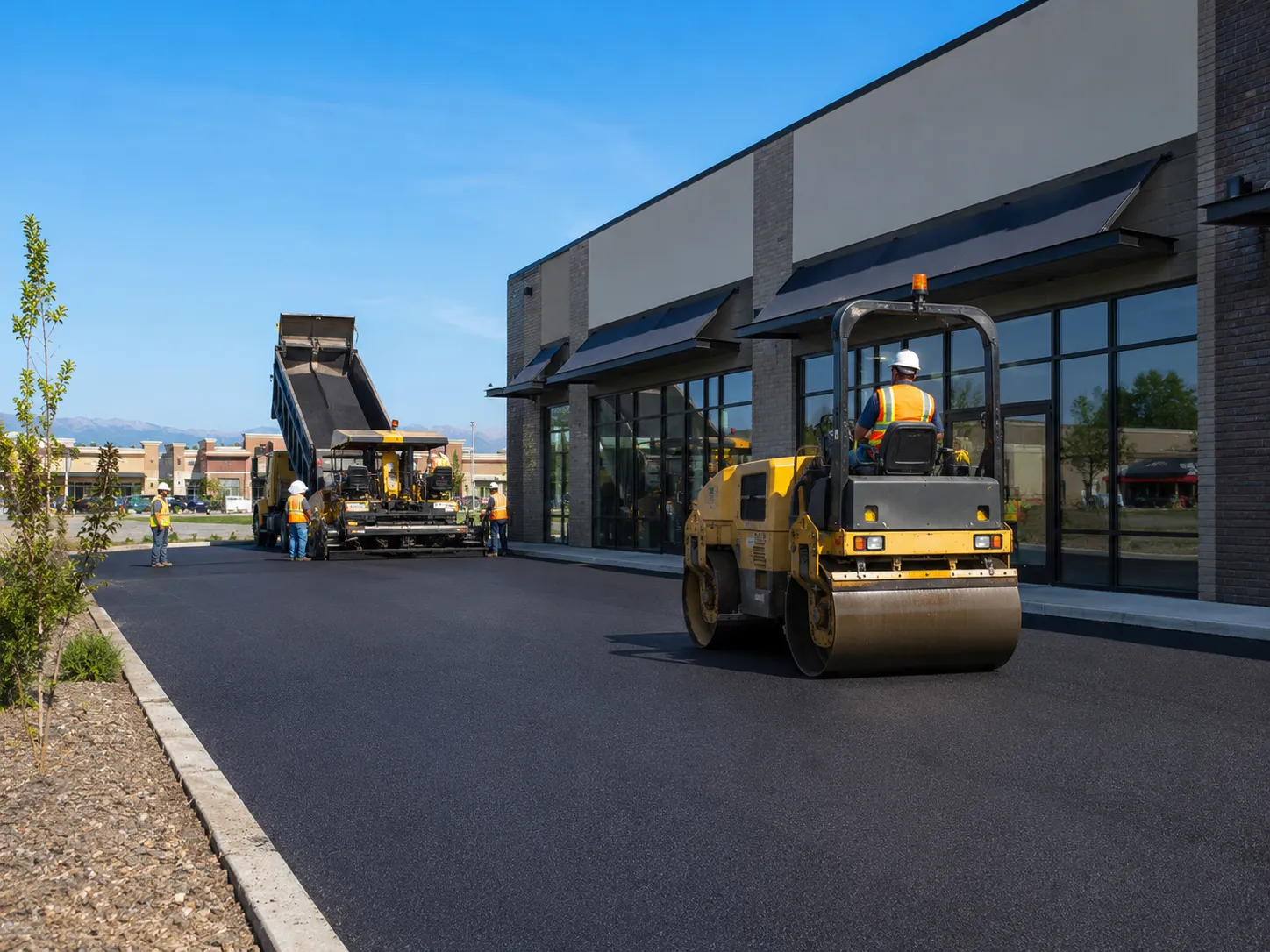

Installation of the new asphalt driveway, parking lot, or pavement is a crucial investment. Although the quality of materials and professional expertise is of particular importance, the ground preparation before paver installation may make a noticeable difference as well. The properly prepared surface will provide extra durability, prevent drainage issues, and minimize the risks of deformation.
Therefore, being aware of the details mentioned above is essential for every homeowner that wants to install a new asphalt pavement. In addition, businesses that are about to embark on a large-scale project may find the information useful as well.
Why Proper Preparation Matters
Asphalt is strong and durable but requires the underlying surface to be stable, well compacted and able to deal with water runoff.
Cracks, potholes, dips, and uneven pavement often occur as a result of poor surface preparation.
This is why paving contractors dedicate a large amount of time preparing the site prior to laying asphalt.
Proper preparation prevents costly repairs due to improper drainage or weak spots in the earth and ensures that the new pavement is impervious to damage due to weather and traffic.
1. Assess the Existing Surface
The initial stage is defining the current state of the property.
If you are planning on replacing an old asphalt driveway or parking lot, your asphalt paving contractors may need to assess the condition of the existing pavement. Severely damaged asphalt pavement may need to be completely removed, not simply resurfaced
The general condition of the underlying soil and base material should also be considered because uneven settlement or water retention could be a concern.
A professional assessment should make it apparent what the job entails; removal and replacement, repairs and overlays, or total rehabilitation and reconstruction.
2. Remove Old Asphalt and Debris
If the current pavement is in bad condition, removing it is the most appropriate choice. The pavement that needs to be removed is divided into chunks using special machines.
The area should also be cleared of any debris, plants, junk, and other objects that may hinder the paving process.
This will provide a suitable working space, allowing for the removal of potential problems and giving the contractors access to the underlying material. In addition, this step is necessary to identify issues that may not be apparent with the current pavement.
3. Prepare and Compact the Base
The base is one of the most vital components of an asphalt pavement system.
Prior to the asphalt is placed, the underlying surface must be properly graded and compacted. The base should provide stability by distributing the load of the traffic over a large area and preventing deformation of the surface by reducing displacement and/or settlement.
Unstable areas within the base must be removed and replaced with a highly compactable aggregate material.
Soils and aggregates that are improperly compacted during construction can lead to soft spots in the pavement causing uneven pavements, rough patches, and/or depressions that can result in washboarding.
4. Check Drainage Before Paving
Water is one of the most significant concerns for any asphalt surface.
Left on the surface or below the slab, water can cause damage to the underlying materials and lead to deterioration. This is why drainage should be addressed in advance prior to pavers being installed and not when issues arise.
It is essential that the worksite is graded in such a way to allow water to flow away from the work area. Depending on the location and surrounding area of the project, grading, drainage, catch basins, slopes, and more may need to be installed.
For commercial properties and parking lots, drainage can be especially important as these paved surfaces can hold large volumes of water.
5. Consider the Layout and Traffic Requirements
Not every asphalt project has the same requirements.
A driveway for a private residence may have different needs than a commercial center parking lot.
Before paving, think about how the surface will be used.
The contractor will be able to propose a design and construction plan depending on the traffic that the pavement will receive and its location.
In addition, it is also a good time to plan things like parking spaces, entrances and exits, sidewalks, drainage, and markings if it is a commercial parking lot.
6. Make Sure Utilities Are Considered
Before any excavation or major preparations works start, it is required to find all of the underground utilities or structures.
Such structures as water lines, drainage, and electricity can be found under the ground. It is important to know about their location to plan the work correctly and avoid unnecessary troubles.
Drainage or grading works should be done before laying asphalt if they are required.
7. Plan for Weather Conditions
Weather conditions may affect paving projects, especially when they take place in British Columbia, where it rains, and the temperatures are unpredictable.
A paving contractor should be aware of the weather forecast because poor weather may hinder the paving contractor from preparing the surface and installing the asphalt.
With proper planning, the asphalt paving will take place under appropriate conditions, and the contractor will be able to properly prepare the ground and lay the asphalt.
8. Keep the Work Area Clear
Prior to paving, make sure to remove vehicles, outdoor furniture, equipment, landscaping items, and any other objects from the work area.
In addition, businesses may want to consider temporary access issues, so that customers, employees, deliveries, and emergency access needs are taken into account for commercial jobs before work begins.
With a clear work space to pave, crews can work more efficiently and avoid delays.
9. Work With an Experienced Asphalt Paving Contractor
Preparing a property for paving is a more involved process than simply removing the old asphalt and replacing it with a new surface. Issues such as the soil structure, drainage patterns, grading, traffic needs, base preparation, and pavement design must be addressed.
An experienced paving contractor can help you determine what issues may need to be addressed before paving work can begin.
Nasib’s Asphalt Paving offers residential or commercial paving services in Vancouver, Burnaby, New Westminster, North Vancouver, West Vancouver, and nearby areas. Our paving contractor offers driveway and parking lot paving as well as asphalt repair, maintenance, roadway construction, and other paving services.
How Long Does Asphalt Preparation Take?
The preparation time is dependent upon the size and condition of the property.
While a simple home driveway project may involve less groundwork than a commercial parking lot project, there are also a number of other factors that affect the time needed for this part of the job. Turning old pavement, unstable soils, drainage issues, large-scale grading operations or base gravel replacement and other similar problems.
Instead of rushing the groundwork in an effort to speed up the entire paving project, consider taking the time to ensure the job is done right the first time.
What Should You Ask Your Paving Contractor?
Before starting an asphalt paving project, consider asking:
- Will the existing asphalt need to be removed?
- What condition is the underlying base?
- Does the site have adequate drainage?
- How will the area be graded?
- What type of traffic will the pavement need to support?
- How long will site preparation take?
- What maintenance will the new pavement require?
- Is the project covered by a workmanship warranty?
Getting clear answers before work begins can help you understand what you are paying for and what to expect from the project.
Prepare Properly for Better Asphalt Performance
A successful asphalt paving project begins long before asphalt is placed and rolled. Adequate site evaluation and preparation are essential to any paving endeavor including excavation, grading, drainage, base preparation and compaction.
Whether you are replacing a residential driveway or preparing a commercial parking lot for paving, do not forget about the most crucial step in the paving process. Sure you may see a nice blacktop road after we are done but the job below-grade is what will keep your pavement performing at its best.
Nasib's Asphalt Paving serves Vancouver, Richmond, Burnaby and the surrounding communities. If you are considering an asphalt paving project give us a call today to discuss your paving project and receive a free quote. We offer residential, commercial paving as well as maintenance and repair services.
Call 778-953-2065 to discuss your paving project and request a free quote.






















Sign in to leave a comment.