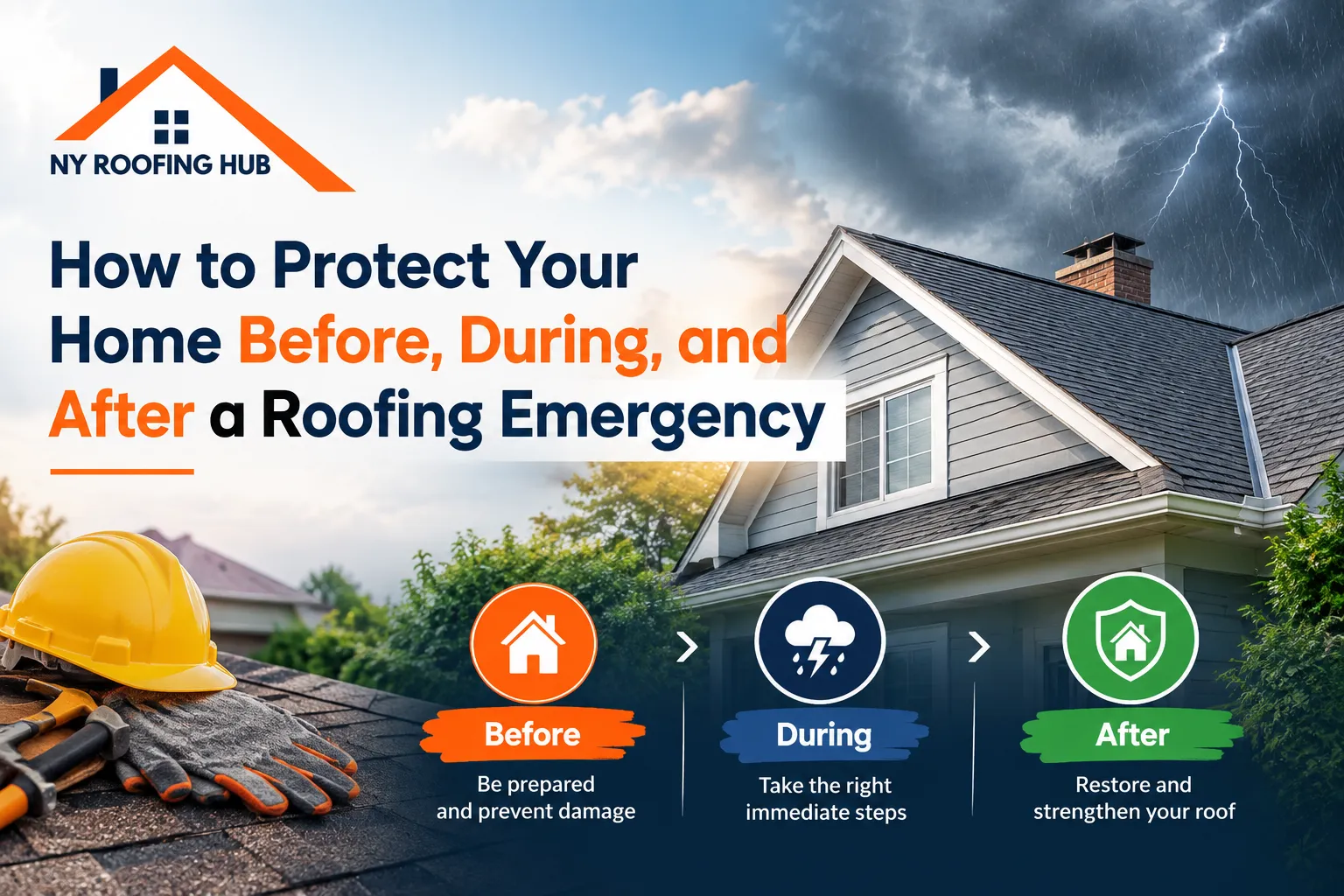

New York City weather doesn't ease into extremes — it swings hard. One season brings nor'easters with 70-mph winds, another brings summer storms that dump inches of rain in an hour, and winter brings the freeze-thaw cycles that cause ice dams. For homeowners across the five boroughs, roofing emergencies aren't random bad luck; they tend to follow predictable patterns tied to building age, roof type, and local weather.
Understanding how to prepare before a storm, respond during one, and recover afterward can be the difference between a minor repair and a major, costly disaster.
Before the Storm: Preparing Your Roof
Schedule a Seasonal Roof Inspection Most roofing emergencies don't come out of nowhere — they start as small, overlooked issues. A professional inspection before storm season (typically spring and fall) can catch loose flashing, worn membrane seams, or early signs of wear before they become active leaks.
Clear Gutters and Drains This matters even more for NYC's flat roofs than for sloped ones. Clogged drains on a flat roof can lead to dangerous ponding water, which adds weight and accelerates membrane failure. Clearing debris before storm season keeps water moving off the roof the way it's supposed to.
Check Flashing Around Chimneys and Skylights Flashing is one of the most common failure points on older NYC homes, especially brownstones and rowhouses. A quick visual check — or a professional one — for cracked or lifted flashing can prevent a small gap from becoming a major leak during the next storm.
Trim Overhanging Branches Tree limbs hanging over the roofline are a leading cause of impact damage during high winds. Trimming them back reduces the risk of a branch puncturing your roof deck during a storm.
Know Your Building's Emergency Process If you live in a co-op or condo, find out ahead of time how roof damage gets reported and approved for repair. Board approval delays are a common frustration for NYC residents, and knowing the process in advance saves valuable time when an emergency actually happens. As a trusted roofing company in NYC, we often help residents navigate this process alongside the board when damage occurs.
During the Storm: What to Watch For
Signs of an Active Problem Dripping sounds, a spreading ceiling stain, or a sudden musty smell can all signal water intrusion in progress. Flat roofs in particular can develop hidden pooling that isn't obvious until water starts coming through the ceiling below.
Stay Off the Roof No matter how tempting it is to check the source, never attempt to inspect your roof during active wind or rain. Wet, windy conditions make even routine rooftop areas dangerous, and NYC's flat roofs often have limited safe access points to begin with.
Contain Interior Water Damage If water starts coming through, place buckets under the leak, move furniture and electronics out of the way, and avoid contact with any area near electrical fixtures. These steps won't stop the leak, but they limit the damage while you wait for help.
Call for Emergency Help When Needed If water is actively entering your home, a section of roofing has visibly failed, or you notice structural sagging, don't wait until morning. Reaching out to emergency roofing services in NYC as soon as it's safe to do so allows a professional team to assess the damage and apply temporary protection before it worsens overnight.
After the Storm: Assessing and Recovering
Check for Visible Exterior Damage Safely Once the storm has fully passed, do a visual check from the ground or a window — missing shingles, displaced flashing, or debris on the roof are all signs worth noting. Leave any rooftop inspection to a professional, especially on flat roofs or buildings with limited safe access.
Document Everything Take photos and videos of both interior and exterior damage as soon as it's safe. This documentation is critical for insurance claims, particularly in New York State, where storm-related claims often come with strict filing deadlines.
Temporary Protection vs. Permanent Repair In some cases, materials or weather conditions may delay a permanent fix. Professional tarping — secured properly and sealed at the edges — can protect your roof for weeks while a permanent repair is scheduled, preventing further water intrusion in the meantime.
Schedule a Full Post-Storm Inspection Even if damage isn't obvious from the ground, a professional inspection after any major storm can catch issues like granule loss, lifted seams, or early leak points before they turn into a bigger emergency down the line.
Common Roofing Emergencies NYC Homeowners Face
- Wind-lifted or missing shingles
- Flat roof membrane separation or seam failure
- Ice dam water intrusion in winter
- Tree or debris impact damage
- Storm and hail damage requiring insurance documentation
Final Thoughts
Roofing emergencies in NYC are rarely a matter of if — they're a matter of when. Buildings across the city face a unique mix of aging materials, flat roofing systems, and unpredictable weather that make preparation genuinely worthwhile. Taking a few proactive steps before storm season, knowing how to respond safely during an emergency, and following through with proper documentation and repairs afterward can save you significant time, money, and stress.
Not sure if your roof is ready for the next storm? Call NY Roofing Hub today for a professional assessment, and let our team help you prepare before an emergency happens — not after.




























Sign in to leave a comment.